
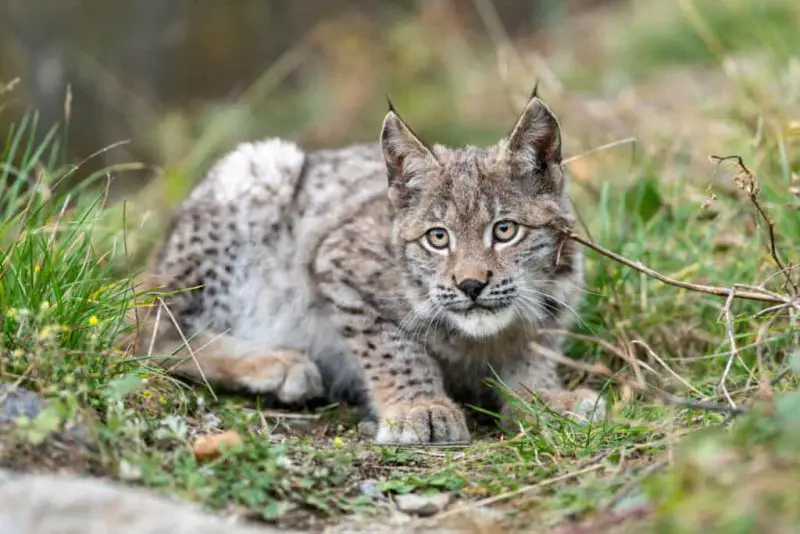
Bobcats have slowly returned to parts of Indiana after decades of decline. Increased forest cover, wildlife conservation, and adaptable hunting behavior have allowed these elusive wild cats to reestablish populations across portions of the state. As sightings increase, homeowners, pet owners, and wildlife enthusiasts naturally begin asking new questions. One that appears frequently is whether bobcats ever mate with domestic cats.
At first glance, the idea seems plausible. Both are felines. They sometimes share overlapping habitats near wooded suburbs, farms, and rural communities. Stories circulate about unusual looking cats seen near forest edges, leading some people to suspect hybrid offspring. However, the biological reality is more complex than rumor suggests.
Understanding whether bobcats and domestic cats can interbreed requires examining genetics, behavior, reproductive biology, habitat overlap, and scientific evidence. This article explores what researchers know, what remains uncertain, and how Indiana residents can interpret wildlife encounters realistically while keeping pets safe.
Bobcats in Indiana: A Wildlife Comeback Story

Historical Presence and Decline
Bobcats were once a widespread native predator across Indiana, occupying forests, wetlands, farmland edges, and brushy transitional landscapes. Early European settlement dramatically altered those habitats. Extensive logging, expanding agriculture, urban development, and organized predator control programs significantly reduced bobcat numbers by the early twentieth century. In many regions, sightings became rare enough that some residents assumed the species had disappeared entirely.
As land management practices changed over the decades, conditions gradually improved. Reforestation, conservation programs, wildlife protections, and reduced predator persecution allowed bobcats to begin returning. Habitat recovery created corridors that supported population growth and natural dispersal. By the late twentieth century, confirmed sightings began increasing again.
Today, bobcats are most frequently reported in southern Indiana, where forest cover remains extensive, but they have steadily expanded into central regions as well. This recovery has sparked renewed public curiosity about their habits, behavior, and possible interactions with domestic animals, including cats.
Habitat Preferences
Bobcats favor environments that combine dense cover with abundant prey. Mixed forests, brushy fields, river corridors, rocky terrain, and woodland edges provide ideal hunting grounds and den sites. These habitats allow stealth movement while supporting prey species such as rabbits, rodents, birds, and small mammals.
Interestingly, certain suburban and semi rural areas now mimic natural edge habitats. Greenbelts, wooded parks, agricultural borders, and undeveloped land pockets can support prey populations that attract bobcats. These environments occasionally bring them closer to residential neighborhoods than many people expect.
Despite this overlap, bobcats generally avoid heavily urbanized areas. They prefer quieter landscapes with sufficient cover, which naturally limits frequent human encounters.
Domestic Cats in Rural and Suburban Indiana
Outdoor Pet Behavior
Domestic cats commonly roam outdoors in many Indiana communities, particularly in rural areas and small towns. Barn cats, neighborhood pets, and semi feral animals often share landscapes similar to bobcat habitat. These environments provide prey, shelter, and space for independent movement.
Outdoor cats hunt rodents, birds, and insects. Bobcats rely on many of the same prey species. This shared food base can bring the two species into proximity without necessarily causing direct interaction.
Although overlapping habitat raises questions about hybridization, roaming behavior alone does not mean interbreeding occurs. Most interactions remain indirect and centered on shared resources.
Feral Cat Populations
Feral cat colonies exist in both agricultural and suburban environments across Indiana. These cats live largely independent of direct human care, forming stable populations that survive through hunting, scavenging, or occasional feeding by people.
When unusually large or distinct looking cats appear near wooded areas, some observers suspect hybrid ancestry. In reality, feral cats display wide variation in coat color, size, and physical features due to mixed breeding histories.
Scientific confirmation of bobcat domestic cat hybrids remains extremely limited. Most suspected cases ultimately prove to be normal bobcats or domestic cats rather than true hybrids.
Biological Compatibility Between Bobcats and Domestic Cats
Taxonomic Differences
Bobcats belong to the species Lynx rufus, while domestic cats belong to Felis catus. Although both belong to the broader cat family, they are classified in different genera. This taxonomic separation reflects significant evolutionary differences that create natural reproductive barriers.
Interbreeding is generally more successful among animals within the same genus. Differences in genetic structure, mating behavior, communication signals, and reproductive cycles reduce compatibility between bobcats and house cats.
This genetic distance alone makes natural hybridization highly unlikely.
Chromosomal Considerations
Both bobcats and domestic cats possess 38 chromosomes, which sometimes leads people to assume hybridization would be easy. However, chromosome number alone does not determine reproductive compatibility. Gene arrangement, developmental biology, and behavioral compatibility also play critical roles.
Even species with matching chromosome counts may experience fertility issues or unsuccessful development due to genetic differences. Behavioral barriers often prevent mating before biological compatibility becomes relevant.
To date, scientific research has not confirmed stable wild populations of bobcat domestic cat hybrids.
Behavioral Barriers to Interbreeding
Territorial Differences
Bobcats maintain defined territories that they defend against other predators and unfamiliar animals. Domestic cats, especially feral individuals, also maintain territories but on much smaller spatial scales.
Size differences further discourage interaction. Adult bobcats are significantly larger and may perceive domestic cats as competitors or potential prey rather than mating partners.
These territorial instincts strongly reduce opportunities for interbreeding.
Mating Signals and Timing
Wild felines depend heavily on scent marking, vocalizations, and behavioral displays during breeding season. Domestic cats use similar signals but often follow different timing patterns.
Bobcats typically breed in late winter, while domestic cats can breed throughout the year when conditions allow. This mismatch in reproductive timing further decreases the likelihood of crossbreeding.
Even when habitats overlap, breeding cycles rarely align closely enough to facilitate mating.
Are There Confirmed Bobcat Domestic Cat Hybrids?
Scientific Evidence
Credible scientific documentation of bobcat domestic cat hybrids in the wild remains extremely scarce. While anecdotal reports exist, most lack genetic confirmation. Many animals initially suspected to be hybrids turn out to be normal bobcats, feral cats, or occasionally misidentified wildlife species.
Visual identification alone is unreliable. Coat patterns, body size, and behavior vary naturally within both species, making misinterpretation common.
Without DNA analysis, confirming hybrid ancestry is nearly impossible.
Captive Breeding Attempts
Historical attempts at captive breeding between bobcats and domestic cats have produced inconsistent results. Many attempts failed entirely, while others resulted in non viable offspring.
These outcomes suggest strong biological barriers even under controlled conditions where animals are closely managed. Such evidence reinforces the conclusion that natural hybridization in the wild is highly unlikely.
Why the Hybrid Myth Persists
Visual Misidentification
Both bobcats and domestic cats display significant natural variation. Lighting conditions, viewing distance, and brief encounters often lead to mistaken identification. Young bobcats in particular can resemble large domestic cats from afar.
Unusual coat patterns or size differences frequently trigger speculation about hybrids. In most cases, these animals are simply normal members of one species.
Understanding natural variation helps reduce misinterpretation.
Social Media and Anecdotal Reports
Online platforms allow rapid sharing of wildlife photos and stories. Images of large cats near wooded areas often circulate with speculative captions about hybrid ancestry.
These claims rarely undergo scientific verification. Misinformation spreads quickly and can reinforce myths.
Balanced education and reliable sources help correct misconceptions.
Potential Risks Between Bobcats and Domestic Cats
Predation Concerns
Bobcats primarily hunt rabbits, rodents, birds, and other small mammals. Very small domestic cats may occasionally be vulnerable, particularly if unsupervised outdoors at night.
This represents predator prey interaction rather than reproductive behavior. Such events remain relatively uncommon but possible.
Keeping pets indoors or supervised significantly reduces risk.
Territorial Conflicts
Adult domestic cats may encounter bobcats near shared hunting areas. Most bobcats prefer avoidance rather than confrontation unless threatened.
These encounters are uncommon but more likely in rural environments. Responsible pet management minimizes risk.
Understanding these dynamics helps prevent unnecessary fear.
Identifying Bobcats Versus Large Domestic Cats
Physical Characteristics
Bobcats typically have short bobbed tails with black tipped ends, tufted ears, spotted or mottled coats, and muscular builds. Facial ruffs and relatively long legs also distinguish them.
Domestic cats display greater variation but rarely exhibit all bobcat traits simultaneously. Observing multiple features improves identification accuracy.
Careful observation reduces mistaken hybrid claims.
Behavioral Clues
Bobcats tend to move stealthily, often avoiding open areas during daylight hours. Domestic cats usually show more relaxed behavior near human structures.
Behavioral observation often provides stronger identification clues than physical appearance alone.
When uncertainty remains, wildlife professionals can assist with identification.
Ecological Importance of Bobcats in Indiana
Predator Role
Bobcats play an important role as mid sized predators. They help regulate populations of rodents, rabbits, and other small mammals. This contributes to ecosystem balance and can indirectly benefit agriculture by controlling pest species.
Their presence often signals relatively healthy habitat conditions.
Predator diversity strengthens ecological resilience.
Coexistence With Humans
Most bobcats avoid direct human contact. Education about wildlife behavior encourages safe coexistence and reduces unnecessary alarm.
Reducing attractants such as unsecured garbage or outdoor pet food helps minimize encounters.
Understanding ecological roles promotes balanced attitudes.
Protecting Domestic Cats in Bobcat Areas
Indoor Living Advantages
Indoor cats generally live longer due to reduced exposure to predators, vehicles, disease, and environmental hazards. Keeping cats indoors also protects wildlife from predation by domestic pets.
This approach benefits both animals and ecosystems.
Indoor enrichment can support feline well being effectively.
Supervised Outdoor Access
For owners who prefer outdoor access, supervised time, enclosed patios, or secure fencing reduce risk. Monitoring outdoor activity during nighttime hours is particularly important.
Responsible pet management supports safety while maintaining quality of life.
Awareness remains the key protective factor.
What Wildlife Experts Recommend
Reporting Sightings
Wildlife agencies often encourage residents to report bobcat sightings. Accurate data helps track population trends and informs conservation decisions.
Providing photos, location details, and observation timing can assist researchers.
Avoid approaching wildlife for closer views.
Avoiding Attractants
Securing garbage, removing outdoor pet food, and managing rodent populations responsibly reduce wildlife attraction to residential areas.
These simple measures minimize encounters and support coexistence.
Awareness combined with prevention remains the most effective strategy.
FAQs About Bobcats and Domestic Cats in Indiana
Can bobcats breed with house cats
Biologically possible in theory but extremely unlikely. No widespread confirmed cases exist.
Are hybrids common in Indiana
No. Most suspected hybrids are misidentified animals.
Do bobcats attack domestic cats
Rarely, but small pets may be vulnerable outdoors at night.
How can I protect my cat
Keep cats indoors or supervise outdoor time.
Are bobcats dangerous to people
Attacks on humans are extremely rare.
Why do people think hybrids exist
Visual misidentification and anecdotal reports contribute to the myth.
Should I report bobcat sightings
Yes. Wildlife agencies often welcome data.
Are bobcats protected in Indiana
Regulations vary, so check current wildlife policies.
Final Thoughts
The idea of bobcats mating with domestic cats in Indiana captures public imagination, but scientific evidence suggests it is extremely rare if it happens at all. Biological differences, behavioral barriers, territorial instincts, and reproductive timing all limit the possibility of hybridization.
As bobcat populations continue to recover in Indiana, understanding their behavior becomes increasingly important. They play valuable ecological roles, typically avoid human contact, and rarely interact directly with domestic pets when responsible ownership practices are followed.
Education remains the best tool for balancing curiosity with realistic expectations. With awareness, proper pet care, and respect for wildlife habitats, Indiana residents can safely coexist with bobcats while appreciating one of the state’s most fascinating returning predators.