
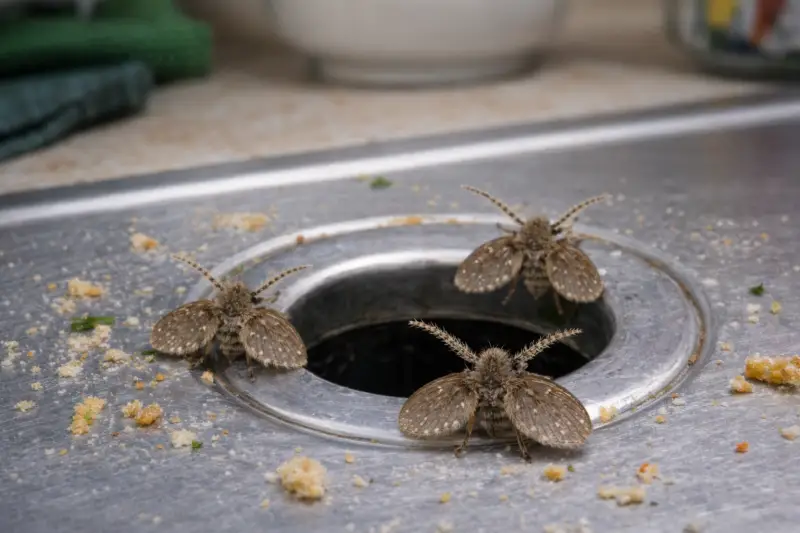
Many Arkansas homeowners eventually notice tiny flies gathering around kitchen sinks, garbage disposals, or drain openings. One day everything looks normal. Soon after, small fuzzy flies begin resting on walls, cabinets, or sink edges. Their sudden appearance often causes concern because it feels like an infestation started overnight.
In most cases, these insects are drain flies. They are harmless but persistent, thriving in moist environments where organic residue accumulates inside plumbing systems. Arkansas climate conditions, combined with kitchen moisture, organic buildup, and ventilation patterns, make kitchens ideal breeding sites.
Understanding why these flies appear suddenly requires exploring their biology, breeding habits, plumbing conditions, climate influences, sanitation factors, and prevention strategies. Once the underlying causes are clear, managing the problem becomes much easier.
What Drain Flies Actually Are

Appearance and Identification
Drain flies are very small insects, usually only a few millimeters long, but their distinctive appearance often makes them easy to recognize once you know what to look for. Their wings are covered with tiny hairs, creating a fuzzy texture that gives them a mothlike appearance. Colors typically range from gray to tan or dark brown. When resting, they often hold their wings rooflike over their bodies, which further adds to their mothlike look.
Their flight behavior is another identifying feature. Unlike fruit flies or houseflies that buzz continuously around a room, drain flies tend to fly weakly. They often hop short distances or remain still on nearby surfaces such as kitchen walls, backsplashes, or cabinet edges. This slow, erratic movement is a helpful clue when distinguishing them from other small flies.
Because they depend heavily on moisture, sightings usually occur near sinks, garbage disposals, dishwashers, floor drains, or any area where water and organic residue accumulate. Spotting several flies consistently near one drain almost always indicates a breeding site nearby.
Life Cycle Overview
Drain flies reproduce quickly when conditions are favorable. Females lay eggs directly on the slimy organic biofilm that develops inside drains. This film contains bacteria, grease residue, soap scum, food particles, and other organic material that provide nourishment for developing larvae.
After hatching, larvae remain within this moist film, feeding on microorganisms and organic debris. The drain environment protects them from flushing water and surface cleaning efforts. Once fully developed, larvae form pupae within the same organic layer before emerging as adult flies.
The entire life cycle may take only a few weeks depending on temperature, humidity, and food availability. Because of this rapid development, infestations can seem to appear suddenly even though the buildup that supports them formed gradually over time.
Why Arkansas Kitchens Are Especially Vulnerable
Humid Climate Conditions
Arkansas experiences a humid subtropical climate characterized by warm temperatures and high moisture levels for much of the year. These environmental conditions support insect reproduction, especially species like drain flies that depend on moist habitats.
Kitchen environments naturally produce humidity through cooking, dishwashing, and general food preparation. When this indoor moisture combines with regional humidity, drains remain damp longer, creating ideal breeding conditions for drain flies.
Homes with limited ventilation often experience higher indoor humidity levels, increasing the likelihood of recurring infestations.
Temperature Stability Indoors
Modern homes typically maintain stable indoor temperatures year round through heating and cooling systems. While this improves comfort, it also removes seasonal temperature fluctuations that might otherwise reduce insect activity.
Even during winter months, indoor warmth allows drain flies to continue reproducing if moisture and organic material remain available. This consistent environment enables populations to persist regardless of outdoor weather conditions.
Stable temperature combined with humidity creates a near perfect habitat for drain breeding insects.
Organic Buildup Inside Kitchen Drains
Food Residue Accumulation
Kitchen drains routinely collect a variety of organic materials. Food particles, grease, oils, starch residues, soap film, and microscopic debris gradually accumulate inside pipes. Over time, these substances form a sticky biofilm coating pipe interiors.
This biofilm becomes the primary breeding substrate for drain flies. It provides both nutrition and protection for developing larvae. Because the buildup occurs inside pipes, it often goes unnoticed until adult flies appear.
Even kitchens that appear spotless on surfaces may have significant organic accumulation hidden within plumbing systems.
Garbage Disposal Effects
Garbage disposals increase the amount of organic material entering kitchen drains. Although disposals grind food waste into smaller pieces, they rarely eliminate residue completely.
Tiny particles frequently cling to pipe walls, particularly in bends or areas where water flow slows. These locations create ideal breeding environments because organic matter remains accessible to larvae while protected from flushing.
Regular disposal cleaning helps reduce this risk but does not completely prevent buildup.
Plumbing Structure and Drain Design Factors
Pipe Bends and Slow Flow Zones
Kitchen plumbing systems commonly include curved pipes, traps, and horizontal sections. These structural features are essential for preventing sewer gas entry and ensuring proper drainage, but they also create zones where water flow slows slightly.
Slower flow allows organic particles to settle rather than wash away completely. Over time, these deposits support biofilm formation that attracts drain flies.
Even well designed plumbing systems can develop such areas, making occasional maintenance necessary.
Rarely Used Fixtures
Some kitchens include secondary sinks, utility drains, or appliances that are used infrequently. Without regular flushing, organic material accumulates more easily in these areas.
Standing moisture combined with food residue creates ideal breeding conditions. Periodic flushing with hot water or cleaning solutions helps prevent buildup.
Regular use remains one of the simplest preventive measures.
Seasonal Patterns in Arkansas
Spring and Summer Increases
Warmer months often bring increased insect activity. Higher temperatures accelerate the drain fly life cycle, leading to faster reproduction and larger populations.
Humidity levels also rise during spring and summer, supporting larval survival. These seasonal factors frequently explain why infestations appear suddenly during warmer periods.
Many homeowners notice increased activity during late spring through early fall.
Winter Indoor Breeding
Unlike outdoor insects limited by cold weather, drain flies can continue breeding indoors year round. Heating systems maintain warmth, while kitchen moisture remains consistent.
This allows populations to persist even during colder months. Indoor infestations may therefore appear at any time of year.
Understanding this helps avoid assuming the problem is strictly seasonal.
Signs That Flies Are Coming From Drains
Concentration Near Sink Areas
Clusters of flies near sink rims, drain openings, or nearby surfaces strongly suggest a drain origin. These insects rarely stray far from their breeding sites.
Observing where flies gather helps identify the primary source. The highest concentration usually indicates the active breeding location.
Targeted cleaning becomes easier once the source is known.
Evening Activity Patterns
Drain flies often become more active in the evening. Artificial lighting attracts newly emerged adults, making them more visible after dark.
Monitoring activity timing can confirm whether drains are the source.
Consistent evening activity typically indicates indoor breeding.
Odors and Slow Drainage
Organic buildup that supports drain flies sometimes produces mild odors or slightly reduced drainage speed. These signs do not necessarily indicate a major blockage but suggest biofilm accumulation.
Addressing the buildup usually resolves both odor and fly issues simultaneously.
Regular inspection helps prevent escalation.
Are Drain Flies Dangerous
Health Risk Assessment
Drain flies do not bite humans or pets. They rarely transmit disease in normal household environments. Their presence is primarily a nuisance rather than a direct health threat.
Maintaining clean drains and proper sanitation reduces any minimal risk further.
Awareness helps keep concerns in perspective.
Psychological Impact
Persistent insect activity can cause stress or discomfort for homeowners. Visible infestations often feel more alarming than they actually are.
Understanding the cause typically reduces anxiety. Knowledge empowers effective management.
Education plays an important role in resolution.
How to Eliminate Drain Flies Effectively
Mechanical Cleaning First
Physical cleaning remains the most effective solution. Removing drain covers and scrubbing inside pipe openings disrupts the biofilm where larvae live.
A long flexible brush designed for plumbing works best. Thorough cleaning may require repeated effort if buildup is heavy.
Mechanical removal targets the root cause rather than symptoms.
Boiling Water Flushes
Carefully pouring boiling water into drains helps loosen grease and organic residue. This method complements brushing rather than replacing it.
It may also kill some larvae directly. However, caution is necessary with certain plastic pipes to avoid damage.
Consistency improves results.
Enzyme Based Cleaners
Enzyme cleaners break down organic matter naturally. Instead of killing insects directly, they eliminate the food source larvae depend on.
Regular use helps prevent recurrence. These products are generally safe for plumbing systems and environmentally friendly.
Long term maintenance benefits from enzyme use.
Baking Soda and Vinegar Treatment
Combining baking soda and vinegar produces a foaming reaction that dislodges debris inside pipes. Following with hot water helps flush loosened residue away.
While not always sufficient alone, this method supports deeper cleaning when used alongside brushing.
Routine application can reduce buildup.
Preventing Future Infestations
Routine Drain Maintenance
Monthly cleaning prevents heavy biofilm accumulation. Preventive maintenance proves more effective than waiting for infestations to develop.
Even drains that appear clear benefit from occasional cleaning.
Consistency reduces recurrence significantly.
Improved Ventilation
Using exhaust fans during cooking and dishwashing reduces kitchen humidity. Lower moisture discourages insect breeding.
Good ventilation also improves indoor air quality and reduces mold risk.
Environmental control supports overall home health.
Proper Food Waste Disposal
Avoid pouring grease, oils, or thick food residues into drains. Use sink strainers to capture particles before they enter plumbing.
Dispose of food waste appropriately rather than washing it down sinks.
Small habits make a big difference.
When Professional Help May Be Needed
Persistent Infestations
If flies continue despite thorough cleaning, deeper plumbing issues may exist. Hidden leaks, damaged pipes, or inaccessible buildup can sustain breeding populations.
Professional inspection ensures accurate diagnosis.
Early intervention prevents ongoing problems.
Sewer Line Concerns
Occasionally, persistent drain fly infestations indicate sewer line issues. These situations require prompt professional attention.
Addressing underlying problems quickly prevents costly repairs later.
Timely action protects home infrastructure.
Natural Deterrent Approaches
Essential Oils
Some homeowners use peppermint or eucalyptus oils near drains to discourage adult flies. These scents may reduce adult activity temporarily.
However, they do not eliminate larvae inside pipes. Cleaning remains essential.
Deterrents work best as supplemental measures.
Environmental Control
Reducing moisture and organic buildup remains the most reliable prevention strategy. Maintaining cleanliness and proper drainage discourages breeding.
Simple habits provide long term benefits.
Consistency remains key.
Common Misconceptions
Clean Kitchens Cannot Have Drain Flies
Surface cleanliness does not guarantee clean plumbing. Hidden buildup inside pipes can still support drain flies even in spotless kitchens.
Understanding this distinction helps target solutions effectively.
Focus should remain on drains rather than surfaces alone.
Chemical Sprays Solve Everything
Sprays may kill visible adult flies but rarely reach larvae protected inside drain biofilm. Without addressing the breeding site, infestations often return.
Effective treatment targets habitat rather than only adult insects.
Long term success depends on thorough cleaning.
FAQs About Drain Flies in Arkansas Kitchens
Why do drain flies suddenly appear in kitchens?
They usually appear when organic buildup inside drains reaches a level that supports breeding. Warm temperatures, humidity, and food residue allow populations to grow quickly.
Are drain flies dangerous to humans?
Drain flies do not bite or transmit disease in most household situations. They are mainly a nuisance rather than a health threat.
How can I confirm flies are coming from the drain?
Place clear tape loosely over the drain overnight. If flies stick to it by morning, the drain is likely the breeding source.
How long does it take to eliminate them?
With thorough cleaning and maintenance, most infestations improve within one to two weeks. Persistent buildup may require repeated treatment.
Do chemical sprays solve the problem permanently?
Sprays may kill adult flies temporarily but rarely eliminate larvae inside pipes. Cleaning the drain biofilm is essential for lasting control.
Can drain flies come from outside?
They sometimes enter from outdoors, but indoor breeding inside drains usually sustains infestations.
Why are they worse in humid states like Arkansas?
Warm temperatures and humidity slow evaporation in drains, creating ideal conditions for larval development.
When should I call a plumber?
If infestations persist after deep cleaning, there may be hidden leaks, pipe damage, or sewer line issues requiring professional inspection.
Final Thoughts
Drain flies appearing suddenly in Arkansas kitchens rarely indicate serious health risks, but they do signal moisture and organic buildup inside plumbing systems. Climate conditions, kitchen habits, and plumbing design all contribute to their presence.
With proper cleaning, ventilation, and preventive maintenance, most infestations can be controlled quickly. Understanding their life cycle and habitat preferences transforms what seems like a sudden mystery into a manageable household issue.
Staying proactive keeps kitchens comfortable, sanitary, and free from recurring drain fly problems.