
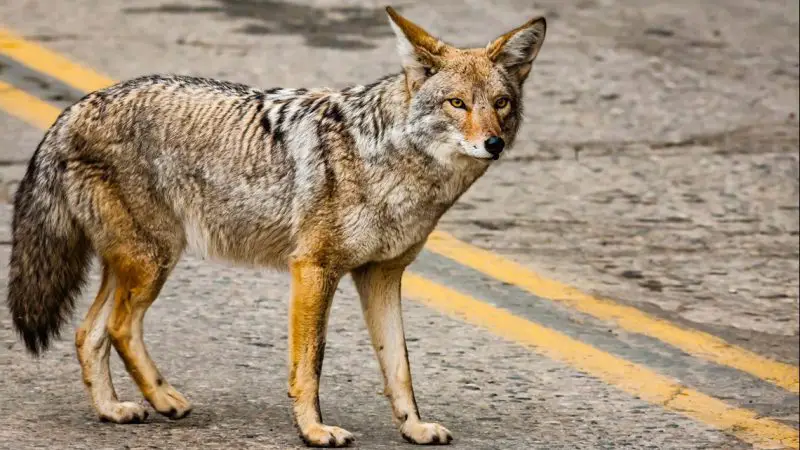
Coyotes are now a familiar part of Missouri’s wildlife landscape. Once limited mostly to western plains, they have expanded across forests, farmland, suburbs, and even urban edges. Their adaptability often brings them close to people and domestic animals, which raises a persistent question among homeowners, hunters, and wildlife observers alike. Can coyotes breed with domestic dogs?
The short answer is yes, but it is uncommon in the wild. Hybrid offspring, sometimes called “coydogs,” do exist, yet their occurrence depends heavily on environmental pressures, breeding timing, and animal behavior. Understanding how and why hybridization happens helps clarify both ecological realities and public concerns.
Missouri provides an interesting case study because its mix of rural farmland, wooded terrain, suburban expansion, and active wildlife populations creates conditions where occasional interactions between coyotes and domestic dogs can occur. Still, biology, behavior, and seasonal cycles place natural limits on how often such crossings actually happen.
What to Know About Coyotes in Missouri

Coyotes are highly adaptable canids that have successfully spread throughout North America. In Missouri they inhabit agricultural regions, river valleys, forests, and suburban fringes. Their ability to adjust diet, territory, and activity patterns allows them to coexist alongside human development.
They are primarily opportunistic omnivores. Small mammals, insects, fruits, carrion, and occasionally livestock or pets may become part of their diet. This flexibility supports population stability even when environmental conditions fluctuate.
Coyotes are also socially adaptable. Some live in family groups, while others roam alone or in pairs. Their territorial nature generally keeps populations dispersed, which indirectly reduces frequent contact with domestic dogs except near human settlements.
The Biology of Coyote and Dog Hybridization
Coyotes and domestic dogs belong to the same biological genus, Canis. This close genetic relationship means interbreeding is biologically possible. Wolves, dogs, and coyotes can all produce viable hybrid offspring under certain conditions.
However, reproductive timing presents a natural barrier. Coyotes breed seasonally, usually in late winter, with females entering estrus only once per year. Domestic dogs, by contrast, may breed twice annually depending on breed and individual health.
This mismatch in reproductive cycles reduces opportunities for mating. Even when dogs and coyotes share territory, synchronized fertility periods must align for hybridization to occur.
Behavioral differences also matter. Coyotes are cautious and often avoid unfamiliar animals, especially those associated with human scent. Domestic dogs may lack these survival instincts, which further limits frequent interaction.
Why Hybridization Happens Occasionally
Hybridization typically occurs under specific circumstances rather than randomly. These situations often involve environmental disruption, isolation, or human influence.
One scenario involves free-ranging or feral dogs in rural areas. Without supervision, they may encounter coyotes during breeding season. Another involves lone coyotes lacking available mates, which may push them to seek alternative partners.
Habitat overlap due to suburban expansion also plays a role. As neighborhoods expand into wildlife corridors, interactions become more possible, although still relatively rare.
In Missouri, where agricultural lands blend with wooded habitats, such overlaps occasionally create opportunities for contact, but most encounters do not result in breeding.
Identifying Possible Coydog Hybrids
Hybrid animals often show mixed characteristics, though appearance alone can be misleading. Some domestic dogs naturally resemble coyotes, while some coyotes show individual variation.
Possible indicators include intermediate body size, unusual coat coloration, altered ear shape, or behavioral traits that combine coyote caution with dog-like boldness.
However, definitive identification usually requires genetic testing. Visual assessment alone cannot reliably confirm hybrid status, which is why verified coydog cases remain limited.
Wildlife agencies often rely on DNA analysis when hybridization becomes a management concern.
Behavioral Traits of Coydog Hybrids
When hybrids do occur, their behavior can vary widely. Some retain strong wild instincts similar to coyotes. Others show reduced fear of humans, influenced by domestic dog genetics.
This unpredictability makes them difficult to categorize. They may be more curious than coyotes yet more cautious than typical dogs.
In Missouri landscapes where wildlife already adapts to human presence, such behavioral blending can create public uncertainty about whether an animal is wild or domestic.
Still, most observed animals labeled as hybrids turn out to be pure coyotes or free-ranging dogs upon closer study.
Seasonal Breeding Patterns in Missouri
Missouri’s climate influences coyote breeding cycles. Late winter mating aligns pup births with spring food availability. This timing supports pup survival during warmer months when prey is abundant.
Domestic dogs, however, do not follow strict seasonal breeding. This difference further reduces consistent opportunities for hybridization.
Occasional overlap can happen, particularly when unneutered dogs roam freely. Even then, successful mating requires proximity, compatibility, and absence of normal coyote social structure.
Coyotes typically form breeding pairs, and established mates discourage outside interactions.
Human Influence on Hybridization Risk
Human behavior plays a major role in determining whether hybridization becomes more likely.
Uncontrolled outdoor dogs increase potential contact. Feeding wildlife or leaving food waste accessible can attract coyotes closer to residential areas. Habitat fragmentation may also compress wildlife territories.
Responsible pet management, including neutering and supervision, greatly reduces opportunities for crossbreeding.
Missouri wildlife officials frequently emphasize prevention through responsible pet ownership rather than reactive wildlife control.
Ecological Impact of Hybridization
Occasional hybridization generally does not significantly alter ecosystems. Coyotes remain dominant as a species, and hybrid animals rarely form large stable populations.
Some research suggests hybrids may display altered hunting patterns or territorial behavior, but these effects tend to be localized rather than widespread.
Missouri ecosystems continue to function largely unchanged despite rare hybrid occurrences. Coyotes maintain their ecological role as mid-sized predators regulating rodent populations and carrion cleanup.
Public Perception Versus Reality
Stories about coydogs often circulate widely. Sightings of unusually colored coyotes or large feral dogs can fuel speculation.
Media attention sometimes exaggerates the frequency of hybridization. Scientific evidence consistently indicates such events remain uncommon.
Understanding this distinction helps reduce unnecessary fear while encouraging informed wildlife coexistence.
Education remains one of the most effective tools for addressing misconceptions.
Differences Between Coyotes, Dogs, and Hybrids
Coyotes generally have slimmer builds, narrower muzzles, bushier tails held low, and cautious behavior. Domestic dogs display wide variation depending on breed.
Hybrids may show intermediate physical traits but often cannot be distinguished reliably without testing.
Behavioral cues sometimes provide hints. Coyotes tend to avoid direct human interaction, while dogs may approach more readily. Hybrids can fall anywhere between those tendencies.
This variability underscores why professional wildlife assessment matters before drawing conclusions.
Rural Versus Urban Missouri Contexts
Hybridization likelihood differs between rural and urban settings.
Rural areas with free-ranging farm dogs present higher theoretical risk. However, established coyote territories still limit encounters.
Urban and suburban environments generally see fewer hybrid cases because pets are more closely managed. Coyotes in cities often remain wary despite proximity to humans.
Missouri’s diverse landscapes create varied interaction patterns, but overall hybrid frequency remains low statewide.
Wildlife Management Perspective
Missouri wildlife authorities monitor coyote populations primarily for ecological balance rather than hybrid concerns.
Hybridization becomes relevant mainly when behavior changes raise safety or livestock concerns. Even then, targeted management focuses on individual animals rather than species-level intervention.
Scientific monitoring helps ensure accurate understanding without unnecessary alarm.
Most management efforts prioritize habitat balance, public education, and responsible pet ownership.
Genetic Studies and Findings
Genetic research across North America shows limited dog ancestry in most coyote populations. Occasional introgression occurs but rarely dominates gene pools.
This suggests hybrid offspring typically integrate back into coyote populations without dramatically altering species identity.
Missouri-specific data align with broader regional findings. Hybridization exists but remains sporadic rather than common.
Long-term studies continue to monitor trends as urban expansion changes wildlife habitats.
Safety Considerations for Pet Owners
Hybridization concerns often intersect with pet safety questions. While breeding is rare, encounters between coyotes and pets can occur.
Keeping dogs supervised, especially at night, reduces risk. Secure fencing and removal of attractants like food scraps help discourage wildlife visits.
Neutering pets also minimizes breeding opportunities and reduces roaming behavior.
These steps protect both pets and wildlife while maintaining healthy boundaries.
Coexistence Strategies in Missouri
Living alongside coyotes requires awareness rather than fear.
Maintaining clean outdoor spaces, securing garbage, supervising pets, and avoiding intentional feeding help keep interactions minimal.
Coyotes play beneficial ecological roles, including rodent control and carrion removal. Balanced coexistence supports ecosystem health.
Understanding hybridization realities helps communities respond calmly and responsibly.
FAQs About Coyotes Breeding With Domestic Dogs in Missouri
Do coyotes and domestic dogs actually breed in Missouri?
Yes, it can happen, but it is rare. Biological compatibility exists, yet seasonal breeding differences and natural behavior limit frequent hybridization.
What is a coydog?
A coydog is a hybrid offspring resulting from breeding between a coyote and a domestic dog. Verified cases exist but are uncommon.
Are coydog hybrids dangerous?
Behavior varies widely. Most do not pose unusual danger, but unpredictable behavior means caution and professional wildlife evaluation are advisable.
How can you tell if an animal is a coydog?
Physical traits alone are unreliable. DNA testing is typically required for accurate identification.
Does hybridization affect Missouri ecosystems?
Current evidence suggests minimal ecological impact. Coyotes continue fulfilling their ecological roles effectively.
Are rural areas more likely to see hybrids?
Potentially yes, especially where free-ranging dogs are present. Still, confirmed cases remain limited.
Do coyotes prefer dogs as mates?
No. Coyotes typically form pair bonds with other coyotes. Hybridization usually occurs only when normal pairing opportunities are limited.
Can hybrid populations grow over time?
So far, evidence suggests hybrids usually integrate back into coyote populations rather than forming separate expanding groups.
Should pet owners worry about coyotes breeding with their dogs?
Supervised, neutered pets face very low risk. Responsible ownership largely prevents such situations.
Who should be contacted if a hybrid is suspected?
Local wildlife agencies or conservation departments can assess sightings and determine appropriate response.
Final Thoughts
Coyotes in Missouri occasionally interbreed with domestic dogs, but the event remains uncommon. Biological compatibility exists, yet seasonal breeding cycles, natural caution, and established social behavior limit frequent hybridization. Most coyotes continue to live, hunt, and reproduce entirely within their own species.
Understanding the science behind these interactions helps separate fact from rumor. Responsible pet ownership, habitat awareness, and realistic expectations allow people and wildlife to coexist more smoothly.
In the broader ecological picture, coyotes remain an important part of Missouri’s natural systems. Occasional hybrids do not change that reality. Education, prevention, and balanced perspective continue to be the most effective tools for living alongside this adaptable native predator.