
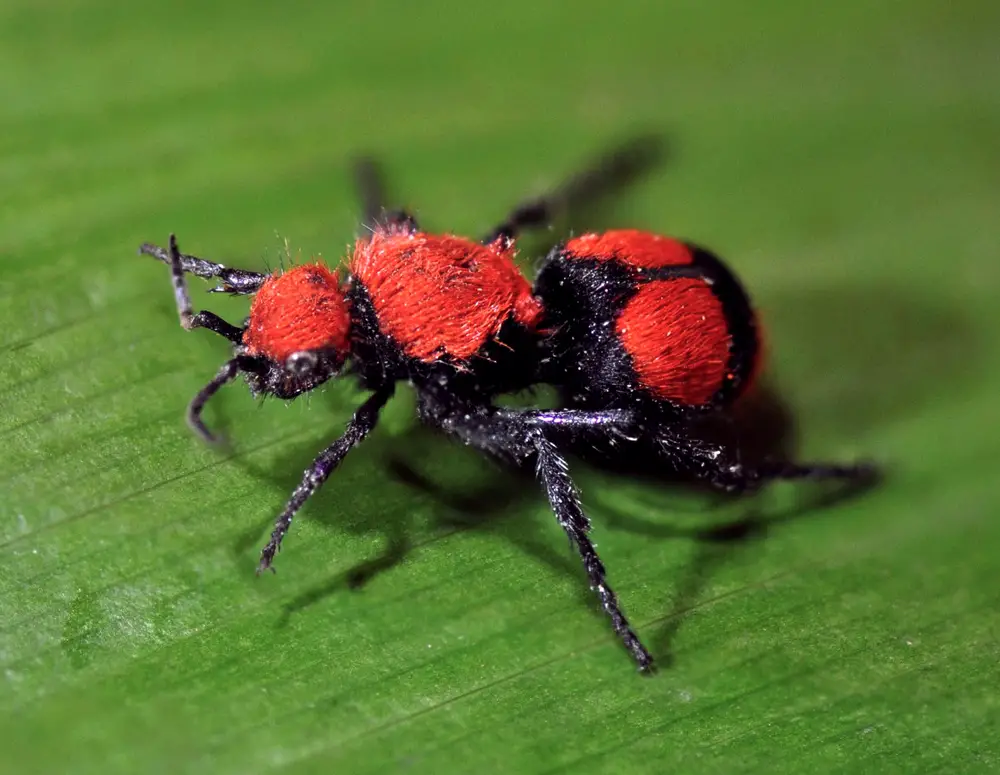
Velvet ants occasionally surprise South Carolina residents with their bright colors, fuzzy appearance, and shockingly painful sting. Despite their name, they are not ants at all but a type of solitary wasp. Their striking red, orange, or black velvet-like bodies make them easy to notice, especially during warm months when outdoor activity increases.
Encounters usually happen suddenly. A velvet ant may be spotted crossing a sidewalk, moving through sandy soil, or wandering across patios and yards. They do not seek conflict, yet accidental contact can lead to one of the most painful insect stings reported in the region. This combination of rarity, vivid appearance, and intense sting explains why they generate so much concern.
Understanding why velvet ants appear in South Carolina, what makes their sting so painful, and how to avoid negative encounters helps reduce fear while encouraging safe coexistence with native wildlife.
What Exactly Is a Velvet Ant

Velvet ants are not true ants despite their name. They belong to the insect family Mutillidae, a group of solitary parasitic wasps found across warm regions of North America. Their ant-like appearance comes mainly from the wingless females, whose fuzzy bodies and segmented shape easily mislead observers. In South Carolina, the species most people notice is often nicknamed the “cow killer.” The dramatic name refers only to the intense sting pain, not any real threat to livestock or humans.
Female velvet ants lack wings and spend most of their time walking across the ground in search of host nests. Their dense, velvety hair can appear bright red, orange, white, or black depending on the species. These colors serve as warning signals to predators. Males look quite different. They have wings, fly actively, and cannot sting because only females possess a functional stinger. This difference often adds to identification confusion.
Unlike ants, bees, or social wasps, velvet ants live completely solitary lives. They do not build large nests, defend colonies, or swarm when threatened. Each individual operates independently, searching for food or suitable host nests. Because of this solitary lifestyle, most sightings involve just one insect wandering through an area rather than a developing infestation.
Where Velvet Ants Are Found in South Carolina
South Carolina provides ideal habitat for velvet ants due to its warm climate, varied ecosystems, and widespread sandy soils. These insects favor environments where ground-nesting bees and wasps are common, because those nests support their reproductive cycle.
They are frequently observed in coastal plains where sandy soil dominates. Open woodlands, grasslands, and lightly vegetated areas also support healthy populations. Suburban gardens, lawns, and landscaped yards sometimes attract them as well, especially when native flowering plants are present.
Public parks, hiking trails, beaches, and outdoor recreation areas often produce sightings during warm months. These locations combine open ground, sunlight, and active insect communities. Most encounters occur between late spring and early fall, when temperatures remain consistently warm and insect activity peaks.
Rather than signaling a pest outbreak, velvet ant presence often indicates a functioning local ecosystem. Their survival depends on other insect populations, making them part of the broader environmental balance.
Why Their Sting Hurts So Much
Velvet ant stings have a reputation for extreme pain. Entomologists who study insect venom frequently rank them among the most painful stings in North America. The intensity usually surprises people because the insect itself is relatively small.
One factor is the size and strength of the stinger. Compared to body size, the stinger is relatively long and capable of penetrating skin effectively. When threatened, the female delivers the sting with noticeable force.
Venom chemistry also contributes. The venom contains compounds that stimulate nerve endings intensely, producing sharp, immediate pain. Many people describe the sensation as burning, electric, or similar to a sudden shock. The discomfort can feel dramatic even though the venom rarely causes serious harm.
For most individuals, symptoms remain localized. Pain may last from several minutes to a few hours, followed by mild redness or swelling. Severe reactions are uncommon unless an individual has a specific allergy to insect venom.
The Purpose of Such a Powerful Sting
Velvet ants use their sting almost exclusively for defense. Unlike hunting wasps that paralyze prey, velvet ants rely on parasitic reproduction rather than active predation.
Because females cannot fly, they are more vulnerable to predators such as birds, reptiles, or small mammals. Bright coloration acts as an initial warning signal. If a predator ignores that warning, the sting provides a strong deterrent.
Animals that experience the sting typically learn quickly to avoid these insects. This learning process helps velvet ants survive without needing colony protection or group defense strategies.
Their defensive sting is therefore an evolutionary adaptation that compensates for solitary behavior and limited mobility.
Typical Behavior Around Homes
Velvet ants rarely enter houses intentionally. Most sightings occur outdoors where they search for host nests or nectar sources. When they do appear near homes, it is usually because the surrounding landscape provides suitable habitat.
They often wander across patios, sidewalks, or driveways warmed by sunlight. Garden beds, mulched landscaping areas, and sandy pathways also attract them. These locations often harbor ground-nesting bees and wasps, which serve as reproductive hosts.
Their movements may seem random, but they are typically following scent cues or searching for nesting opportunities. They are not attracted to food scraps, garbage, or indoor humidity like many common household pests.
Because they are solitary, finding one does not mean more are nearby.
Life Cycle and Ecological Role
Velvet ants are parasitic wasps with a specialized reproductive strategy. The female locates the underground nest of a solitary bee or wasp and deposits an egg inside. The developing larva consumes resources within that nest, eventually emerging as an adult.
While this process may sound harsh, it helps regulate populations of ground-nesting insects. Natural population control contributes to ecological balance, preventing any single species from dominating an area.
Adult velvet ants feed primarily on nectar. During this phase they may visit flowers and contribute modestly to pollination. Although they are not major pollinators, their activity supports biodiversity.
Overall, velvet ants play a small but beneficial ecological role, balancing insect populations while participating in pollination networks.
Why Encounters Increase in Summer
Summer in South Carolina brings peak insect activity. Warm soil temperatures encourage ground-nesting bees and wasps, which in turn attract velvet ants searching for reproductive hosts.
Dry sandy soil conditions make it easier for velvet ants to move and locate nests. Landscaping practices such as mulching, flower planting, or maintaining open sunny areas can inadvertently create suitable habitat.
Human outdoor activity also increases during summer. Gardening, hiking, beach visits, and backyard recreation raise the likelihood of accidental encounters.
Most summer sightings reflect seasonal behavior rather than sudden population increases.
Are Velvet Ants Dangerous to Humans
Despite their painful sting, velvet ants are considered medically low risk. They do not seek confrontation and typically sting only when handled, stepped on, or trapped against skin.
Common reactions include intense temporary pain, localized swelling, and mild redness. Symptoms usually resolve without medical intervention.
Severe allergic reactions remain possible but rare. Individuals with known insect venom allergies should take general outdoor precautions, including carrying appropriate medication if recommended by healthcare professionals.
For most people, velvet ants are startling rather than truly dangerous.
Comparing Velvet Ant Stings to Other Insects
Pain perception varies widely between individuals, but comparisons often include paper wasp stings, hornet stings, or fire ant bites. The velvet ant sting is notable for its immediate sharp intensity.
Unlike social wasps or bees, velvet ants do not defend nests collectively. Multiple stings are unlikely unless the insect is repeatedly handled.
Avoidance remains the most effective protection. Simply observing from a distance prevents nearly all negative encounters.
Why They Are Often Misidentified
Velvet ants are frequently mistaken for true ants because of their wingless form and segmented appearance. Others confuse them with spiders, beetles, or unfamiliar exotic insects.
Their bright coloration sometimes leads people to assume they are invasive species. In reality, most velvet ants in South Carolina are native and part of local ecosystems.
Misidentification can create unnecessary concern. Learning to recognize their distinctive fuzzy body and solitary behavior helps reduce accidental contact.
Accurate identification also supports more informed wildlife awareness.
Prevention Tips for South Carolina Residents
Prevention focuses on awareness rather than elimination. Velvet ants are not structural pests, so control measures are rarely necessary.
Wearing closed-toe shoes outdoors reduces risk, particularly on sandy soil. Gloves provide protection when gardening or landscaping. Avoiding direct contact with unfamiliar insects is always advisable.
Maintaining yards without excessive debris can reduce host insect nesting areas, though complete removal is neither practical nor environmentally desirable.
Respectful distance usually provides sufficient safety.
What to Do If Stung
If stung, remain calm. Pain can feel intense but typically fades gradually.
Wash the area gently with soap and water. Applying a cold compress helps reduce swelling and discomfort. Over-the-counter pain relief may help if needed.
Monitor for signs of allergic reaction such as difficulty breathing, widespread swelling, or dizziness. Seek medical attention promptly if such symptoms occur.
Most people recover fully without complications.
Myths About Velvet Ants in South Carolina
The nickname “cow killer” has fueled exaggerated fears. While the sting is painful, it does not pose serious danger to large animals or humans.
Another myth suggests infestations are common. Velvet ants remain solitary insects that do not form colonies.
Some people believe they attack humans intentionally. In reality, stings occur almost exclusively when the insect is accidentally disturbed or handled.
Correcting misconceptions helps promote calm, informed responses.
Why Outdoor Awareness Matters
South Carolina’s climate supports year-round outdoor activity. Understanding local insects helps residents enjoy nature safely.
Gardening, hiking, camping, and beach recreation all benefit from basic awareness of native wildlife. Recognizing velvet ants reduces unnecessary alarm and prevents accidental contact.
Education encourages coexistence rather than fear. Awareness often prevents incidents more effectively than chemical control.
Knowledge builds confidence outdoors.
Wildlife Value Beyond the Sting
Velvet ants contribute quietly to biodiversity. Their parasitic role helps balance insect populations, preventing unchecked growth of certain species.
Adult nectar feeding supports pollination networks. Although minor contributors compared with bees, their role still adds ecological value.
They also serve as prey for specialized predators that tolerate their defenses.
Each species plays a part in maintaining ecological balance, even those with intimidating reputations.
Seasonal Safety Advice
During warmer months, simple precautions make a big difference. Wearing shoes outdoors reduces accidental contact. Checking seating areas before sitting prevents unexpected encounters.
Teaching children not to handle unfamiliar insects builds long-term awareness. Pets should also be supervised in areas where ground insects are active.
These steps require minimal effort yet significantly lower sting risk. Awareness remains the most effective prevention strategy.
Outdoor enjoyment and wildlife safety can easily coexist.
FAQs About South Carolina Velvet Ants
Are velvet ants common in South Carolina?
They are regularly present but not abundant. Most people see them only occasionally during warm seasons.
Do all velvet ants sting?
Only females sting. Males have wings but lack a functional stinger.
How painful is the sting really?
It is often described as extremely painful but short-lived. Serious complications are rare.
Can they infest homes?
No. They are solitary outdoor insects and rarely enter buildings intentionally.
Are they aggressive?
Not at all. They sting mainly when handled or accidentally stepped on.
Do they damage gardens?
They generally do not harm plants. Their larvae develop in other insect nests rather than vegetation.
Should they be exterminated?
Usually unnecessary. They provide ecological benefits and pose minimal risk if left undisturbed.
What attracts them to yards?
Sandy soil, flowering plants, and presence of ground-nesting bees or wasps.
How long does sting pain last?
Severe pain may last minutes to hours, with mild irritation sometimes lingering longer.
Are children or pets at higher risk?
Curiosity can increase risk, so supervision and awareness help prevent accidental contact.
Final Thoughts
Velvet ants in South Carolina are striking insects whose painful sting has earned them an outsized reputation. While encounters can be startling, these solitary wasps are not aggressive pests and rarely cause serious harm. Their presence often reflects healthy outdoor ecosystems rather than infestation problems.
Understanding their behavior, habitat preferences, and defensive nature helps residents respond calmly. Awareness, proper footwear, and simple outdoor precautions usually prevent negative encounters entirely.
In the broader ecological picture, velvet ants remain a small but fascinating part of South Carolina’s wildlife community. Respecting their space while appreciating their role allows people and native species to coexist safely and comfortably.