
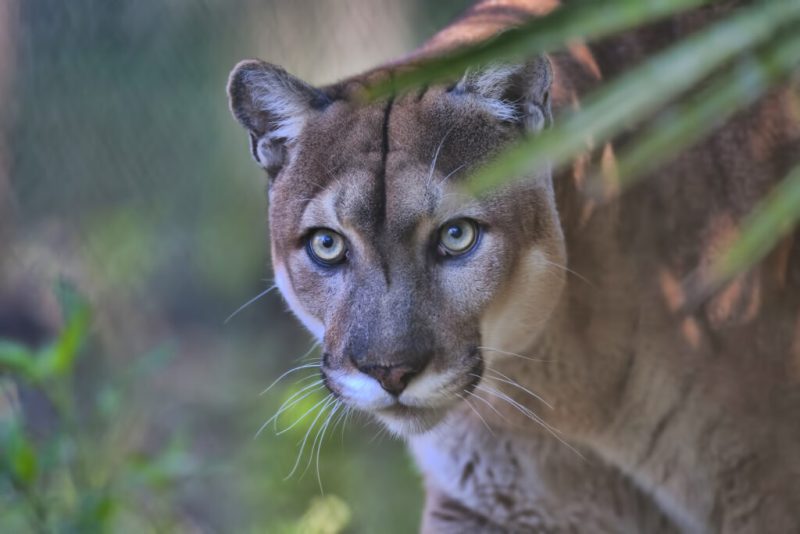
The idea sounds dramatic at first. A rare wild panther crossing paths with a neighborhood cat, producing some mysterious hybrid roaming Florida backyards. Stories like this circulate often, especially in regions where wildlife overlaps with suburban development. Curiosity, concern, and sometimes misinformation keep the question alive.
Florida panthers are already surrounded by myth. They are elusive, rarely seen, and protected due to their endangered status. Domestic cats, on the other hand, are everywhere. The contrast between these two animals naturally sparks speculation about what might happen if their paths cross.
Biologically, ecologically, and behaviorally, the answer becomes clearer once we look closely at the science behind big cats, domestic cats, and how wildlife actually behaves in Florida.
Understanding What a Florida Panther Really Is

The Florida panther is not a separate species from other mountain lions. It is a regional population of Puma concolor, the same species known elsewhere as cougars, pumas, or mountain lions. Historically, these cats ranged across much of the southeastern United States, but habitat loss drastically reduced their numbers.
Today, most Florida panthers live in southwestern Florida, particularly in protected areas, forests, swamps, and wildlife corridors. Conservation programs have helped stabilize the population somewhat, but they remain rare compared with many other North American mammals.
Their survival depends heavily on habitat protection, prey availability, and minimizing human conflict.
Domestic Cats Belong to a Different Branch of the Cat Family
Domestic cats, Felis catus, come from a completely different evolutionary lineage than mountain lions. They belong to the small cat group, which includes animals like wildcats, lynxes, and ocelots. Panthers belong to the big cat lineage, even though mountain lions technically lack the ability to roar like lions or tigers.
This evolutionary separation matters when discussing hybridization. Species that diverged millions of years ago generally cannot interbreed successfully, even if they look somewhat similar.
The genetic distance between domestic cats and Florida panthers is substantial.
Biological Compatibility Is Extremely Unlikely
Successful breeding requires compatible genetics, reproductive behavior, and physical compatibility. Domestic cats and panthers differ dramatically in body size, reproductive cycles, chromosome arrangement, and courtship behavior.
Florida panthers weigh anywhere from 70 to over 150 pounds. Domestic cats usually weigh under 15 pounds. Physical compatibility alone makes mating extraordinarily unlikely.
Genetic compatibility presents an even larger barrier. There is no verified scientific evidence that Florida panthers have ever bred successfully with domestic cats.
Size Difference Alone Creates a Barrier
Even in species capable of hybridization, similar body size usually plays a role. Lions can hybridize with tigers because they are comparable in size. Domestic cats simply do not match the scale of panthers.
The physical risk to a domestic cat in an encounter with a panther is significant. Panthers are predators. They are far more likely to view small animals as prey than potential mates.
This ecological reality strongly limits any theoretical interaction.
Behavioral Differences Reduce Interaction
Florida panthers are solitary and highly territorial. They avoid humans whenever possible and typically roam large territories that can span dozens or even hundreds of square miles.
Domestic cats usually stay close to human habitation. Even outdoor cats rarely range as widely as wild panthers.
The overlap between these two lifestyles is limited, reducing opportunities for direct encounters.
Predatory Instinct Overrides Reproductive Behavior
Wild predators respond to smaller animals primarily as potential prey. Panthers hunt deer, feral hogs, raccoons, rabbits, and other wildlife. A domestic cat fits the size profile of prey rather than partner.
Wildlife camera footage occasionally shows large predators investigating smaller animals cautiously, but these interactions rarely suggest mating interest.
Nature prioritizes survival first.
Hybrid Big Cats Do Exist, But Not Like This
Some big cat hybrids exist in captivity, such as ligers or tigons, produced through human intervention. These animals require closely related species and controlled breeding environments.
There is no documented equivalent involving domestic cats and mountain lions. The genetic gap is simply too wide.
Hybridization within the cat family usually occurs among closely related species, not across major evolutionary branches.
Why People Still Ask the Question
The question persists because wildlife encounters in Florida have increased. Urban expansion pushes development into natural habitats. Outdoor pets sometimes disappear. When a rare predator lives nearby, speculation naturally follows.
Stories spread quickly, especially online. Photos, rumors, and anecdotal reports can blur the line between possibility and reality.
Curiosity keeps the topic alive.
Florida Panthers Rarely Approach Homes Intentionally
Panthers avoid humans whenever possible. Encounters near neighborhoods usually happen when animals travel through habitat corridors or search for prey.
Most sightings occur at night or in remote areas. Daytime sightings near homes attract attention because they are unusual.
Wildlife agencies emphasize coexistence strategies rather than fear.
Outdoor Cats Face Risks From Many Predators
Even without panthers, outdoor cats in Florida face risks from coyotes, bobcats, large birds of prey, snakes, and vehicle traffic. Panthers are only one potential hazard among many.
Keeping cats indoors or supervised significantly reduces these risks.
Veterinarians often recommend indoor lifestyles for safety and health.
Conservation Concerns Take Priority
Florida panthers remain endangered. Wildlife biologists focus on protecting genetic diversity within the panther population itself, not hybridization with unrelated species.
Past conservation efforts even introduced Texas cougars decades ago to increase genetic diversity among Florida panthers. That program involved closely related populations, not domestic animals.
Protecting habitat remains the most critical priority.
Disease Transmission Is a More Realistic Concern
While breeding is extremely unlikely, disease transmission between domestic cats and wild felines can occur indirectly. Pathogens like feline leukemia virus, feline immunodeficiency virus, and parasites can move between populations through shared environments.
This concern motivates recommendations for responsible pet ownership near wildlife habitats.
Vaccination and veterinary care help reduce risk.
Habitat Fragmentation Drives Encounters
Florida’s rapid development fragments wildlife habitat. Panthers must cross roads, pass through suburban areas, and navigate human infrastructure to maintain territories.
This increases visibility but does not increase breeding compatibility with domestic cats.
Understanding habitat pressures clarifies why sightings occur.
The Role of Wildlife Corridors
Conservation groups work to maintain wildlife corridors that allow panthers safe movement between habitats. These corridors reduce human-wildlife conflict and improve genetic diversity among panthers.
Better habitat connectivity decreases the chance of unusual encounters near homes.
Long-term conservation depends on these strategies.
Why Rumors Spread Faster Than Science
Wildlife stories often contain elements of mystery. Rare animals invite speculation. When evidence is limited, imagination fills the gap.
Social media accelerates rumor spread. A single dramatic claim can reach thousands before experts respond.
Scientific confirmation requires time, data, and verification.
Genetic Testing Would Reveal Hybridization Quickly
Modern wildlife genetics is highly advanced. If a panther-domestic cat hybrid existed, DNA analysis would identify it quickly.
Wildlife agencies regularly collect genetic samples from panthers for conservation monitoring. No evidence of hybridization with domestic cats has emerged.
Data strongly supports the conclusion.
Historical Records Show No Verified Cases
Despite decades of observation, research, and conservation monitoring, there are no confirmed reports of Florida panthers breeding with domestic cats.
This absence of evidence matters, especially given how closely the species are monitored.
Scientific silence here is meaningful.
Ethical Wildlife Interaction Matters
Allowing domestic cats to roam freely near sensitive wildlife habitats creates ecological impacts beyond predation risk. Cats can affect bird populations, small mammals, and reptiles.
Responsible pet management benefits both wildlife conservation and pet safety.
Balanced coexistence supports ecosystem health.
Understanding Fear Versus Reality
Large predators inspire strong emotions. Fear, fascination, and curiosity mix together. Questions about breeding often reflect broader concerns about safety and environmental change.
Clear information helps replace uncertainty with understanding.
Knowledge reduces unnecessary alarm.
What Experts Consistently Say
Wildlife biologists, veterinarians, and conservation scientists consistently agree on three points. Florida panthers do not breed with domestic cats. Encounters are rare. Responsible pet ownership reduces risks for both animals.
Consensus across disciplines strengthens confidence in the answer.
Practical Advice for Pet Owners Near Panther Habitat
Keeping cats indoors at night, supervising outdoor time, maintaining vaccinations, and securing food sources help minimize wildlife interactions.
Simple precautions go a long way.
Most conflicts are preventable.
Ecological Importance of Florida Panthers
Panthers play a critical role as apex predators. They help regulate prey populations, maintain ecosystem balance, and support biodiversity.
Protecting them benefits broader environmental health.
Conservation success depends on public awareness.
Why Curiosity About Hybridization Will Continue
People naturally wonder about unusual biological possibilities. Hybrid animals fascinate us because they challenge expectations.
Even when science provides clear answers, curiosity persists.
Continued education helps keep that curiosity grounded in evidence.
FAQs About Florida Panthers and Domestic Cats
Can Florida panthers breed with domestic cats
No. There is no scientific evidence that Florida panthers have ever bred with domestic cats, and biological differences make it extremely unlikely.
Are domestic cats at risk from Florida panthers
Yes, although encounters are rare. Panthers may view small animals, including cats, as potential prey rather than mates.
Where do Florida panthers usually live
Most live in southwestern Florida in protected forests, swamps, and wildlife corridors away from dense urban areas.
Why do people think panthers breed with house cats
Rumors often arise from disappearing outdoor pets, wildlife sightings, or misunderstanding of how closely related species can hybridize.
Could genetics confirm a hybrid if it existed
Yes. Wildlife biologists regularly use DNA testing, and any hybrid would likely be identified quickly through monitoring programs.
Do outdoor cats increase wildlife risks
Yes. Outdoor cats can encounter predators, spread diseases to wildlife, and impact local ecosystems.
Are Florida panthers dangerous to humans
Attacks are extremely rare. Panthers generally avoid people and prefer natural prey.
How can pet owners reduce wildlife conflict
Keeping cats indoors at night, supervising outdoor time, maintaining vaccinations, and securing food sources help reduce risk.
Why are Florida panthers protected
They are endangered due to habitat loss, road mortality, and historically low population numbers, making conservation critical.
What is the biggest concern for panther conservation
Habitat preservation, wildlife corridors, genetic diversity, and reducing human conflict remain top priorities.
Final Thoughts
Florida panthers and domestic cats occupy very different biological worlds. Their genetic distance, size difference, behavioral patterns, and ecological roles make successful breeding extraordinarily unlikely. There is no scientific evidence that such hybridization has ever occurred.
Encounters between wild panthers and domestic cats, while rare, are far more likely to involve predation risk than reproductive interaction. Responsible pet ownership, habitat conservation, and public education remain the best ways to support both wildlife protection and pet safety.
Understanding the science behind these animals replaces speculation with clarity. And in Florida’s unique landscape, that clarity helps both people and wildlife coexist more safely.