
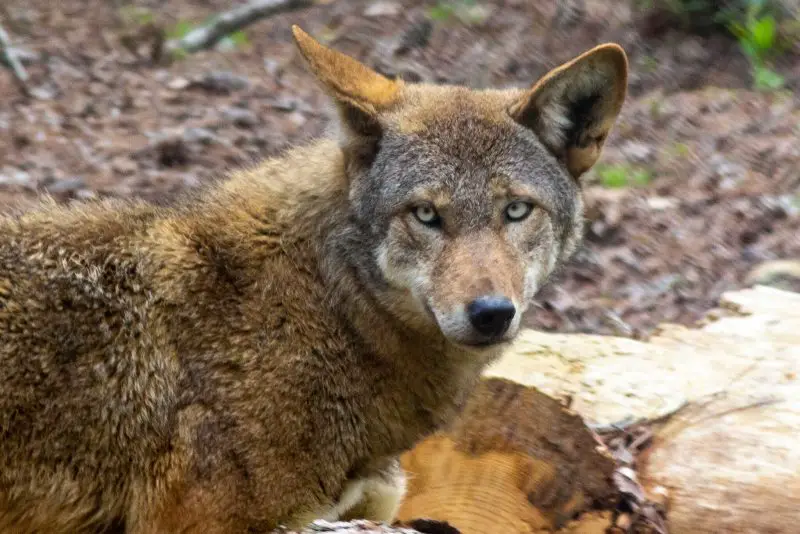
The question comes up often among wildlife enthusiasts, conservationists, and residents living near wild habitats. Red wolves are rare, coyotes are widespread, and both can sometimes occupy overlapping landscapes. That overlap naturally raises curiosity. Could these animals interbreed? And if so, what does it mean for conservation?
In North Carolina, where the last remaining wild population of red wolves survives, this question is not just theoretical. It directly affects wildlife policy, ecosystem balance, and the future of one of North America’s most endangered predators.
Understanding whether red wolves can breed with coyotes requires looking at genetics, behavior, conservation history, and the ecological pressures shaping both species today.
Understanding the Red Wolf

The red wolf is one of the rarest canids in the world. Smaller than the gray wolf but larger than most coyotes, it historically roamed across the southeastern United States. Habitat loss, hunting, and hybridization pressure reduced populations drastically during the twentieth century.
By the 1980s, red wolves were declared extinct in the wild. A captive breeding program preserved a small genetic population, and reintroduction efforts began in eastern North Carolina.
Today, that region remains the only place where wild red wolves still exist.
Their survival is fragile, and hybridization concerns play a major role in management strategies.
Coyotes: Highly Adaptable Survivors
Coyotes have expanded dramatically across North America. Originally concentrated in western regions, they adapted to farmland, forests, suburbs, and even urban environments. Their flexibility, diet diversity, and tolerance for human-modified landscapes have allowed them to thrive where other predators declined.
In North Carolina, coyotes are now well established. Their presence overlaps with red wolf recovery areas, creating opportunities for interaction.
This overlap drives the core question about interbreeding.
Biological Possibility of Hybridization
Unlike domestic cats and large wild cats, red wolves and coyotes are closely related species within the genus Canis. That genetic proximity makes hybridization biologically possible.
In fact, scientific studies confirm that red wolves and coyotes can produce fertile offspring. This is not speculation. Genetic evidence demonstrates hybrid individuals have existed in the wild.
However, biological possibility does not mean it happens constantly. Behavioral and ecological factors strongly influence how often hybridization occurs.
Why Hybridization Happens
Hybridization typically increases when populations of one species decline. When red wolves became rare, finding a mate of the same species became more difficult. Coyotes, being more numerous, sometimes filled that gap.
This phenomenon is known as “genetic swamping,” where a rare species risks losing its genetic identity through repeated hybridization with a more common relative.
Conservationists consider this one of the biggest threats to red wolf survival.
Conservation Management Efforts
Wildlife agencies actively monitor red wolf populations to prevent excessive hybridization. Strategies include tracking wolves with radio collars, sterilizing coyotes in key territories, and managing habitats to encourage red wolf pair bonding.
These efforts aim to maintain genetically pure red wolf lineages while still allowing natural ecosystem dynamics.
It is a delicate balance between intervention and natural processes.
Differences in Behavior That Reduce Hybridization
Despite genetic compatibility, red wolves and coyotes behave differently in ways that reduce frequent breeding.
Red wolves form strong, monogamous pair bonds. Once paired, they typically remain together for life unless one dies. Coyotes can also form pair bonds, but their social flexibility is greater.
Territorial behavior also matters. Established red wolf territories discourage coyote intrusion. Where stable wolf populations exist, hybridization rates tend to decrease.
Physical Differences Between Red Wolves and Coyotes
Red wolves are generally larger, with longer legs, broader heads, and reddish-brown fur tones. Coyotes tend to be smaller, with narrower faces and grayer coloration.
These physical differences influence dominance interactions. Wolves often dominate coyotes in direct encounters, though coyotes’ adaptability allows them to coexist in fragmented habitats.
Visual differences help researchers identify potential hybrids in the field.
Genetic Testing in Conservation Work
Modern conservation relies heavily on DNA analysis. Genetic testing identifies pure red wolves, coyotes, and hybrids with high accuracy.
This information guides breeding programs, relocation decisions, and long-term conservation planning.
Without genetic monitoring, distinguishing between species would be much harder, especially as hybridization blurs physical traits.
Ecological Consequences of Hybridization
Hybridization has complex ecological effects. Some hybrids may function similarly to red wolves in controlling prey populations, while others behave more like coyotes.
Predator-prey dynamics can shift subtly, affecting deer populations, small mammals, and overall ecosystem balance.
Conservationists focus not only on species preservation but also on maintaining ecological roles.
Public Perception and Misunderstanding
Many people assume hybridization means species are disappearing entirely. The reality is more nuanced. Hybridization is a natural process in some contexts, but when driven by human-caused habitat loss, it can threaten vulnerable species.
Education helps communities understand why red wolf conservation involves active management.
Misunderstanding can lead to resistance against conservation programs.
Habitat Fragmentation Plays a Major Role
Development, agriculture, and infrastructure fragment habitats, reducing space for red wolves while creating edge environments favorable to coyotes.
These fragmented landscapes increase encounters between species. Protecting larger continuous habitats helps reduce hybridization risk.
Habitat quality directly influences genetic conservation.
Human Activity Influences Species Interaction
Road construction, hunting pressure, land clearing, and urban expansion all shape predator dynamics. When red wolves lose territory, coyotes often fill the gap.
This pattern reflects broader ecological change rather than isolated wildlife behavior.
Understanding the human role clarifies why conservation intervention matters.
Disease Transmission Considerations
Hybridization is not the only interaction concern. Disease transmission between coyotes, wolves, and domestic dogs can affect population health.
Rabies, distemper, parasites, and other pathogens require monitoring. Vaccination programs and wildlife health surveillance contribute to conservation success.
Healthy populations are more resilient genetically and ecologically.
The Importance of Captive Breeding Programs
Captive breeding remains critical for red wolf survival. Carefully managed breeding maintains genetic diversity and provides individuals for potential reintroduction.
These programs operate alongside wild population management.
Without them, red wolves might not exist today.
Climate Change and Future Hybridization Risk
Changing climate patterns may alter habitats, prey availability, and species distributions. These shifts could influence future interactions between red wolves and coyotes.
Predicting exact outcomes is difficult, but ongoing monitoring helps conservationists adapt strategies.
Flexibility remains essential.
Why Coyotes Thrive While Red Wolves Struggle
Coyotes succeed partly because they tolerate human-altered environments. Red wolves require more stable, less fragmented habitats.
This difference highlights how adaptability influences survival in modern landscapes.
Conservation often means restoring conditions where less adaptable species can persist.
Community Involvement in Conservation
Local residents play a role through reporting sightings, supporting habitat protection, and reducing human-wildlife conflict.
Public cooperation improves monitoring accuracy and conservation effectiveness.
Education builds trust.
Ethical Considerations in Wildlife Management
Managing hybridization raises ethical questions about intervention versus natural processes. Some argue for minimal interference, while others emphasize active protection of endangered species.
Wildlife agencies strive for balanced approaches grounded in science.
Debate continues, but conservation goals remain clear.
Lessons From Other Canid Hybridization Cases
Hybridization is not unique to red wolves. Wolves and coyotes hybridize in other regions, and domestic dogs can hybridize with both.
These examples show how flexible canid genetics can be.
Each case requires context-specific management.
Why the Question Still Matters Today
Red wolves remain critically endangered. Hybridization risk has not disappeared. Continued monitoring ensures conservation gains are not reversed.
The question about breeding reflects broader concerns about biodiversity, habitat preservation, and human impact on wildlife.
Understanding the issue supports informed public discussion.
The Role of Scientific Research
Ongoing research examines genetics, behavior, ecology, and conservation strategies. Field studies, remote tracking, and laboratory analysis all contribute.
Science evolves, and conservation approaches evolve with it.
Evidence-based management remains essential.
Public Safety Considerations
Red wolves pose minimal risk to humans. They avoid people and prefer natural prey. Coyotes can adapt to suburban environments but rarely cause serious problems when managed properly.
Education reduces unnecessary fear.
Coexistence remains possible.
FAQs About Red Wolves and Coyotes in North Carolina
Can red wolves really breed with coyotes
Yes. Red wolves and coyotes are closely related canids and can produce fertile offspring, although conservation programs try to limit this.
Why is hybridization a concern for red wolf conservation
Because coyotes are more numerous, repeated interbreeding can dilute red wolf genetics and threaten the survival of the species.
Where do red wolves live in North Carolina
Most remaining wild red wolves are found in eastern North Carolina within managed conservation recovery areas.
Are hybrid red wolf–coyote animals common
They are not common where conservation programs actively monitor populations, but hybridization has occurred historically.
How do wildlife agencies prevent hybridization
They track wolves, manage territories, sometimes sterilize coyotes in key areas, and use genetic testing to guide conservation decisions.
Are red wolves dangerous to humans
No. Red wolves are shy animals that avoid people and primarily hunt deer, small mammals, and other wildlife.
Do coyotes compete with red wolves for food
Yes. Both species can hunt similar prey, which increases territorial overlap and potential hybridization risk.
Can domestic dogs breed with red wolves or coyotes
Yes, dogs can hybridize with both species, which is another concern for wildlife management in some regions.
Why are red wolves endangered today
Habitat loss, human conflict, historical hunting, and hybridization pressure have all contributed to their endangered status.
What helps protect red wolves long term
Habitat preservation, public education, scientific monitoring, and responsible wildlife management remain key conservation tools.
Final Thoughts
Yes, red wolves in North Carolina can breed with coyotes. The genetic compatibility is real, and documented hybridization has occurred. But this does not mean it happens constantly or inevitably. Conservation programs actively manage populations to preserve the genetic identity of the red wolf while maintaining ecological balance.
The situation reflects broader environmental pressures, including habitat loss, human expansion, and shifting wildlife dynamics. Protecting red wolves requires continued research, habitat conservation, public awareness, and careful wildlife management.
Understanding the science behind hybridization replaces rumor with clarity. And in the case of red wolves, that clarity supports one of North America’s most important conservation efforts.