
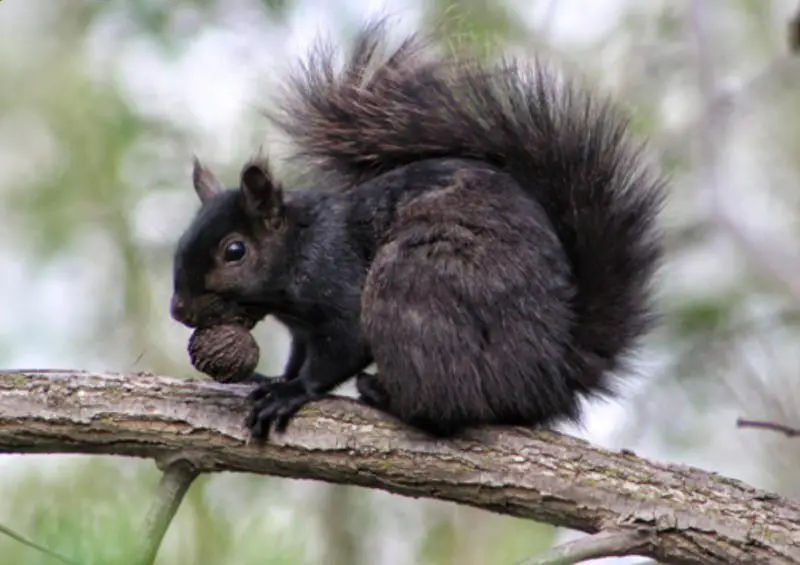
Spotting a completely black squirrel in Florida can feel surprising, especially if you are used to seeing the familiar gray or reddish tones of common tree squirrels. Many residents assume these darker animals represent a new species, a mutation caused by pollution, or even an introduced exotic animal. In reality, black squirrels are usually a natural color variation rather than a sudden biological change.
Florida’s wildlife diversity, climate variation, and urban landscaping create conditions where these darker squirrels occasionally appear more noticeable. While they may seem rare, their presence reflects genetics, environmental adaptation, and population dynamics rather than any mysterious transformation. Understanding why some squirrels appear completely black helps separate biological reality from misconception while highlighting how wildlife adapts to changing environments.
This topic also offers insight into genetics, habitat adaptation, climate influences, and how human development shapes animal appearance over time. The answer involves science rather than myth, and the explanation is both fascinating and reassuring.
What Species of Squirrels Live in Florida?

Florida hosts several squirrel species, but the most commonly encountered is the Eastern gray squirrel (Sciurus carolinensis). Despite the name, these squirrels do not always appear gray. Their fur color can vary significantly, ranging from pale gray to reddish-brown and occasionally jet black.
Fox squirrels (Sciurus niger) also inhabit parts of Florida, especially wooded rural areas. These larger squirrels often show striking color variation, including black, tan, orange, or mixed patterns. Some Florida fox squirrel subspecies are particularly known for dark coloration.
Flying squirrels also exist in Florida, though they are nocturnal and rarely seen. Their coloration usually remains gray or brown rather than black.
Most sightings of completely black squirrels in Florida involve melanistic Eastern gray squirrels or dark fox squirrel variants rather than entirely new species.
Understanding Melanism in Animals
The primary scientific explanation for black squirrels is melanism. Melanism occurs when animals produce excess melanin, the pigment responsible for dark coloration in skin, fur, or feathers. It represents a naturally occurring genetic variation rather than a disease or mutation caused by environmental contamination.
Melanism appears across many animal species. Panthers, black wolves, dark-phase birds, and even reptiles sometimes display this trait. In squirrels, melanism results from genetic variants affecting pigment production.
This coloration can be inherited through generations. When two squirrels carrying melanistic genes reproduce, their offspring have a higher likelihood of being black.
Melanism therefore reflects genetic diversity rather than sudden transformation.
Why Black Squirrels May Appear “Suddenly”
People often report black squirrels appearing suddenly in an area. This perception usually stems from increased visibility rather than rapid biological change.
Several factors explain this:
Population growth makes rare color variants more noticeable.
Habitat changes alter wildlife movement patterns.
Urban landscaping attracts squirrels into visible spaces.
Seasonal behavior changes increase outdoor activity.
A melanistic squirrel may have lived unnoticed nearby for years before appearing regularly in a yard or park.
Human attention plays a role in perceived sudden appearance.
Climate Influences on Fur Color
Climate can indirectly influence the survival of darker animals. Dark fur absorbs heat more efficiently than lighter fur, potentially offering advantages in cooler climates. While Florida is generally warm, seasonal temperature fluctuations and microclimates still exist.
In shaded forests or cooler northern parts of the state, darker coloration may provide subtle thermoregulation benefits. Conversely, in hot open areas, lighter fur might be advantageous.
These subtle environmental influences can affect which color variations persist locally.
However, climate alone does not create black squirrels. Genetics remains the primary factor.
Urban Environments and Black Squirrel Visibility
Urban and suburban landscapes often support high squirrel populations due to abundant food sources, trees, and reduced predator pressure. Parks, campuses, neighborhoods, and landscaped areas provide ideal habitat.
When squirrels become more numerous, rare color variations naturally appear more frequently. Urban settings also increase human observation, making melanistic squirrels seem more common than they actually are.
Artificial feeding, bird feeders, ornamental plants, and waste availability all contribute to stable urban squirrel populations.
Urban ecology strongly influences wildlife visibility.
Predator Pressure and Color Variation
Predator pressure can influence which color variations survive. Hawks, owls, snakes, and mammals prey on squirrels throughout Florida.
In dense forest habitats, darker squirrels may blend better with shaded environments, potentially offering camouflage advantages. In open environments, lighter squirrels might have similar advantages.
Predation therefore shapes population dynamics over time.
However, in urban areas where predators are less abundant, both color types may thrive equally.
Reduced predation sometimes increases color diversity.
Genetics Behind Black Fur
Melanistic squirrels usually carry specific genetic variations affecting melanin production. In Eastern gray squirrels, this often involves a mutation in pigment-related genes inherited from parent populations.
Some researchers believe melanistic gray squirrels may descend partly from historic hybridization events between gray and fox squirrels, although genetic mechanisms remain complex.
These genes can remain hidden in populations for generations. When conditions align, visible black offspring appear.
Genetics explains persistence rather than sudden origin.
Historical Spread of Black Squirrels
Black squirrel populations have existed for centuries across North America. Some areas, especially northern regions, report higher frequencies of melanistic individuals.
Human relocation of squirrels historically contributed to their spread. In the early twentieth century, universities, parks, and estates sometimes intentionally introduced black squirrels for novelty or aesthetic appeal.
While Florida has fewer documented intentional introductions, wildlife movement and urban landscaping can still influence distribution.
Population history shapes present sightings.
Do Black Squirrels Behave Differently?
Scientifically, melanistic squirrels generally behave similarly to their gray counterparts. They forage, nest, and reproduce in the same ways.
Some studies suggest slight differences in boldness or stress tolerance, though findings remain mixed. Behavioral variation usually reflects individual personality rather than fur color.
Most black squirrels integrate seamlessly into mixed-color populations.
Their ecological role remains identical.
Diet and Nutrition Factors
Diet does not cause fur color change. Melanism results from genetics rather than nutrition.
However, abundant food sources support overall squirrel population growth. As populations expand, genetic diversity becomes more visible.
Florida’s year-round vegetation, nut-bearing trees, fruit availability, and urban food sources contribute to stable squirrel populations.
Diet influences population size, not coloration.
Understanding this distinction prevents misconceptions.
Seasonal Molting and Color Perception
Squirrels molt seasonally, replacing fur gradually. Changes in lighting, coat thickness, and environmental conditions sometimes alter how color appears.
A squirrel that seemed gray at one time might appear darker during another season due to fur condition, lighting angle, or wetness.
These visual changes can reinforce the idea of sudden transformation even when genetics remain constant.
Perception often shapes interpretation.
Human Influence on Wildlife Genetics
Urban development influences wildlife genetics indirectly. Habitat fragmentation, selective pressures, and localized breeding populations affect gene distribution.
Neighborhoods with stable squirrel populations may develop distinctive color frequencies over time.
Human landscaping choices, tree planting, and food availability shape wildlife distribution patterns.
Human presence therefore affects genetic visibility.
Are Black Squirrels Rare in Florida?
Compared with northern states, black squirrels remain relatively uncommon in Florida but not unheard of. Sightings vary by region, habitat type, and population density.
Some local populations may include multiple melanistic individuals, while nearby areas have none.
Natural genetic variation produces these localized differences.
Rarity often reflects observation patterns.
Health and Survival of Black Squirrels
Melanistic squirrels generally experience similar health outcomes to gray squirrels. Their fur color does not inherently cause disease or weakness.
Some studies suggest potential advantages such as improved parasite resistance or UV protection, though evidence remains limited.
Overall survival depends more on habitat quality, food availability, and predator presence than coloration.
Black squirrels remain fully functional wildlife members.
Public Fascination With Black Wildlife
Humans often find black animals visually striking. Cultural associations with rarity, mystery, or symbolism amplify attention.
This fascination sometimes leads to exaggerated reports of population changes.
Public interest can support conservation awareness but also spread misinformation if not grounded in science.
Education helps balance curiosity with accuracy.
Conservation and Ecological Importance
Squirrels play important ecological roles regardless of color. They disperse seeds, contribute to forest regeneration, and serve as prey for many predators.
Healthy squirrel populations support biodiversity.
Color variation does not alter ecological function.
Recognizing their ecological importance encourages respectful coexistence.
Common Misconceptions About Black Squirrels
Several myths persist:
They are a different species.
They result from pollution.
They are newly evolving animals.
They behave more aggressively.
Scientific evidence does not support these claims.
Melanism remains a normal genetic variation.
Correcting misconceptions promotes wildlife understanding.
How Climate Change May Influence Distribution
Climate change can influence species distribution gradually. Warmer temperatures, shifting vegetation, and altered predator patterns may affect squirrel populations over time.
However, climate change does not directly cause melanism.
It may influence where melanistic squirrels thrive rather than why they exist.
Scientific monitoring continues to track these trends.
What To Do If You See a Black Squirrel
Observation requires no special action. Black squirrels are harmless wildlife similar to gray squirrels.
Avoid feeding wildlife excessively. Maintain natural habitat conditions. Enjoy observation from a respectful distance.
Reporting unusual wildlife sightings may assist local ecological studies, though black squirrels typically require no management response.
Appreciation supports conservation awareness.
FAQs About Black Squirrels in Florida
Are black squirrels a different species?
No. They are usually melanistic variations of common squirrel species.
Did they suddenly evolve?
No. The genes have existed long-term within populations.
Are they more aggressive?
There is no consistent scientific evidence supporting increased aggression.
Does diet cause black fur?
No. Coloration is genetic rather than nutritional.
Are they rare in Florida?
Less common than gray squirrels but regularly reported.
Do they live shorter lives?
Current research suggests similar survival rates.
Should sightings be reported?
Generally unnecessary unless part of a research project.
Are they invasive?
No. They are natural variations within native species.
Can their color change back?
Individual squirrels do not change color, but offspring may vary.
Are they protected wildlife?
Yes. They fall under standard wildlife protection regulations.
Final Thoughts
Black squirrels in Florida are not mysterious new animals or sudden environmental anomalies. They represent a natural genetic variation known as melanism, present across many animal species. Their occasional appearance reflects population genetics, habitat adaptation, and increased human observation rather than biological transformation.
Understanding the science behind melanistic squirrels helps reduce misconceptions while highlighting the fascinating adaptability of wildlife. Whether gray, brown, or black, squirrels play essential ecological roles and remain a familiar part of Florida’s natural environment.
Accurate knowledge replaces surprise with appreciation. Wildlife diversity, even in subtle variations like fur color, offers valuable insight into how animals adapt and thrive alongside human communities.