
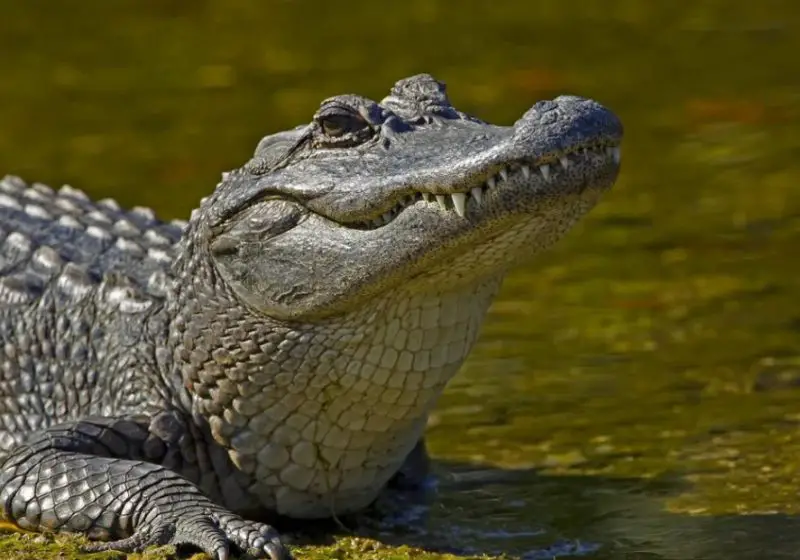
Florida’s relationship with alligators is unlike anywhere else in the United States. Lakes, canals, retention ponds, marshes, golf courses, and suburban waterways often overlap with natural alligator habitat. For many residents, seeing an alligator occasionally is simply part of living in the state. Yet a recurring story circulates in communities, fishing docks, and social media posts: some people believe alligators actively follow humans.
This perception sparks understandable concern. Alligators are powerful predators capable of defending territory and hunting effectively. However, wildlife biology, behavioral research, and ecological context reveal a more complex explanation. Alligators are not typically stalking humans as prey. Instead, a mix of learned behavior, habitat overlap, food conditioning, curiosity, and environmental changes explains why some encounters create the impression of pursuit.
Understanding these factors helps reduce fear while improving safety and coexistence.
Florida Is Prime Alligator Habitat

Florida offers one of the most favorable environments for American alligators anywhere in North America. The state’s subtropical climate provides long warm seasons, mild winters, and abundant rainfall, all of which support freshwater ecosystems where alligators thrive. From expansive marshlands like the Everglades to smaller inland lakes, slow rivers, swamps, and seasonal wetlands, suitable habitat is widespread rather than isolated. This extensive network of water systems allows alligator populations to remain stable and well distributed across the state.
Water availability is the most critical factor. Alligators require aquatic environments not only for hunting but also for thermoregulation, nesting, and protection from extreme temperatures. Florida’s landscape naturally retains water through wetlands, shallow basins, and interconnected drainage systems. Even during dry periods, many bodies of water persist, providing year-round refuge.
Human development has unintentionally created additional habitat. Stormwater ponds, golf course lakes, irrigation canals, and residential retention basins often mimic natural wetlands. These artificial water bodies attract fish, birds, turtles, and other prey species, which in turn draw alligators. As suburban communities expand near these water sources, encounters naturally increase. Visibility rises even if overall population numbers remain relatively stable.
When people see alligators more frequently, interpretation follows. Stories spread, perceptions shift, and sometimes routine wildlife behavior becomes framed as unusual or threatening. This is where myths about following or stalking can begin.
Alligators Rarely See Humans as Natural Prey
Alligators evolved as opportunistic predators primarily targeting animals that live in or near water. Their typical diet includes fish, amphibians, turtles, water birds, raccoons, muskrats, and occasionally deer. Humans fall outside this natural prey spectrum. Most alligators instinctively avoid large unfamiliar animals unless they feel threatened or have learned to associate people with food.
Predators generally conserve energy. Chasing unfamiliar large animals is risky and inefficient compared to ambushing known prey. From an evolutionary standpoint, avoidance of humans has often been the safer strategy for alligators. Encounters that escalate usually involve specific triggers such as feeding conditioning, territorial defense, or accidental proximity.
Misinterpreting their motivations can lead to unnecessary fear. Understanding their ecological role and hunting instincts provides a more accurate picture of behavior.
Food Conditioning Is a Major Factor
One of the strongest explanations for apparent following behavior is food conditioning. When alligators receive food from humans, intentionally or accidentally, they begin associating people with feeding opportunities. This association can fundamentally change their natural avoidance behavior.
Common sources of unintended feeding include discarded fishing bait, leftover fish scraps at docks, unsecured garbage near waterways, pet feeding close to shorelines, or even casual hand feeding by curious residents. Over time, an alligator that repeatedly receives food near humans may begin approaching people proactively.
This behavior does not necessarily reflect aggression. It reflects learned expectation. Wildlife agencies emphasize strict no-feeding policies because conditioning increases the likelihood of conflict and often results in the removal of the animal for public safety.
Many reports of alligators “following” people trace back to food conditioning rather than predatory intent.
Curiosity Versus Predatory Intent
Young alligators, in particular, sometimes display exploratory behavior. Movement along shorelines, splashing, fishing activity, or unusual sounds can attract their attention. Investigation is a normal part of wildlife behavior and does not automatically indicate hunting.
Alligators rely heavily on vibration detection in water. Sudden disturbances signal potential prey or environmental change. Swimming toward such disturbances allows them to gather information about their surroundings.
To observers, this approach may appear purposeful or targeted. However, investigation differs significantly from predatory stalking. Context, body posture, and subsequent behavior usually clarify the difference.
Curiosity can resemble pursuit, but intent often differs.
Territorial Behavior Can Look Like Following
Alligators maintain territories, especially adult males during breeding season. These territories often center around water bodies with reliable food and nesting sites. When humans enter these areas, an alligator may remain nearby, swim parallel to shore, or maintain visual contact.
This behavior functions as monitoring rather than pursuit. Territorial animals track movement within their domain to assess potential threats. Maintaining distance while observing allows them to gauge risk without escalating confrontation.
Understanding territorial monitoring helps explain many sightings where an alligator seems to move alongside a person without directly approaching.
Observation is not necessarily aggression.
Breeding Season Changes Behavior
Spring through early summer marks alligator mating season in Florida. During this period, males become more vocal and territorial, while females focus on nesting. Increased movement, vocalization, and territorial displays make encounters more noticeable.
Nest-guarding females may appear particularly defensive if humans approach nesting areas. Protective behavior toward eggs or hatchlings is common among reptiles and does not indicate general aggression toward humans.
Seasonal hormonal changes influence activity patterns. Recognizing these cycles helps explain fluctuations in sightings and perceived boldness.
Seasonality shapes wildlife behavior.
Habitat Overlap Is Increasing
Florida’s rapid population growth has expanded residential development into historically wetland regions. Housing developments frequently include water retention features for flood control and landscaping. These water bodies provide suitable habitat for fish and other prey species, inadvertently attracting alligators.
As more people live near such environments, opportunities for encounters increase. Visibility grows even when population levels remain stable.
Urban expansion also fragments habitat, sometimes concentrating alligators in remaining waterways. This concentration can heighten encounter frequency.
Human expansion changes perception as much as ecology.
Movement Patterns of Alligators
Alligators regularly patrol shorelines while searching for food or maintaining territory. Their movement is typically slow and energy efficient. If a person walks along the edge of a water body, an alligator swimming in the same direction may simply be following its habitual route.
Parallel movement can create the impression of deliberate following. In many cases, the animal is:
Maintaining territory boundaries
Checking feeding areas
Responding to environmental cues
Navigating familiar pathways
Coincidental movement often fuels dramatic interpretations.
Human Body Language Influences Animal Response
Wildlife responds strongly to movement cues. Sudden gestures, splashing, running, or erratic motion can attract attention. Conversely, calm, steady movement often signals non-threatening presence.
Animals interpret posture, speed, and noise differently than humans do. An alligator may approach cautiously when sensing unusual activity, not necessarily as an attack strategy.
Human behavior influences wildlife reactions more than many people realize.
Predictability promotes safety.
Climate Conditions Affect Activity Levels
Temperature directly influences alligator metabolism. Warm water increases activity, digestion speed, and feeding frequency. Cooler temperatures reduce movement.
Florida’s warm climate allows year-round activity, but seasonal variations still occur. Heat waves, rainfall patterns, and drought cycles influence water levels and prey availability.
Weather conditions can temporarily increase sightings without changing overall population trends.
Climate shapes wildlife visibility.
Juvenile Versus Adult Behavior Differences
Young alligators often display exploratory behavior as they learn to navigate their environment. Adults, particularly large males, typically show more established territorial patterns.
Juveniles may approach disturbances out of curiosity, while adults are more likely to assess risk cautiously.
Understanding life stage differences helps interpret encounters accurately.
Not all alligators behave the same.
Media Amplification Plays a Role
Modern media accelerates the spread of dramatic wildlife stories. A single unusual encounter can quickly circulate online, shaping public perception statewide.
Emotional narratives often overshadow routine behavior. Videos highlighting rare incidents receive disproportionate attention compared to everyday peaceful coexistence.
This amplification reinforces the idea that alligators frequently follow humans, even when such events remain uncommon.
Awareness expands faster than reality.
Safety Recommendations From Wildlife Experts
Wildlife agencies emphasize simple precautions:
Never feed alligators under any circumstance.
Maintain safe distance from all water bodies.
Supervise pets and children near shorelines.
Avoid swimming in unfamiliar freshwater areas.
Stay alert during dawn and dusk when activity peaks.
Preventive behavior dramatically reduces risk. Education remains the most effective safety tool.
Ecological Importance of Alligators
Alligators function as keystone species. Their nesting mounds provide habitat for birds, turtles, and plants. Their feeding behavior regulates fish and mammal populations, supporting ecological balance.
Wetland ecosystems often depend on apex predators for stability. Removing them can disrupt entire food webs.
Healthy alligator populations often indicate healthy wetlands.
Predators sustain biodiversity.
Legal Protection and Management
Florida wildlife agencies actively manage alligator populations through monitoring programs, relocation efforts, and public education campaigns. Strict feeding bans help prevent conditioning, while nuisance removal programs address individuals that pose safety concerns.
Management policies aim to balance conservation with public safety. Responsible oversight supports coexistence.
Science informs policy decisions.
Why Some Residents Still Feel Followed
Several factors combine to create this perception:
Food-conditioned animals approaching humans
Territorial monitoring behavior
Exploratory curiosity in juveniles
Habitat overlap with development
Human psychological interpretation
Together, these influences produce compelling but sometimes misleading narratives.
Understanding reduces fear.
Knowledge builds confidence.
Research Continues on Human–Alligator Interaction
Scientists continue studying movement patterns, habitat use, human conflict prevention, and behavioral adaptation. GPS tracking, ecological modeling, and field observation provide increasingly detailed insights.
Research informs public safety guidance and conservation planning.
Science continues evolving.
Cultural Perception of Alligators
Alligators are iconic in Florida culture. Tourism marketing, sports mascots, folklore, and media coverage all reinforce their symbolic presence. Cultural narratives shape how people interpret encounters.
Symbolism often blends with reality.
Perception becomes part of ecology.
The Balance Between Fear and Respect
Respectful caution encourages safe coexistence without unnecessary fear. Understanding alligator behavior helps residents navigate shared environments responsibly.
Education fosters stewardship. Awareness supports conservation. Balanced perception benefits both people and wildlife.
Alligators are neither villains nor companions. They are native predators responding to environmental cues — and understanding those cues is the key to living safely alongside them.
FAQs About Alligators and Human Encounters in Florida
Do alligators really follow people in Florida
Usually no. What seems like following is often curiosity, territorial monitoring, or food conditioning rather than predatory intent.
Why do some alligators approach humans
Most cases involve food conditioning, where alligators learn to associate people with food sources.
Are alligator attacks on humans common
Attacks are rare. Most alligators avoid people unless provoked, cornered, or fed regularly.
What should you do if you see an alligator nearby
Keep your distance, avoid sudden movements, never feed it, and leave the area calmly.
Do alligators live in man-made ponds
Yes. Retention ponds, canals, and golf course lakes often provide suitable habitat.
Are young alligators more curious than adults
Yes. Juveniles may investigate disturbances more often, while adults tend to be more territorial.
When are alligators most active in Florida
They are most active in warmer months and during dawn, dusk, and breeding season.
Why do media stories make encounters seem more common
Viral videos and news coverage highlight rare events, increasing public awareness and perception.
How can residents reduce alligator encounters
Avoid feeding wildlife, secure garbage, supervise pets, and stay alert near freshwater.
Why are alligators important to Florida ecosystems
They regulate prey populations and help maintain healthy wetland ecosystems.
Final Thoughts
Reports that alligators follow humans in Florida usually stem from learned food association, territorial monitoring, curiosity, or simple coincidence rather than deliberate stalking behavior. Habitat overlap, urban expansion, seasonal activity, and increased public awareness all contribute to encounter frequency.
Alligators remain essential components of Florida ecosystems, regulating prey populations and supporting wetland health. With proper precautions, informed understanding, and responsible wildlife practices, coexistence remains both possible and sustainable.
Rather than viewing alligators as pursuers, it is more accurate to see them as adaptable predators responding to environmental cues. Understanding those cues transforms fear into informed respect — a perspective that ultimately benefits both people and wildlife.