
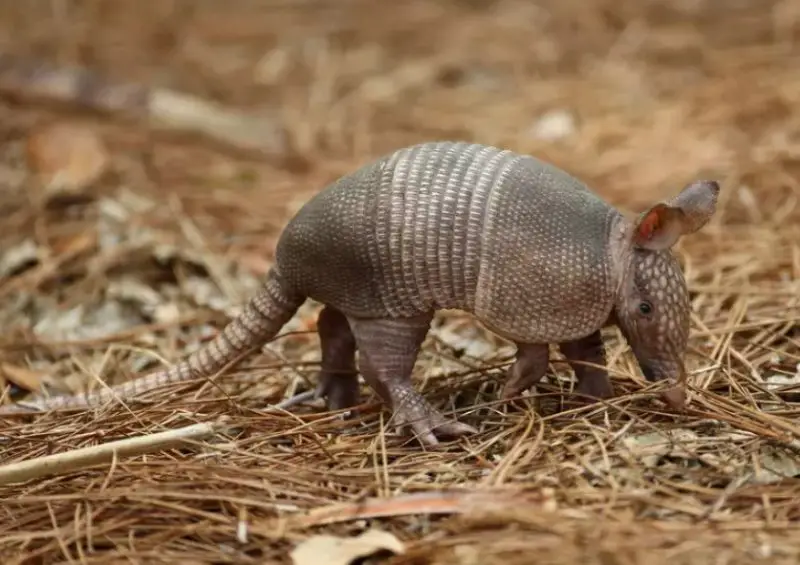
For decades, armadillos were considered animals of the southern United States. Texas, Louisiana, Mississippi, and Florida were where people expected to see them rooting through soil at night. Illinois, with its colder winters and Midwestern climate, seemed far outside that range. Yet in recent years, sightings have increased. Trail cameras capture unfamiliar shapes. Drivers report road crossings. Wildlife agencies receive more questions than ever.
In Illinois, the appearance of armadillos is not just a curiosity. It reflects changing wildlife patterns driven by climate shifts, habitat adaptation, and the remarkable resilience of a species that has been expanding northward for over a century. Understanding why armadillos are showing up in Illinois requires looking at their history, biology, environmental pressures, and how human landscapes are evolving alongside wildlife.
Armadillos Have Been Expanding for Over 150 Years

The nine-banded armadillo, the species most commonly seen in the United States, was once restricted primarily to South America and parts of the southern borderlands. During the late nineteenth and early twentieth centuries, populations began moving north through Texas and into neighboring states.
This expansion was gradual but persistent. By the mid-1900s, armadillos were established across much of the Southeast. Over time they reached states once considered too cold, including Missouri, Kansas, and parts of southern Illinois.
Their appearance in Illinois may feel sudden, but biologically it is the continuation of a long-term range expansion.
Climate Change Plays a Significant Role
Temperature is one of the biggest factors influencing armadillo distribution. Unlike many mammals, armadillos have relatively low body fat and limited tolerance for prolonged freezing conditions. Historically, harsh winters restricted their northward movement.
However, average winter temperatures in many Midwestern states have gradually warmed. Severe freezes occur less frequently and for shorter durations. These milder conditions improve survival rates, allowing armadillos to establish populations farther north.
Climate does not act alone, but it provides a crucial enabling factor.
Snow Cover and Soil Conditions Matter
Armadillos feed primarily on insects, grubs, worms, and other soil-dwelling invertebrates. Frozen ground limits their ability to forage effectively. Reduced snow cover and shorter freeze periods make northern soils more accessible during winter months.
Even slight changes in soil temperature can influence survival. When armadillos can continue feeding through winter rather than relying solely on fat reserves, expansion becomes more feasible.
This ecological detail often goes unnoticed but strongly affects range limits.
Habitat Flexibility Helps Them Thrive
One reason armadillos expand successfully is their adaptability. They are not strictly forest animals or grassland specialists. Instead, they thrive in a mosaic of environments including:
Woodland edges
Agricultural fields
Suburban greenbelts
River corridors
Parks and undeveloped lots
Illinois provides many such transitional habitats. Agricultural landscapes mixed with forest patches and waterways create suitable conditions.
Adaptability often determines whether a species expands successfully.
River Corridors Act as Natural Highways
Many armadillo expansions follow river systems. Rivers provide moisture, softer soils, abundant insects, and natural cover. They also serve as travel corridors linking suitable habitats.
In Illinois, major rivers such as the Mississippi, Ohio, and Illinois Rivers create pathways for gradual northward movement. These corridors allow animals to disperse while maintaining access to food and shelter.
Wildlife often follows geography in ways humans rarely notice until new species appear.
Reduced Predator Pressure Helps
In some areas, traditional predators of armadillos are less abundant than in the past. Coyotes, bobcats, and large raptors do prey on them, but human landscape changes sometimes reduce predator effectiveness.
Additionally, armadillos have physical defenses. Their armored shells, digging ability, and nocturnal behavior help reduce vulnerability.
Lower predation pressure can facilitate population expansion.
Reproductive Strategy Supports Growth
Nine-banded armadillos have an unusual reproductive trait. They typically give birth to four genetically identical offspring from a single egg. This reproductive efficiency allows populations to grow steadily when conditions are favorable.
Although they do not reproduce as rapidly as some small mammals, this consistent reproductive output supports expansion over time.
Biology quietly shapes geographic patterns.
Human Landscapes Provide New Opportunities
Urban and suburban development unintentionally benefits some wildlife species. Irrigated lawns, gardens, golf courses, and parks create insect-rich environments. Compost, mulch beds, and artificial water sources support prey populations.
Armadillos exploit these environments effectively. They often forage near human habitation without being noticed.
Modern landscapes sometimes mimic natural habitats in unexpected ways.
Increased Observation Technology Matters
Trail cameras, home security systems, and smartphones have dramatically increased wildlife detection. Animals once present but unnoticed now appear regularly in photos and videos.
Some Illinois sightings may reflect improved detection rather than sudden arrival. Documentation creates awareness that earlier generations lacked.
Technology shapes perception as much as ecology does.
Seasonal Movement Patterns Influence Sightings
Armadillos are primarily nocturnal. They move most during warm evenings and early mornings. Seasonal changes in temperature affect activity levels.
Spring and fall often bring increased movement as animals disperse or search for mates. During these periods, sightings become more frequent.
Seasonality can create the impression of sudden expansion.
Soil Composition Plays a Role
Illinois soils vary widely. Loamy, well-drained soils support insect populations and allow easier digging. Armadillos prefer such conditions.
Clay-heavy or rocky soils are less suitable. Thus, distribution within the state may remain patchy even as overall presence increases.
Microhabitat factors matter.
Food Availability Remains a Key Driver
Armadillos consume beetle larvae, ants, termites, worms, and other invertebrates. Agricultural areas and suburban landscapes often support abundant insect populations.
Climate change, irrigation, and landscaping practices influence prey abundance, indirectly affecting armadillo expansion.
Food availability often determines range limits more than temperature alone.
Road Mortality Reveals Hidden Populations
Many first confirmations of armadillo presence come from roadkill observations. As populations expand, encounters with vehicles increase.
Wildlife agencies often track road mortality to monitor distribution. These data provide valuable insight into population trends.
Unfortunate incidents still contribute to scientific understanding.
Public Reaction Often Mixes Curiosity and Concern
Illinois residents react differently to armadillo sightings. Some view them as fascinating newcomers. Others worry about garden damage, disease transmission, or ecological impact.
Education helps balance these responses. Most armadillo activity causes minor disruption rather than significant harm.
Understanding reduces unnecessary anxiety.
Potential Ecological Impacts
Armadillos influence ecosystems by consuming insects and aerating soil through digging. Their burrows can provide shelter for other wildlife species.
While they may occasionally disturb lawns or gardens, their broader ecological role often includes beneficial effects.
Ecosystem interactions are complex.
Disease Concerns and Public Health
Armadillos can carry certain pathogens, including bacteria associated with leprosy in rare cases. Transmission risk to humans is extremely low, particularly without direct handling.
Wildlife agencies recommend avoiding direct contact, which is standard advice for all wild animals.
Awareness without alarm remains the goal.
Interaction With Native Wildlife
So far, evidence suggests armadillos integrate into ecosystems without causing major disruption. They occupy ecological niches similar to other insectivores.
Long-term monitoring continues to assess potential impacts on native species.
Adaptation takes time.
Winter Survival Still Limits Expansion
Despite warming trends, harsh winters can still reduce populations. Severe cold snaps occasionally cause mortality events.
Thus, expansion may fluctuate year to year rather than follow a straight upward trend.
Climate variability matters.
Agricultural Implications
Most agricultural impacts remain minor. Armadillos occasionally dig in fields or pastures but rarely cause widespread crop damage.
Farmers often report curiosity rather than concern.
Context shapes perception.
Cultural Fascination With Range Expansion
Wildlife range shifts capture public imagination. They symbolize environmental change, adaptation, and the fluid nature of ecosystems.
Armadillos, with their unusual appearance, amplify that fascination.
Stories follow sightings.
Conservation and Monitoring Efforts
Wildlife agencies continue monitoring armadillo distribution through surveys, public reports, and research collaborations.
Data helps guide management decisions and public education efforts.
Science supports coexistence.
The Bigger Picture of Wildlife Movement
Armadillo expansion reflects broader ecological patterns. Many species adjust ranges in response to climate, habitat change, and human activity.
Birds, insects, mammals, and plants all shift distributions over time.
Illinois is part of this dynamic landscape.
Coexisting With New Wildlife Neighbors
Practical coexistence strategies include:
Securing compost and food sources
Maintaining yards responsibly
Avoiding direct wildlife contact
Respecting natural habitats
Simple measures reduce conflict.
Awareness helps communities adapt.
Future Outlook for Illinois Armadillos
If warming trends continue and suitable habitat remains available, armadillos will likely maintain or slowly expand their presence in Illinois. However, population density will probably remain lower than in southern states.
Ongoing monitoring will clarify long-term trends.
Change remains gradual.
FAQs About Armadillos in Illinois
Are armadillos actually living in Illinois now
Yes. Sightings have increased in southern Illinois, and wildlife agencies confirm gradual northward expansion of nine-banded armadillos.
Why are armadillos moving north into Illinois
Warmer winters, adaptable habitat use, river corridors, and abundant insect food sources all contribute to their expansion.
Are armadillos dangerous to people or pets
They are generally harmless, shy animals. They may startle easily but rarely pose any threat unless handled.
Do armadillos cause damage to yards or gardens
They can dig small holes while searching for insects, but damage is usually minor and manageable.
Can armadillos survive cold Illinois winters
Milder winters help survival, though severe cold periods can still limit populations and slow expansion.
Do armadillos carry diseases humans should worry about
They can carry certain bacteria, but transmission risk is extremely low if people avoid direct contact.
Where in Illinois are sightings most common
Southern Illinois and areas near major river corridors report sightings more frequently.
Are armadillos protected wildlife in Illinois
Regulations vary, but wildlife agencies monitor them primarily as a naturally expanding species.
Will armadillos keep spreading farther north
If climate conditions remain favorable, gradual expansion may continue, though harsh winters can slow progress.
What should residents do if they see one
Observe from a distance, avoid handling it, and report unusual sightings to local wildlife authorities if requested.
Final Thoughts
Armadillos appearing in Illinois are not a sudden mystery but part of a long ecological story shaped by climate shifts, habitat adaptation, and remarkable species resilience. Warmer winters, flexible habitat use, river corridor movement, and human landscape changes all contribute to their gradual northward expansion.
While sightings may feel surprising, they reflect natural processes unfolding over decades. Understanding those processes helps replace speculation with informed perspective. And as wildlife continues adapting to a changing world, Illinois residents may find that armadillos are simply the latest example of nature’s quiet, persistent ability to adjust.