
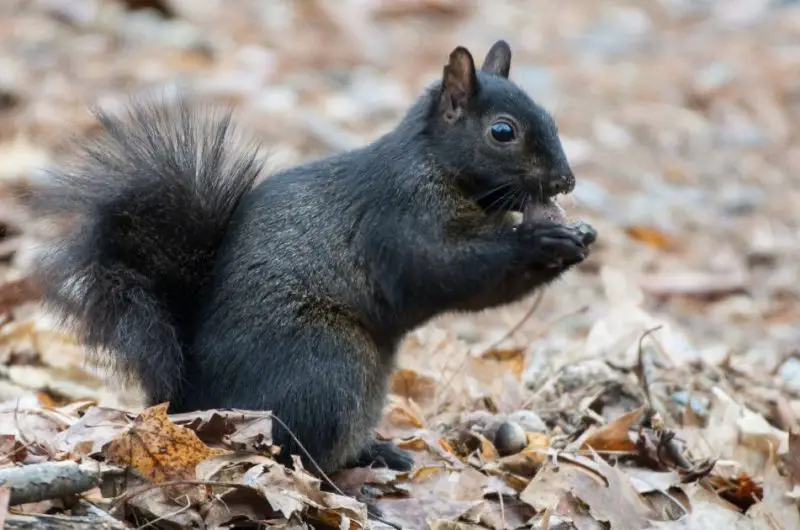
In many Massachusetts neighborhoods, parks, wooded suburbs, and college campuses, residents have noticed something unexpected in recent years. A squirrel runs across the yard, but instead of the familiar gray coat, it appears entirely black. Sometimes several are spotted in the same area within weeks. Other times, only one shows up suddenly, creating curiosity and even concern.
People often wonder whether these black squirrels are a new species, a mutation caused by environmental changes, or some kind of hybrid animal. The truth is both simpler and more fascinating. Black squirrels are usually a naturally occurring color variation of the eastern gray squirrel, influenced by genetics, environmental advantages, and population dynamics.
Understanding why black squirrels appear suddenly in Massachusetts requires looking at genetics, ecology, climate adaptation, and how wildlife populations shift over time. Once you know the science behind it, these sightings become less mysterious and much more interesting.
Table of Contents
- 1 The Most Common Squirrel in Massachusetts
- 2 What Causes Completely Black Fur?
- 3 Why Black Squirrels Are Increasing in Massachusetts
- 4 Why They Seem to Appear Suddenly
- 5 Are Black Squirrels a Different Species?
- 6 Health and Environmental Concerns
- 7 Differences Between Gray and Black Squirrels
- 8 Massachusetts Habitat Factors Supporting Black Squirrels
- 9 Common Myths About Black Squirrels
- 10 How Wildlife Experts Study Them
- 11 Coexisting With Squirrels in Massachusetts
- 12 FAQs About Black Squirrels in Massachusetts
- 13 Conclusion
The Most Common Squirrel in Massachusetts

Eastern gray squirrels dominate the region
Massachusetts is primarily inhabited by eastern gray squirrels, one of the most adaptable mammal species in North America. These squirrels thrive in a wide range of environments, including dense forests, suburban neighborhoods, city parks, and even heavily urbanized areas. Their success comes from flexibility in behavior, diet, and nesting habits, allowing them to live comfortably alongside humans.
They are opportunistic feeders capable of exploiting both natural and human-provided resources. Nuts, acorns, seeds, berries, buds, mushrooms, insects, and occasional bird eggs all form part of their diet. Bird feeders, gardens, and landscaped yards provide additional food sources, further supporting their population growth in residential areas.
While most individuals display the familiar gray coat with a white underside, eastern gray squirrels actually exhibit significant color variation. This natural diversity includes shades ranging from pale silver-gray to reddish-brown and, in some cases, completely black coats.
Color variation is normal
Color variation in squirrels is largely controlled by melanin, the pigment responsible for fur coloration in many animals. Differences in melanin production lead to variations in coat color without affecting the animal’s health, behavior, or ecological role.
Black squirrels are simply gray squirrels with a condition known as melanism. This means their bodies produce more dark pigment than usual, resulting in a solid black or very dark coat. It is not a separate species, nor does it indicate a recent environmental change.
This genetic variation has existed in squirrel populations for generations. In certain regions, environmental conditions and natural selection have made melanistic individuals more common, which explains why some communities suddenly notice more black squirrels than before.
What Causes Completely Black Fur?
The melanism gene
The black coloration seen in some squirrels results from a specific genetic mutation affecting pigment production. This mutation increases melanin levels in the fur, creating a darker appearance. Such mutations are not rare in nature and occur across many animal groups, including birds, reptiles, insects, and mammals.
Melanism is a normal evolutionary phenomenon rather than a sign of pollution, disease, or environmental damage. It simply represents one variation within a species’ genetic diversity. In some habitats, darker coloration may even offer advantages that encourage its persistence.
For black offspring to appear consistently, both parents usually carry the melanistic gene. However, carriers may still appear gray themselves, meaning the gene can remain hidden within a population until the right genetic combination occurs.
Genetic inheritance patterns
Genetic inheritance in squirrels works similarly to other mammals. If only one parent carries the melanistic gene, offspring may appear gray while still carrying the gene invisibly. When two carriers reproduce, the likelihood of black offspring increases.
This explains why black squirrels sometimes seem to appear suddenly in a neighborhood. The genetic trait may have existed quietly for years before becoming visibly expressed in a new generation. Population genetics often produces gradual changes that only become noticeable once a certain threshold is reached.
These changes are part of normal evolutionary processes rather than abrupt environmental shifts. Over time, the proportion of melanistic squirrels may increase or decrease depending on local conditions.
Hybridization is not the cause
A common misconception is that black squirrels result from crossbreeding between different squirrel species. In Massachusetts, this is generally not true. Most black squirrels are simply melanistic eastern gray squirrels, not hybrids.
Their behavior, diet, and habitat preferences remain identical to those of gray individuals. The only difference is fur color. Hybridization with other squirrel species is rare and unnecessary to explain melanism.
Understanding this helps clarify that black squirrels represent natural variation rather than unusual or artificial wildlife changes.
Why Black Squirrels Are Increasing in Massachusetts
Climate adaptation advantages
Dark fur absorbs heat more efficiently than lighter fur, which can provide a subtle advantage in colder climates. Massachusetts winters, while not extreme compared to northern Canada, still present significant seasonal cold.
Melanistic squirrels may retain warmth slightly better, allowing them to remain active longer during cold periods. This can translate into improved foraging efficiency and potentially higher survival rates.
Although this advantage is modest, even small survival benefits can influence population trends over multiple generations. Natural selection may therefore favor darker individuals in certain climates.
Urban heat island effects
Cities and suburban developments often create localized warming effects known as urban heat islands. Buildings, pavement, and reduced vegetation trap heat, raising temperatures slightly compared to surrounding rural areas.
Black squirrels frequently thrive in these environments because the warmer microclimates complement their heat-absorbing fur. Urban areas also provide consistent food sources, reduced predator pressure, and ample nesting sites in trees, buildings, and structures.
As urbanization continues, these conditions may help support increasing numbers of melanistic squirrels in populated regions.
Predator camouflage factors
Coloration can influence vulnerability to predators. In shaded forests, dense vegetation, or urban environments with dark surfaces, black fur may offer improved camouflage.
Predators relying on visual cues might find it harder to detect darker squirrels in shadowed habitats. This selective advantage, while subtle, can contribute to gradual increases in melanistic individuals within certain populations.
Natural selection often operates through such small advantages accumulating over time.
Why They Seem to Appear Suddenly
Population threshold visibility
Black squirrels may exist in small numbers for many years without attracting much attention. Once their numbers increase beyond a certain threshold, sightings become frequent enough for people to notice.
This creates the impression of sudden emergence, even though the population shift occurred gradually. Human perception often interprets increased visibility as rapid change.
Local migration and dispersal
Young squirrels frequently disperse to new territories when populations become dense. A few melanistic individuals moving into a neighborhood can quickly alter the perceived local population.
Wildlife dispersal is constant but often unnoticed. These movements explain why new areas sometimes report black squirrels seemingly overnight.
Seasonal visibility changes
Seasonal changes also affect visibility. During winter, leafless trees and snow cover make dark animals easier to spot. Contrast between black fur and lighter surroundings increases detectability.
This seasonal visibility can amplify the perception that black squirrels have recently appeared, even when they were present previously.
Are Black Squirrels a Different Species?
No separate classification
Black squirrels in Massachusetts are almost always eastern gray squirrels exhibiting melanism. They are not classified as a separate species, subspecies, or invasive population.
They share identical ecological roles with gray individuals, including diet, nesting behavior, and habitat use. The color difference reflects genetic diversity rather than taxonomic distinction.
Behavior remains identical
Black squirrels build the same leaf nests and tree cavities, forage on identical food sources, and display similar territorial and social behaviors.
Their interaction with humans also remains unchanged. They frequent bird feeders, gardens, parks, and wooded neighborhoods just like gray squirrels.
From an ecological standpoint, only coat color differs. Everything else about their biology remains consistent.
Health and Environmental Concerns
Not caused by pollution
Occasionally, residents worry that unusual coloration signals environmental contamination or mutation caused by pollution. There is no scientific evidence supporting this concern.
Melanism occurs naturally across many animal species and regions worldwide. It is not linked to environmental damage or chemical exposure.
Not a disease indicator
Black squirrels are generally healthy individuals. Their coloration does not indicate illness, abnormal development, or reduced lifespan.
Population increases often reflect stable habitat conditions rather than ecological problems.
Ecosystem balance considerations
The presence of melanistic squirrels usually indicates a functioning ecosystem with sufficient food, shelter, and habitat diversity. Wildlife color variation is a normal part of biodiversity.
Maintaining diverse wildlife populations contributes to ecological resilience and balance.
Differences Between Gray and Black Squirrels
Temperature tolerance
Black fur absorbs sunlight more efficiently, potentially improving cold-weather endurance. This advantage may help melanistic squirrels remain active during colder periods.
However, the difference is subtle rather than dramatic. Both gray and black squirrels survive Massachusetts winters successfully.
Visibility to predators
Gray fur blends well with tree bark and winter landscapes, while black fur blends better with shadows and darker environments. Each coloration offers situational advantages depending on habitat.
Human perception differences
People often notice black squirrels more simply because they stand out visually. This increased attention can make their population seem larger than it actually is.
Massachusetts Habitat Factors Supporting Black Squirrels
Mixed urban-forest environments
Massachusetts offers diverse habitats combining forests, suburban landscapes, parks, agricultural edges, and urban green spaces. These mixed environments suit adaptable species like squirrels exceptionally well.
Such habitat diversity supports both gray and melanistic individuals.
Food availability
Nut-bearing trees, landscaped yards, bird feeders, compost piles, and gardens provide reliable food. Consistent nutrition supports stable squirrel populations.
Color variation persists naturally within these expanding populations.
Mild but variable winters
Winters in Massachusetts are cold enough to favor darker fur advantages but not severe enough to eliminate lighter-colored individuals. This balance helps maintain genetic diversity.
Common Myths About Black Squirrels
Myth: They are invasive
Black squirrels are native gray squirrels with natural color variation. They do not represent invasive wildlife.
Myth: They are more aggressive
Behavior differences are unrelated to fur color. Individual temperament varies, but no consistent aggression pattern exists.
Myth: They cause more damage
Property damage relates to population density, not coat color. Black and gray squirrels behave similarly around homes.
How Wildlife Experts Study Them
Genetic sampling
Researchers analyze DNA to understand how melanistic genes spread through populations. This helps track long-term evolutionary patterns.
Population monitoring
Wildlife surveys, camera traps, and observation studies track changes over time. These methods confirm gradual increases rather than sudden population shifts.
Climate correlation research
Scientists also study relationships between winter severity and melanistic frequency. Some evidence suggests colder climates may favor darker coloration.
Coexisting With Squirrels in Massachusetts
Managing bird feeders
Secure feeders reduce excessive squirrel activity while still supporting bird populations. Balanced feeding practices help maintain ecological harmony.
Protecting gardens
Simple barriers, netting, and habitat adjustments can reduce garden damage. Coexistence strategies often work better than exclusion alone.
Appreciating biodiversity
Color variation among wildlife adds richness to everyday nature encounters. Recognizing black squirrels as part of normal biodiversity fosters appreciation rather than concern.
FAQs About Black Squirrels in Massachusetts
Are black squirrels rare?
They are less common than gray squirrels but increasingly visible in some areas.
Do they interbreed with gray squirrels?
Yes, they are the same species.
Are they dangerous?
No. They behave like typical squirrels.
Why do some towns have many?
Local genetics, habitat, and climate influence frequency.
Do they live longer?
Lifespan differences are minimal.
Are they protected wildlife?
Yes, under general wildlife protections.
Do they damage homes?
They may chew or nest like any squirrel.
Can they turn gray later?
No. Coat color remains consistent.
Are they spreading?
Some regional increases are observed.
Should residents worry?
No. They are normal native wildlife.
Conclusion
Black squirrels appearing in Massachusetts are not a mystery once genetics and ecology are understood. They are melanistic eastern gray squirrels whose dark coloration results from natural genetic variation rather than environmental problems or hybridization.
Their increasing visibility reflects climate adaptation advantages, urban habitat changes, and normal wildlife dispersal patterns. While their striking appearance may capture attention, they behave just like their gray counterparts and play the same ecological roles.
Rather than signaling danger or environmental concern, black squirrels often represent a thriving, adaptable wildlife population adjusting to changing landscapes. With informed awareness, residents can appreciate these unique animals as part of the region’s evolving natural diversity rather than viewing them as a sudden anomaly.