
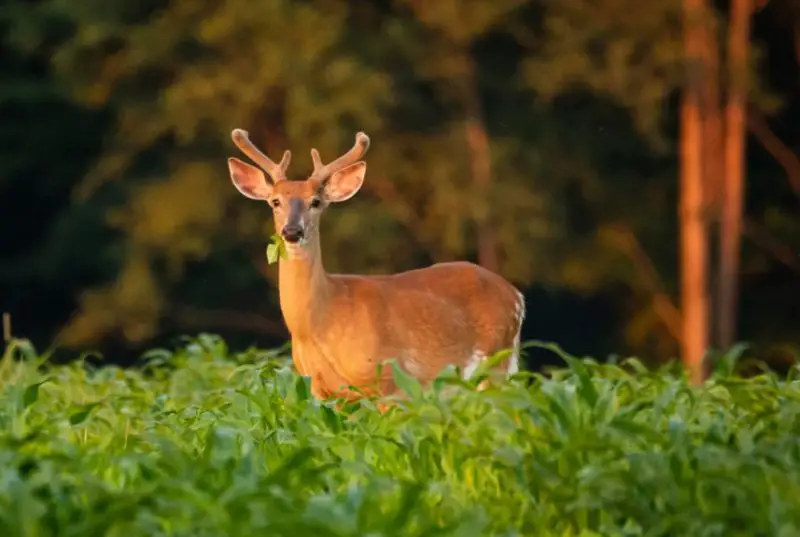
Indiana winters can be unpredictable. Some years bring mild cold and light snow, while others deliver weeks of ice, deep snow cover, freezing winds, and landscapes that look completely lifeless. Yet white-tailed deer continue to move through forests, farmlands, suburbs, wetlands, and open countryside. They survive months when food appears scarce, nothing green seems visible, and nearly every plant looks dormant. Their survival depends entirely on what they eat and how they adjust their diet when winter conditions are at their worst.
Winter doesn’t just change the temperature for deer. It reshapes every feeding habit they have. The leafy browse of spring disappears. Summer crops are gone. Fall food is buried or depleted. Deer must find nutrition in a world where food is harder to access and energy costs are higher. Understanding what deer eat in Indiana during harsh winters explains how they make it through the season, why they spend more time near certain habitats, and why human landscapes often become important survival areas.
This detailed guide explores what deer really eat when Indiana turns bitterly cold, how their winter diet differs from other seasons, which foods become essential, and how behavior, weather, metabolism, and habitat all connect to survival.
Table of Contents
- 1 Winter Forces Indiana Deer to Change Their Diet Completely
- 2 Woody Browse Becomes the Most Important Winter Food Source
- 3 Shrubs and Understory Vegetation Are Critical in Winter
- 4 Evergreen Plants Provide Year-Round Feeding
- 5 Agricultural Fields Remain Vital Winter Food Sources in Indiana
- 6 Stored Fat Still Matters — But Winter Food Keeps Deer Alive
- 7 Deer Eat Remaining Autumn Foods If They’re Still Available
- 8 Deer Eat Bark in Severe Winter Conditions
- 9 Winter Weeds and Tall Grass Still Provide Food
- 10 Deer Take Advantage of Suburban Landscapes
- 11 Deer Will Eat Remaining Fruits and Berries
- 12 Wetlands and River Corridors Provide Additional Winter Food
- 13 Winter Survival Means Eating Less — But Eating Smarter
- 14 Snow Depth Strongly Affects What Deer Eat
- 15 Ice Storms Are Harder on Deer Than Snow
- 16 Deer Feed in Groups More During Winter
- 17 Winter Diet Differs Between Habitat Types
- 18 Winter Feeding Isn’t Just About Food — It’s About Shelter Too
- 19 FAQs About What Deer Eat in Indiana During Harsh Winters
- 20 Conclusion
Winter Forces Indiana Deer to Change Their Diet Completely

Unlike summer, when food is everywhere, winter strips options dramatically. Snow buries ground food. Frozen soil makes digging nearly impossible. Trees lose leaves. Herbaceous plants die back. Short daylight means less feeding time and more energy conservation.
Yet deer do not hibernate. They must eat daily.
Winter creates three main diet challenges:
-
Less available food
-
Lower nutritional value in many winter plants
-
Higher energy demands to maintain body heat
Because of this, deer must shift from soft leafy diets to tough, woody, high-fiber winter foods that still provide just enough energy to survive.
Woody Browse Becomes the Most Important Winter Food Source
When harsh winter conditions arrive, the majority of a deer’s diet comes from woody browse. This includes stems, twigs, buds, and young branches from shrubs and trees.
Deer Eat Tree Twigs and Buds for Survival
In Indiana’s forests and woodlots, deer feed heavily on:
-
maple twigs
-
oak saplings
-
hickory branches
-
dogwood
-
aspen
-
sumac
-
elm shrubs
They especially target younger growth because:
-
it’s softer
-
easier to chew
-
contains more nutrients
Buds are particularly valuable. Even in winter dormancy, buds store energy for spring growth. Deer use that stored nutrition to stay alive when harsh weather eliminates easier options.
Shrubs and Understory Vegetation Are Critical in Winter
Thick brush zones and understory plant layers become winter feeding hotspots.
Common Shrubs Deer Feed On
Indiana deer browse winter shrubs such as:
-
blackberry canes
-
honeysuckle
-
multiflora rose
-
viburnum
-
serviceberry
These shrubs not only provide food but also cover from wind, snow, and predators. That combination of food + shelter explains why deer spend so much time in brushed edges and thickets.
Where thick winter vegetation exists, deer find both protection and a steady, if limited, food supply.
Evergreen Plants Provide Year-Round Feeding
Most plants lose leaves, but evergreens stay green — and deer take advantage of them.
Deer Eat Evergreen Foliage When Pressed by Winter
In harsh winters they may browse:
-
cedar
-
pine
-
hemlock
-
spruce
Evergreens are not the most nutritious food. They contain resins and compounds that make digestion harder. Still, in survival conditions, they provide calories, roughage, and moisture content.
Evergreen areas often become emergency winter feeding zones.
Agricultural Fields Remain Vital Winter Food Sources in Indiana
Indiana’s agricultural landscape plays a huge role in deer winter survival. Even after harvest, farm fields are far from empty.
Deer Feed on Leftover Crops and Field Residue
Winter deer commonly feed in:
-
harvested corn fields
-
soybean stubble
-
alfalfa fields
-
winter wheat stands
They search for:
-
spilled kernels
-
missed cobs
-
residual beans
-
late-season green growth
These leftover agricultural foods supply carbohydrates and fats deer desperately need for body heat and winter energy.
This is why deer are often seen in open crop fields during cold weather — even when snow is deep.
Stored Fat Still Matters — But Winter Food Keeps Deer Alive
By late fall, deer bulk up aggressively in Indiana. They build fat reserves to survive winter stress. But fat alone isn’t enough. They still need daily feeding to:
-
maintain body temperature
-
fuel digestion
-
support movement
Fat acts as backup. Winter diet keeps them functioning.
Their metabolism even slows slightly in extreme cold, allowing them to stretch energy longer. Still, feeding remains necessary.
Deer Eat Remaining Autumn Foods If They’re Still Available
If winter arrives gradually, some fall foods linger.
Deer may eat:
-
fallen acorns
-
leftover nuts
-
dried leaves
-
late season grasses
Acorns are extremely valuable when still available. They provide high fat content and are easier to eat than woody browse. In mast-rich years, deer winter survival improves significantly. In poor acorn years, they rely more heavily on woody food.
Deer Eat Bark in Severe Winter Conditions
Bark is not a preferred food, but in brutal winters, it becomes necessary.
Why Deer Strip Bark
They chew:
-
young tree bark
-
thin-barked saplings
-
vulnerable ornamental trees in suburban areas
Bark provides fiber and minimal nutrition but helps keep their digestive system active. Unfortunately, heavy bark feeding can injure trees — especially young landscaping trees.
In harsh winters, bark feeding becomes a sign of nutritional stress.
Winter Weeds and Tall Grass Still Provide Food
Not everything dies completely in winter. Some grasses and weeds persist above snow, especially in fields, roadside edges, and prairie remnants.
Deer Feed on:
-
sedges
-
cattail shoots in thaw periods
-
hardy grass stems
-
tall standing weeds
Even dried stems still offer fiber and trace nutrients. Open prairie and field edges become quiet winter feeding corridors.
Deer Take Advantage of Suburban Landscapes
Indiana suburbs are not wildlife-proof. In fact, they often help winter deer survive.
Deer Eat Landscape Plants and Yard Vegetation
They browse:
-
ornamental shrubs
-
evergreen bushes
-
fruit trees
-
decorative plants
They often prefer:
-
arborvitae
-
yews
-
ornamental cedars
Why suburbs matter:
-
less hunting pressure
-
more ornamental vegetation
-
often less snowplow disturbance
-
sheltered windbreaks
Winter pushes deer toward these softer artificial environments where plants remain accessible and nutritious.
Deer Will Eat Remaining Fruits and Berries
Many shrubs and trees retain dried fruit into winter.
Indiana deer feed on:
-
crabapples
-
wild apples
-
rose hips
-
winterberries
-
honeysuckle berries
Even dried fruits provide sugar, moisture, and energy. Any winter fruiting plant becomes valuable.
Wetlands and River Corridors Provide Additional Winter Food
Snow covers fields, but water corridors remain active.
Deer Feed in Wetland Zones
They eat:
-
sedges
-
water plant shoots during thaws
-
woody vegetation along stream edges
River valleys often provide wind protection, milder microclimates, and reliable winter browse.
This is why deer often group near waterways in harsh winters.
Winter Survival Means Eating Less — But Eating Smarter
Deer actually reduce movement and feeding duration in harsh winter weather to conserve energy. Instead of constantly searching, they:
-
bed longer
-
move shorter distances
-
feed strategically in known areas
It’s not about eating constantly. It’s about eating efficiently.
They choose feeding sites that offer:
-
cover
-
nearby bedding
-
reliable browse
-
minimal travel stress
Winter survival is an energy calculation.
Snow Depth Strongly Affects What Deer Eat
Snow matters — not just cold.
Light Snow Winters
Deer can still reach:
-
ground vegetation
-
acorns
-
field residue
Feeding remains easier.
Deep Snow Winters
Movement becomes difficult. Food beneath snow disappears. Deer shift almost completely to:
-
woody browse
-
shrubs
-
evergreen food
-
accessible agricultural residue
Deep snow winters are the most dangerous.
Ice Storms Are Harder on Deer Than Snow
Indiana sometimes gets ice instead of snow. Ice creates:
-
sealed ground
-
frozen crust layers
-
slippery movement risks
This is one of the toughest conditions. Deer struggle to reach food even more than in snow. Winter mortality increases in prolonged ice periods because every feeding effort costs higher energy.
Deer Feed in Groups More During Winter
Winter encourages deer to gather. Group feeding:
-
helps locate food areas
-
improves predator awareness
-
reduces individual search energy
Where one deer finds a winter feeding zone, others follow.
This is why winter deer sightings often involve larger groups than summer.
Winter Diet Differs Between Habitat Types
Indiana isn’t uniform. Winter diet changes by region.
Forest and Woodlot Deer
Feed mainly on:
-
browse
-
twigs
-
bark
-
shrubs
Farmland Deer
Rely heavily on:
-
crop residue
-
winter wheat
-
field edges
-
nearby woodlot browse
Suburban Deer
Feed on:
-
landscaping
-
ornamental shrubs
-
backyard vegetation
Each habitat shapes survival strategy.
Winter Feeding Isn’t Just About Food — It’s About Shelter Too
Food is only part of survival. Deer choose winter feeding areas that also provide:
-
wind cover
-
thermal protection
-
safe bedding locations
Thick woods, cedar groves, south-facing slopes, and dense brush become essential to balancing energy use.
Where energy is saved, less food is required.
FAQs About What Deer Eat in Indiana During Harsh Winters
What do deer eat most in Indiana winter?
Mostly woody browse from shrubs, twigs, tree buds, and leftover farm residue like corn and soybeans.
Do deer eat grass in winter?
Occasionally, especially when snow is light, but woody plants become more important.
Do deer rely on crops during winter?
Yes. Spilled grain and leftover agricultural crops are major winter foods.
Do deer eat bark in winter?
Yes, especially in harsh winters when food is limited.
Do deer eat evergreen plants?
They do when food is scarce, including cedar, pine, and ornamental evergreens.
Why do deer visit suburbs more in winter?
Suburbs provide shrubs, ornamental plants, reduced hunting pressure, and easier access to food.
Do deer starve in winter?
Some do in extreme winters, especially when deep snow or ice prevents feeding. Most survive through adaptation.
Why do deer group up in winter?
To share feeding grounds, reduce energy loss, and improve safety.
Conclusion
Deer in Indiana do not survive harsh winters by accident. They survive because their diet shifts completely — from lush summer greenery to tough winter browse, agricultural residue, evergreen foliage, shrubs, tree buds, bark, persistent berries, and any plant material that still offers nutrition. Snow and ice limit their options, but their adaptability, feeding intelligence, group survival behavior, and habitat choices allow them to endure months when food seems impossible to find.
Winter deer are not simply wandering through frozen landscapes. Every bite they take and every feeding place they choose reflects strategy, instinct, and biological design. When you see deer moving through snowy Indiana fields or quietly browsing winter shrubs in wooded areas, you are watching endurance in action — a remarkable demonstration of how wildlife continues to thrive even in the hardest conditions nature delivers.