
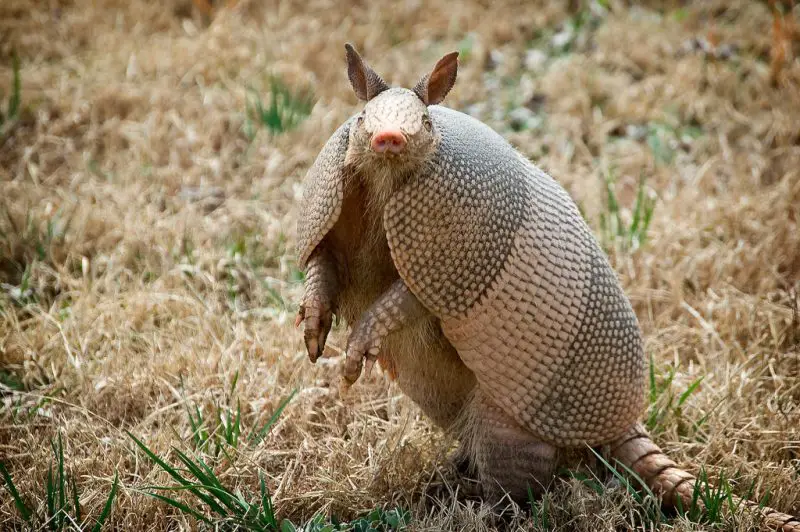
If you live in Texas long enough, you eventually see the signs of an armadillo long before you ever see the animal itself. Small cone-shaped holes appear overnight in your yard. Flowerbeds look disturbed. Soil is turned over. Lawns seem freshly “punched” with divots. Then one evening, you finally catch the culprit — a low, armored, almost prehistoric-looking creature quietly sniffing and digging through the ground. That is the nine-banded armadillo, and its entire lifestyle revolves around what it eats.
Armadillos are surprisingly common across Texas. They wander through ranchland, suburban neighborhoods, forest edges, fields, riverbanks, and even city green spaces. Many people think of them only as yard-destroyers, but their digging behavior is tied to one of the most interesting diets in the animal world. Understanding what armadillos eat explains why they dig so much, why they show up where they do, and why Texas offers nearly perfect conditions for them to thrive.
This detailed guide explores what armadillos eat in Texas, why the ground holds most of their favorite foods, why they dig constantly, how their feeding habits benefit ecosystems (even if homeowners sometimes disagree), and how their diet changes with weather and habitat.
Armadillos Are Primarily Insect Eaters

The most important fact about armadillos is that they are insectivores. Roughly 80–90% of their diet consists of insects and other invertebrates. They are not predators of large animals, they don’t attack people, and they rarely eat plant material unless they stumble onto something edible while foraging.
Their Favorite Foods Live Underground
Armadillos are obsessed with:
-
beetle larvae
-
grubs
-
earthworms
-
termites
-
ants
-
centipedes
-
roaches
-
soil-dwelling insects
Most of these live beneath the soil surface or under leaf litter, which is exactly why armadillos dig constantly. They aren’t digging for fun — they’re digging for food.
Armadillos Hunt With Their Nose, Not Their Eyes
Unlike many animals, armadillos do not rely heavily on eyesight to find food. Their vision is actually quite poor. Instead, their greatest feeding tool is their incredible sense of smell.
They can detect insects underground with remarkable accuracy. Once they smell prey beneath the soil, digging begins almost instantly. Their nose guides every strike of the paw.
This is why armadillos zigzag and sniff constantly across lawns and fields — they’re scanning the ground like living metal detectors searching for insects.
Why Armadillos Dig So Much in Texas Yards
If Texas armadillos could find all their food above ground, Texas lawns would be far less damaged. But the majority of their prey lives in the soil. Their digging is simply feeding behavior in action.
Digging Lets Them Reach Protein-Rich Food
Protein is critical for armadillos. Insects and larvae offer dense nutrition that supports:
-
muscle maintenance
-
reproduction
-
energy demands
-
daily survival
Soft Texas soils, irrigated lawns, garden beds, and loose dirt make digging easier — which is why yards often become feeding grounds.
Texas Lawns Attract Armadillos
Well-watered lawns attract:
-
grubs
-
earthworms
-
beetle larvae
Those insects love moist soil. Armadillos love insects. The result? They meet in your yard.
Healthy, watered turf often becomes a buffet.
They Don’t Just Dig for Food — They Dig for Shelter Too
Feeding isn’t the only reason Texans see digging activity.
Armadillos also dig:
-
burrows for shelter
-
escape tunnels
-
resting chambers
-
nurseries for raising young
Burrows can be several feet deep and over 10 feet long. Most are hidden under shrubs, near fences, along creek banks, or beneath structures. Their burrows protect them from heat, predators, and extreme weather.
So armadillos dig because:
-
Food lives underground
-
Safety exists underground
Digging is simply how they survive.
What Else Do Armadillos Eat in Texas?
Though insects dominate the menu, armadillos aren’t picky when hungry.
They also eat:
-
snails
-
slugs
-
small amphibians (rarely)
-
small reptiles (rarely)
-
carrion (dead animals, occasionally)
-
bird eggs if discovered
-
fruits or plants when available
However, these foods are usually opportunistic. They don’t actively hunt for larger prey. If something edible crosses their path while digging, they take advantage.
Their Specialized Feeding Anatomy Explains Everything
Armadillos are uniquely built for the diet they eat.
They have:
-
strong claws for digging
-
long pointed snouts for probing
-
a sticky tongue for catching insects
-
powerful legs for tearing soil
-
sharp smell detection
-
armored plating for protection while foraging
Everything about their body supports underground insect hunting.
Why Texas Is Perfect for Armadillos
Texas gives armadillos nearly every advantage they need.
Warm Temperatures
Armadillos are not suited for extreme cold. Texas warmth keeps insect populations active longer and keeps armadillos comfortable.
Soft and Varied Soil
From Gulf Coast sands to Blackland Prairie loam, many Texas soils are perfect for digging.
Abundant Insects
Texas ecosystems are insect-rich. Agricultural fields, backyards, wooded areas, and prairies all produce enough insects to sustain armadillos year-round.
Expanding Habitat
Urban and suburban development often increases insect sources like watered lawns and gardens.
Texas isn’t just a place armadillos live — it’s one of the best environments in the country for them.
Armadillos in Rural Texas Eat Differently Than Urban Armadillos
Where an armadillo lives affects what it eats.
Rural Armadillos
They primarily eat:
-
natural grubs
-
forest insects
-
soil invertebrates
-
agricultural pests
They forage in pastureland, forests, creek beds, and open scrub.
Suburban and Urban Armadillos
They focus more on:
-
lawn grubs
-
garden soil insects
-
landscaped areas
-
parks
-
golf courses
Humans accidentally create ideal feeding habitats.
Do Armadillos Eat Plants?
They occasionally nibble plants, but it’s not their focus. If they uproot plants, it’s usually because they were digging for insects in the soil around roots — not because they wanted the plant itself.
Plant damage is a side effect of their hunting strategy, not a food goal.
Do Armadillos Damage Ecosystems?
Despite yard frustrations, armadillos play an important ecological role.
They:
-
control insect populations
-
reduce pests
-
aerate soil naturally
-
help nutrient cycling
Their digging mixes soil layers, promotes decomposition, and can even help seedbeds. Nature benefits more than people sometimes realize.
When Do Armadillos Hunt for Food?
Armadillos in Texas are mostly nocturnal, especially in areas with human activity. They often forage:
-
late evening
-
nighttime
-
early morning hours
Heat encourages nighttime behavior. Cooler weather may push them to daytime activity.
If your yard is freshly disturbed in the morning, the work probably happened overnight.
Seasonal Feeding Changes in Texas
Texas weather changes across seasons, and armadillo feeding adjusts accordingly.
Spring and Summer
Food is abundant. Insects and larvae flourish. This is peak feeding season and prime digging time.
Fall
Food remains available, though some insect types decline. Armadillos continue feeding heavily to maintain health.
Winter
Cold slows them but does not stop them. Texas winters are mild enough that armadillos usually continue feeding. In severe cold snaps, they reduce activity but don’t truly hibernate.
Why Armadillos Sometimes Tear Up Large Sections of Yard Overnight
It can feel shocking how much damage appears in one night. But remember:
-
they move constantly
-
they dig quickly
-
they search widely
-
they need to eat a lot of insects
Insects aren’t packed together like berries on a bush. Armadillos must keep moving and digging to find enough.
So scattered digging = normal feeding.
Why They Return to the Same Yards Repeatedly
Armadillos have strong location memory. If a yard had:
-
good insects
-
easy soil
-
moisture
They come back.
They do not randomly wander every night. They revisit proven feeding grounds.
Armadillo Digging Sounds Destructive, But It’s Survival
To humans, digging looks like damage. To armadillos, digging is food access. They aren’t being mischievous, careless, or aggressive. They are simply following instinct.
Their digging pattern is:
-
smell
-
locate
-
dig
-
eat
-
move
-
repeat
They stop when food sources run out.
Armadillos and Human Conflict
Most armadillo conflicts arise because:
-
people want perfect lawns
-
armadillos search for insects in those lawns
Both interests collide.
But understanding why armadillos dig helps homeowners manage expectations and reduce frustration. As long as insects live in soil, armadillos will occasionally look for them.
Do Armadillos Spread Disease?
Nine-banded armadillos can carry certain bacteria, including those associated with Hansen’s disease (leprosy), but the risk to humans is extremely low, especially without handling them directly. Most conflicts relate to yard disruption, not health risk.
They are not aggressive animals and typically avoid humans completely.
Armadillos Play a Surprising Role in Pest Control
Because armadillos consume huge amounts of insects, they help reduce:
-
lawn grubs
-
beetle larvae
-
termites in natural soil
-
crop-damaging invertebrates
They remove pests that could otherwise harm plant life.
In nature, they act as cleanup crews.
Their Diet Explains Their Behavior Completely
If you understand their diet, you understand armadillos.
They:
-
dig because food lives underground
-
roam because insects are widely scattered
-
return to yards because insects remain abundant
-
thrive in Texas because the environment supports insects year-round
Everything comes back to what they eat.
FAQs About What Armadillos Eat in Texas
What do armadillos eat most in Texas?
Mostly insects such as grubs, beetle larvae, ants, termites, worms, and soil invertebrates.
Why do armadillos dig in yards?
They’re searching for insects. Lawns hold grubs and worms, making them ideal feeding grounds.
Do armadillos eat plants?
Occasionally, but plant damage is usually accidental while digging for insects.
Do armadillos hunt other animals?
Rarely. They mainly eat small invertebrates and occasionally scavenge.
Are armadillos helpful or harmful?
They can damage lawns but help ecosystems by controlling insects and aerating soil.
Why are armadillos so common in Texas?
Warm climate, soft soil, abundant insects, and human-altered landscapes create perfect conditions.
Do armadillos eat day or night?
Mostly at night, especially in suburban areas.
Do armadillos hibernate?
No. Texas winters are generally mild enough for them to stay active.
Conclusion
Armadillos in Texas are more than curious armored animals digging holes in the yard. Their diet defines their life. They survive by eating insects hidden beneath the soil, and digging is simply the method they use to reach them. Everything about their body, behavior, and daily routine is built around underground insect hunting.
They dig because food is underground. They visit lawns because healthy lawns support insect populations. They roam at night because it’s safer and cooler. They thrive in Texas because the state provides warmth, soft soil, abundant insects, and endless foraging opportunities.
When you see small holes peppering your Texas yard, you’re seeing nature’s insect hunter at work. Whether they frustrate you or fascinate you, their digging behavior is a story of survival — driven completely by what they eat and how perfectly adapted they are to the Texas landscape.