
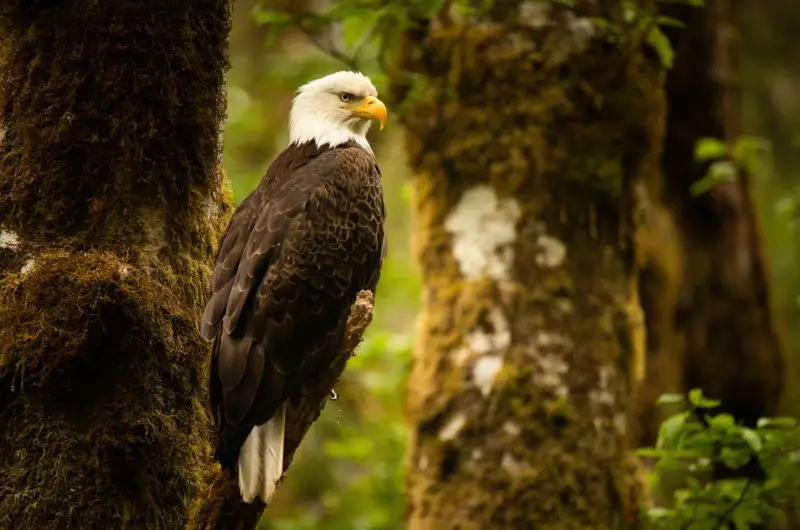
Missouri’s rivers, forests, wetlands, and rolling farmland create some of the most reliable eagle-watching habitats in the Midwest. Two species appear across the state each year, each one adding power and mystery to Missouri’s landscapes. Their presence reflects the health of waterways, the abundance of prey, and the seasonal rhythms that draw thousands of birds through the Mississippi Flyway.
These eagles are not equally common. One species lives in Missouri year-round, soaring above lakes and floodplains even in summer. The other arrives only during colder months, following northern winds into the state’s forests and bluffs. Learning how to identify both helps birdwatchers, photographers, and nature lovers appreciate Missouri’s growing raptor populations.
This guide covers the two eagle species found in Missouri in detail. You will find identification notes, size comparisons, behavior patterns, habitat preferences, photographs, a comparison table, viewing tips, and a complete FAQ section to support readers of all experience levels.
Different Types of Eagles Found in Missouri
Bald Eagle (Haliaeetus leucocephalus)

Identification
Adult Bald Eagles are unmistakable in the field. Their bright white head and tail stand out sharply against a dark chocolate-brown body. The bill is thick, hooked, and pale yellow. When seen soaring, their wings appear broad and flat with a long, steady profile. Immature birds look very different. They are mottled brown and white for the first four to five years of life, with dark heads and darker bills that gradually turn yellow. Their varied plumage often leads beginners to mistake them for other raptors, but their heavy build and powerful flight posture give them away.
Their silhouettes remain one of the easiest ways to identify them. The head projects far in front of the wings during flight, unlike vultures whose heads appear shorter. Their tail is wide and slightly rounded. Their call is surprisingly soft and high-pitched compared to their size, a gentle contrast to their fierce appearance.
Size
Bald Eagles are among North America’s largest raptors. Missouri adults typically measure between 28 and 38 inches long. Their wingspan stretches from 6 to 7.5 feet. Females are noticeably larger than males, sometimes reaching weights above 12 pounds, while males average slightly less. Their thick legs, large talons, and broad chest reflect their specialization as powerful fish-eaters capable of lifting heavy prey.
Behavior
Bald Eagles spend much of their day soaring in loose circles or perched quietly near water. They feed mostly on fish but take advantage of carrion, waterfowl, and small mammals when available. They are opportunistic hunters, often stealing prey from other birds such as Ospreys or feeding on winterkill along frozen river edges. Their flight style is controlled and confident, mixing slow wingbeats with long glides.
During winter, Bald Eagles gather in large numbers along rivers where open water concentrates fish. These gatherings can become spectacular, especially near dams where currents prevent water from freezing completely. Their nests are massive structures of sticks and branches built high in trees and reused for many years.
Habitat
Bald Eagles appear throughout Missouri but concentrate most heavily along the Mississippi River, the Missouri River corridor, large reservoirs, and major wetlands. They prefer habitats with tall snags for perching and large bodies of water for fishing. While traditionally associated with northern forests, Missouri’s mix of rivers and lakes supports a thriving and expanding population.
They nest in cottonwood groves, oak woodlands, and even near agricultural fields if water is close by. Winter brings additional individuals from the Great Lakes and Canada, making the cold months the peak season for sightings.
Golden Eagle (Aquila chrysaetos)

Identification
Golden Eagles have a rich dark-brown body with a warm golden wash on the back of the neck and head. This golden nape glows in sunlight and inspired their name. Their eyes are deep brown, and their bill is slimmer and darker than the Bald Eagle’s. Juveniles carry striking white patches at the base of their tail and on the underside of their wings. These clean blocks of white contrast with the mottled appearance of young Bald Eagles and help separate the two species in the field.
Their silhouettes differ as well. Golden Eagles hold their wings in a shallow V shape during soaring and glide more frequently over open hillsides and ridges. Their head shape is smaller and more streamlined. They appear more elongated in flight, with longer tails and slightly narrower wings.
Size
Golden Eagles are similar in size to Bald Eagles but tend to look slimmer and more aerodynamic. Their wingspan usually ranges from 6 to 7.5 feet, with body lengths between 27 and 33 inches. Females are larger than males. Despite their size, they move with surprising agility, capable of rapid dives and sharp turns during hunting.
Behavior
Golden Eagles are powerful hunters that specialize in mammals. They pursue rabbits, prairie dogs, ground squirrels, and occasionally larger animals. Their hunting flights often take place along bluffs, open fields, and ridgelines where rising air currents support their soaring. They move silently and methodically, often flying low over slopes or watching from elevated perches.
Missouri’s Golden Eagles are mostly winter visitors. They arrive from northern breeding grounds to take advantage of milder conditions and dependable prey. Their behavior during winter is more solitary than Bald Eagles. They seldom gather in large groups and spend much of their time patrolling open landscapes.
Habitat
Golden Eagles prefer wide, open spaces where they can scan for moving mammals. In Missouri, they appear primarily in the Ozarks, glades, highland forests, and rolling hill country. They are far less common than Bald Eagles, and sightings often require patience. Winter provides the best opportunities because they move into the state when northern territories become too harsh for consistent hunting.
Although they rarely breed in Missouri, the state serves as an important part of their winter range along the edge of the central flyway.
Comparison Table: Bald Eagle vs. Golden Eagle
|
Feature
|
Bald Eagle
|
Golden Eagle
|
|---|---|---|
|
Head and Tail
|
White head and tail in adults
|
Golden nape, dark tail
|
|
Juvenile Pattern
|
Mottled brown with irregular white
|
Clean white patches on wings and tail
|
|
Bill
|
Large, yellow, heavy
|
Slimmer, darker
|
|
Preferred Food
|
Mostly fish
|
Mostly mammals
|
|
Commonness in Missouri
|
Very common
|
Uncommon winter visitor
|
|
Habitat
|
Rivers, lakes, wetlands
|
Hills, bluffs, open country
|
|
Flight Silhouette
|
Broad wings, level posture
|
Slight V-shaped wings, longer tail
|
Best Time and Places to Observe Eagles in Missouri
Missouri offers excellent eagle-watching during winter, especially from December through February when northern birds migrate southward. The Mississippi River corridor hosts some of the largest concentrations of Bald Eagles in the central United States. Locations near dams are particularly productive because the moving water keeps fish accessible. Gavins Point, Lock and Dam 24, Clarksville, and areas near Quincy consistently attract high numbers.
For Golden Eagles, the best observation sites lie in the state’s hilly and remote regions. The Ozark Plateau, the Mark Twain National Forest, and glade habitats provide prime viewing opportunities. Observers scan ridgelines during windy or sunny days when Golden Eagles soar to search for prey. Their solitary habits require patience, but winter remains the most reliable season for sightings.
Spring and summer still offer Bald Eagle encounters, especially near major lakes such as Truman Lake, Table Rock Lake, and Lake of the Ozarks. These areas support nesting pairs that hunt for fish and raise young through the warmer months.
FAQs About Eagles in Missouri
Are Bald Eagles common in Missouri?
Yes. Missouri hosts a robust year-round Bald Eagle population, with thousands more arriving during winter.
How rare are Golden Eagles in Missouri?
Golden Eagles occur as uncommon winter visitors. They are far less abundant and require intentional searching to observe.
Do Bald Eagles nest in Missouri?
Yes. Nesting occurs primarily near large lakes, rivers, and forested wetlands where food and tall trees are abundant.
How do I tell a juvenile Bald Eagle from a Golden Eagle?
Juvenile Bald Eagles show mottled and irregular white markings, while Golden Eagles display clean, sharp patches of white on wings and tail.
Where is the best place to photograph eagles in Missouri?
The Mississippi River near dams offers the highest density of Bald Eagles during winter. Photographers often gather at viewing platforms in Clarksville, Quincy, and surrounding areas.
Do Golden Eagles hunt differently than Bald Eagles?
Golden Eagles specialize in mammals and use soaring terrain to locate prey. Bald Eagles feed largely on fish and often hunt near open water.
Are eagles dangerous?
They avoid humans and rarely pose a threat. Their primary interactions involve hunting prey or defending nests during breeding season.
Can both species be seen in the same area?
In winter, yes. Some regions with mixed forests and open landscapes may host individuals of both species.
Conclusion
Missouri’s mixture of wetlands, forests, and river corridors creates ideal habitat for one of the largest raptors in North America. Bald Eagles thrive throughout the state and represent a conservation success story that continues to unfold along the Mississippi Flyway. Golden Eagles arrive quietly each winter, adding diversity and intrigue to Missouri’s wild spaces.
Learning to identify both species deepens the experience of exploring Missouri’s outdoors. These birds mirror the health of the landscapes they inhabit, and their presence reminds us how important it is to preserve the waterways, forests, and open spaces they depend on.