
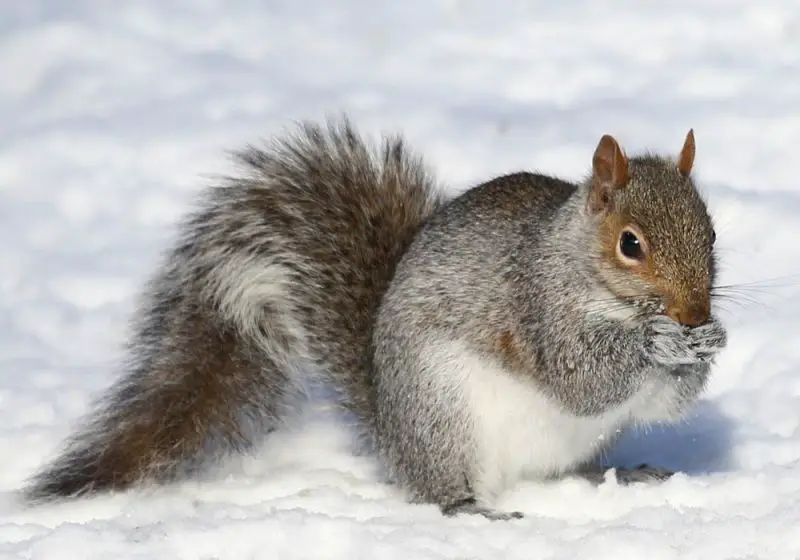
Winter in Vermont does not arrive softly. It freezes ponds, buries forests under thick snow, coats rooftops with ice, and stretches darkness across long, silent nights. Temperatures drop far below comfortable levels, storms move across mountains and valleys, and the landscape that once felt full of life becomes quiet and demanding. Yet squirrels remain. They do not migrate, they do not disappear, and they do not simply wait for warmth to return. Instead, they survive — actively, intelligently, and instinctively — through one of New England’s most challenging seasonal environments.
Their survival depends deeply on food. What squirrels eat during Vermont’s deep cold determines whether they maintain body heat, conserve energy, and make it through until spring finally breaks the ice. Their winter menu is not random. It is carefully built through preparation, instinct, and adaptability long before snow falls.
This detailed guide explores what squirrels eat to survive Vermont’s deep winter, how their diet shifts from fall abundance to snow-covered scarcity, how stored food saves their lives, and why their winter feeding habits matter to forests, towns, and ecosystems across the state.
How Vermont’s Winter Shapes Squirrel Feeding

Extreme Cold Demands Serious Energy
Vermont winters are long and intense. January and February can bring subzero temperatures, frequent snow cover, and wind that strips heat away quickly. Squirrels are small mammals with fast metabolisms, which means they burn energy rapidly just to stay warm.
Every winter meal must provide real nutritional value — fats for insulation and long-term fuel, protein for muscle maintenance, and calories for daily survival. Winter food is not about comfort; it’s about endurance.
Snow Changes Access to Food
Once snow covers Vermont’s forests, yards, and farmlands, most ground food sources disappear. Seeds, grasses, fallen fruit, ground insects, and plants become buried beneath thick layers of snow and ice. This forces squirrels to rely less on daily foraging and more on preparation made months earlier.
This is where squirrels’ impressive food-saving behavior becomes essential.
The Importance of Food Caching Before Winter
Storing Food Is Their Greatest Survival Advantage
One of the biggest reasons squirrels survive Vermont’s deep cold is preparation. During late summer and fall, squirrels work tirelessly to collect and hide food across their territory. This behavior, called caching, is the foundation of their winter survival strategy.
They store food:
• in tree holes
• under leaf piles
• beneath soil
• in crevices of bark
• inside logs
• in hidden ground spots near trees
Instead of depending on daily luck, squirrels spend winter visiting these hidden “pantries.”
Remembering Where They Hid It
Squirrels do not just hide food and hope. They remember locations using spatial memory linked to landmarks. Snow may cover the ground, but squirrels can still find buried caches beneath frozen soil using memory, smell, and instinct.
Not every hidden stash gets recovered — and that turns into another fascinating benefit for Vermont forests, which we will explore later.
Core Winter Foods Squirrels Depend On in Vermont
Nuts: The Backbone of Winter Survival
Nuts are the most important winter food squirrels rely on. They are incredibly energy-dense, high in healthy fats, and long-lasting. This makes them perfect “winter fuel.”
Squirrels eat:
• acorns
• beechnuts
• hickory nuts
• walnuts
• chestnuts
These nuts are often stored in fall and retrieved throughout winter. Even frozen nuts remain nutritious, making them one of the most dependable cold-weather foods.
Seeds and Tree Mast
When nuts are limited, seeds provide strong backup nutrition. Certain Vermont trees produce seeds that remain accessible into winter or remain in tree cones and pods.
Squirrels may eat:
• maple tree seeds
• pine seeds from cones
• spruce and fir cones
• leftover seed pods from hardwood trees
Breaking into cones or seed clusters requires effort, but the payoff is valuable energy.
Bark, Twigs, and Inner Tree Layers
When Snow Covers Everything Else
There are times when squirrels cannot reach stored food or natural supplies run thin. When this happens, trees become emergency winter grocery stores.
Squirrels will nibble on:
• tree bark
• tender inner bark (cambium layer)
• young twigs and shoots
This food is not as rich as nuts or seeds, but it helps sustain life when deep cold makes feeding difficult. It is a survival strategy built into nature.
Berries, Fruits, and Leftover Autumn Food
What Remains Still Matters
Some Vermont plants and shrubs hold dried fruit and berries through winter. Even shriveled or frozen, these provide sugar, hydration, and additional nutrients.
Wintering squirrels may eat:
• crabapples
• hawthorn berries
• sumac berries
• wild grapes still clinging to vines
• leftover orchard fruit
These foods are especially valuable during midwinter stretches when cached nuts are low.
Mushrooms and Fungi Stored from Earlier Seasons
An Overlooked Survival Trick
Squirrels are known for drying mushrooms by placing them on branches or tree bark during warmer seasons. Once dried, these fungi remain edible through winter.
They may consume dried:
• bracket fungi
• bolete mushrooms
• forest mushrooms safe for wildlife
This unique behavior gives squirrels additional winter nutrition beyond nuts.
Insects and Animal Protein — Rare but Possible
Supplementing When Needed
Most insects vanish in Vermont winter, but squirrels occasionally eat:
• dormant insects found in bark
• larvae hidden in wood
• insect eggs
Additionally, though primarily plant-eaters, desperate winter squirrels may consume:
• small bits of carrion
• bird eggs if found
• occasionally nestlings in survival situations
This is not their main diet, but extreme cold can force unusual feeding behavior.
Human Environments Play a Huge Winter Role
Suburban and Urban Feeding
Vermont squirrels do not rely solely on forests. Towns, neighborhoods, and city parks offer winter food opportunities.
They commonly eat:
• bird feeder seeds
• spilled sunflower seeds
• corn and grain from livestock areas
• compost scraps
• leftover garden produce under snow
Bird feeders are especially attractive winter resources. Many Vermont residents notice squirrels visiting feeders daily — not just for stealing, but because seeds help them survive.
Red Squirrels vs Gray Squirrels vs Flying Squirrels in Winter
Gray Squirrels
Common in Vermont towns and forests. They cache large amounts of food and rely heavily on nuts, seeds, stored food, and backyard feeders.
Red Squirrels
More territorial and often protect single food storage piles rather than scatter caching. Depend greatly on pine cones and forest mast.
Flying Squirrels
Mostly nocturnal, making them harder to see. Still active in cold months, feeding on nuts, fungi, seeds, and occasionally stored plant material.
Each species adapts to Vermont winter differently but shares one goal: energy stability.
Water and Hydration in Freezing Weather
Snow as a Water Source
When lakes and streams freeze, squirrels often rely on snow for hydration. Eating snow helps maintain moisture balance, though it requires energy to melt internally.
They may also drink:
• water from melting ice
• runoff from tree bark during thaws
Hydration remains a quiet but important part of survival.
How Squirrels Find Food Beneath Deep Snow
Smell, Touch, and Memory Working Together
Snow does not stop squirrels. Their sense of smell allows them to detect buried food beneath inches of snow. Combined with sharp memory, they can dig precisely where food was hidden months earlier.
They scrape snow aside with front paws, uncover soil, and retrieve nuts or seeds once thought lost to winter.
Energy Conservation Is Just as Important as Eating
Winter Rhythm of Activity
Squirrels reduce unnecessary movement. They stay sheltered during intense storms, conserve heat, and limit travel to essential feeding trips. When weather improves, they forage more actively again.
This rhythm helps balance energy use and food supply through long Vermont winters.
Nutrition Value of Their Winter Diet
Fat
Keeps body heat stable and supports endurance.
Protein
Maintains muscle strength for climbing, running, and escaping predators.
Carbohydrates
Provide immediate energy for cold weather activity.
Their instinct-driven diet naturally provides the nutrition needed to survive subzero conditions.
Where Vermont Squirrels Are Finding Food Right Now
Forests and Wilderness Areas
Provide nuts, cones, bark, berries, and stored caches.
Suburban Neighborhoods
Offer bird seed, fruit trees, compost access, and man-made food opportunities.
Farmlands and Rural Areas
Provide spilled grain, stored crops, barn seeds, and rodent-rich spaces.
Squirrels survive not through luck, but through flexibility.
Challenges Squirrels Face During Vermont Winter
Extreme Cold Snaps
Increase energy needs drastically.
Deep Snow Periods
Temporarily block travel to food.
Predators
Owls, hawks, foxes, and other predators stay active.
Food Shortage Winters
Years with poor nut production make survival far more difficult.
Yet squirrels remain resilient.
How Their Winter Diet Helps the Environment
Forest Regeneration
Remember those hidden nuts squirrels forget to retrieve?
Many sprout into new trees.
Squirrels unintentionally plant:
• oak forests
• beech growth
• hickory stands
Their winter caching behavior shapes future Vermont forests.
Supporting Food Chains
By remaining active, squirrels serve as prey for winter predators, helping maintain ecological balance.
FAQs about What Squirrels Eat to Make It Through Vermont’s Deep Cold
Do squirrels hibernate in Vermont?
No. They stay active but reduce movement during severe weather.
What do they eat the most in winter?
Nuts, seeds, cached food, bark, and tree mast.
Do squirrels rely on bird feeders?
Often yes. Seeds from feeders provide valuable winter calories.
Do squirrels ever starve in harsh winters?
Some do during extremely poor food years, but many survive through caching.
Do squirrels eat meat in winter?
Rarely, but in extreme conditions they may eat insects or scavenged protein.
How do squirrels find food under snow?
They use strong memory, smell, and digging ability.
Do all Vermont squirrel species eat the same foods?
Their diets overlap, but red squirrels rely more on pine cones, while gray squirrels depend more on nuts.
Does winter diet affect their health in spring?
Yes. Strong winter nutrition improves survival and breeding success.
Final Thoughts
Vermont’s deep cold creates a season where only adaptable, prepared, and resilient wildlife survives. Squirrels do not make it through winter by accident. They prepare for months, store food with purpose, use instinct to guide their diet, and shift feeding strategies as the landscape freezes around them.
What squirrels eat in winter — nuts, seeds, cones, berries, bark, fungi, supplemental human food, and occasional animal protein — fuels warmth, strength, and endurance. Their winter diet does more than keep them alive. It shapes forests, supports ecosystems, and reminds us how survival often depends on planning, adaptability, and nature’s quiet intelligence.
When Vermont finally thaws and spring sunlight returns, squirrels emerge not as fragile survivors, but as living examples of resilience built on preparation, instinct, and a winter diet designed perfectly for endurance.