
North Carolina beaches attract millions of visitors every year. Warm ocean water, long stretches of sand, coastal marshes, and sea breezes make the shoreline one of the most popular destinations on the East Coast. Families walk along the dunes at sunset, anglers cast lines into the surf, and vacationers settle into quiet evenings on oceanfront decks.
Yet many visitors quickly discover something unexpected.
Just as the sun begins to drop and the breeze softens, a sudden itching sensation appears on exposed skin. Small red marks show up around ankles, wrists, or legs. The irritation may grow stronger over the next several hours.
Often people never see what caused the bites.
What most North Carolina beach visitors don’t realize about no-see-ums is that these insects are so small they often go completely unnoticed while they are feeding. By the time someone feels the bite, the insect responsible may already be gone.
These nearly invisible insects are a common part of coastal ecosystems throughout North Carolina.
Understanding where they come from and why they appear helps explain why beach evenings sometimes bring unexpected itching along the coast.
The Tiny Insect Behind the Bites

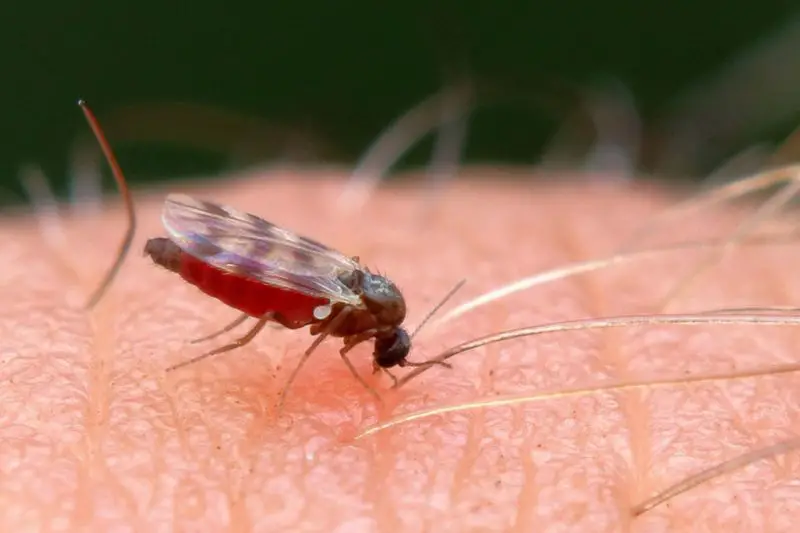
The insects commonly called no-see-ums belong to the biting midge group within the genus Culicoides. These insects are extremely small, often measuring only one to three millimeters in length. Because of their tiny size, they are difficult to see even when flying close to the skin, which is why beach visitors often feel the bite before ever noticing the insect itself.
Many people describe them as “invisible gnats” because they can bite without being detected. Unlike mosquitoes, which are large enough to notice easily, no-see-ums often appear only as tiny dark specks in the air. On windy beaches or during sunset when light fades, they become even harder to detect.
Despite their small size, these insects are well adapted for feeding on blood. Female no-see-ums possess specialized mouthparts designed to pierce skin and draw small amounts of blood. Only females bite, because they require protein from blood to develop their eggs.
Once a female obtains a blood meal, she flies back toward nearby marshes or damp coastal areas to deposit eggs. This cycle allows new generations to develop continuously in coastal habitats where moisture and organic material remain available.
Why North Carolina Beaches Attract No-See-Ums
North Carolina’s coastline provides nearly perfect habitat for biting midges. The region contains extensive marshlands, barrier islands, tidal flats, and estuaries where saltwater and freshwater mix together. These areas remain damp for much of the year, creating stable breeding grounds for insects that depend on moisture.
Văn bản đã dán (1)
Female no-see-ums deposit their eggs in wet soil, muddy shorelines, or damp organic debris. These locations often lie just beyond the beach itself, especially in salt marshes where grasses grow in shallow water along tidal creeks.
When the eggs hatch, the larvae remain within the moist soil and feed on microorganisms and decaying organic material. Unlike mosquitoes, which require standing water, biting midges can develop in damp ground where moisture remains trapped in the sediment.
Because the North Carolina coast contains thousands of acres of marsh habitat, large numbers of larvae can develop each season. As adults emerge, they disperse into nearby areas where people gather, including beaches, boardwalks, and coastal homes.
This connection between marsh ecosystems and nearby beaches explains why no-see-ums are so common in many coastal vacation spots.
Why Visitors Rarely See Them
One of the most frustrating aspects of no-see-ums is how difficult they are to detect. Their name comes directly from this trait.
Even when a no-see-um lands on the skin, it may remain almost invisible. Their bodies are extremely small and often pale gray, allowing them to blend easily with sand or the surrounding air.
Their wings also beat extremely fast. This rapid motion allows them to hover while feeding, yet produces almost no sound.
Mosquitoes usually reveal their presence with a distinctive buzzing noise. No-see-ums rarely make audible sounds during flight, which allows them to approach unnoticed.
During sunset hours along North Carolina beaches, lighting conditions make them even harder to detect. As daylight fades, these tiny insects become nearly impossible to see while they move through the air.
For beach visitors relaxing near dunes or walking along the shoreline, bites may occur without any visible insect nearby.
Why Bites Often Feel Worse Later
Many people are surprised that no-see-um bites often begin itching long after the insect has finished feeding.
When a no-see-um pierces the skin, it injects saliva that prevents the blood from clotting. This allows the insect to feed more efficiently while drawing only a tiny amount of blood.
However, the body’s immune system recognizes these foreign proteins as irritants.
In response, the immune system releases histamines that cause swelling and itching around the bite site.
This reaction may take time to develop. As a result, beach visitors often notice irritation several hours after leaving the beach rather than during the bite itself.
The intensity of the reaction varies widely among individuals. Some people develop small red bumps that fade quickly, while others experience stronger itching that lasts for a day or more.
Because the insects themselves are rarely seen, people sometimes assume another insect was responsible for the irritation.
Why Sunset Brings More Activity
Many beachgoers notice that no-see-um activity tends to increase around sunrise and sunset.
This pattern results from several environmental factors that influence insect behavior.
During the middle of the day, strong sunlight and high temperatures can make conditions less favorable for tiny flying insects. Coastal breezes also tend to strengthen during daylight hours, making it harder for small insects to remain airborne.
As the sun begins to set, temperatures drop slightly and winds often calm.
These calmer conditions allow no-see-ums to fly more easily through the air. At the same time, people often gather outdoors during the evening to enjoy the cooler temperatures and scenic sunsets along the shoreline.
The combination of increased insect activity and human presence leads to more frequent encounters between no-see-ums and beach visitors.
This is why many bites occur during sunset walks along North Carolina beaches.
Coastal Marshes and Breeding Grounds
North Carolina’s coastal marshes play a major role in supporting no-see-um populations.
Salt marsh grasses grow across shallow estuaries and tidal creeks that stretch for miles along the coastline. These wetlands remain saturated with water and organic material, creating nutrient-rich habitats for many small organisms.
Within the moist soil beneath these grasses, no-see-um larvae develop quietly.
They feed on bacteria, algae, and microscopic organisms that thrive in the damp sediment. This food supply allows the larvae to grow until they transform into pupae and eventually emerge as adults.
Because marshes remain productive ecosystems throughout the warm season, they support continuous insect development.
Adult midges emerging from marshes often travel short distances toward beaches, coastal homes, or boardwalk areas where people gather.
This proximity between marsh habitats and popular beach destinations explains why no-see-ums frequently appear near vacation areas along the North Carolina coast.
Why Wind Reduces No-See-Ums
Wind plays one of the most important roles in controlling no-see-um activity along beaches.
Because the insects are extremely small and lightweight, even mild breezes can disrupt their flight.
When steady coastal winds blow across open beaches, no-see-ums struggle to maintain stable flight paths. This makes it difficult for them to reach potential hosts.
For beach visitors, windy days often feel much more comfortable because the insects cannot approach easily.
Calm evenings, however, allow the insects to move freely.
When winds drop near sunset and the air becomes still, midges can travel farther and locate hosts more easily.
This is why some of the most noticeable biting periods occur during calm coastal evenings when the air feels warm and still.
Natural Predators of No-See-Ums
Although no-see-ums may seem like persistent pests, they play an important role in coastal food webs.
Many animals depend on them as food.
In marsh environments, fish and aquatic insects feed on larvae developing in wet soil and shallow pools. Crustaceans and other small predators also consume midge larvae in coastal waters.
Adult midges become prey for birds, bats, dragonflies, and spiders.
Swallows and other insect-eating birds often fly low across marshlands capturing small flying insects. Dragonflies patrol the air above wetlands where midges emerge in large numbers.
Because no-see-ums are abundant during warm months, they provide an important source of energy for these predators.
Their presence therefore supports wildlife populations throughout North Carolina’s coastal ecosystems.
Why Some People Attract More Bites
One mystery many beach visitors notice is that some people receive far more bites than others.
Several biological factors may influence this pattern.
Body heat and carbon dioxide released through breathing help insects locate potential hosts. These signals guide biting insects toward warm-blooded animals.
Certain skin bacteria may also produce odors that attract insects.
Dark clothing can make people more visible to flying insects near the ground. Movement also plays a role, as walking through dunes or vegetation may disturb insects resting nearby.
Although these factors affect how attractive someone may appear to biting insects, no-see-ums remain opportunistic feeders.
When a host is available, they will attempt to feed regardless of individual differences.
How No-See-Ums Fit Into Coastal Ecosystems
Despite their reputation as biting pests, no-see-ums perform valuable ecological functions.
Their larvae help break down organic material within marsh soils. By feeding on microorganisms and plant debris, they contribute to the recycling of nutrients in coastal wetlands.
Healthy marsh ecosystems depend on this constant recycling process.
These wetlands support fish populations, filter pollutants from water, and protect shorelines from erosion caused by storms.
Adult midges also serve as an important food source for many animals living along the coast.
Birds, fish, amphibians, and insects all rely on these small midges as part of their diets.
Although beach visitors may find them irritating, no-see-ums remain an essential part of the ecological balance within North Carolina’s coastal environments.
FAQs About No-See-Ums on North Carolina Beaches
What are no-see-ums?
No-see-ums are extremely small biting midges that feed on blood to produce eggs.
Why are they common on North Carolina beaches?
Coastal marshes provide ideal breeding habitats for these insects.
Why can’t people see them?
Their bodies are extremely small and often nearly invisible to the naked eye.
When are they most active?
They are usually most active during early morning and evening hours.
Are no-see-um bites dangerous?
Their bites are usually harmless but may cause itching or irritation.
Final Thoughts
What most North Carolina beach visitors don’t realize about no-see-ums is that these tiny insects represent a natural part of coastal ecosystems shaped by marshlands, tides, and warm summer weather.
Although their bites may cause temporary discomfort, the insects themselves play important roles within the food webs of marsh and beach environments.
Their larvae help recycle organic material in coastal wetlands, while adult insects provide food for birds, fish, and other wildlife.
For visitors enjoying North Carolina’s shoreline, encounters with these nearly invisible insects simply reflect the vibrant ecological life that exists along the coast.
Even the smallest creatures contribute to the balance of these coastal landscapes, reminding us that the beach environment is far more alive than it may appear at first glance.