
New York’s landscapes offer an extraordinary mix of forests, parks, wetlands, and suburban green spaces where wildlife thrives. From the wooded trails of the Hudson Valley to quiet suburban yards on Long Island and shaded parks throughout upstate towns, the state provides abundant habitats for countless species of insects and animals. People spend weekends hiking, gardening, camping, or simply relaxing outdoors, rarely thinking about the tiny creatures living quietly within grasses and leaf litter.
Yet many residents eventually experience the same unsettling discovery after spending time outside. A small dark speck appears attached to the skin, often so tiny it can be mistaken for dirt or a freckle. Only upon closer inspection does it become clear that the speck is moving slightly or firmly embedded in the skin. In many cases, that tiny insect is a blacklegged tick, one of the most medically significant tick species in the northeastern United States.
Blacklegged ticks are sometimes called deer ticks, a name that reflects their close association with white-tailed deer populations. Although extremely small, these ticks have become widely known because they can transmit certain diseases, including Lyme disease, which was first identified in the northeastern United States decades ago.
Despite how frequently blacklegged ticks appear in news headlines and public health advisories, many New York residents still misunderstand how these ticks behave and how bites actually occur. Some assume ticks jump from trees or actively hunt people, while others believe they only exist deep within remote forests.
In reality, blacklegged ticks live much closer to human environments than many people realize. Their life cycle unfolds quietly in forest edges, grassy fields, and even suburban yards where wildlife moves through vegetation. Understanding how these ticks live, feed, and spread reveals a far more complex ecological story than most people expect.
For New York residents who enjoy spending time outdoors, learning about blacklegged tick bites offers valuable insight into one of the smallest yet most influential animals living in the region’s ecosystems.
The Tiny Parasite Known as the Blacklegged Tick

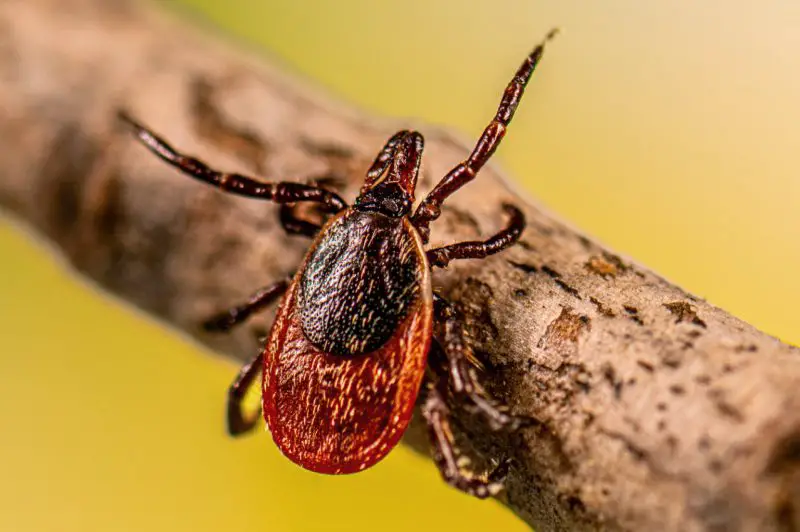
The blacklegged tick, scientifically known as Ixodes scapularis, belongs to a group of arthropods called arachnids. This group also includes spiders, scorpions, and mites.
Unlike insects, which possess six legs, ticks have eight legs in their adult stage. This feature places them closer to spiders than to insects.
Adult blacklegged ticks are extremely small. Female ticks typically measure only about 3 to 4 millimeters long before feeding, roughly the size of a sesame seed.
After feeding on blood, their bodies expand dramatically and may become several times larger.
Male ticks are slightly smaller and feed much less than females.
The body of a blacklegged tick appears flattened and oval-shaped, allowing it to hide easily in vegetation or on animal hosts.
Their dark brown to black legs give the species its common name.
Despite their small size, blacklegged ticks possess specialized mouthparts designed specifically for attaching securely to hosts while feeding.
Where Blacklegged Ticks Live in New York
Blacklegged ticks are widely distributed throughout New York State.
They thrive particularly well in environments where forests, wildlife, and humidity combine.
Wooded areas provide thick layers of leaf litter that trap moisture near the ground.
Ticks require humid environments because their small bodies lose water easily.
Forest edges often support especially large tick populations.
These transition zones between forests and open land attract many animals that serve as hosts for ticks.
Suburban neighborhoods located near wooded areas can also harbor blacklegged ticks.
Backyards containing shrubs, tall grass, or piles of fallen leaves may provide suitable microhabitats.
Because wildlife such as deer, mice, and birds frequently travel through these areas, ticks can easily move into residential environments.
The Complex Life Cycle of Blacklegged Ticks
Blacklegged ticks undergo a four-stage life cycle consisting of egg, larva, nymph, and adult.
Each stage requires a blood meal from a host animal before the tick can develop further.
The cycle begins when adult female ticks lay clusters of thousands of eggs in leaf litter during spring.
After several weeks, tiny larvae emerge.
These larvae are extremely small and possess only six legs.
They typically feed on small animals such as mice or birds.
After feeding, larvae drop off the host and molt into the next stage known as the nymph.
Nymphs are slightly larger and now possess eight legs.
This stage is responsible for many human tick bites because nymphs are still very small and difficult to detect.
After another blood meal, the nymph molts into an adult tick.
Adult ticks often feed on larger mammals such as deer.
Following mating and feeding, adult females lay eggs and begin the cycle again.
This life cycle typically takes about two years to complete.
Why Ticks Attach to Humans
Ticks do not fly or jump.
Instead, they use a behavior known as questing to find hosts.
During questing, ticks climb onto the tips of grass blades or low plants.
They extend their front legs outward, waiting for an animal or person to brush past.
When contact occurs, the tick quickly grasps onto clothing or skin.
From there, it begins searching for a suitable feeding location.
Ticks often move toward areas where skin is thin or where clothing fits tightly.
Common attachment sites include the scalp, behind the knees, under arms, and along waistbands.
Once the tick finds a suitable location, it inserts specialized mouthparts into the skin.
How Tick Bites Work
The feeding process of a tick is remarkably complex.
Ticks possess a structure known as a hypostome, which resembles a tiny barbed tube.
When the tick begins feeding, it pushes this structure into the skin.
The barbs anchor the tick firmly in place.
Ticks also release saliva containing compounds that prevent blood clotting and reduce the host’s pain response.
Because of this saliva, many people do not feel the tick bite when it first occurs.
Once attached, the tick begins slowly drawing blood from the host.
Feeding may last from several hours to several days depending on the tick’s stage.
During this time the tick’s body gradually expands as it fills with blood.
Why Blacklegged Ticks Are Associated With Lyme Disease
Blacklegged ticks are widely known because they can transmit Lyme disease, an illness caused by a bacterium known as Borrelia burgdorferi.
However, ticks themselves do not naturally carry this bacterium when they hatch.
They acquire it while feeding on infected animals, particularly certain species of mice.
Once infected, the tick may carry the bacterium for the remainder of its life.
Transmission to humans occurs only if the tick remains attached long enough for bacteria to transfer through its saliva.
For this reason, early detection of ticks is an important factor in reducing the risk of infection.
Seasonal Patterns of Tick Activity
Tick activity in New York follows predictable seasonal patterns.
Larvae usually appear during late summer, feeding primarily on small animals.
Nymphs become active during late spring and early summer, which coincides with the time many people spend outdoors.
Because nymphs are so small, they account for many unnoticed bites.
Adult ticks are most active during autumn and again during early spring after snow melts.
Unlike many insects, ticks can remain active even during cool weather if temperatures stay above freezing.
This means tick encounters can occur during several months of the year.
Why Tick Bites Often Go Unnoticed
Many people never realize they have been bitten by a tick until they later discover the insect attached to their skin.
Several factors contribute to this.
First, ticks are extremely small, especially during the larval and nymph stages.
Second, the saliva ticks inject into the skin contains compounds that reduce pain and inflammation.
Because of this chemical effect, the bite often produces little immediate sensation.
Ticks also tend to attach in areas that are difficult to see, such as the scalp or behind the knees.
For these reasons, tick bites often remain unnoticed for hours or even days.
Wildlife and the Spread of Ticks
Wildlife plays a major role in the spread of blacklegged ticks.
White-tailed deer serve as important hosts for adult ticks.
While deer do not carry Lyme disease bacteria, they help transport adult ticks across landscapes.
Small mammals such as white-footed mice play another critical role.
These mice frequently carry the bacteria responsible for Lyme disease.
When ticks feed on infected mice, they may acquire the bacteria.
Birds can also carry ticks over long distances during migration.
Because these animals move widely across landscapes, tick populations can spread into new areas over time.
Why Suburban Areas Often Have Ticks
Many people associate ticks only with remote wilderness areas.
However, suburban environments can support significant tick populations.
Residential neighborhoods located near forests provide ideal conditions for ticks.
Shrubs, woodpiles, and leaf litter create moist microhabitats similar to forest floors.
Bird feeders may attract rodents, which serve as hosts for ticks.
Deer moving through neighborhoods may also transport adult ticks.
Because these animals travel through suburban landscapes regularly, ticks can appear in yards as well as forests.
FAQs About Blacklegged Tick Bites in New York
What is a blacklegged tick?
A blacklegged tick is a small parasitic arachnid that feeds on the blood of animals and sometimes humans.
Why are they called deer ticks?
They are commonly associated with white-tailed deer, which serve as hosts for adult ticks.
Where are blacklegged ticks found?
They live in forests, grassy areas, and suburban environments with wildlife activity.
Do ticks jump or fly?
No. They attach to hosts by waiting on vegetation and grabbing passing animals.
Why are tick bites hard to notice?
Ticks inject saliva containing compounds that reduce pain and inflammation.
When are ticks most active?
Nymphs are most active in late spring and early summer, while adults appear in fall and early spring.
Do all ticks carry Lyme disease?
No. Ticks must first acquire the bacteria from infected animals.
How long do ticks feed?
Ticks may remain attached for several hours to several days depending on their life stage.
Final Thoughts
Blacklegged ticks are among the smallest animals living in New York’s forests and suburban landscapes, yet their impact on human health has made them widely recognized.
Although their bites often go unnoticed at first, these ticks follow a predictable life cycle shaped by wildlife movement, seasonal weather patterns, and ecological relationships between animals and vegetation.
Understanding how blacklegged ticks live and spread helps explain why they appear in both natural and residential environments.
For New York residents who enjoy spending time outdoors, awareness of tick behavior offers insight into the hidden ecological connections linking forests, wildlife, and human activity.
Even the tiniest creatures play significant roles in shaping the ecosystems that surround everyday life.