
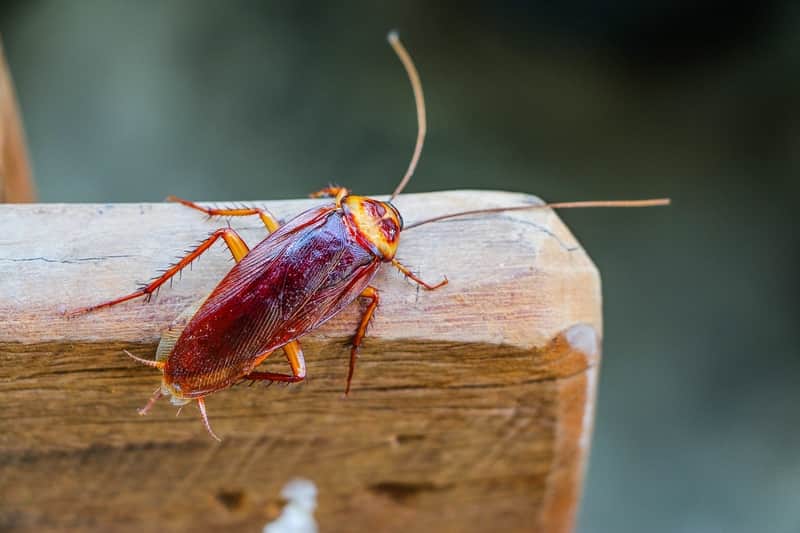
In many Pennsylvania homes, cockroach sightings seem puzzling. Kitchens are kept clean. Food is sealed. Crumbs are wiped away nightly. Yet roaches still appear, sometimes weeks after any obvious food source has been removed. Homeowners often assume the infestation must be severe or that roaches are feeding on something unseen.
The truth is more unsettling and more complex. Cockroaches do not need much food to survive, and in Pennsylvania homes, they rely on strategies that allow them to persist in conditions that would starve most other pests. Their survival is not driven by abundance, but by efficiency, flexibility, and biology shaped over millions of years.
This article explains how roaches survive with minimal food in Pennsylvania homes, what they actually consume when food seems unavailable, and why traditional assumptions about starvation often fail to eliminate them.
Roaches Are Built for Scarcity, Not Abundance

Survival Evolved Under Harsh Conditions
Cockroaches evolved long before human homes existed. For most of their evolutionary history, food availability was unpredictable. Survival favored individuals that could endure long periods without eating, extract nutrition from poor-quality sources, and remain active with minimal energy input.
Modern household roaches in Pennsylvania still carry these traits. They are not dependent on daily meals. They are designed to endure.
This biological foundation explains why removing visible food rarely leads to immediate population collapse.
Low Metabolic Demand
Roaches have relatively slow metabolisms compared to mammals. Their bodies are efficient at conserving energy, especially when activity is reduced.
In cool, dark, undisturbed areas such as basements, wall voids, and crawl spaces common in Pennsylvania homes, roaches can lower activity levels and extend survival with very little intake.
This ability allows them to wait out unfavorable conditions rather than die off quickly.
What Roaches Actually Eat When Food Seems Gone
Organic Residue Is Enough
Roaches do not require full meals. Microscopic residues are sufficient. Grease films on walls, sugars left behind by spilled drinks, starch dust from cardboard, and food vapors absorbed into surfaces all provide usable calories.
In Pennsylvania homes, kitchens are not the only feeding zones. Pantries, trash areas, laundry rooms, and even living spaces accumulate trace organic matter over time.
To a roach, these residues are food.
Paper, Cardboard, and Glue
Roaches can digest cellulose and starch-based adhesives. Cardboard boxes, book bindings, wallpaper paste, and envelope glue all provide nutrition.
This matters in Pennsylvania, where basements often store boxes, paper goods, and seasonal items. Even if no food is present, stored materials quietly support roach survival.
These sources are rarely recognized as food by homeowners.
Water Matters More Than Food
Roaches Die Faster Without Water
While roaches can survive weeks without food, they cannot survive long without moisture. Water is the true limiting factor.
Pennsylvania homes provide abundant moisture sources. Condensation on pipes, damp basements, leaking faucets, pet water bowls, humidifiers, and even moisture trapped under appliances all sustain roaches.
As long as water is available, food scarcity becomes far less effective as a control strategy.
Humidity as a Hidden Resource
High humidity acts as indirect hydration. Roaches absorb moisture from humid air and damp surfaces.
Older Pennsylvania homes, especially those with stone foundations or poor ventilation, often maintain higher humidity levels year-round. This allows roaches to survive even when liquid water is not obvious.
Cannibalism and Colony Recycling
Roaches Feed on Each Other
When food is scarce, roaches turn inward. They feed on injured, dying, or dead members of their own species.
This behavior recycles nutrients within the colony and reduces waste. Nothing is lost. Even shed skins from molting are consumed for protein.
Cannibalism allows colonies to persist far longer than expected under starvation conditions.
Eggs and Weak Individuals Are Targeted
Egg cases, weaker nymphs, and compromised adults become food sources during shortages. While this limits population growth, it prevents complete collapse.
From a survival perspective, this tradeoff is effective.
How Roaches Adjust Behavior During Food Shortage
Reduced Movement and Exposure
When food becomes limited, roaches change behavior. They reduce foraging distance, move less frequently, and remain hidden longer.
This makes them harder to detect and creates the illusion that the infestation is shrinking, when it is actually conserving energy.
In Pennsylvania homes, this often happens during winter or after cleaning efforts intensify.
Shift to Nocturnal Micro-Foraging
Roaches become more selective, emerging only briefly at night to collect tiny food particles.
Because activity windows shorten, sightings decrease. Homeowners may assume the problem is resolved, while roaches quietly persist.
Pennsylvania Housing Creates Ideal Survival Zones
Basements as Long-Term Refuge
Basements are a major factor in Pennsylvania roach survival. They are cool, dark, humid, and rarely disturbed.
Even finished basements contain wall voids, utility rooms, and storage areas that provide stable conditions year-round.
Roaches retreat to these zones during food shortages and re-emerge when conditions improve.
In apartments, row homes, and townhouses, roaches do not rely on a single unit’s food supply.
They move through shared walls, plumbing chases, and utility corridors, feeding wherever resources exist.
This allows roaches to survive even if one household removes all food.
Cold Weather Does Not Kill Indoor Roaches
Heated Structures Override Seasonal Limits
Pennsylvania winters limit outdoor insects, but indoor roaches are insulated from these effects.
Heating systems keep temperatures within survivable ranges. Walls, floors, and appliances provide warmth gradients roaches exploit.
As a result, food scarcity during winter does not lead to die-offs indoors.
Winter Behavior Increases Stealth
Roaches become less visible in winter, not because they are gone, but because they reduce movement.
This seasonal lull often delays treatment until populations rebound in spring.
Why Starvation-Based Control Fails
Roaches Outlast Human Patience
Many homeowners expect roaches to starve within days or weeks. Roaches often survive far longer.
When people stop active control too early, roaches rebound once minimal food becomes available again.
This cycle repeats year after year.
Partial Food Removal Is Not Enough
Even strict cleaning leaves trace resources. Roaches need far less food than people realize.
Without addressing moisture, nesting areas, and movement pathways, food control alone rarely succeeds.
How Long Roaches Can Actually Survive Without Food
Adults vs Nymphs
Adult roaches can survive weeks to over a month without food if water is available. Some species last even longer in cool environments.
Nymphs are more vulnerable but still capable of surviving extended shortages by feeding on organic debris and colony resources.
In Pennsylvania homes, conditions often favor adult survival.
Species Differences Matter
German cockroaches, the most common indoor species, are highly adaptable and survive food scarcity better than expected.
American and Oriental cockroaches rely more on moisture but can persist in basements and drains even when food is limited.
Hidden Food Sources Homeowners Miss
Appliances and Electronics
Roaches feed on grease and dust inside ovens, microwaves, refrigerators, and electronics.
Heat from these devices increases metabolic efficiency and attracts roaches even when kitchens appear clean.
Trash Areas and Recycling
Recycling bins, bottle returns, and trash storage areas often contain residues sufficient to sustain roaches.
In Pennsylvania, where recycling is common, these areas become overlooked food sources.
How Roaches Use Memory and Trails
Remembering Resource Locations
Roaches remember where food and water were previously available. They revisit these locations repeatedly.
Even after cleaning, they test old sites, waiting for conditions to change.
This persistence is mistaken for intelligence, but it is simply efficient survival behavior.
Chemical Communication Maintains Access
Roaches leave pheromones that guide others to resources. Even when food is removed, these chemical trails remain temporarily.
This keeps roaches returning to areas long after food is gone.
Why Infestations Reappear After Seeming Gone
Survivors Rebuild Slowly
A small number of survivors is enough to restart an infestation. Roaches reproduce quickly once conditions improve.
Because starvation rarely eliminates all individuals, resurgence is common.
Neighboring Units Reinforce Populations
In connected housing, roaches migrate between units. One household’s success does not guarantee building-wide control.
This is a common issue in Pennsylvania urban housing.
What Actually Weakens Roach Populations
Targeting Moisture First
Reducing humidity, fixing leaks, improving ventilation, and drying basements has a greater impact than food removal alone.
Without water, roaches die quickly.
Interrupting Harborages
Sealing cracks, reducing clutter, and limiting access to wall voids removes safe zones where roaches conserve energy.
This forces exposure and increases effectiveness of other controls.
Why Understanding Roach Survival Matters
Roaches are not thriving because homes are dirty. They survive because their biology allows them to exploit tiny resources most people never consider.
In Pennsylvania homes, moisture, shelter, and structural complexity matter more than crumbs.
Understanding how roaches survive with minimal food shifts control from frustration to strategy.
FAQs About Roach Survival in Pennsylvania Homes
Can roaches really live without food?
Yes. They can survive weeks or longer with water available.
Do roaches eat paper and cardboard?
Yes. They digest starches and adhesives.
Why do roaches survive in clean homes?
Because they use hidden food and moisture sources.
Does winter kill indoor roaches?
No. Heated structures protect them.
Are basements a major factor?
Yes. Basements provide ideal survival conditions.
Is starvation an effective control method?
Not by itself. Moisture control is more important.
Why do roaches come back after months?
Survivors rebuild once conditions improve.
Conclusion
Roaches survive with minimal food in Pennsylvania homes because they are biologically designed for scarcity. They rely on moisture, hidden residues, cannibalism, and behavioral adaptation to outlast efforts aimed only at cleaning.
Food removal helps, but it is not the deciding factor. As long as water, shelter, and hidden resources remain, roaches endure.
Effective control begins with understanding that roaches are not defeated by starvation alone. They are defeated when the conditions that allow them to wait are removed.