
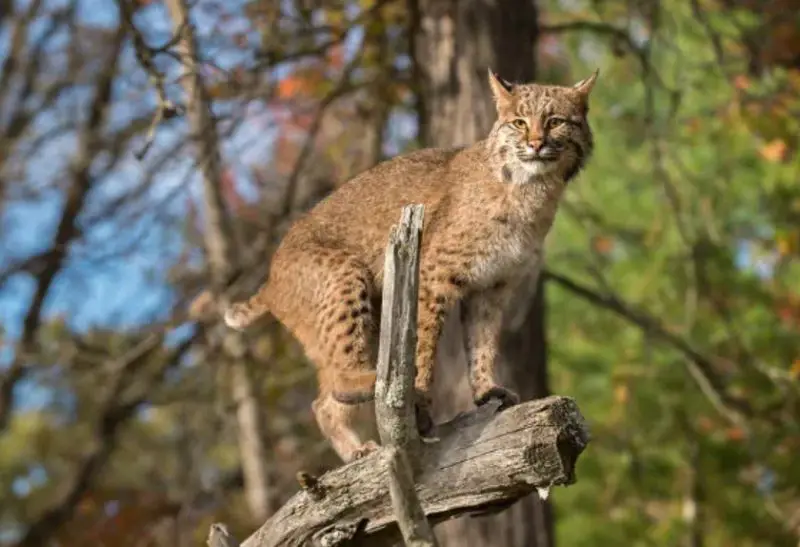
Bobcats are among the most adaptable wild predators in North America, and their quiet return to parts of the northeastern United States has sparked curiosity and concern among residents. In Connecticut, sightings of bobcats have steadily increased over the past few decades as forests have regenerated and wildlife corridors have improved. Along with these sightings comes a persistent question: can bobcats mate with domestic cats?
The idea of hybrid wild-domestic cats captures public imagination. Some pet owners worry about safety, while others wonder whether unusual-looking cats they encounter might be hybrids. Scientifically, however, the answer is more nuanced. While bobcats and domestic cats are both felines, biological, behavioral, and ecological barriers make successful interbreeding extremely unlikely.
Understanding these differences helps clarify the real risks, reduce unnecessary fear, and promote informed coexistence with wildlife. The topic also sheds light on genetics, wildlife ecology, pet safety, and how human development intersects with natural habitats.
Bobcats in Connecticut Today

Bobcats (Lynx rufus) were once relatively uncommon in Connecticut, largely due to historical habitat loss, unregulated hunting, and expanding human settlement throughout the nineteenth and early twentieth centuries. As forests were cleared for agriculture and development, suitable habitat declined significantly. Over the past several decades, however, conservation initiatives, reforestation, and changing land-use patterns have allowed bobcat populations to rebound steadily. Today, they are considered an established native predator across much of the state.
Modern Connecticut provides a patchwork landscape well suited to bobcats. Forested hills, wetlands, abandoned farmland, rocky outcrops, and suburban green corridors offer excellent hunting and denning opportunities. These adaptable cats thrive in edge habitats where forests meet open land, because such environments support abundant prey including rabbits, rodents, birds, and small mammals. Even suburban areas with wooded buffers can support bobcat movement without residents realizing it.
Bobcats are solitary by nature. Adults maintain defined territories that supply food, water, shelter, and breeding opportunities. They avoid unnecessary conflict with both other bobcats and humans. Activity peaks at dawn, dusk, and nighttime, which explains why sightings remain relatively rare despite stable populations. Many Connecticut residents live near bobcats without ever encountering one directly.
This quiet coexistence often leads to speculation about interactions with domestic animals, particularly cats. Increased sightings naturally prompt questions about whether these wild felines might interbreed with pets or pose risks to them.
Understanding Domestic Cat Behavior Outdoors
Domestic cats (Felis catus) display highly variable outdoor behavior depending on upbringing, environment, and human management. Some live exclusively indoors, while others roam freely or develop semi-feral lifestyles. Outdoor cats commonly hunt small prey such as mice, birds, insects, and reptiles, bringing them into partial ecological overlap with native predators like bobcats.
Despite these overlaps, domestic cats differ significantly from wild felines in survival strategy. Many rely on predictable food sources provided by humans, access sheltered sleeping areas, and have reduced awareness of natural predators. Selective breeding has also emphasized temperament traits suitable for companionship rather than wilderness survival.
Social behavior also differs. Domestic cats can form loose colonies near reliable food sources, while bobcats remain strongly solitary. These behavioral distinctions reduce sustained interaction opportunities between species.
Even when habitats overlap geographically, behavioral differences limit meaningful contact that would be necessary for mating.
Genetic Compatibility Between Bobcats and Domestic Cats
From a biological standpoint, bobcats and domestic cats belong to separate genera. Bobcats are classified in the genus Lynx, whereas domestic cats belong to Felis. This evolutionary separation represents millions of years of divergence, resulting in substantial genetic differences.
Successful hybridization most often occurs between species within the same genus, such as lions and tigers or wolves and dogs. Cross-genus hybrids are rare and often biologically unviable. Differences in chromosome structure, reproductive physiology, and developmental compatibility all reduce the likelihood of viable offspring.
Despite occasional anecdotal reports, no scientifically confirmed bobcat-domestic cat hybrids have been documented in Connecticut or elsewhere. Animals suspected to be hybrids usually turn out to be domestic cats with unusual markings, large feral cats, or misidentified bobcats seen briefly at a distance.
Genetic incompatibility remains one of the strongest barriers to hybridization.
Behavioral Barriers to Hybridization
Behavioral compatibility is critical for successful mating in felines. Bobcats communicate through scent marking, vocalizations, territorial displays, and seasonal breeding rituals that domestic cats generally do not recognize.
Domestic cats may misinterpret these signals entirely. Likewise, bobcats typically view animals similar in size to domestic cats as potential prey rather than potential mates. Predatory instinct often overrides any hypothetical reproductive interaction.
Territoriality further limits encounters. Bobcats actively patrol territories and avoid unfamiliar animals unless hunting or defending resources. Domestic cats entering these territories may trigger avoidance or defensive responses rather than courtship behavior.
These behavioral barriers significantly reduce hybridization probability.
Differences in Breeding Cycles
Reproductive timing adds another layer of separation. Bobcats in Connecticut breed seasonally, usually between late winter and early spring. This timing ensures kittens are born when prey becomes abundant, improving survival chances.
Domestic cats, by contrast, can breed multiple times per year, especially in urban environments where food availability remains stable year-round. Indoor lighting, climate-controlled environments, and human care further disrupt natural seasonal cycles.
Because successful mating requires synchronized reproductive readiness, this mismatch in breeding cycles makes crossbreeding extremely unlikely.
Seasonal ecological alignment reinforces species separation.
Habitat Separation in Connecticut
Habitat preferences also reduce interaction opportunities. Bobcats favor wooded landscapes, rocky terrain, wetlands, and transitional habitats offering dense cover and reliable prey.
Domestic cats usually remain near human dwellings where shelter, food, and warmth are accessible. Even feral populations cluster near predictable resources such as barns, neighborhoods, or managed feeding areas rather than deep wilderness.
While occasional overlap occurs at suburban or rural edges, sustained interaction sufficient for mating remains rare.
Habitat separation helps maintain species distinction naturally.
Public Perception Versus Scientific Evidence
Public fascination with wildlife hybrids often leads to speculation. Large feral cats, unusual coat patterns, or fleeting sightings can spark rumors about bobcat-domestic cat crosses.
Scientific research consistently finds no verified hybridization between these species. Misidentification remains the most common explanation.
Educational outreach helps replace speculation with accurate understanding. Wildlife agencies emphasize evidence-based information to reduce unnecessary concern.
Accurate knowledge supports both conservation awareness and responsible pet ownership.
Risks to Domestic Cats From Bobcats
Although hybridization is unlikely, predation risk deserves realistic consideration. Bobcats are opportunistic predators capable of hunting small mammals, including domestic cats, particularly in rural or forest-edge environments.
Risk varies depending on prey availability, habitat structure, and seasonal factors. When natural prey populations decline, opportunistic hunting may increase.
Keeping domestic cats indoors, supervising outdoor time, and avoiding nighttime roaming significantly reduce encounter risk.
Pet safety remains a more practical concern than hybridization.
Ecological Role of Bobcats
Bobcats play an important ecological role in Connecticut ecosystems. As mid-sized predators, they help regulate populations of rabbits, rodents, and other small mammals.
This predation contributes to ecological balance, supports vegetation health, and limits agricultural pest populations. Predator presence often strengthens biodiversity by maintaining stable food web relationships.
Occasional human concern should be balanced with ecological appreciation.
Understanding their ecological role encourages coexistence rather than fear.
How Bobcats Avoid Human Interaction
Bobcats are naturally elusive animals. Camouflage coloration, quiet movement, and nocturnal habits help them avoid detection.
Most encounters occur accidentally when humans enter wildlife habitats or when bobcats pass through suburban green corridors at night.
They rarely seek contact with humans or domestic animals unless hunting opportunities arise.
Maintaining natural habitat buffers and minimizing attractants helps preserve this separation.
Coexistence depends largely on awareness.
Responsible Pet Ownership in Bobcat Territory
Pet management plays a key role in reducing wildlife conflict. Indoor living provides the safest option for domestic cats, protecting both pets and native wildlife.
Supervised outdoor time, secure cat enclosures, and avoidance of nighttime roaming reduce risk substantially. Removing outdoor food sources and securing garbage discourages wildlife attraction.
Responsible ownership benefits pets, wildlife, and community safety simultaneously.
Myths About Wild-Domestic Cat Hybrids
Several persistent myths surround bobcat-domestic cat hybridization:
Some believe hybrids are common in suburban areas.
Others assume hybrids are unusually aggressive.
Some speculate they represent emerging new species.
Others think sightings confirm frequent crossbreeding.
Scientific evidence does not support these claims. Biological, behavioral, and ecological barriers make hybridization extremely rare or nonexistent.
Education remains the best corrective tool.
Wildlife Management Perspective in Connecticut
Connecticut wildlife agencies focus primarily on habitat conservation, population monitoring, and public education. Hybridization concerns rarely drive management decisions because confirmed cases are absent.
Programs emphasize coexistence strategies, pet safety awareness, and habitat stewardship rather than fear-based messaging.
Scientific monitoring ensures management decisions remain evidence-based.
Balanced management supports both ecosystems and communities.
Future Research Possibilities
Advances in genetic analysis continue improving wildlife monitoring. DNA testing would quickly identify any hybridization if it occurred.
Current research consistently supports reproductive separation between bobcats and domestic cats. Continued monitoring helps refine conservation strategies and public education efforts.
Scientific understanding continues evolving.
Living Comfortably Alongside Wildlife
Connecticut’s mix of forests, suburbs, farmland, and wetlands creates natural opportunities for wildlife coexistence. Awareness of local species helps residents make informed decisions.
Respecting wildlife space, supervising pets, maintaining clean yards, and preserving habitat buffers all reduce conflict risk.
Most wildlife encounters remain peaceful when humans practice simple precautions.
Balanced coexistence benefits both communities and ecosystems.
FAQs About Bobcats Mating With Domestic Cats in Connecticut
Can bobcats breed with domestic cats?
Biologically unlikely. Genetic differences and behavior barriers prevent viable hybridization.
Are bobcat-cat hybrids documented?
No confirmed scientific evidence supports stable hybrids.
Are bobcats dangerous to pets?
Small outdoor cats may face predation risk in certain habitats.
Do bobcats enter residential areas often?
Occasionally, especially near wooded edges, but they generally avoid people.
Should I worry about my outdoor cat?
Supervision or indoor living greatly reduces risk.
Can hybrids look different?
Most unusual cats are simply domestic variations, not hybrids.
Do bobcats attack humans?
Rarely. They avoid people whenever possible.
Are bobcats protected wildlife?
Yes, wildlife laws regulate their management.
How can I reduce encounters?
Secure food sources, supervise pets, and maintain clean yards.
Are bobcats beneficial?
Yes. They help regulate prey populations and support ecosystem health.
Final Thoughts
Bobcats in Connecticut can theoretically encounter domestic cats, but successful mating is extraordinarily unlikely. Genetic incompatibility, behavioral differences, habitat separation, and breeding cycle mismatches all limit hybridization potential.
The more realistic concern involves pet safety rather than crossbreeding. Responsible pet ownership, wildlife awareness, and habitat respect help minimize conflict.
Bobcats remain valuable components of Connecticut’s ecosystems. Understanding their behavior promotes coexistence, reduces unnecessary fear, and supports conservation efforts.
Knowledge replaces myth with confidence, helping communities live comfortably alongside native wildlife.