
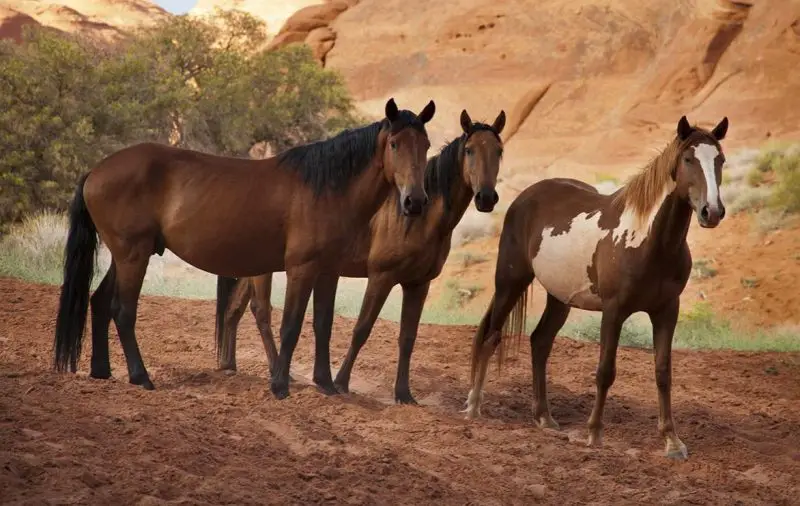
Arizona’s deserts are often imagined as harsh, empty landscapes defined by cactus silhouettes, rocky hills, and intense sunlight. Yet many residents and travelers report sightings of free-roaming horses in these dry regions. Photos circulate online. Local stories persist. Some people assume they are mythical remnants of the Old West, while others question whether horses can truly survive in desert ecosystems at all.
The reality is both fascinating and complex. Wild-living horses do exist in parts of Arizona, but their history, ecological role, and survival strategies differ from common assumptions. Understanding where they live, how they survive, and what scientists say about them reveals a deeper picture of desert wildlife adaptation and human influence on landscapes.
What People Mean When They Say “Wild Horses”

Strictly speaking, most free-roaming horses in the American West are not truly wild in the biological sense. They are considered feral animals, meaning they descend from domesticated horses introduced by humans but now live independently without direct human care.
Spanish explorers brought horses to North America centuries ago. Over time, some escaped or were released intentionally. These animals formed self-sustaining populations across western landscapes, including Arizona. Generations later, they behave much like wild species even though their ancestry traces back to domesticated stock.
This distinction matters mainly for scientific classification. In everydayught practice, people commonly call them wild horses because they live freely, reproduce naturally, and develop survival behaviors similar to other wildlife.
The terminology reflects history as much as biology.
Where Horses Are Found in Arizona
Arizona is not uniform desert. The state includes mountain forests, river valleys, grasslands, and high desert plateaus alongside classic Sonoran Desert terrain. Horses are most often associated with transitional zones where water, vegetation, and shelter exist.
One of the best-known populations lives near the Salt River northeast of Phoenix. These horses often occupy riparian corridors where river water supports grasses and shrubs. They also roam desert foothills and open scrubland nearby.
Other smaller populations occur near the Verde River, in parts of western Arizona, and in certain Bureau of Land Management territories where free-roaming herds are monitored.
Water access shapes distribution more than desert boundaries themselves.
How Horses Survive Desert Conditions
Desert survival requires adaptation to limited water, fluctuating temperatures, and sparse vegetation. Horses manage this through behavioral flexibility rather than dramatic physical evolution.
They travel widely to locate water sources, often following seasonal patterns tied to rainfall or river flow. Herd movement helps prevent overgrazing in any single area. Nighttime activity increases during extreme heat, reducing dehydration risk.
Diet also shifts seasonally. Desert horses consume grasses when available but also browse shrubs, mesquite pods, and drought-resistant plants. Their digestive systems can process fibrous vegetation that many animals avoid.
Mobility and dietary flexibility become survival tools.
The Importance of Water Sources
Reliable water access determines whether horses can persist in desert landscapes. Permanent rivers, springs, reservoirs, and artificial water developments often anchor herd territories.
Riparian habitats provide more than drinking water. They support vegetation growth, insect life, and shade. These factors collectively create microhabitats that buffer harsh desert extremes.
During prolonged drought, horses may expand travel ranges significantly. Some herds develop predictable routes linking seasonal water sources. Observers sometimes interpret these movements as wandering, but they reflect resource tracking.
Water remains the primary ecological constraint.
Seasonal Behavior Patterns
Desert conditions shift dramatically across seasons. Summers bring extreme heat, while winters can produce surprisingly cold nights in higher elevations.
Horses adjust accordingly. Summer activity peaks during early morning, evening, and nighttime hours. Shade becomes essential midday. Dust bathing helps regulate skin health and parasite load.
Winter behavior shifts toward daytime grazing when temperatures are milder. Breeding cycles often align with seasonal resource availability so foals arrive during periods of better forage.
Seasonality governs survival rhythms.
Diet in Arid Landscapes
Arizona desert vegetation may appear sparse, yet it supports diverse plant communities. Horses exploit grasses, sedges, forbs, and woody shrubs depending on location.
Mesquite beans provide important seasonal nutrition. Cactus pads are occasionally eaten when other forage declines, though horses typically avoid heavily spined varieties. Saltbush, creosote edges, and desert grasses also contribute.
Foraging patterns influence plant community dynamics. Some ecologists argue horses help seed dispersal, while others note potential overgrazing concerns in sensitive habitats.
Diet reflects ecological balance.
Predators and Natural Threats
Large predators capable of taking adult horses are relatively rare in Arizona deserts. Mountain lions pose the primary threat, particularly to foals or weakened animals. Coyotes may target newborns occasionally.
More significant risks often come from environmental factors: dehydration, heat stress, injury, disease, and food scarcity. Human factors such as vehicle collisions, habitat fragmentation, and water competition also affect survival.
Predation pressure is moderate compared with other ecosystems.
Environmental stress dominates risk profiles.
Human History and Cultural Identity
Wild-living horses hold strong cultural symbolism in the American Southwest. They evoke frontier imagery, independence, and historical continuity with early exploration and ranching traditions.
Indigenous histories also intersect with horse presence. Horses transformed mobility, trade, and cultural practices across many Native American communities after their introduction.
Modern public interest often blends ecology with heritage appreciation. This emotional connection influences conservation debates.
Cultural meaning shapes perception alongside science.
Ecological Debates About Their Impact
The ecological role of free-roaming horses remains a subject of ongoing research and discussion. Some scientists argue they can contribute to habitat disturbance through grazing pressure, soil compaction, and competition with native species.
Others highlight potential benefits such as seed dispersal, nutrient cycling, and maintenance of open grassland structure.
Impact varies widely by region. Water availability, herd size, vegetation resilience, and land management practices all influence outcomes.
No single narrative fits every landscape.
Ecology resists simplification.
Management and Population Monitoring
Wild horse populations in Arizona are monitored through collaboration between federal agencies, state wildlife departments, and nonprofit organizations. Strategies vary depending on herd size, habitat conditions, and public policy priorities.
Common management tools include fertility control programs, relocation efforts, habitat assessment, and public education initiatives. These approaches aim to balance ecological health with animal welfare and cultural values.
Management decisions often generate debate because they involve science, economics, ethics, and public sentiment simultaneously.
Balancing interests remains complex.
Climate Change and Future Conditions
Climate trends influence desert ecosystems significantly. Rising temperatures, shifting precipitation patterns, and prolonged drought cycles affect vegetation and water availability.
These changes may alter horse distribution over time. Some areas could become less suitable, while others might temporarily improve due to altered rainfall patterns.
Adaptive behavior will likely remain key. Horses historically demonstrate resilience through mobility and dietary flexibility.
Long-term outcomes remain uncertain.
Monitoring continues.
Interaction With Other Wildlife
Wild horses share desert ecosystems with many species: deer, javelina, coyotes, birds of prey, reptiles, and smaller mammals. Resource overlap occurs primarily around water and forage.
Most interactions remain indirect. Horses rarely compete aggressively with native wildlife but can influence vegetation structure, which in turn affects habitat availability.
Complex ecological networks shape outcomes.
Interdependence defines ecosystems.
Public Perception Versus Scientific Evidence
Stories about desert horses sometimes exaggerate numbers or behaviors. Viral photos, tourism promotion, and anecdotal sightings amplify attention.
Scientific surveys often reveal stable or slowly changing populations rather than dramatic expansion. Perception shifts faster than ecological reality.
Education helps align public understanding with evidence.
Knowledge stabilizes interpretation.
Tourism and Economic Interest
Wild horse sightings attract visitors. Photography tours, wildlife watching, and local tourism initiatives sometimes highlight these animals as regional icons.
Economic benefits can encourage conservation interest. However, increased human presence also raises concerns about disturbance, feeding, and habitat stress.
Responsible tourism practices help balance appreciation with protection.
Awareness supports coexistence.
Ethical Considerations Around Intervention
Debates about intervention often focus on whether humans should actively manage feral horse populations. Some advocate minimal interference, emphasizing natural adaptation.
Others support active management to prevent habitat degradation or animal suffering during drought.
Ethical perspectives vary widely.
Policy reflects societal values as much as ecological data.
Research Continues Expanding Understanding
Scientists continue studying horse movement patterns, genetic diversity, forage use, and ecosystem interactions. Modern tracking technology provides new insights into how herds navigate desert landscapes.
Long-term data helps inform policy decisions, conservation strategies, and public education.
Science evolves continuously.
Understanding deepens over time.
FAQs About Wild Horses in Arizona Deserts
Are wild horses native to Arizona?
They are not originally native. Most descend from domesticated horses introduced centuries ago that later formed free-roaming populations.
Where are they most commonly seen?
Riparian corridors such as the Salt River region and certain high desert areas offer the best chances for sightings.
Can horses survive without constant water?
They require water regularly but can travel long distances to reach seasonal or permanent sources.
Do they harm desert ecosystems?
Impact varies by location, herd size, and environmental conditions. Research shows both potential benefits and challenges.
Are they protected by law?
Some populations receive management protection under federal or state programs, though policies vary.
Do predators control their numbers?
Predation exists but typically plays a smaller role than environmental factors and human management.
Is it safe to approach them?
Observing from a distance is safest. These animals remain unpredictable wildlife despite familiarity.
Are populations increasing?
Some areas show stability, others fluctuation. Comprehensive monitoring continues.
Do they migrate seasonally?
Movement often follows water and forage availability rather than traditional migration patterns.
Why do people feel strongly about them?
Cultural symbolism, history, and emotional connection contribute to strong public interest.
Final Thoughts
Wild horses living in Arizona deserts reflect a complex intersection of history, ecology, and human perception. They are not mythical relics nor simple invasive animals. They represent adaptation, resilience, and the lasting influence of human activity on natural landscapes.
Their presence highlights how ecosystems evolve over time. Desert environments once thought inhospitable continue supporting surprising forms of life. With informed management, respectful observation, and ongoing research, coexistence remains achievable.
Understanding replaces assumption.
Awareness supports balance.
And the desert story continues unfolding.