
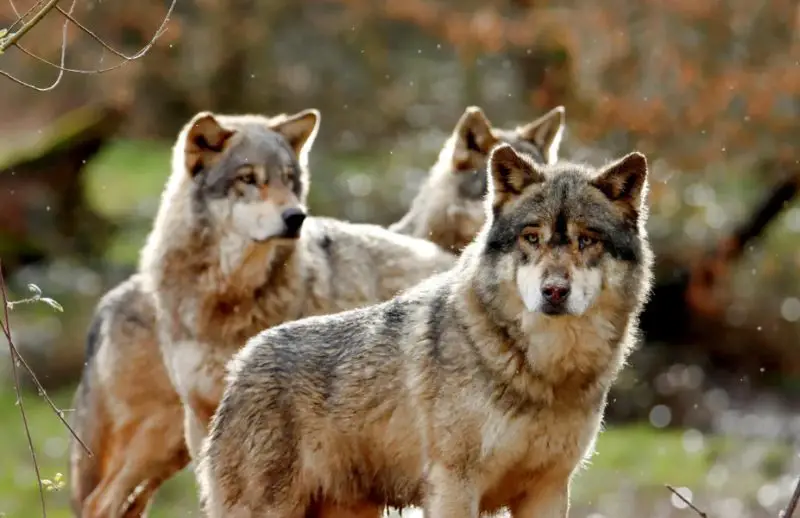
Wolves are some of the most misunderstood and extraordinary animals in North America, and in places like Colorado, they continue to shape ecosystems, inspire debate, and fascinate anyone who takes time to learn about them. When most people think of wolves, they imagine fierce predators, sharp teeth, howling in the darkness, and powerful hunters roaming the wilderness. But behind their intimidating image lies something even more impressive — their incredible ability to work together as a unified, emotionally connected, highly intelligent family team.
Colorado wolves don’t just survive through strength or aggression. They survive through cooperation, communication, loyalty, strategy, discipline, and teamwork. Their family bonds are deeper than many people realize. Their hunting methods look like coordinated military operations. Their parenting systems are advanced and community-based. Every wolf plays a role. Every action has purpose. A wolf pack functions more like a well-structured society than a group of wild animals.
This guide explores the amazing teamwork behavior found in Colorado wolves, revealing how they communicate, hunt, protect one another, raise pups together, adapt to Colorado’s landscapes, and why their teamwork plays such a critical role in the state’s ecosystem.
Colorado Wolves Rely on Family Before Anything Else

At the heart of wolf teamwork is one powerful truth: wolf packs are families. A pack isn’t just a random group of animals living together. Almost every pack is built around a breeding pair — often called the “alpha” pair — and their offspring. This includes yearlings, young adults, and newly born pups.
Every wolf in a pack has strong emotional and social bonds with the others. They recognize one another, rely on one another, and trust one another in ways that feel shockingly human-like.
Pack loyalty means:
-
Wolves rarely abandon each other
-
Injured wolves are sometimes supported by the group
-
Every wolf participates in survival roles
-
Wolves share resources instead of hoarding them
Working alone isn’t an option in the wolf world. Survival in Colorado’s mountains, forests, plateaus, and harsh winters requires unity.
Wolf Hierarchy Creates Order — Not Cruelty
Many people misunderstand wolf hierarchy as brutal dominance. In reality, wolf leadership is more about structure, stability, and teamwork rather than aggression.
Typical pack structure includes:
-
A breeding pair (often referred to as alpha male and alpha female)
-
Older offspring who help with duties
-
Yearlings learning roles
-
Young pups
This hierarchy provides organization, not tyranny. Leadership prevents chaos and ensures every wolf knows its responsibilities.
Leaders:
-
Guide hunts
-
Make movement decisions
-
Protect territory
-
Teach younger wolves
-
Maintain peace inside the pack
Instead of constant fighting for rank, most hierarchy is calm, respectful, and based on trust.
Communication: Wolves Have a Language of Their Own
Colorado wolves rely heavily on communication to maintain strong teamwork. Their communication system is one of the most complex in the animal world and involves sound, body language, scent, and behavior.
Vocal Communication
Wolves are famous for their howls — and they use them for critical reasons:
-
To locate pack members
-
To strengthen bonds
-
To warn rival packs
-
To mark territory
-
To coordinate movement
Each wolf howls with a unique voice, allowing pack members to recognize one another even across miles.
They also use:
-
Whines (care and comfort)
-
Growls (warnings)
-
Barks (alert signals)
-
Yips and chirps (social bonding)
Body Language
Wolves communicate through:
-
Tail position
-
Ear movement
-
Eye contact
-
Posture
A confident wolf stands tall. A submissive wolf lowers its head. Friendly wolves wag gently and lick.
Scent Marking
Scent tells other wolves:
-
Whose territory this is
-
Who lives here
-
When a wolf is ready to mate
Communication isn’t random. It’s essential teamwork — keeping the pack unified, organized, and aware.
Wolf Hunts Are Team Operations, Not Chaotic Attacks
Hollywood often shows wolves recklessly charging their prey. Real wolf hunts, especially in Colorado, are far more intelligent, coordinated, and strategic.
Wolves Study Their Environment
Before attacking prey like elk or deer, wolves:
-
Observe movement patterns
-
Watch for injury or weakness
-
Learn herd behavior
-
Calculate risk
Energy conservation is critical. Wolves cannot afford wasted effort.
Wolves Work in Roles
During hunts:
-
Some wolves chase
-
Some flank prey
-
Others cut off escape routes
-
One may make the final grab
Every wolf understands movement cues and positioning. This is not instinct alone — it’s practiced, learned teamwork.
Wolves Protect Each Other During Hunts
Wolves do not willingly sacrifice pack members. If a hunt becomes too dangerous, they disengage. Injury means starvation risk, so teamwork includes knowing when to stop.
A successful hunt feeds the pack — not just certain individuals. Food is shared, starting with pups and weaker wolves.
The Pack Raises Pups Together — True Community Parenting
One of the most amazing examples of wolf teamwork in Colorado is how they raise pups. Parenting is not handled by just the mother. It is a group effort.
Every Wolf Helps Raise Young
When pups are born:
-
The mother nurses
-
The father protects and hunts
-
Older siblings babysit
-
The entire pack brings food
They play with pups. Teach them. Protect them constantly. Pups are never “on their own.”
Wolves Feed Pups in an Unexpected Way
Wolves cannot carry meat to pups easily. Instead, they swallow food, return to the den, and regurgitate partially digested food for pups to eat. While it may sound unpleasant to humans, it is one of the clearest examples of resource sharing and teamwork.
Pups Learn Through Social Training
Young wolves learn through:
-
Play
-
Observation
-
Imitation
-
Guidance from adults
They develop hunting skills, social understanding, and place within the pack gradually. No wolf pup grows alone — everyone helps shape them.
Wolves Protect Their Pack With Fierce Unity
Teamwork is not only for hunting and parenting. It is essential for safety.
Wolves Defend Territory Together
Colorado wolves protect territories to:
-
Secure food sources
-
Prevent dangerous conflicts
-
Protect pups
Territories are marked, monitored, and defended as a team. Lone invaders or unfamiliar packs are discouraged quickly.
When Threatened, Wolves Stand Together
If danger appears — whether it’s another predator or environmental threat — wolves do not scatter. They coordinate defense strategies depending on the risk.
Unity equals survival.
Wolves Know When to Work Together — and When to Spread Out
Not every moment requires the full pack. Sometimes teamwork means dividing responsibilities.
Splitting Into Subgroups
In difficult seasons:
-
Older wolves may scout
-
Others stay with pups
-
Some search new territory
-
Others monitor food sources
This division of effort ensures constant safety and opportunity.
Reuniting Strengthens Bonds
When separated wolves return, reunions are full of affection — licking, tail wagging, excited body movement. These emotional displays show wolves experience deep social attachment.
Colorado’s Landscape Strengthens Wolf Teamwork
Colorado provides an environment that challenges wolves in powerful ways, forcing them to rely even more heavily on teamwork.
Mountains Demand Strategy
Rugged terrain, cliffs, snow, and altitude require:
-
Careful movement
-
Energy management
-
Strong leadership
Wolves must coordinate routes and timing, working together to navigate obstacles.
Winter Requires Cooperation
Cold reduces prey availability. Wolves:
-
Share body heat
-
Hunt more efficiently
-
Support weaker members
-
Increase communication
Only packs with strong teamwork survive harsh winters successfully.
Wolves Keep Colorado’s Ecosystem Healthy
One of the most surprising truths about Colorado wolves is how their teamwork doesn’t just benefit their pack — it benefits the entire ecosystem.
Wolves Control Prey Populations
Without wolves, deer and elk can overpopulate. Overgrazing destroys vegetation, weakens habitats, and harms other wildlife.
Wolves reduce weak, sick, and overpopulated animals, allowing:
-
Forests to recover
-
Plant diversity to increase
-
Rivers and waterways to stabilize
This effect is known as a trophic cascade — one species improving entire ecosystems.
Wolves Indirectly Support Other Animals
When wolves leave leftover prey, scavengers benefit:
-
Ravens
-
Coyotes
-
Bears
-
Foxes
-
Birds of prey
Even insects benefit. Wolves help maintain balance without ever realizing it.
Wolves Show Emotional Intelligence and Social Awareness
Beyond survival, wolves demonstrate remarkable emotional capability.
They:
-
Grieve lost pack members
-
Show affection
-
Play with joy
-
Display stress when separated
-
Comfort injured wolves
These emotional bonds strengthen teamwork. They work together because they care — not simply because instinct forces them.
Myths vs Reality: Understanding Wolf Behavior Correctly
Wolves are often misunderstood. Let’s clear some misconceptions.
Myth 1: Wolves Are Mindless Killers
Reality: Wolves avoid unnecessary risk. They hunt strategically and for survival.
Myth 2: Wolves Constantly Fight for Dominance
Reality: Packs are stable families with mostly peaceful structure.
Myth 3: Wolves Don’t Need Teamwork
Reality: Without teamwork, wolves would struggle to survive.
Myth 4: Wolves Are Dangerous to People
Reality: Attacks on humans are extremely rare. Wolves avoid humans.
Understanding the facts helps people respect wolves instead of fearing them.
Frequently Asked Questions About Colorado Wolves
Do wolves live in packs or alone?
Most wolves live in packs made of family members. Lone wolves are usually young wolves searching for a new territory or mate.
Why do wolves howl?
They howl to communicate, locate pack members, warn rivals, and strengthen family bonds.
Are wolves dangerous?
Wolves avoid humans and rarely pose danger unless threatened or cornered.
Do wolves mate for life?
Many do form long-term pair bonds, especially within established packs.
What do Colorado wolves eat?
Mostly deer and elk, but also smaller mammals depending on availability.
Why is teamwork so important for wolves?
Teamwork helps with hunting, protection, parenting, territory defense, and survival.
Final Thoughts
The amazing teamwork behavior found in Colorado wolves proves that these animals aren’t just powerful predators — they are intelligent social partners, loyal family members, disciplined hunters, effective communicators, and essential ecosystem guardians. Everything they do is shaped by connection, cooperation, and shared responsibility.
Watching wolves isn’t witnessing chaos. It’s witnessing natural unity.
Their teamwork teaches lessons about respect, community, strength in unity, and the beauty of family working together. In Colorado’s wild spaces, wolves remind us that survival isn’t always about being the strongest — sometimes it’s about being the most united.
So the next time you think of wolves howling under a Colorado sky, imagine more than a lone predator. Picture a devoted family working together, protecting one another, thriving through teamwork, and quietly shaping nature in ways most people never see — but every part of the ecosystem feels.