
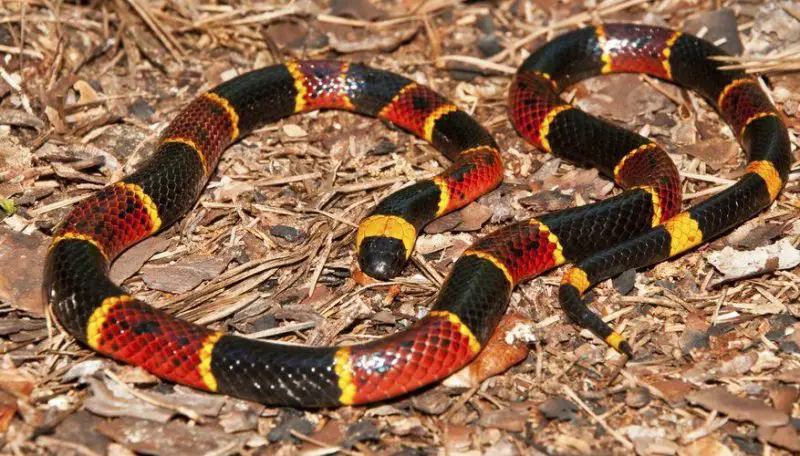
Many people in Georgia misunderstand coral snakes more than almost any other native snake. They are rarely seen, poorly recognized, and often confused with harmless look-alikes. When they do appear, reactions tend to swing between panic and dismissal. Both responses miss the reality of how coral snakes live, behave, and interact with people across the state.
Unlike more visible venomous snakes, coral snakes do not announce themselves. They move quietly, avoid confrontation, and spend most of their lives hidden from view. Their danger is often overstated, while their biology, behavior, and ecological role are largely ignored.
This article explores the hidden truth about coral snakes in Georgia. It focuses on what residents commonly misunderstand, why sightings feel so mysterious, and how coral snakes actually fit into Georgia’s landscapes without posing the threat many assume.
Table of Contents
- 1 Coral Snakes in Georgia: A Species Most People Never See
- 2 The Appearance That Causes So Much Confusion
- 3 The Venom Myth: Deadly but Not Aggressive
- 4 Behavior That Georgia Residents Often Misinterpret
- 5 How Coral Snakes Actually Use Their Habitat
- 6 Diet and Ecological Role in Georgia
- 7 Seasonal Activity Patterns Residents Rarely Notice
- 8 Why Fear Persists Despite Low Risk
- 9 What To Do If You Encounter a Coral Snake in Georgia
- 10 Conservation Status and Human Responsibility
- 11 Common Myths Georgia Residents Still Believe
- 12 FAQs About Coral Snakes in Georgia
- 12.1 Are coral snakes common in Georgia?
- 12.2 Are coral snake bites deadly?
- 12.3 Do coral snakes enter homes?
- 12.4 Can coral snakes climb?
- 12.5 Are they protected in Georgia?
- 12.6 How can I tell a coral snake from a mimic?
- 12.7 Should I kill a coral snake if I see one?
- 12.8 Do coral snakes benefit the ecosystem?
- 13 Conclusion
Coral Snakes in Georgia: A Species Most People Never See

Limited Range Within the State
Coral snakes in Georgia occupy a surprisingly small portion of the state, despite Georgia’s reputation for high snake diversity. Their range is largely confined to the southern half of the state, with the highest concentrations found in the Coastal Plain and select areas of south-central Georgia. These regions offer the warm temperatures and sandy, well-drained soils coral snakes require to survive.
Loose soil is critical to their lifestyle. It allows them to burrow easily, regulate body temperature, and avoid predators. Pine forests, sandhills, scrub habitats, and lightly wooded flatlands provide ideal conditions. In contrast, rocky terrain, compact clay soils, and cooler elevations limit their ability to establish stable populations.
Northern Georgia, including most Piedmont and mountain regions, does not support long-term coral snake populations. Reported sightings from these areas are frequently traced back to misidentified species such as scarlet kingsnakes or milk snakes. This uneven distribution explains why many Georgia residents, even those who spend years outdoors, never encounter a coral snake at all.
Why Coral Snakes Are So Rarely Observed
Even within their limited range, coral snakes remain elusive. They are naturally secretive and spend the majority of their lives hidden from view. Much of their time is spent underground, beneath leaf litter, inside rotting logs, or tucked into natural debris where light and movement are minimal.
Surface activity is brief and highly conditional. Coral snakes are most likely to appear during warm months, particularly after periods of heavy rainfall that soften the soil and flood underground shelters. Even then, they favor low-light conditions such as early morning, dusk, or overcast days.
Their scarcity is not simply a matter of low population numbers. It is the result of a survival strategy built around concealment. Coral snakes avoid exposure whenever possible, making them one of the least frequently observed venomous snakes in Georgia.
The Appearance That Causes So Much Confusion
The Famous Color Pattern Explained
The coral snake’s red, yellow, and black banding is iconic, yet it is also the source of widespread confusion. In Georgia, true coral snakes consistently display red bands touching yellow bands, separated by narrower black bands. This pattern remains reliable, but it is not always easy to interpret in real-world conditions.
Mud, shadows, leaf litter, and partial visibility can obscure band order. When a snake is moving, coiled, or only partially exposed, even experienced observers may struggle to identify it accurately. Stress and fear further distort perception, causing colors to blend or appear darker than they truly are.
Relying solely on rhymes or memory tricks can lead to false confidence. In practice, accurate identification often requires clear visibility, calm observation, and experience, conditions that rarely exist during surprise encounters.
Why Look-Alikes Are So Commonly Mistaken
Georgia is home to several harmless snakes with similar coloration, most notably scarlet kingsnakes and scarlet snakes. These species often display brighter, more vivid colors and are significantly more common than coral snakes.
Unlike coral snakes, these mimics are more surface-active and more tolerant of human-altered environments. They are frequently encountered in yards, gardens, and near homes, increasing the likelihood of misidentification.
Because people encounter these mimics far more often, many assume coral snakes are equally common. In reality, most “coral snake sightings” in Georgia involve harmless species that share similar colors but very different behaviors.
The Venom Myth: Deadly but Not Aggressive
Venom Type and Delivery
Coral snakes possess a potent neurotoxic venom, one of the strongest among North American snakes. This fact dominates public perception and fuels fear. However, venom potency alone does not determine real-world danger.
Coral snakes have small, fixed fangs rather than long, hinged fangs like vipers. Delivering venom requires prolonged contact, often involving chewing rather than a quick strike. This makes accidental envenomation extremely rare.
Most documented bites occur during deliberate handling, attempts to kill the snake, or careless interaction. Incidental encounters almost never result in bites.
Why Bites Are So Uncommon in Georgia
Coral snakes are not defensive in the way rattlesnakes or copperheads are. They do not coil aggressively, hold ground, or deliver warning strikes. When threatened, they attempt to flee, hide, or remain motionless.
Their primary defense is avoidance. They rely on staying hidden rather than confronting threats. Georgia reports very few coral snake bites, and fatalities are extraordinarily rare, especially with modern medical treatment.
The gap between their reputation and actual risk remains one of the most misunderstood aspects of coral snake biology.
Behavior That Georgia Residents Often Misinterpret
Not Aggressive, Just Misunderstood
Coral snakes do not chase people, defend territory, or repeatedly strike. Their movements are slow, smooth, and deliberate. When startled, they may thrash briefly, but this behavior reflects confusion and stress rather than aggression.
To someone unfamiliar with coral snake behavior, this brief movement can appear hostile. In reality, the snake is attempting to orient itself and escape, not confront the perceived threat.
Why They Sometimes Appear in Yards
Yard sightings usually follow environmental disruption. Heavy rainfall, flooding, landscaping, or construction can force coral snakes to surface temporarily when underground shelters become unsuitable.
They are not attracted to homes, food waste, or structures. When found near residences, it is almost always accidental and short-lived. Once conditions stabilize, coral snakes retreat back into natural cover and resume their hidden lifestyle.
How Coral Snakes Actually Use Their Habitat
A Life Below the Surface
Coral snakes are fossorial, meaning they spend much of their lives underground. Sandy soils allow efficient underground movement and provide insulation from temperature extremes.
They commonly occupy spaces beneath pine needles, leaf litter, and decaying wood, where moisture levels remain stable. This subterranean lifestyle keeps them hidden from predators and human activity alike.
Preference for Undisturbed Environments
Coral snakes thrive in relatively undisturbed habitats. Pine flatwoods, sandhills, scrub, and open woodlands offer the loose soil and prey availability they need.
They avoid heavily urbanized or compacted areas. When development fragments habitat, coral snakes often disappear rather than adapt. This sensitivity further reduces encounter rates and contributes to their reputation as “rare” snakes.
Diet and Ecological Role in Georgia
Specialized Predators
Coral snakes feed primarily on other small reptiles, especially lizards and snakes. This specialized diet distinguishes them from many other venomous species.
By preying on other snakes, including venomous ones, coral snakes help regulate reptile populations and maintain ecological balance.
Low Impact, High Importance
Despite their low visibility, coral snakes play a significant ecological role. Their presence signals healthy soils, intact prey communities, and functioning ecosystems.
Removing them would have consequences disproportionate to their numbers, disrupting local food webs.
Seasonal Activity Patterns Residents Rarely Notice
Spring and Summer Emergence
Activity increases in late spring and summer as soil temperatures rise. These conditions support surface movement, mating, and foraging.
Rain events often trigger brief activity bursts, explaining why sightings sometimes cluster after storms.
Fall Retreat and Winter Dormancy
As temperatures decline, coral snakes retreat deeper underground. They enter a period of reduced activity rather than true hibernation.
Winter sightings in Georgia are extremely rare and typically involve disturbed individuals.
Why Fear Persists Despite Low Risk
The Power of Reputation
Coral snakes’ potent venom overshadows all other traits. Fear persists even when actual encounter risk is low.
Media and Misinformation
Misidentified photos, exaggerated stories, and viral posts reinforce fear. Many images labeled as coral snakes actually show harmless species.
Without context, misinformation spreads easily.
What To Do If You Encounter a Coral Snake in Georgia
Distance Is Enough
Stop, observe, and back away slowly. Coral snakes will attempt to escape if given space.
Do Not Attempt Identification Up Close
Treat any banded snake with caution. Distance matters more than certainty.
Allow the Snake to Leave
Most will move away on their own. Contact professionals if relocation is necessary.
Conservation Status and Human Responsibility
Not a Pest Species
Coral snakes do not infest homes or damage property. Killing them does not improve safety.
Habitat Loss Is the Real Threat
Urban expansion and soil compaction pose far greater risks than human encounters.
Common Myths Georgia Residents Still Believe
Coral snakes are aggressive
They are not. They rely on avoidance.
They are common in yards
They are rare and appear only under unusual conditions.
All red, yellow, and black snakes are coral snakes
Many harmless species share similar colors.
They strike instantly
Coral snakes are slow to bite and avoid confrontation.
FAQs About Coral Snakes in Georgia
Are coral snakes common in Georgia?
No. They are limited mainly to southern regions and are rarely encountered.
Are coral snake bites deadly?
With modern medical care, fatalities are extremely rare.
Do coral snakes enter homes?
No. They may appear near homes only due to flooding or soil disturbance.
Can coral snakes climb?
They are primarily ground-dwelling and poor climbers.
Are they protected in Georgia?
They are native wildlife and should not be harmed unnecessarily.
How can I tell a coral snake from a mimic?
Band order matters, but distance and caution matter more.
Should I kill a coral snake if I see one?
No. Give it space or contact professionals.
Do coral snakes benefit the ecosystem?
Yes. They help regulate reptile populations.
Conclusion
The hidden truth about coral snakes in Georgia is not about danger, but about invisibility. These snakes are rare, secretive, and deeply misunderstood. Their potent venom has overshadowed their gentle behavior, specialized lifestyle, and ecological importance.
Most Georgia residents will never see a coral snake, and those who do are unlikely to be at risk. Fear comes from misunderstanding, not reality. By learning how coral snakes actually live, move, and respond to humans, residents can replace anxiety with awareness.
Coral snakes are not symbols of danger. They are quiet indicators of healthy ecosystems, living beneath the surface, unnoticed and largely unbothered, just as nature intended.