
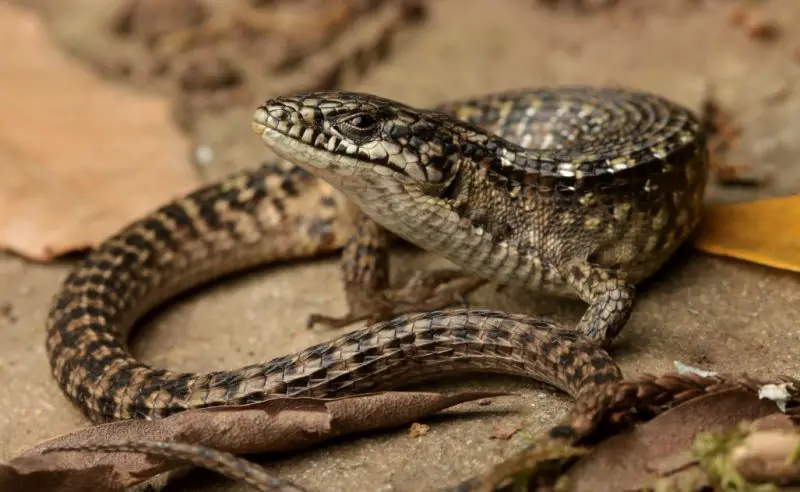
Washington State is better known for rain, forests, and mountains than reptiles, yet several lizard species quietly thrive across its dry basins, rocky slopes, and shrub-steppe habitats. While lizard diversity here is lower than in desert states, the species that do occur are highly adapted to cooler temperatures, short summers, and seasonal extremes.
Most Washington lizards are small, ground-dwelling reptiles that depend on sun-warmed rocks, open soil, and sparse vegetation. They are often overlooked due to their camouflage, quick movements, and tendency to retreat when disturbed. Understanding how to identify them helps reduce confusion with salamanders or snakes and builds appreciation for their ecological role.
This guide covers 8 types of lizards found in Washington State, with clear identification details, behavior notes, habitat preferences, and safety information.
Table of Contents
- 1 Overview of Lizards in Washington State
- 2 1. Northern Alligator Lizard
- 3 2. Southern Alligator Lizard
- 4 3. Western Fence Lizard
- 5 4. Sagebrush Lizard
- 6 5. Side-Blotched Lizard
- 7 6. Long-Nosed Leopard Lizard
- 8 7. Western Skink
- 9 8. Short-Horned Lizard
- 10 FAQs About Lizards in Washington State
- 11 Final Thoughts
Overview of Lizards in Washington State
Washington’s lizard species are primarily concentrated in eastern and central regions, where rainfall is lower and sunlight is more consistent. Most species prefer dry, open habitats such as sagebrush plains, grasslands, rocky outcrops, and canyon slopes.
Unlike snakes, lizards typically have external ear openings, movable eyelids, and visible legs. Many species can also detach and regrow their tails as a defense mechanism. All native lizards in Washington are non-venomous and harmless to humans.
Seasonal activity is another key factor. Lizards are most visible from late spring through early fall, becoming inactive or brumating during cold months. On cool mornings, they may bask openly, making identification easier.
1. Northern Alligator Lizard

Identification and Physical Traits
The Northern Alligator Lizard is one of the most easily recognized lizards in Washington due to its long, low-slung body and heavy, armor-like scales. The keeled scales overlap tightly, giving the lizard a segmented appearance that resembles the plates of an alligator’s back. Adults usually measure 8 to 12 inches, though individuals with regenerated tails may appear shorter or uneven.
Coloration is highly variable and depends on habitat. Most individuals appear brown, gray, or olive, often marked with dark crossbands or irregular blotches along the back and sides. Some show subtle light striping or pale speckling. The belly is typically lighter, ranging from cream to pale yellow.
The head is broad and triangular with a noticeably strong jaw. This often causes confusion with snakes at first glance. Unlike snakes, however, the Northern Alligator Lizard has movable eyelids, visible ear openings, and stiff, deliberate movements rather than fluid slithering.
Habitat and Behavior
This species favors moist, shaded environments, including forest floors, woodland edges, brushy ravines, and rocky slopes with leaf litter. It is commonly found beneath logs, bark, flat stones, or garden debris rather than exposed in direct sunlight. In cooler climates, it remains active under cover even when other lizards are inactive.
Northern Alligator Lizards are slow-moving and secretive. Instead of fleeing, they often freeze or retreat into tight crevices. When handled or cornered, they may bite defensively and clamp down, but the bite is harmless and poses no medical risk.
Their diet consists primarily of insects, spiders, centipedes, snails, slugs, and occasionally small lizards. They play an important role in controlling invertebrate populations in forest ecosystems.
Range in Washington
This is the most widespread lizard species in Washington, occurring west of the Cascades, throughout central regions, and into parts of eastern Washington. Its ability to tolerate cool temperatures, moisture, and dense vegetation allows it to occupy habitats unsuitable for most other lizards in the state.
2. Southern Alligator Lizard

Identification and Physical Traits
The Southern Alligator Lizard closely resembles the northern species but is generally larger, thicker-bodied, and more heavily scaled. Adults commonly reach 10 to 14 inches in total length. The scales are strongly keeled, creating a rigid, plated appearance that limits flexibility compared to sleeker lizards.
Color patterns range from tan and yellow-brown to darker brown, often accented by bold banding or mottled markings along the back. The underside is pale, and the limbs are short but sturdy. Like its northern counterpart, it has a broad head and powerful jaws.
The tail is long and fragile. If lost, it regenerates slowly and usually grows back darker and blunter than the original, making older individuals easy to identify.
Habitat and Behavior
Southern Alligator Lizards prefer drier and warmer environments than the northern species. They are commonly associated with rocky hillsides, oak woodlands, open forests, and brushy slopes. Unlike many lizards, they do not rely heavily on prolonged basking and instead regulate body temperature through shelter use.
They are opportunistic predators, feeding on insects, beetles, spiders, small rodents, nestling reptiles, and occasionally bird eggs. When threatened, they may thrash violently and bite, holding on stubbornly rather than attempting escape.
Range in Washington
In Washington, this species has a very limited distribution, confined mainly to the southern edge of the state near the Columbia River and the Oregon border. Sightings are uncommon, and it is far less frequently encountered than the Northern Alligator Lizard.
3. Western Fence Lizard

Identification and Physical Traits
The Western Fence Lizard is instantly recognizable by its rough, spiny scales and bold posture. Adults typically measure 5 to 8 inches long. The back is gray or brown with darker blotches, while the belly of males displays vivid blue patches bordered by black.
Females lack strong blue coloration but retain the same spiny texture and patterned back. The head is pointed, and the tail is moderately long, aiding balance when climbing.
This species has a muscular build and a confident stance, often sitting upright on elevated surfaces.
Habitat and Behavior
Western Fence Lizards thrive in sun-exposed habitats, including rocky outcrops, fences, logs, cliffs, and manmade structures. They are excellent climbers and frequently perch in open view, darting away only when approached too closely.
They are well known for their push-up displays, which serve both territorial and mating functions. Highly alert and quick, they rely on sudden bursts of speed to escape predators.
Their diet consists mostly of ants, beetles, flies, spiders, and other insects. They are active hunters throughout the day during warm weather.
Range in Washington
This species occurs primarily in central and eastern Washington, favoring dry, open landscapes. It is rare west of the Cascades due to cooler, wetter conditions.
4. Sagebrush Lizard

Identification and Physical Traits
The Sagebrush Lizard is smaller and more slender than the Western Fence Lizard, measuring 4 to 6 inches in length. It has fine spiny scales, a narrow head, and a streamlined body built for rapid movement.
Coloration blends well with arid environments. Individuals range from pale gray and tan to brown, often with dark side blotches and faint striping along the back. During breeding season, males may show subtle blue or turquoise markings on the belly.
Habitat and Behavior
This species is tightly linked to sagebrush steppe and desert grasslands. It is primarily ground-dwelling and rarely climbs higher than low rocks or shrubs. Instead, it relies on speed and cover for protection.
Sagebrush Lizards are extremely skittish. At the slightest movement, they dash beneath vegetation or rocks. Their diet consists mainly of ants, termites, grasshoppers, and other small insects.
Range in Washington
They are found mostly in south-central and southeastern Washington, closely following sagebrush ecosystems and dry basins east of the Cascades.
5. Side-Blotched Lizard

Identification and Physical Traits
The Side-Blotched Lizard is one of the smallest lizards in Washington, measuring 3.5 to 5 inches long. Its defining feature is the dark blotch just behind each front leg, though coloration elsewhere varies widely.
Individuals may appear gray, tan, brown, orange, or patterned, depending on temperature, habitat, and population. Despite their size, they are muscular and fast.
Habitat and Behavior
This species thrives in hot, open environments, including deserts, rocky flats, and disturbed ground near roads or construction sites. It is highly tolerant of heat and often basks when other lizards seek shade.
Side-Blotched Lizards are active hunters, feeding on insects and spiders. They are known for complex mating strategies and territorial behavior unusual for such a small reptile.
Range in Washington
They are restricted to eastern Washington, especially the driest desert-like regions and shrublands.
6. Long-Nosed Leopard Lizard

Identification and Physical Traits
One of Washington’s largest lizards, the Long-Nosed Leopard Lizard can reach 10 to 14 inches. It has a slender, elongated body, long legs, and a pointed snout. The pale gray or yellow background is marked with bold dark spots resembling leopard markings.
The tail is thin and whip-like, aiding balance during rapid movement.
Habitat and Behavior
This species inhabits open deserts and shrub-steppe environments with minimal vegetation. It is an active, visual hunter that chases prey rather than ambushing it.
Long-Nosed Leopard Lizards feed on insects, other lizards, small snakes, and occasionally rodents. They rely on speed and endurance rather than hiding.
Range in Washington
This species is rare in Washington, found only in small areas of the southeastern corner near Oregon and Idaho.
7. Western Skink

Identification and Physical Traits
The Western Skink is smooth-scaled and glossy, with a streamlined appearance. Juveniles are especially striking due to their electric-blue tails, which fade slightly with age. Adults measure 5 to 8 inches.
The body features bold black stripes bordered by tan or cream lines running from head to tail.
Habitat and Behavior
Western Skinks prefer forest edges, rocky hillsides, and grasslands. They are secretive and quick, often vanishing beneath cover before being noticed.
They feed on insects, spiders, and small invertebrates. Tail autotomy is a key defense, with the detached tail wriggling to distract predators.
Range in Washington
They occur mainly in central and eastern Washington, especially where forests transition into open terrain.
8. Short-Horned Lizard

Identification and Physical Traits
The Short-Horned Lizard has a flattened, round body with short horns along the back of the head. Adults measure 3 to 5 inches. The coloration closely matches surrounding soil, ranging from gray and tan to reddish brown.
Its toad-like appearance makes it unlike any other lizard in Washington.
Habitat and Behavior
This species favors open, sandy, or gravelly habitats where camouflage is effective. It feeds almost entirely on ants and moves slowly compared to other lizards.
When threatened, it often remains motionless, relying on blending into the environment rather than fleeing.
Range in Washington
Short-Horned Lizards are uncommon but present in central and eastern Washington, particularly in arid landscapes with loose soil.
FAQs About Lizards in Washington State
Are there venomous lizards in Washington?
No. All lizards native to Washington State are non-venomous and harmless to humans.
Do Washington lizards bite?
Most lizards avoid contact. Some may bite defensively if handled, but bites are not dangerous.
Where are lizards most common in Washington?
They are most common in eastern and central regions with dry, open habitats and rocky terrain.
Do lizards live west of the Cascades?
Yes, but fewer species occur west of the Cascades, mainly the Northern Alligator Lizard.
When is the best time to see lizards?
Late spring through early fall, especially on warm, sunny days.
Are lizards protected in Washington?
Some species are protected, and collecting or harming wildlife may be regulated. Always observe without disturbing.
Do lizards hibernate?
They enter a dormant state called brumation during cold months, hiding underground or in shelters.
Final Thoughts
Lizards may not be the first wildlife that comes to mind when thinking about Washington State, yet these resilient reptiles play an important role in controlling insect populations and maintaining ecological balance. From the armored Northern Alligator Lizard to the spiny Short-Horned Lizard, each species reflects a unique adaptation to the state’s varied landscapes.
Understanding how to identify Washington’s lizards helps reduce fear, prevents misidentification, and encourages coexistence. With patience and a keen eye, these often-hidden reptiles reveal a fascinating side of Washington’s natural world that deserves recognition and protection.