
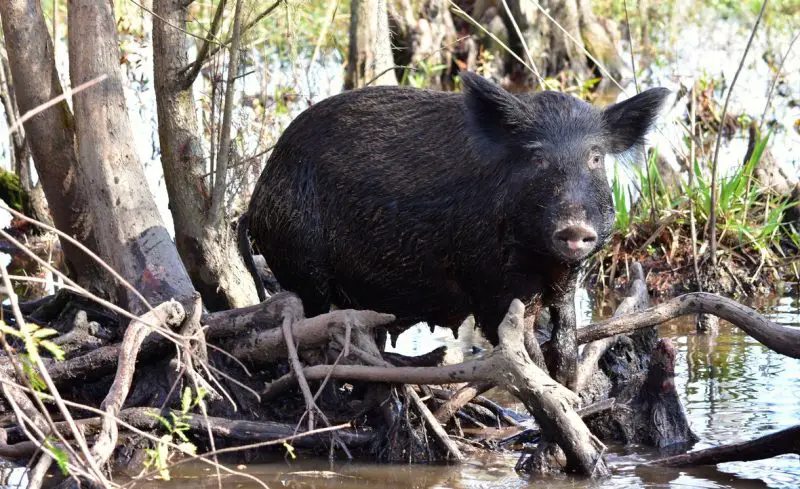
Feral pigs have become one of the most widespread large invasive mammals in Mississippi. These animals thrive in wetlands, forests, agricultural fields, river bottoms, and even suburban edges. Their adaptability, high reproductive rate, and omnivorous diet allow populations to grow quickly across many parts of the state. Because of their mixed ancestry, feral pigs in Mississippi are usually classified into three main types based on origin and physical traits rather than strict species differences.
Understanding these types helps landowners, hunters, wildlife observers, and conservationists identify pigs correctly. Appearance often hints at ancestry, behavior, habitat preference, and potential ecological impact. Some pigs clearly resemble escaped domestic livestock. Others retain characteristics of imported Eurasian wild boar. Many today are hybrids that combine traits from both lineages.
Feral Hog (Wild Domestic Pig)

Identification Features
Feral hogs descended from domestic pigs display wide variation in appearance. Coat color ranges from solid black to pink, reddish brown, white, or spotted combinations. Some resemble farm breeds while others show darker tones due to environmental adaptation. Hair tends to be shorter and smoother compared with true wild boar, although regional variation occurs.
Body shape often reflects domestic ancestry. These hogs typically have broader bodies, shorter legs, and less pronounced shoulder humps than wild boar. The snout may appear shorter and wider. Ears sometimes droop slightly forward, which contrasts with the upright ears seen in many wild boar.
Tusks are present in adult males but are usually smaller and less curved than those of wild boar. Overall posture often looks heavier or less streamlined. These visual cues help distinguish them in the field.
Habitat and Distribution in Mississippi
Wild domestic feral hogs occur statewide in Mississippi. They inhabit agricultural land, bottomland hardwood forests, marsh edges, pine plantations, and mixed rural landscapes. Access to water is a major factor because pigs require frequent hydration and wallowing opportunities.
Crop fields attract large groups. Corn, soybeans, rice, peanuts, and pasture grasses provide dense nutrition. River floodplains and wetlands also support stable populations because vegetation remains available year round.
They frequently use wooded corridors, brush lines, and drainage areas as travel routes. This behavior sometimes brings them close to human settlements, especially where food sources exist.
Behavior and Ecology
These hogs are highly social. Females and young form groups called sounders, which improve foraging efficiency and predator awareness. Adult males often live alone except during breeding periods.
Rooting behavior defines much of their environmental impact. Powerful snouts allow them to dig deeply into soil searching for roots, insects, small animals, and plant material. This activity disturbs vegetation, accelerates erosion, and alters soil structure.
Their diet is extremely flexible. They consume crops, acorns, fruits, insects, amphibians, reptiles, bird eggs, carrion, and vegetation. This omnivorous adaptability explains their success across varied habitats.
Reproduction and Population Growth
Domestic ancestry contributes to rapid reproduction. Breeding may occur throughout the year when food is abundant. Females can produce multiple litters annually.
Litters commonly include four to eight piglets, though larger litters occur. Young pigs grow quickly and reach reproductive age early, which accelerates population expansion.
Without active management, populations increase rapidly. This growth intensifies agricultural damage, ecological disruption, and conflicts with human land use.
Eurasian Wild Boar

Identification Characteristics
Eurasian wild boar typically appear darker and more rugged than domestic feral hogs. Coat coloration ranges from dark brown to nearly black. Hair is coarse and bristly, often forming a ridge along the back.
Body shape appears leaner with a prominent shoulder hump. Legs are proportionally longer, which improves mobility through dense vegetation and uneven terrain. Snouts tend to be longer and narrower compared with domestic pigs.
Adult males often possess well developed tusks that curve outward. Piglets frequently display striped coats during early development, a classic wild boar trait rarely seen in domestic lineages.
Habitat Preferences in Mississippi
Wild boar ancestry is often associated with heavily forested regions, swamp edges, and remote woodland habitats. Dense cover provides security, while mast producing trees such as oaks supply seasonal food.
Bottomland hardwood forests in Mississippi create ideal conditions. Water availability remains high and vegetation diversity supports year round feeding.
Although historically introduced for hunting in some areas, descendants have dispersed widely and sometimes interbreed with domestic derived hogs.
Behavior Patterns
Wild boar tend to be more cautious than domestic descended pigs. They rely heavily on scent detection and often increase nocturnal activity in areas with human presence.
Foraging behavior still includes rooting but may focus more on natural foods such as acorns, roots, insects, and forest vegetation rather than cultivated crops.
Breeding patterns may align somewhat with seasonal food availability, especially mast production cycles. However hybridization has blurred strict behavioral distinctions in many populations.
Ecological Impact
Wild boar significantly influence ecosystems through rooting, grazing, and predation. Soil disturbance affects plant regeneration and can increase erosion risk along slopes and waterways.
Competition with native wildlife occurs for food sources like acorns and insects. Ground nesting birds and reptiles may also experience predation pressure.
Despite these impacts, they remain an important subject for ecological research because they demonstrate how introduced large mammals adapt to new environments.
Wild Boar–Domestic Pig Hybrid

Identification Traits
Hybrid pigs now represent a large portion of Mississippi feral pig populations. These animals display mixed physical characteristics that reflect both domestic pig and wild boar ancestry.
Some hybrids show bristly coats and elongated snouts like wild boar while retaining varied coloration typical of domestic pigs. Others exhibit intermediate body shapes, partial shoulder humps, or variable ear structure.
Coat colors may include black, brown, red, spotted, or mixed patterns. Tusks vary widely in size. Identification often depends on observing several traits together rather than relying on a single feature.
Habitat Flexibility
Hybrids tend to be extremely adaptable. They occupy forests, wetlands, agricultural land, river bottoms, and transitional habitats between these environments.
This adaptability contributes significantly to population spread. Genetic diversity may enhance survival in changing conditions, including climate variation and human pressure.
They frequently move across landscapes following seasonal food availability. Long distance movement supports gene flow and expansion into new areas.
Behavior and Feeding
Hybrid pigs maintain omnivorous feeding habits similar to both parent types. Crops, mast, fruits, roots, insects, amphibians, small mammals, carrion, and vegetation all contribute to their diet.
Their intelligence allows rapid learning. Hunting pressure often causes shifts toward nocturnal activity or use of denser cover.
Social organization resembles that of domestic feral hogs. Females form sounders with young while mature males often remain solitary outside breeding periods.
Population Dynamics
Frequent hybridization means many pigs exist along a genetic continuum rather than as clearly distinct types. Pure domestic or pure wild boar traits may still appear locally but mixed ancestry dominates.
Genetic mixing can improve resilience, disease resistance, and reproductive success. These factors complicate management strategies.
Wildlife agencies usually focus on population control rather than lineage classification. Effective management requires coordinated trapping, hunting, and habitat monitoring efforts.
How to Identify Feral Pig Types in Mississippi
Physical appearance offers initial clues. Dark bristly coats, long snouts, and pronounced shoulder humps suggest wild boar ancestry. Smooth coats, varied colors, and heavier bodies often indicate domestic lineage.
Hybrids display mixed features. Habitat context can also help. Agricultural areas often host domestic derived hogs, while remote forests may support more wild boar traits.
Behavior patterns such as group structure, feeding habits, and activity timing provide additional identification hints.
Environmental Impact of Feral Pigs in Mississippi
Feral pigs affect agriculture, forestry, wetlands, and native wildlife. Crop damage remains a major economic concern. Rooting destroys pasture grasses, irrigation systems, and planting areas.
Wetland disturbance affects water quality and vegetation stability. Soil erosion increases after repeated rooting activity.
Native species compete with pigs for food resources. Ground nesting birds, reptiles, amphibians, and small mammals may face increased predation pressure.
Management Challenges
Rapid reproduction and adaptability make feral pig management difficult. Control methods include trapping, regulated hunting, fencing, and coordinated monitoring.
Public awareness plays an important role. Preventing intentional relocation of pigs helps reduce spread.
Research continues into improved population control strategies that balance ecological health with agricultural needs.
FAQs About Feral Pigs in Mississippi
Are feral pigs native to Mississippi
No. They descend from escaped domestic pigs and introduced wild boar rather than native wildlife.
Which type is most common
Hybrid pigs combining domestic and wild boar traits now dominate many populations.
Do feral pigs damage crops
Yes. Crop damage and pasture destruction are major concerns for farmers across the state.
Are wild boar more aggressive
Behavior varies. Most pigs avoid humans but can become defensive if threatened.
How fast do populations grow
Rapid reproduction allows populations to increase quickly without management.
Can pigs be identified by color alone
No. Hybridization creates wide color variation. Body shape and behavior also matter.
Where are pigs most abundant
They often occur in forest agriculture transition zones with reliable water sources.
Are control programs effective
They help reduce local populations but require ongoing effort.
Final Thoughts
Feral pigs in Mississippi represent a complex mix of domestic ancestry, Eurasian wild boar genetics, and hybrid adaptation. Understanding these three main types improves identification, ecological awareness, and wildlife management insight.
Their adaptability makes them highly successful yet environmentally disruptive. Continued monitoring, responsible land stewardship, and public education remain essential for balancing agriculture, conservation, and ecosystem health.
Recognizing differences among wild domestic hogs, Eurasian wild boar, and hybrids helps observers appreciate how invasive species evolve while highlighting the importance of sustainable wildlife management across Mississippi.