
Georgia homeowners across cities, suburbs, and rural areas often notice the same frustrating pattern. You clean the bathroom carefully. The sink is wiped down. The shower looks spotless. The tiles are dry. Everything feels fresh again. Then, sometimes the very next day, tiny flies appear. Hovering near the sink. Resting quietly on mirrors. Crawling along the edge of the drain. Always small. Always persistent.
What makes the situation confusing is how consistently they return. You eliminate a few flies and expect the issue to fade. Instead, they reappear, sometimes in greater numbers. Many people assume the flies are coming from outdoors. Others worry about sewer gas leaks or broken pipes. Some blame humidity alone, while others suspect poor housekeeping.
The truth is much more specific.
Tiny flies emerging from bathroom drains in Georgia are almost always responding to stable environmental conditions inside the plumbing system. Warm temperatures, constant humidity, organic buildup, and slow evaporation inside pipes combine to create an ideal indoor breeding habitat. Once that hidden environment develops, flies tend to keep returning until those conditions change.
Understanding this process removes most of the mystery and makes the problem far easier to control.
What These Tiny Bathroom Flies Usually Are

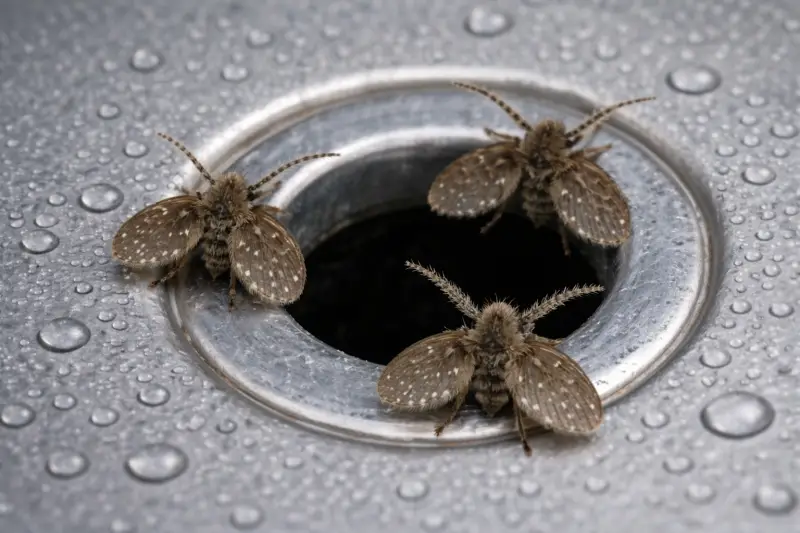
In most Georgia homes, the tiny insects seen gathering around bathroom drains turn out to be drain flies. They are often called moth flies or sewer flies, and once you know what to look for, their appearance becomes recognizable. They are small, fuzzy, and slightly triangular when resting. Their wings often look dusty or hairy, giving them a soft, mothlike texture rather than the glossy look of fruit flies.
Their movement is another giveaway. Drain flies rarely zip quickly across rooms. Instead, they flutter weakly, hover close to surfaces, and frequently crawl along sinks, tiles, or mirrors. That slow, hesitant flight pattern is not random behavior. It reflects how closely tied they are to their breeding site.
Occasionally, homeowners encounter phorid flies or fungus gnats in bathrooms. Phorid flies move faster and can indicate deeper plumbing issues, while fungus gnats often originate from damp soil in houseplants. Still, when activity centers specifically on bathroom drains, drain flies remain the most likely explanation.
Their life cycle depends on moisture and organic residue. Eggs are laid directly into the slimy film inside drains. Larvae feed quietly there, hidden from view. Adults emerge nearby. They are not wandering in from outside curiosity. They are appearing where they developed.
Why Georgia Homes Experience This More Frequently
Climate influences indoor insect patterns far more than most homeowners expect. Georgia’s warm conditions allow insects to breed longer and more consistently than in northern states. Even winter temperatures indoors rarely drop low enough to interrupt drain fly development entirely.
Bathrooms stay warm year round. Pipes remain damp. Organic buildup stays active. These stable conditions allow multiple generations to develop continuously rather than seasonally.
Humidity plays an equally significant role. Georgia air frequently holds substantial moisture, especially from late spring through early fall. Bathrooms retain that moisture longer after showers, baths, or routine sink use. Drains rarely dry fully.
That detail matters. Drain flies do not need standing water. They only need moist organic material, and Georgia homes naturally provide it.
Rainfall adds another layer. Extended rainy periods increase indoor humidity and can subtly influence plumbing moisture levels. Homeowners often notice spikes in drain fly activity after long stretches of humid or rainy weather, even when nothing else in the bathroom has changed.
Drains Are Not Just Pipes — They Are Micro Environments
It is easy to imagine drains as simple tubes carrying water away. In reality, the upper section of most drains becomes a miniature ecosystem over time.
Soap residue, shampoo, toothpaste, body oils, skin cells, hair, and cosmetic products slowly accumulate. These materials combine into a thin biofilm lining the inside of pipes. It is sticky, nutrient rich, and consistently moist.
This biofilm traps warmth and organic material. It protects developing larvae. It provides food and shelter. For drain flies, it is nearly ideal habitat.
Eggs are deposited directly into the film. Larvae feed on the organic layer. Pupae mature there. Adults emerge just inches below the drain opening.
So when flies seem to crawl straight out of the drain, that perception is usually accurate. They are not traveling up from distant sewer systems. They are developing in the uppermost portion of the plumbing, close to the visible opening.
Understanding this hidden environment explains why surface cleaning alone rarely solves the issue.
Why Bathroom Cleaning Often Doesn’t Solve It
A spotless bathroom can still harbor active drain fly populations because most cleaning focuses on visible surfaces. Counters get wiped. Tiles get scrubbed. Fixtures shine. Yet the inside of the drain remains largely untouched.
Hot water may loosen some buildup but often passes through too quickly to remove the biofilm. Chemical cleaners may reduce larvae temporarily but rarely eliminate the organic layer they depend on.
Eggs remain protected. Larvae cling tightly to pipe walls. A new generation develops quietly out of sight.
This creates a frustrating but predictable cycle. You clean thoroughly. Flies disappear for a few days. Then they reappear, often unexpectedly. It feels random, but it follows the life cycle developing inside the drain.
Once homeowners recognize that pattern, the recurrence becomes less mysterious.
Why Bathroom Drains Are Worse Than Kitchen Drains
Many Georgia homeowners notice the issue primarily in bathrooms, even when kitchens see more daily activity. Several factors explain this difference.
Kitchen drains often experience hotter water, grease dissolving detergents, and more frequent flushing. These conditions occasionally disrupt organic buildup and larval development.
Bathroom drains, especially showers, behave differently. Warm water mixed with soap cools quickly. Hair accumulates easily and traps residue. Ventilation may be weaker. Moisture lingers longer.
In a humid climate like Georgia’s, these conditions persist. Drains stay damp. Biofilm remains soft. Breeding cycles continue quietly.
Bathrooms become stable breeding environments without obvious warning signs.
Why Activity Seems Worse at Night
Drain flies tend to prefer calm, low light conditions. Bathrooms at night provide exactly that environment. Lights are off. Airflow slows. Humidity may rise slightly after evening showers.
Adult flies often emerge during these periods to mate and lay eggs. When someone switches on the bathroom light suddenly, activity becomes visible all at once.
This creates the impression that flies appeared instantly, when in reality they were already active in darkness.
Understanding this behavior helps reduce alarm. It is not a sudden infestation. It is a predictable emergence pattern.
Why They Stay Close to One Bathroom
Drain flies are weak flyers compared to many other insects. They rarely travel far from where they emerged.
If flies consistently appear in one bathroom, that drain almost always serves as the breeding site. Multiple bathrooms showing activity usually indicate multiple drains involved rather than one central source.
This localized behavior makes identification easier once recognized. Tracking activity room by room often leads directly to the problem drain.
Are These Flies Dangerous
Drain flies are primarily nuisance pests rather than health hazards. They do not bite. They are not aggressive. They are not known for transmitting disease in typical household settings.
However, their presence signals moisture and organic buildup inside plumbing. Persistent infestations can occasionally indicate slow drains, hidden leaks, or ventilation issues that deserve attention.
The main concern is sanitation and household comfort rather than direct health risk. Still, ignoring persistent infestations is not recommended.
Why Bleach and Quick Fixes Often Fail
Bleach remains one of the most commonly attempted solutions, yet it often produces only temporary results. The reason is simple. Bleach flows through pipes quickly without clinging to the biofilm.
It may kill some larvae on contact, but it rarely removes the organic layer that supports future generations. Once the chemical dissipates, conditions revert to normal.
Drain covers, sprays, or temporary treatments may reduce visible flies without eliminating breeding sites. Long term control typically requires removing buildup and managing moisture rather than relying solely on chemicals.
How Humidity Keeps the Cycle Going in Georgia
Humidity slows evaporation inside plumbing systems. Even drains that appear dry on the surface often remain damp internally.
Air conditioning can unintentionally contribute. Cool indoor air meeting humid outdoor air may create condensation around pipes or traps. That moisture stabilizes the drain environment.
As long as organic residue remains moist, drain fly populations can persist. This explains why Georgia homeowners often deal with recurring activity compared with drier regions.
Moisture is the critical factor.
Reduce it, and populations typically decline.
Hidden Causes Many Homeowners Overlook
Some contributing factors develop gradually and go unnoticed. Partially clogged drains slow water flow and increase residue buildup. Unused guest bathrooms allow water to stagnate. Hair accumulation traps organic matter. Minor leaks keep pipes consistently damp. Poor ventilation slows drying after showers.
None of these issues alone guarantee an infestation. Together, they create favorable conditions that persist quietly until flies become visible.
Recognizing these hidden contributors often leads to more effective long term solutions.
When Drain Flies Signal a Bigger Problem
While most infestations remain minor, persistent activity sometimes indicates deeper plumbing concerns. Cracked pipes, hidden leaks beneath floors, or sewer line damage can create stable breeding environments beyond the visible drain.
Phorid flies, in particular, may signal structural plumbing issues. If cleaning fails repeatedly or unusual odors accompany fly activity, professional inspection may help identify underlying problems.
Ignoring persistent signals can allow small plumbing issues to grow.
Practical Steps That Actually Help
Effective control focuses on disrupting the breeding environment rather than simply killing adult flies. Mechanical cleaning inside drains often produces the best results. Removing hair and organic buildup directly breaks the life cycle.
Enzyme cleaners can help break down biofilm gradually. Improved bathroom ventilation helps drains dry faster. Regular flushing prevents buildup from stabilizing.
Consistency matters more than intensity. Occasional maintenance often prevents recurring infestations.
Seasonal Patterns in Georgia
Many homeowners notice seasonal fluctuations. Spring and summer bring higher humidity and warmer temperatures, encouraging faster breeding cycles. Fall may still support activity indoors, especially after rainy periods.
Winter sometimes reduces activity but rarely eliminates it completely in Georgia. Indoor warmth and humidity often sustain small populations year round.
Understanding seasonal patterns helps anticipate recurrence and maintain preventive habits.
FAQs about Tiny Flies in Georgia Bathroom Drains
Are these flies coming from the sewer system
Usually not. They typically breed in the upper portion of the drain where organic residue collects.
Why do they keep coming back after cleaning
Eggs and larvae often remain inside biofilm. When adults emerge, the cycle repeats.
Does this mean my home is dirty
No. Even clean homes develop organic buildup inside plumbing over time.
Will bleach permanently eliminate them
Bleach may reduce numbers temporarily but rarely removes the underlying breeding environment.
Are drain flies harmful
They are mostly nuisance insects. However, persistent infestations may indicate moisture or plumbing issues.
Why do they appear mostly in one bathroom
That drain is usually the breeding site. Multiple bathrooms with flies often indicate multiple sources.
Should I call a plumber immediately
Only if thorough cleaning fails or other plumbing concerns appear.
Can they disappear on their own
Sometimes, especially if drains dry out, but recurring conditions usually bring them back.
Conclusion
Tiny flies coming out of bathroom drains in Georgia are not random intruders. They are responding to stable environmental conditions hidden just below the drain surface. Warmth, humidity, organic buildup, and consistent moisture create an ideal habitat for their life cycle.
Once that environment changes, the flies usually disappear. Better ventilation, regular drain maintenance, and attention to moisture levels help prevent recurrence. Understanding the process transforms a frustrating mystery into a predictable household issue that can be managed effectively over time.