
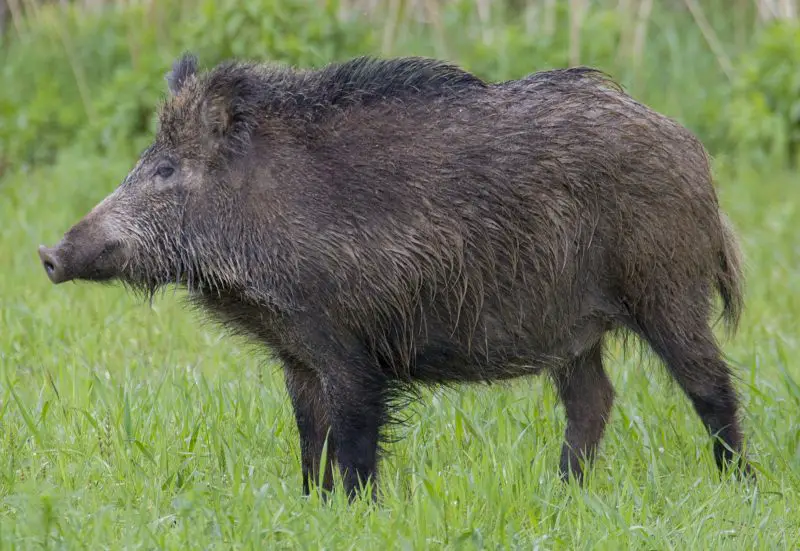
Feral pigs in Oregon are not native wildlife. They are descendants of escaped domestic pigs, imported wild boars, or hybrids of the two. Over time, these animals adapted to forests, grasslands, wetlands, and agricultural regions, developing survival traits that make them highly resilient. Although their numbers are far lower than in states like Texas or California, sightings still occur, and wildlife authorities actively monitor populations to prevent ecological damage.
These pigs are extremely adaptable mammals. They forage opportunistically, reproduce quickly, and tolerate diverse climates ranging from coastal rainforests to semi-arid eastern Oregon. Their rooting behavior can damage soil structure, destroy crops, and disrupt native ecosystems. Understanding the different types helps with identification, wildlife management, and public awareness.
In Oregon, feral pigs are generally grouped into three main categories based on genetics and origin rather than strict biological subspecies. These include true European wild boars, feral domestic pigs, and hybrids between the two. Each type shows distinct physical features, behavior patterns, and habitat preferences.
European Wild Boar

Origin and Presence in Oregon
European wild boars are generally regarded as the closest example of a truly wild pig that has appeared in Oregon. These animals descend from Eurasian wild boars that were imported into North America during the 20th century, primarily for hunting preserves. Some individuals escaped captivity or were deliberately released, allowing small feral populations to develop.
Oregon wildlife authorities have made strong efforts to prevent these animals from becoming permanently established because of their ecological impact. As a result, stable populations are uncommon today. However, occasional sightings still occur, especially in remote forested regions where monitoring is more challenging.
Their presence remains a management concern because even a small number of breeding animals can expand quickly if not controlled. This is why early detection and reporting are strongly encouraged by state agencies.
Physical Characteristics and Identification
European wild boars have several distinctive physical traits that separate them from domestic pigs. Their bodies tend to be compact and muscular, built for endurance and survival in rugged environments. The head is wedge shaped with a long snout designed for rooting in soil.
Coat coloration usually ranges from dark brown to black or grizzled gray. The hair is coarse and bristly, often becoming thicker during colder months. Adults commonly develop visible tusks that curve outward from the lower jaw, especially in males. Compared with domestic pigs, their tails are straighter rather than curled, and their legs are generally longer.
Typical identification features include:
-
Thick, bristly dark coat
-
Lean but powerful body structure
-
Prominent tusks in mature individuals
-
Straight tail rather than curled
-
More upright ears and alert posture
These traits give them a distinctly wild appearance that experienced observers can usually recognize quickly.
Behavior and Habitat Preferences
European wild boars are naturally cautious animals. They rely heavily on their keen sense of smell and hearing to detect threats. In areas where humans are present, they often become nocturnal to avoid contact. In quieter landscapes, daytime activity is more common.
Preferred habitats usually include dense vegetation where cover is readily available. Forest edges, brushlands, river corridors, and remote valleys provide both food sources and shelter. Access to water is especially important because pigs frequently wallow in mud to cool themselves and deter parasites.
They are strong swimmers and capable travelers, allowing them to expand into new habitats if conditions are favorable. Their adaptability contributes to their invasive potential.
Diet and Ecological Impact
European wild boars are omnivorous opportunists. Their diet includes roots, tubers, grasses, acorns, berries, insects, reptiles, eggs, carrion, and occasionally small mammals. This flexible feeding strategy helps them survive in diverse Oregon ecosystems.
However, their rooting behavior can significantly disturb soil layers. While some disturbance can aid nutrient cycling, excessive rooting often leads to erosion, habitat degradation, and the spread of invasive plant species. Wetlands and riparian zones are particularly vulnerable.
Because of these impacts, wildlife managers typically classify European wild boars as an invasive species requiring careful monitoring and control.
Feral Domestic Pigs

Origins and Development in the Wild
Feral domestic pigs originate from escaped livestock or animals intentionally released into the wild. Oregon’s long agricultural history means occasional escapes have occurred over many decades. When these pigs survive long enough to reproduce, small feral populations can form.
Domestic pigs adapt surprisingly quickly to wild conditions. Within just a few generations, they may develop thicker coats, longer snouts, and stronger survival instincts. This rapid adaptation is why escaped farm pigs are taken seriously by wildlife authorities.
If not addressed early, these populations can grow and begin affecting local ecosystems and agriculture. Early intervention often prevents long-term establishment.
Physical Traits and Identification
Unlike European wild boars, feral domestic pigs often display a wide range of coat colors and patterns. Some remain pink or spotted, while others turn darker as natural selection favors camouflage. Their bodies are usually rounder, reflecting domestic breeding for meat production.
Ears may be floppy rather than upright, and tusks are often smaller initially. Over time, however, feral generations can develop more pronounced tusks and stronger physiques.
Common identification characteristics include:
-
Variable coat colors including pink, black, brown, or spotted
-
Rounder body shape compared with wild boars
-
Shorter legs on average
-
Sometimes drooping ears
-
Smaller or less visible tusks in early generations
Because of their diversity, identification sometimes requires observing multiple features rather than relying on color alone.
Habitat Flexibility and Behavior
Feral domestic pigs are highly adaptable when it comes to habitat selection. They may occupy farmland edges, wetlands, forest clearings, grasslands, or scrub habitats. Proximity to water remains a key requirement due to their limited ability to regulate body temperature.
Behaviorally, these pigs quickly learn to avoid humans. They may become nocturnal in agricultural areas to raid crops without detection. Their intelligence and memory help them locate reliable food sources and evade control efforts.
Social structure typically mirrors that of wild boars, with females and young forming groups called sounders while mature males roam alone.
Diet and Agricultural Effects
Diet is extremely varied. Feral domestic pigs consume crops, fruits, roots, insects, amphibians, eggs, carrion, and small animals. Their opportunistic feeding can lead to crop losses, damaged pastures, and contamination of water sources.
In addition to economic concerns, their rooting behavior disrupts soil structure and native vegetation. This can negatively affect biodiversity and contribute to invasive plant spread.
Although domestic in origin, these pigs can quickly become ecologically disruptive once established in the wild.
Wild Boar–Domestic Hybrids

How Hybrids Form
Hybrid feral pigs result from interbreeding between European wild boars and feral domestic pigs. This mixing can occur when both types exist in the same area. The resulting offspring often inherit traits that enhance survival and reproduction.
Hybrids are frequently considered the most adaptable type because they combine wild boar toughness with the higher reproductive potential of domestic pigs. When populations emerge in Oregon, hybrids often represent a significant portion of sightings.
Their genetic diversity contributes to their ability to thrive across varied habitats and climates.
Physical Variation and Identification
Hybrid pigs can vary dramatically in appearance. Some resemble wild boars with dark coarse fur and tusks, while others show lighter or spotted coloration inherited from domestic ancestors. A ridge of longer hair along the back is commonly observed and sometimes described as a mane.
They may grow larger than either parent type due to hybrid vigor. Facial features often appear intermediate, combining domestic softness with wild boar angular structure.
Typical identification indicators include:
-
Mixed or variable coat colors
-
Coarse hair texture
-
Moderate to large body size
-
Partial tusk development
-
Mane-like ridge along the spine
-
Combination of domestic and wild facial traits
Because hybrids are so diverse, identification usually requires evaluating several physical and behavioral traits together.
Behavior and Social Structure
Hybrids tend to be highly adaptable and cautious. Near human settlements, they often shift to nighttime activity, while in remote areas they may remain active during daylight. This flexibility helps them avoid threats and maximize food availability.
They usually travel in sounders consisting of females and young. Adult males may remain solitary except during breeding seasons. Communication involves vocalizations, scent marking, and body language similar to both parent types.
Hybrids can be assertive if threatened, particularly when protecting young. Maintaining distance is always recommended when encountering any feral pig.
Diet, Adaptability, and Impact
Dietary habits mirror those of both wild boars and feral domestic pigs. Hybrids consume vegetation, agricultural crops, insects, small vertebrates, carrion, and various natural food sources. This broad diet contributes to their persistence across landscapes.
Their rooting and foraging behaviors can significantly alter habitats. Soil disturbance, vegetation damage, and competition with native wildlife are common concerns. These impacts make hybrids a priority for monitoring and management.
Because hybrids combine adaptability, reproductive capacity, and survival skills, they are often considered the most challenging feral pig type to control once established.
Habitat and Distribution in Oregon
Feral pigs have appeared sporadically across Oregon rather than forming large continuous populations. Sightings have been reported in southwestern forests, eastern rangelands, agricultural valleys, and remote mountainous areas.
Climate tolerance plays a major role in their distribution. Thick coats allow survival in cold winters, while behavioral adaptations such as mud wallowing help them cope with summer heat. Availability of water, shelter, and food strongly influences local presence.
State wildlife agencies actively monitor populations. Rapid response removal programs aim to prevent long-term establishment because once feral pigs become widespread, eradication becomes extremely difficult.
Ecological Impact
Feral pigs are considered one of the most destructive invasive mammals globally. Their ecological impact in Oregon can include soil disturbance, native plant damage, predation on wildlife, and water contamination.
Rooting behavior overturns soil while searching for food. This process damages plant communities, accelerates erosion, and facilitates invasive plant spread. Sensitive habitats like wetlands and riparian zones are particularly vulnerable.
They also prey on ground-nesting birds, amphibians, reptiles, and small mammals. Egg predation can affect local bird populations, especially species already under environmental stress.
Competition with native wildlife for food is another concern. Deer, elk, and small mammals may lose access to key food sources when pigs dominate an area.
Behavior and Social Structure
Feral pigs are intelligent, social animals. Females and young typically live in groups called sounders, while adult males often roam alone except during breeding periods.
Communication includes vocalizations, scent marking, and body language. Social hierarchy determines feeding priority, mating access, and group movement patterns.
They are excellent swimmers and capable runners. Their sense of smell is highly developed, aiding food detection and predator avoidance.
Activity patterns shift based on human disturbance. Near populated areas, pigs become nocturnal, while in remote regions they may remain active during daylight.
Identification Summary
Recognizing feral pig types helps differentiate between occasional escapes and established invasive populations. Key identification factors include body shape, coat texture, tusk presence, ear posture, and coloration patterns.
Wild boars tend to appear darker and leaner with prominent tusks. Domestic feral pigs show more color variation and rounder builds. Hybrids often display mixed features from both.
Accurate identification supports wildlife management decisions and reporting efforts.
FAQs About Feral Pigs in Oregon
Are feral pigs common in Oregon?
They are not widespread compared with some states. However, occasional populations appear, and authorities work quickly to remove them to prevent establishment.
Are feral pigs dangerous to humans?
Attacks are rare but possible, especially if animals feel cornered or threatened. Keeping distance is strongly recommended.
What should I do if I see a feral pig?
Report sightings to state wildlife agencies. Early reporting helps prevent population growth and ecological damage.
Can feral pigs survive Oregon winters?
Yes. Their thick coats and adaptable behavior allow survival even in cold conditions.
Why are they considered invasive?
They damage ecosystems, compete with native wildlife, and reproduce quickly, making them difficult to control.
Do feral pigs carry diseases?
They can carry diseases affecting livestock, wildlife, and occasionally humans. This is another reason authorities monitor them closely.
Are they legal to hunt in Oregon?
Regulations vary and often focus on eradication rather than recreational hunting. Always check current wildlife rules before taking action.
How fast do feral pigs reproduce?
Females can produce multiple litters per year under favorable conditions, contributing to rapid population growth.
What do they eat most often?
Roots, vegetation, crops, insects, small animals, and carrion form the bulk of their diet.
Can feral pigs become fully wild again?
Yes. Over generations, domestic pigs can develop traits similar to wild boars, including thicker fur, longer snouts, and increased wariness.
Conclusion
Feral pigs in Oregon fall into three main categories: European wild boars, feral domestic pigs, and hybrids between the two. Each type reflects a different origin story but shares similar adaptability, intelligence, and ecological impact. While Oregon does not have the massive feral pig populations seen elsewhere, even small groups can cause environmental and agricultural damage if left unchecked.
Understanding identification features helps residents, landowners, and wildlife observers recognize these animals accurately. Early reporting and management remain essential for protecting ecosystems, agriculture, and native wildlife. Continued awareness ensures Oregon can prevent large-scale invasions while maintaining balanced natural habitats.