
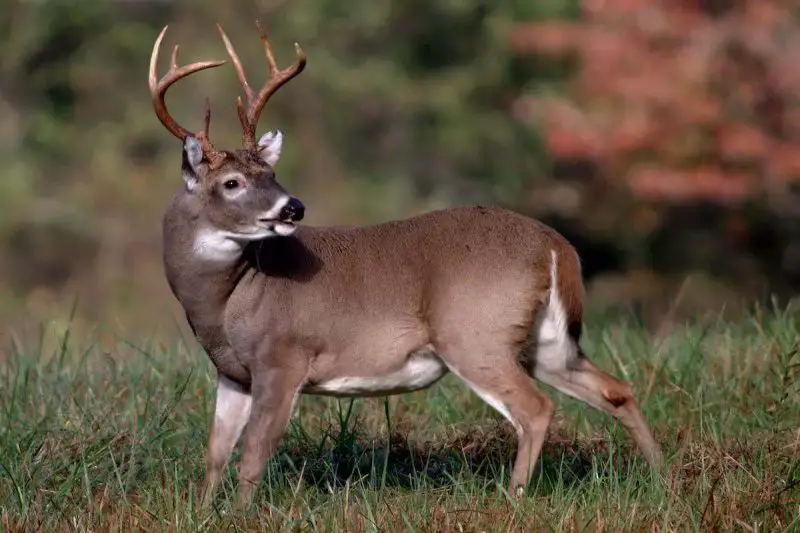
Washington State is home to a diverse range of habitats, from coastal rainforests and river valleys to dry shrub-steppe and rugged mountain ranges. Across these landscapes, deer have adapted in remarkably different ways. While many people assume Washington has “lots of deer,” there are actually three distinct types, each with unique physical traits, behaviors, and habitat preferences.
Understanding which deer species you are seeing matters for identification, wildlife observation, hunting regulations, and even road safety. Some species favor dense forests. Others thrive in open country. One is commonly seen near farms and towns, while another prefers remote mountain slopes.
This guide explores all three types of deer found in Washington State, with clear identification tips, habitat details, behavioral traits, and seasonal movement patterns.
Overview: Deer Diversity in Washington
Washington supports deer because of its varied geography and climate. West of the Cascades, lush forests and mild winters favor forest-adapted deer. East of the Cascades, drier terrain and open landscapes support species built for visibility and long-distance travel.
The three deer species found in Washington are:
-
White-tailed Deer
-
Mule Deer
-
Black-tailed Deer
Although related, they differ in appearance, movement, behavior, and habitat use. These differences become especially noticeable once you know what to look for.
White-tailed Deer in Washington

Identification Overview
White-tailed deer are one of the most recognizable deer species in North America, and once you learn their key traits, they are difficult to confuse with other species. Their most iconic feature is the tail. When startled or fleeing danger, a white-tailed deer raises its tail high, exposing a bright white underside that flashes repeatedly as it runs. This visual signal warns other deer of nearby threats and is often the first thing people notice.
Adult white-tailed deer are medium-sized but appear lean and athletic. They have long, slender legs built for quick bursts of speed rather than endurance. Their body shape looks lighter and more streamlined compared to mule deer. Seasonal coat changes are noticeable, with a reddish-brown coat in summer that gradually shifts to a grayish-brown tone in winter, providing camouflage against leaf litter and bare ground.
Bucks grow antlers with a single main beam on each side, from which multiple points rise upward. This antler structure is one of the easiest ways to distinguish white-tailed deer from mule deer. Their faces are narrow and expressive, with dark eyes set high for wide vision. Long, pointed ears rotate constantly, allowing them to detect faint sounds from multiple directions at once, a critical survival trait in mixed landscapes.
Habitat and Range in Washington
In Washington State, white-tailed deer are found almost entirely east of the Cascade Mountains. They thrive in landscapes that combine open feeding areas with nearby cover, making eastern Washington ideal for their lifestyle.
They are especially abundant in northeastern Washington, including the Spokane region and the Pend Oreille River basin. These areas provide a mix of forests, rivers, agricultural land, and brushy edges that white-tailed deer rely on year-round. Riparian corridors along rivers and creeks are particularly important, offering shelter in winter and reliable forage during dry seasons.
White-tailed deer are highly adaptable to human-modified environments. They frequently use farmland, orchards, hay fields, and suburban green spaces, often moving between natural cover and developed areas. This adaptability explains why they are commonly seen near towns, rural neighborhoods, and roadways, especially during dawn and dusk.
Behavior and Movement
White-tailed deer are known for their alert, nervous energy. They rely heavily on quick reactions rather than size or strength to avoid predators. When threatened, they explode into motion, bounding away with powerful leaps while flashing their raised tail. This escape style is fast, erratic, and designed to confuse predators.
They are primarily crepuscular, with peak activity occurring at sunrise and sunset. However, in areas with minimal human disturbance, white-tailed deer may move during daylight hours, especially in winter when food availability is limited. During colder months, they often form loose groups and concentrate in sheltered lowland areas, particularly river bottoms where snow depth is reduced.
Their ability to adjust behavior, diet, and movement patterns allows white-tailed deer to survive harsh winters and coexist closely with people, making them one of the most resilient deer species in Washington.
Mule Deer in Washington

Identification Overview
Mule deer are larger, heavier-bodied, and more rugged in appearance than white-tailed deer. Their name comes from their most distinctive feature: oversized ears that resemble those of a mule. These ears are broad, rounded, and highly mobile, giving mule deer exceptional hearing in open landscapes.
Their tails are narrow with a dark or black tip and lack the wide white underside seen in white-tailed deer. When running, mule deer keep their tails down rather than flashing them upward. Their coloration is typically grayish-brown to tan, blending perfectly with dry grasslands, sagebrush, and rocky hillsides.
Antler structure is another key identification feature. Mule deer antlers fork evenly, with each main beam splitting into two branches that may split again. This symmetrical, forked pattern contrasts sharply with the single-beam antlers of white-tailed deer and is one of the easiest ways to tell the species apart.
Habitat and Range in Washington
Mule deer are widespread east of the Cascade Mountains and dominate much of central and eastern Washington. They are especially common in shrub-steppe environments, open plains, foothills, and mountainous terrain with scattered trees.
They thrive in areas such as central Washington’s dry basins, eastern Washington’s rolling hills, and transitional zones where forests give way to open land. Mule deer prefer landscapes where visibility is high, allowing them to detect predators from a distance.
Unlike black-tailed deer, mule deer avoid dense, closed-canopy forests. They depend on open ground, ridges, and slopes where their vision and bounding escape style are most effective.
Behavior and Seasonal Migration
Mule deer are famous for their long-distance seasonal migrations, some of which are among the longest of any land mammal in North America. Many herds spend summers in high-elevation mountain ranges where forage is lush, then migrate to lower valleys and foothills as winter approaches.
Their movement is deliberate and well-established, often following the same migration routes year after year. During winter, mule deer may be seen grouped together on south-facing slopes where snow melts faster and forage remains accessible.
When fleeing danger, mule deer use a distinctive stiff-legged bounding motion known as pronking. This gait allows them to leap over obstacles, navigate uneven terrain, and conserve energy while escaping predators. Even in winter, mule deer remain relatively visible on open slopes and ridgelines, especially during calm, sunny days.
Black-tailed Deer in Washington

Identification Overview
Black-tailed deer are closely related to mule deer but are uniquely adapted to the wet, forested landscapes of western Washington. They are smaller and stockier, with compact bodies built for maneuvering through dense vegetation rather than covering open ground.
Their coats are darker than those of mule deer, ranging from deep brown to charcoal gray, which helps them blend into shadowy forests. The tail is dark on top, often appearing almost black, and lacks the white flash seen in white-tailed deer.
Their antlers resemble mule deer antlers but are typically smaller, shorter, and less dramatically forked. This reduced antler size reflects their forest lifestyle, where large antlers would hinder movement through thick brush.
Habitat and Range in Washington
Black-tailed deer are found primarily west of the Cascade Mountains and are the dominant deer species in western Washington. They thrive in coastal rainforests, lowland forests, and rugged foothills where dense vegetation provides constant cover.
They are especially common on the Olympic Peninsula, in the western lowlands, and in areas with frequent logging activity. Clearcuts and regenerating forests create ideal feeding conditions, while nearby mature forests provide escape cover.
Unlike mule deer, black-tailed deer prefer environments where visibility is limited. Thick brush, fallen logs, and understory vegetation form the backbone of their habitat.
Behavior and Adaptation
Black-tailed deer are among the most secretive deer in North America. Rather than fleeing immediately when threatened, they often freeze in place, relying on camouflage to remain unseen. If they do move, they slip quietly into cover rather than running long distances.
Their home ranges are typically smaller than those of mule deer, and they show less dramatic seasonal migration. Instead, black-tailed deer make subtle elevation adjustments in response to snow depth, moving slightly downhill during winter and back upslope in spring.
Because of their stealthy behavior and preference for dense cover, black-tailed deer are frequently present without being seen. Many people in western Washington live near black-tailed deer for years before ever spotting one, despite their constant presence in nearby forests.
Key Differences Between Washington’s Deer Species
Washington’s deer differ in more than just appearance. Their behavior, movement, and habitat preferences reflect deep evolutionary adaptations.
White-tailed deer excel at living near humans and using mixed landscapes. Mule deer dominate open country and rely on migration. Black-tailed deer thrive in dense forests where concealment matters more than speed.
Understanding these differences helps explain why deer sightings vary so dramatically across the state.
Tips for Identifying Deer in the Wild
Correct identification becomes easier when you focus on a few consistent traits rather than trying to remember everything at once.
First, look at the tail. A raised white flag indicates a white-tailed deer. A dark, narrow tail suggests mule or black-tailed deer.
Second, observe the ears. Very large, wide ears usually belong to mule deer.
Third, consider habitat. Dense rainforest points toward black-tailed deer. Open sagebrush favors mule deer. Agricultural edges often attract white-tailed deer.
Finally, watch movement style. Bounding with stiff legs suggests mule deer. Quick, low runs with tail flashing suggest white-tailed deer. Quiet slipping into cover is classic black-tailed deer behavior.
Seasonal Behavior and Visibility
Deer behavior changes dramatically with the seasons in Washington.
In spring and summer, deer spread out into higher elevations and forest edges. In fall, rutting activity increases movement and visibility, especially among bucks. Winter concentrates deer into lower elevations where food is accessible and snow is manageable.
Understanding these seasonal shifts explains why deer seem abundant at certain times and scarce at others.
Human–Deer Interactions in Washington
As development expands, interactions between deer and people increase. White-tailed deer are most commonly involved in vehicle collisions due to their use of agricultural and suburban landscapes.
Mule deer collisions peak during fall migration and winter movement. Black-tailed deer collisions are more localized but occur frequently on forested highways in western Washington.
Awareness of species-specific behavior can improve safety and reduce conflict.
Tips for Living Near Deer
If you live in an area with frequent deer activity, small adjustments can reduce problems.
Avoid feeding deer intentionally or unintentionally. Protect gardens with fencing. Drive cautiously at dawn and dusk. Keep pets supervised, especially during rutting season when bucks become more aggressive.
Coexistence becomes easier when deer behavior is understood rather than feared.
FAQs About Deer in Washington State
How many types of deer live in Washington State?
Washington is home to three types of deer: white-tailed deer, mule deer, and black-tailed deer.
Which deer species is most common in Washington?
White-tailed deer are the most widespread overall, especially in eastern Washington, while black-tailed deer dominate western forests.
Are mule deer and black-tailed deer the same?
They are closely related but behave differently. In Washington, black-tailed deer occupy forested coastal and western regions, while mule deer prefer open eastern landscapes.
Which deer is most likely to be seen near cities?
White-tailed deer are the most adaptable and are often seen near farms, suburbs, and small towns.
Do deer migrate in Washington?
Mule deer show strong seasonal migration. White-tailed and black-tailed deer migrate less but still adjust elevation and movement in winter.
When is the best time to see deer?
Early morning and evening are best year-round, with peak visibility during fall rut and winter concentration periods.
Are deer protected in Washington?
Deer are protected wildlife with regulated hunting seasons managed by the Washington Department of Fish and Wildlife.
Final Thoughts
Washington State’s deer are not all the same. Each species reflects the land it lives on and the challenges it faces.
White-tailed deer represent adaptability and coexistence. Mule deer embody wide-open landscapes and seasonal movement. Black-tailed deer symbolize stealth and forest survival.
Learning to identify these three types deepens your understanding of Washington’s wildlife and helps you interpret what you see on the road, on the trail, or even in your own backyard.
Once you know the differences, every deer sighting tells a clearer story about place, season, and survival.