
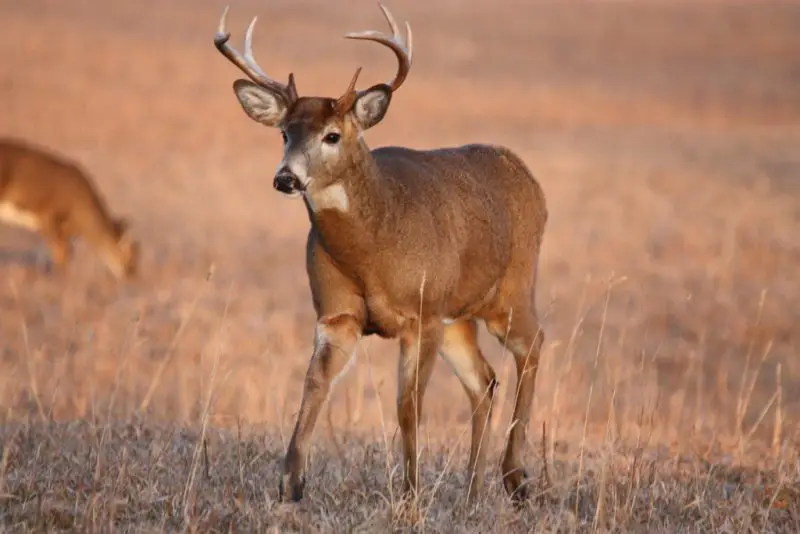
Florida is often associated with alligators, panthers, and tropical birds, but deer remain one of the most widespread and ecologically important large mammals in the state. Despite Florida’s warm climate and flat landscapes, deer have successfully adapted to everything from pine forests and swamps to coastal islands and suburban neighborhoods.
Unlike many states with multiple deer species, Florida is home to just two distinct types of deer. One is widespread and adaptable, while the other is small, rare, and found nowhere else in the world. Understanding how to identify them, where they live, and how they behave helps reduce confusion and supports conservation efforts.
This guide explores the two types of deer found in Florida, with detailed identification features, habitat preferences, behavior patterns, and key differences that set them apart.
Overview of Deer in Florida
Florida’s deer belong to the white-tailed deer species, but regional adaptations have resulted in two clearly defined types. These differences are shaped by habitat, climate, isolation, and food availability.
Deer in Florida are year-round residents and do not migrate long distances like northern populations. Instead, their movements are influenced by seasonal rainfall, food growth, breeding cycles, and human development.
Both deer types play critical roles in Florida’s ecosystems by shaping vegetation, dispersing seeds, and supporting predator populations. At the same time, increasing urban expansion has led to more frequent deer-human interactions.
1. White-tailed Deer

Identification and Physical Characteristics
The White-tailed Deer is the most common and widespread deer species in Florida. Adult males, known as bucks, typically weigh between 120 and 220 pounds, while females, called does, are smaller. Florida’s white-tailed deer tend to be smaller than those in northern states due to warmer climate and lower-calorie vegetation.
Their coat is reddish-brown during warmer months and shifts to a grayer tone in winter. The most recognizable feature is the long tail with a bright white underside, which is raised and flashed as a warning signal when the deer is alarmed.
Bucks grow antlers annually, shedding them after the breeding season. Antler size varies greatly depending on age, genetics, and nutrition. Florida bucks generally have smaller antlers than Midwestern deer, but mature individuals can still develop impressive racks.
Habitat and Distribution in Florida
White-tailed Deer are found throughout the entire state, from the Panhandle to South Florida. They occupy an exceptionally wide range of habitats, including pine flatwoods, hardwood forests, marsh edges, agricultural land, and suburban green spaces.
They are especially common near forest-field edges, where cover and food sources overlap. In South Florida, they often use hammocks and wetland margins, adapting well to seasonal flooding.
Because of their adaptability, white-tailed deer are frequently seen near roads, neighborhoods, and golf courses, where vegetation is abundant and predators are scarce.
Behavior and Daily Activity
White-tailed Deer in Florida are primarily crepuscular, meaning they are most active at dawn and dusk. During hot weather, they reduce daytime activity and seek shade to avoid overheating.
They are alert, cautious animals with excellent hearing and smell. When threatened, they flee in bounding leaps known as “stotting,” often raising the white tail as a visual alarm to other deer.
Social structure varies by season. Does and young deer form small family groups, while adult bucks are more solitary outside the breeding season.
Diet and Feeding Habits
Florida’s White-tailed Deer are herbivores with a highly flexible diet. They feed on grasses, leaves, shrubs, acorns, fruits, agricultural crops, and native plants.
In spring and summer, they favor tender new growth. During fall, acorns and hard mast become critical food sources. In winter and dry seasons, they rely more heavily on woody browse.
This flexible diet allows them to survive in diverse environments but can also lead to conflicts with farmers and gardeners.
Breeding and Life Cycle
Breeding season, known as the rut, varies across Florida but typically occurs between late summer and winter, depending on latitude. Bucks compete for mates through displays and sparring.
Does usually give birth to one or two fawns after a gestation period of about 200 days. Fawns are born with white spots that provide camouflage in dense vegetation.
Fawns remain hidden for the first few weeks of life, relying on camouflage and minimal scent to avoid predators. The mother returns periodically to nurse them.
Ecological Role and Conservation
White-tailed Deer are a keystone species in Florida ecosystems. Their browsing shapes plant communities and influences forest regeneration. They also serve as prey for predators such as Florida panthers, bobcats, and coyotes.
Populations are actively managed through regulated hunting to prevent overpopulation, habitat degradation, and increased vehicle collisions.
2. Florida Key Deer

Identification and Physical Characteristics
The Florida Key Deer is a subspecies of the White-tailed Deer and is the smallest deer found in North America. Adult males typically weigh 55 to 75 pounds, while females are even smaller.
Their appearance is similar to mainland white-tailed deer but on a much smaller scale. They have shorter legs, smaller bodies, and lighter antlers. Their coat is reddish-brown to gray, with a white underside of the tail.
Despite their small size, Key Deer retain the same alert posture and graceful movement as their larger relatives.
Habitat and Extremely Limited Range
Florida Key Deer are found only in the Florida Keys, primarily on Big Pine Key and a few surrounding islands. This makes them one of the most geographically restricted deer populations in the world.
They inhabit pine rocklands, hardwood hammocks, mangrove edges, and residential areas. Limited freshwater availability shapes their daily movements and habitat use.
Urban development has forced Key Deer to share space with humans more than any other deer population in Florida.
Behavior and Adaptations
Key Deer are less fearful of humans than mainland deer due to long-term exposure and lack of natural predators. This behavior, while seemingly tame, makes them vulnerable to vehicle collisions and illegal feeding.
They are active throughout the day, especially during cooler hours. Because of limited food resources, they travel short distances and rely heavily on native vegetation.
Their small size is an evolutionary adaptation to limited island resources, a phenomenon known as island dwarfism.
Diet and Feeding Patterns
Florida Key Deer feed on a wide variety of native plants, grasses, leaves, fruits, and mangrove vegetation. During dry periods, access to freshwater becomes a major challenge.
Human feeding has caused serious health issues, including malnutrition and dependency. For this reason, feeding Key Deer is illegal and strictly enforced.
Reproduction and Population Challenges
Key Deer breeding occurs year-round, with peaks varying by rainfall and food availability. Does typically give birth to a single fawn.
The population is closely monitored due to its endangered status. Vehicle strikes, habitat loss, and climate change remain the most serious threats.
Conservation Status and Protection
The Florida Key Deer is listed as endangered under the Endangered Species Act. Extensive conservation efforts are in place, including wildlife crossings, speed limits, habitat protection, and public education.
Their survival depends on continued human cooperation and responsible development practices in the Florida Keys.
Key Differences Between Florida’s Two Deer Types
White-tailed Deer are larger, more widespread, and highly adaptable to human-altered landscapes. Florida Key Deer are smaller, restricted to a tiny geographic area, and far more vulnerable to environmental changes.
While they belong to the same species, their differences reflect powerful forces of evolution, isolation, and habitat specialization.
Tips for Observing and Living Around Deer in Florida
When encountering deer in Florida, maintaining distance is essential for both safety and conservation. Even though deer may appear calm or accustomed to people, especially in suburban areas or the Florida Keys, they are still wild animals and can react unpredictably if startled or approached too closely.
If you want to observe deer, early morning and late evening provide the best opportunities. These cooler hours align with their natural activity patterns, particularly during hot summer months. Using binoculars allows close viewing without disturbing their behavior or causing stress.
Drivers should be especially cautious at dawn, dusk, and during the breeding season, when deer movement increases. Slowing down in posted wildlife zones and scanning road edges can significantly reduce the risk of collisions, which remain one of the leading causes of deer mortality in Florida.
Homeowners can reduce unwanted deer encounters by avoiding intentional feeding and choosing landscaping plants that are less attractive to browsing. In the Florida Keys, never feed deer under any circumstances, as it is illegal and harmful to the endangered Key Deer population.
Finally, remember that respectful coexistence benefits everyone. Allow deer to move freely, keep pets leashed in deer-heavy areas, and report injured or distressed animals to wildlife authorities rather than intervening directly.
FAQs About Deer in Florida
How many types of deer live in Florida?
Florida has two types of deer: the White-tailed Deer and the Florida Key Deer.
Are there elk or mule deer in Florida?
No. Elk and mule deer do not naturally occur in Florida.
Are Florida Key Deer wild?
Yes. Despite their calm behavior, Key Deer are fully wild animals and protected by law.
When are deer most active in Florida?
Deer are most active at dawn and dusk, especially during cooler months.
Is it legal to feed deer in Florida?
Feeding deer is discouraged statewide and illegal in the Florida Keys.
Why are Florida deer smaller than northern deer?
Warmer climates and lower-calorie diets result in smaller body size.
What should I do if I see an injured deer?
Contact Florida Fish and Wildlife Conservation Commission or local wildlife authorities.
Final Thoughts
Florida’s deer may be few in number compared to other states, but their ecological importance and uniqueness are profound. From the adaptable White-tailed Deer to the endangered Florida Key Deer found nowhere else on Earth, these animals reflect Florida’s diverse landscapes and conservation challenges.
Understanding how to identify, respect, and coexist with deer helps protect both wildlife and people. As development continues across the state, responsible management and public awareness will remain essential to ensuring that Florida’s deer continue to thrive for generations to come.