
Montana is one of the wildest states in the country, and its rugged mountains, dense forests, and vast prairies are home to some of North America’s most powerful predators. These animals shape the landscape through their hunting habits, territorial behavior, and constant movement across remote terrain. Their presence defines much of the state’s wilderness character.
Many of these predators rarely interact with people, but they can become dangerous when surprised, defending young, or searching for food near human activity. Understanding how they behave and where they live helps hikers, campers, and residents stay safe while exploring Montana’s backcountry. Each species brings its own strengths, from raw strength to stealth and speed.
This guide introduces 12 dangerous predators found throughout Montana, complete with photos and identification details. With clear descriptions and habitat insights, you’ll learn how to recognize these iconic animals and appreciate the important role they play in Montana’s wild ecosystems.
Montana’s Most Powerful and Threatening Predators
Grizzly Bear

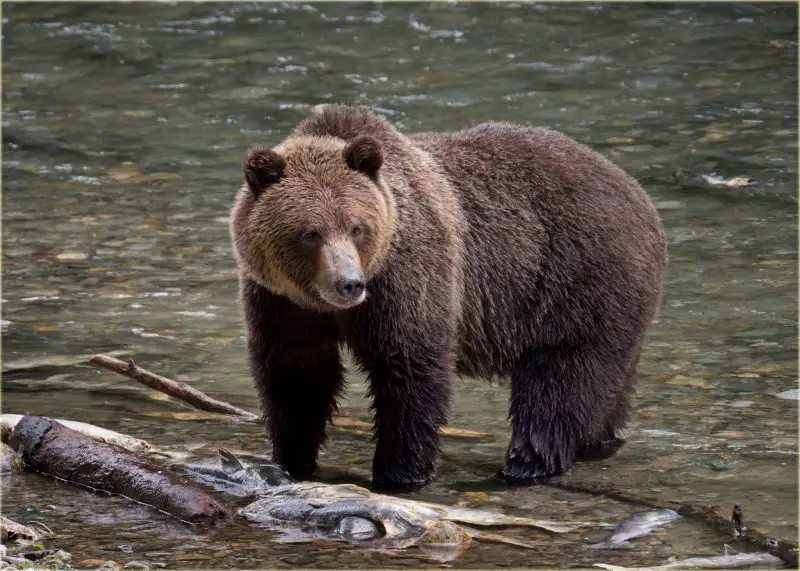
The Grizzly Bear commands more respect in Montana than any other predator. Its massive frame, heavy shoulder hump, and silver-tipped fur give it a powerful, unmistakable appearance. Even from afar, the animal’s confident stride shows why it dominates the region’s wilderness.
Fully grown grizzlies often reach 400 to 700 pounds, with some males pushing far beyond that. Their speed surprises many hikers, as they can sprint fast enough to outrun a horse over short distances. Long claws and immense strength make them expert diggers and formidable fighters.
Grizzlies occupy mountain forests, river valleys, and alpine meadows, shifting habitats with the seasons in search of berries, carrion, fish, and young ungulates. When natural food is scarce, they may wander closer to backcountry campsites or hiking trails.
Most conflicts happen when a person approaches too quietly or wanders between a mother and her cubs. Travelers who store food correctly and make noise along trails greatly reduce their chances of trouble. Respecting their space keeps both human and bear safe.
Black Bear

The Black Bear is far more adaptable and widespread across Montana’s forests than the grizzly. Its coat ranges from jet-black to cinnamon or blond, giving it a varied appearance. Without the muscular hump of its larger relative, it has a sleeker and more agile silhouette.
Adult Black Bears typically weigh 150 to 350 pounds, yet their climbing ability sets them apart. They can ascend trees in seconds, using strong limbs and curved claws. Their diet is broad, including berries, grasses, insects, small animals, and scavenged food.
These bears are comfortable in dense forests, riparian corridors, foothills, and even near rural homes. Curiosity often leads them to trash cans, bird feeders, and outdoor coolers, especially in late summer when they search intensely for calories.
A bear accustomed to easy meals can become unpredictable. Communities that secure garbage and remove attractants experience far fewer encounters. Their intelligence and quick problem-solving make them both fascinating and challenging neighbors.
Gray Wolf

The Gray Wolf brings teamwork and endurance to Montana’s predator lineup. Its thick fur, long legs, and alert expression create a striking image in the northern wilderness. Packs communicate constantly through body language, scent, and echoing howls that travel across valleys.
Wolves usually weigh 70 to 120 pounds, but their strength comes from cooperative hunting. Packs pursue elk, deer, and other large animals with persistence rather than speed, following trails for miles if needed. Their coordination allows them to tackle prey much larger than themselves.
They roam remote forests, foothills, and high mountain basins, often shifting territories as prey migrate. Tracks in snow or distant howls are the most common signs that wolves are nearby.
Encounters with people rarely escalate, as wolves tend to withdraw once they detect humans. Issues mostly arise around livestock, leading to monitoring and management efforts. Their presence has a major ecological impact, shaping prey behavior and strengthening ecosystems.
Mountain Lion

The Mountain Lion moves through Montana with a level of stealth few predators can match. Its tawny coat, long tail, and fluid movements allow it to slip through forests and rocky canyons unnoticed. Many people hike through cougar territory for years without ever seeing one.
These cats weigh between 80 and 150 pounds, built for short bursts of explosive power. Exceptional jumping ability and sharp vision help them ambush deer and smaller mammals, usually under low-light conditions. Their hunting style relies on patience and a perfectly timed strike.
Cougars occupy thick forests, steep slopes, and rugged foothills where cover is abundant. Their territories can stretch for miles, often overlapping areas where deer are plentiful.
Direct confrontations with people are rare, as cougars tend to avoid open areas and human noise. Hikers who keep pets leashed and stay alert at dawn and dusk minimize the chances of surprise encounters. Their quiet dominance maintains balance among prey species in Montana’s mountains.
Wolverine

The Wolverine has earned a legendary reputation despite its modest size. With dense fur, a broad head, and striking facial markings, it looks built for harsh mountain winters. Determination and endurance define this animal more than brute force alone.
Typically weighing 20 to 40 pounds, Wolverines display astonishing strength, capable of taking down prey or tearing through frozen carcasses with ease. Their large paws act like snowshoes, giving them surprising speed and mobility on deep snowfields.
They inhabit isolated alpine forests, high ridges, and remote mountain basins. Their journeys often span great distances as they search for carrion, rodents, hares, or weakened ungulates. Solitude is central to their lifestyle, with individuals covering vast territories.
Because they keep such distance from people, sightings are exceptionally rare. Habitat changes and warmer winters pose challenges to their long-term survival. Encountering one in the wild is considered one of the most extraordinary experiences in Montana’s backcountry.
Coyote

Coyotes are among the most adaptable predators in Montana, moving easily between forests, prairies, foothills, and rural edges. Their slender build, sharp features, and bushy tail give them a fox-like appearance, but their intelligence and social behavior set them apart. They are especially active during dawn, dusk, and nighttime hours.
Most adults weigh between 25 and 45 pounds, built for both stamina and quick bursts of speed. Their keen hearing and acute sense of smell make them effective hunters, capable of detecting small prey even in thick brush or snow-covered terrain. They use a mixture of stealth and agility when approaching their targets.
Coyotes typically hunt alone, but they sometimes form small groups when tackling larger prey or defending territory. Their diet includes rodents, rabbits, insects, berries, and livestock if given the opportunity. This flexibility is one reason they thrive in areas where other predators struggle.
Conflicts with humans usually arise when attractants such as outdoor pet food or unsecured garbage are available. Pets left outdoors at night can also be vulnerable. Even so, coyotes tend to avoid people when possible and play a significant role in controlling rodent populations across the state.
Bobcat

Bobcats are medium-sized wildcats with tufted ears, spotted coats, and a distinctive short tail that makes identification easy. Their compact size allows them to move quietly through dense cover, slipping between rocks, logs, and vegetation with barely a sound. They are solitary by nature and far more secretive than many other predators.
Weighing 15 to 35 pounds, Bobcats may seem small, but they possess impressive strength. Their powerful hind legs help them pounce on prey with precision, while their sharp vision enables them to hunt effectively in dim light. Snowy terrain poses little challenge thanks to their wide, well-furred paws.
Their preferred habitats include wooded foothills, mountain forests, and scrubby areas where small mammals are abundant. Rabbits form a major part of their diet, but they also take birds, rodents, and occasionally deer fawns. Their careful stalking and patience make them capable hunters.
Bobcats rarely show themselves to humans, and conflicts are unusual. They retreat quickly when detected and generally avoid open confrontation. Their secretive nature, combined with their role in regulating small mammal populations, makes them a vital yet unseen part of Montana’s ecosystem.
Golden Eagle

The Golden Eagle is one of Montana’s most powerful aerial hunters, easily recognized by its dark plumage, massive wingspan, and golden sheen on the back of its head and neck. Its commanding presence over cliffs, prairies, and open mountainsides makes it one of the top avian predators in the region.
A full-grown Golden Eagle may reach wingspans of over seven feet, supported by strong muscles that allow soaring for long periods. These birds are remarkably fast, capable of dramatic dives reaching well over 100 miles per hour. Their sharp talons and hooked beak are perfectly designed for capturing and dispatching prey.
They prefer open landscapes where they can scan for rabbits, ground squirrels, and other small mammals. Nests are usually built on cliffs or tall rock formations, providing a clear view of surrounding terrain. Pair bonds are strong, and many nesting sites are reused for years.
Human encounters rarely pose problems, as Golden Eagles generally keep distance and focus on natural prey. However, their size and strength command respect. Seeing one glide across a canyon or mountain ridge is often a highlight for anyone exploring Montana’s wild spaces.
Bald Eagle

The Bald Eagle is one of the most recognizable birds in North America, known for its striking white head and tail contrasting with a dark brown body. Montana’s rivers, reservoirs, and lakes provide ideal hunting grounds, making the species a regular sight across much of the state.
Adults typically sport wingspans of six to seven feet, giving them the lift needed to patrol shorelines for fish. Their powerful talons, sharp eyesight, and ability to snatch prey from the water surface make them skilled hunters. While fish form the bulk of their diet, they readily steal food from other birds or scavenge carrion when opportunities arise.
Bald Eagles prefer habitats near large bodies of water, especially areas with tall trees suitable for nesting. Their nests can become enormous over time, sometimes weighing hundreds of pounds as branches accumulate each year.
Despite their imposing appearance, Bald Eagles generally avoid conflict with people. Observers must still maintain respectful distance, especially during nesting season. Their recovery from near extinction is one of North America’s most celebrated conservation successes and a reminder of the importance of wildlife protection.
Great Horned Owl

The Great Horned Owl is a dominant nighttime predator in Montana, famous for its large size, ear-like tufts, and deep yellow eyes. Its hooting calls echo through forests at night, an unmistakable sound that often gives away its location long before it is seen. The owl’s camouflaged feathers help it vanish into tree bark during the day.
These owls typically measure 18 to 25 inches tall, supported by broad wings that enable silent flight. The strength in their talons is astonishing, allowing them to overpower prey equal to or even larger than their own body weight. They have excellent night vision and acute hearing, key tools for night hunting.
Great Horned Owls use a wide range of habitats, from wooded valleys and canyon rims to prairies dotted with scattered trees. Their prey list is extensive, including rabbits, rodents, skunks, and even other owls. They strike with precision from elevated perches or glide silently just above the ground.
Encounters with humans are usually distant, as these owls prefer isolation and cover. They rarely pose danger unless a nest is disturbed. Their presence reflects a healthy ecosystem, and their nighttime silhouette symbolizes the wild and untamed nature of Montana’s landscapes.
Red Fox

The Red Fox is one of Montana’s most widespread small predators, easily recognized by its reddish coat, pointed ears, and long white-tipped tail. Its graceful posture and alert expressions make it one of the most visually striking mammals in the state. Despite living close to rural communities, it remains cautious around people and prefers to keep its distance.
Adult foxes typically weigh between 8 and 15 pounds. They move with remarkable lightness, able to trot quietly through snow-covered fields or weave between brush without making a sound. Their sharp senses allow them to pinpoint prey even when hidden under several inches of snow.
Red Foxes inhabit prairies, forest edges, agricultural lands, and open valleys. Their diet is extremely flexible—rodents, insects, birds, berries, and even leftover scraps from farms or campgrounds can all become meals. This adaptability has helped them thrive in landscapes shared with humans.
Encounters rarely escalate because foxes tend to flee at the first sign of approach. Their ecological value is significant, especially in controlling rodent populations. Their presence adds color and movement to Montana’s evenings and early mornings.
Lynx

The Lynx is among the most elusive predators in Montana, distinguished by its long legs, tufted ears, and oversized paws that act like natural snowshoes. Its dense, grayish coat blends seamlessly into snowy forests, making it exceptionally hard to spot. Many people hike their entire lives without ever seeing one.
Adults usually weigh between 18 and 30 pounds, with a compact yet powerful build. Their large eyes and specialized whiskers help them detect movement in dense undergrowth. Thanks to their wide paws, they stay atop deep snow where other predators sink, giving them a major advantage when tracking winter prey.
Lynx prefer remote boreal forests and high-elevation habitats thick with spruce and fir. Their survival is closely tied to snowshoe hares, which make up the majority of their diet. When hare numbers fluctuate, lynx populations rise and fall in response.
Shy by nature, lynx avoid human activity and rarely cause conflict. Their rarity is due to specific habitat needs and competition with other predators such as bobcats. Protecting large, snowy forest tracts is essential for maintaining Montana’s small but important lynx population.
FAQs About Dangerous Predators in Montana
What predators are considered the most dangerous in Montana?
Grizzly Bears and Mountain Lions are generally the most dangerous due to their size, strength, and ability to defend territory or young.
Are wolf encounters dangerous for humans?
Attacks are extremely rare. Wolves usually avoid people and retreat once they sense human presence.
How can hikers stay safe in predator country?
Make noise on trails, travel in groups, secure food properly, and carry bear spray in grizzly territory.
Do coyotes or bobcats pose risks to people?
They rarely threaten humans but may target small pets if given the chance.
What time of day are predators most active?
Dawn, dusk, and nighttime are common active periods for wolves, mountain lions, coyotes, and owls.
Why does Montana support so many large predators?
The state has vast wilderness, abundant prey, and healthy ecosystems that allow multiple predators to coexist.
Are Wolverines dangerous?
They avoid people and seldom interact with humans, but they can defend themselves fiercely if cornered.
Do Bald Eagles and Golden Eagles attack humans?
No. They focus on natural prey such as fish, rabbits, and small mammals and typically stay far from people.
Conclusion
Montana’s wild landscapes are home to an impressive range of predators, from the towering strength of Grizzly Bears to the silent agility of Mountain Lions and the aerial power of Golden Eagles. Each species plays a vital role in maintaining ecological balance, shaping prey populations, and preserving the natural rhythms of the state’s forests, mountains, and prairies. While some predators pose potential risks, most avoid direct encounters with people and prefer to stay hidden in remote terrain.
Understanding their behavior, habitat, and patterns of activity makes exploring Montana’s wilderness both safer and more rewarding. By respecting wildlife, securing food properly, and giving predators the space they need, visitors and residents can coexist with these remarkable animals. Montana’s predators are not just symbols of wilderness—they are essential elements of the rugged, untamed character that defines the state.