
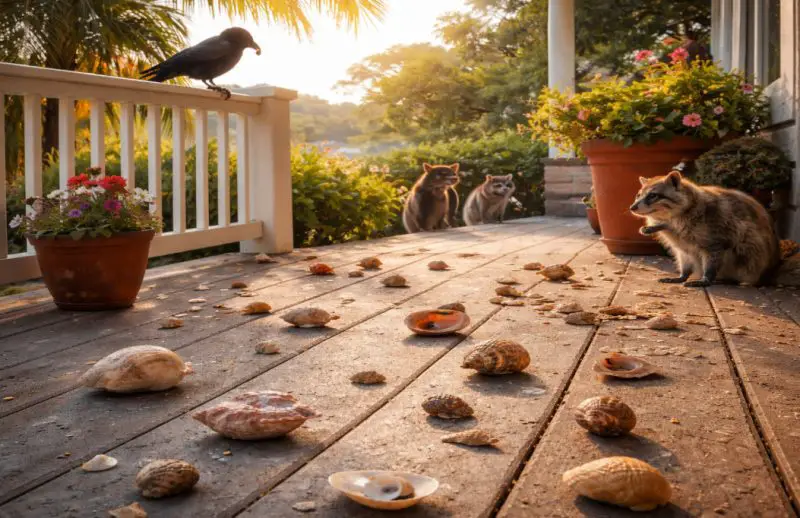
You step outside in the morning and notice something strange. Small shells scattered across the porch. Some are cracked. Some look freshly dropped. Others seem completely intact. At first it might feel random, maybe even a little unsettling. But when it keeps happening day after day, curiosity quickly turns into a real question: what is leaving shells on your porch?
In Florida, this situation is surprisingly common. The state’s warm, humid climate supports a wide variety of wildlife that interact with human environments. Birds, rodents, reptiles, insects, and even weather conditions can all play a role in shells appearing on porches, patios, and driveways.
Understanding the most likely causes helps remove the mystery. In many cases, the explanation involves natural feeding behavior, habitat overlap, or simple environmental factors rather than anything unusual or dangerous.
Table of Contents
- 1 The Most Common Explanation: Birds Using Your Porch as a Dining Spot
- 2 Small Mammals Can Also Leave Shells
- 3 Snails and Slugs Living Nearby
- 4 Coastal Factors Unique to Florida
- 5 Human Activity Can Play a Role
- 6 Why It Happens Overnight
- 7 Are Shells on Your Porch a Problem?
- 8 How to Identify the Source
- 9 Preventing Recurring Shell Deposits
- 10 When Professional Help Is Needed
- 11 Living With Florida Wildlife
- 12 FAQs About Shells Appearing on Florida Porches
- 12.1 Are birds usually responsible?
- 12.2 Could it be rodents?
- 12.3 Is it dangerous?
- 12.4 Do snails cause this directly?
- 12.5 Are storms responsible?
- 12.6 Should I remove shells quickly?
- 12.7 Can lighting attract wildlife indirectly?
- 12.8 Will the problem stop naturally?
- 12.9 Do pets contribute?
- 12.10 Is professional help necessary?
- 13 Conclusion
The Most Common Explanation: Birds Using Your Porch as a Dining Spot
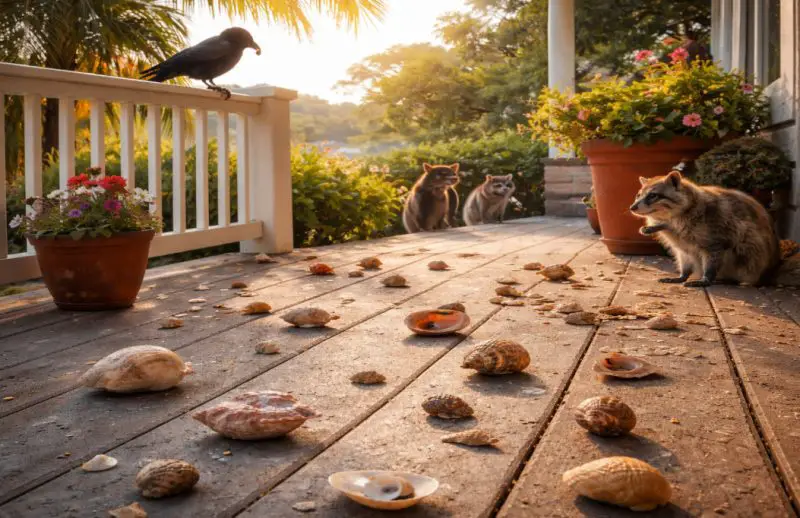
Birds dropping shells after feeding
One of the most common and overlooked explanations for shells appearing on Florida porches is simple feeding behavior by birds. Many bird species regularly consume snails, small crustaceans, acorns, and other hard-shelled food items. Because breaking through a shell requires force and a stable surface, birds often transport their prey to a solid, elevated area before eating.
A porch provides an ideal location for this behavior. It offers a flat surface where shells can be cracked open without losing prey in grass or sand. It also provides a vantage point where birds can watch for predators while feeding. Railings, roof edges, and nearby branches give them quick escape routes if threatened.
Once the bird finishes feeding, it has no reason to remove the empty shell. The shell remains exactly where the meal took place. If this behavior happens repeatedly, the porch becomes a regular feeding station without the homeowner ever realizing it.
In areas near wetlands, lakes, canals, or coastal zones, this is even more common. Birds naturally hunt aquatic snails or small marine organisms and then carry them inland to safe, hard surfaces.
Species commonly involved
Florida hosts an impressive variety of bird species capable of this behavior. Large black birds such as crows and grackles are particularly intelligent and adaptable. They often search lawns and gardens for snails after rain and carry them to hard surfaces to break open.
Blue jays are also frequent culprits, especially in suburban neighborhoods with oak trees. While they are well known for cracking acorns, they also consume small shelled prey when available. The cracking behavior is similar regardless of the food source.
In coastal communities, gulls are especially notorious for dropping shellfish from heights. They may pick up small clams or crabs from shorelines and carry them over homes. If a porch roof or driveway lies below, shells can land there repeatedly.
Herons and egrets, though more commonly associated with water edges, occasionally transport prey short distances before consuming it. If a property borders a pond or canal, this possibility increases.
None of these behaviors indicate disturbance or aggression. They are simply efficient feeding strategies developed over generations.
Height advantage for shell breaking
Some birds intentionally use gravity as a tool. Instead of pecking repeatedly at a shell, they drop it from height onto a hard surface to crack it open. This saves energy and reduces the time they are exposed to danger.
If your porch lies beneath a tree branch, roof edge, or railing where birds perch, it may unintentionally serve as the target area. Birds may repeat this action multiple times until the shell breaks successfully.
In coastal or lakeside regions of Florida, this behavior can become routine. Once a bird learns that your porch provides a reliable cracking surface, it may return frequently.
The result is a pattern of shells appearing consistently in the same location.
Small Mammals Can Also Leave Shells
Rodents feeding near homes
Squirrels, rats, and mice are opportunistic feeders. They frequently transport food items to sheltered areas where they feel secure. Porches offer protection from open-air predators such as hawks while still allowing a quick retreat into nearby shrubs or structural gaps.
If snails are abundant in the yard, rodents may collect them during damp evenings and bring them to covered porch areas to eat. They may also carry nuts or even small crab fragments if living near coastal environments.
Rodents are creatures of habit. Once they identify a safe feeding zone, they often return repeatedly. Over time, shells accumulate in small piles or scattered fragments.
Because rodents are primarily nocturnal, homeowners rarely witness the feeding itself. They only see the leftover evidence in the morning.
Raccoons and opossums
Florida’s raccoons and opossums are well known for their adaptability. Both species forage at night and consume a wide range of foods, including snails, insects, small crustaceans, and plant matter.
Raccoons, in particular, use their dexterous paws to manipulate food. They may gather multiple snails from a yard and carry them to a flat surface where they can eat more comfortably. A porch provides both stability and shelter.
Opossums are less deliberate but equally opportunistic. They may feed wherever they encounter prey. If your porch is part of their nightly travel route, it can become a feeding stop.
Signs of mammal involvement often include broken shells rather than intact ones, as mammals tend to crush shells rather than drop them from height.
Snails and Slugs Living Nearby
Natural snail populations
Florida’s humid climate supports dense snail populations, especially in shaded landscapes with irrigation systems. Snails are attracted to moisture, leaf litter, mulch beds, and gardens.
If your porch is near a landscaped area with frequent watering, snails may congregate nearby. Outdoor lighting can attract insects, which in turn attract snails feeding on organic matter.
In some cases, shells found on porches are simply the remains of snails that died naturally near the structure. Rain and wind may then move the empty shells slightly, making them more noticeable.
Predators targeting snail colonies
When predators discover a reliable snail population, they may return repeatedly. Birds and mammals quickly learn where food sources are dependable.
If your yard provides consistent snail activity due to irrigation or landscaping, your porch may simply be the final feeding platform in that food chain.
Reducing snail habitat by limiting excess moisture and clearing organic debris can significantly reduce shell accumulation.
Coastal Factors Unique to Florida
Marine shells carried inland
In coastal regions, seabirds often transport marine shells inland. During feeding flights, they may carry shellfish from beaches or shallow waters toward elevated structures.
Wind patterns can also redistribute lightweight shells, especially after storms. Strong coastal breezes occasionally move small shells surprisingly far.
Homes located near dunes or waterfront areas are more likely to experience this phenomenon.
Tidal flooding or storm surges
Florida’s seasonal storms can dramatically shift debris patterns. Even mild flooding can deposit shells on porches or patios, particularly in low-lying coastal neighborhoods.
After water recedes, shells remain behind as physical evidence of the event.
Seasonal tropical systems increase the likelihood of sudden shell appearances unrelated to wildlife feeding.
Human Activity Can Play a Role
Landscaping materials
Crushed shells are commonly used in Florida landscaping. Over time, rain, foot traffic, or animals may displace these materials toward porches.
Homeowners sometimes forget shells were part of decorative paths or garden beds. Gradual movement may seem mysterious when discovered later.
Even lawn maintenance equipment can scatter shells unintentionally.
Children or pets
Children collecting shells from beaches may accidentally drop them near entrances. Pets may pick up shells as play objects and leave them behind.
Dogs, especially, sometimes carry unfamiliar items into sheltered areas.
These small human or pet interactions can occasionally explain unexpected shell findings.
Why It Happens Overnight
Nocturnal wildlife activity
Many of Florida’s most adaptable animals are active at night. Raccoons, opossums, rodents, and certain birds forage under cover of darkness.
Because human activity decreases at night, wildlife becomes more confident moving through suburban spaces. Porches become quiet, undisturbed feeding areas.
By morning, the evidence remains, even though the feeding activity went unseen.
Motion-activated cameras frequently reveal these nightly visitors.
Cooler nighttime temperatures
Florida days can be extremely hot. Many animals prefer feeding during cooler nighttime hours to conserve energy and avoid heat stress.
Lower temperatures and reduced human presence create ideal conditions for feeding behavior near homes.
This explains why shells consistently appear by morning rather than during the day.
Are Shells on Your Porch a Problem?
Usually harmless
In most cases, shells on a porch represent natural wildlife activity rather than a structural or safety issue. They do not indicate infestation or aggression.
Simple sweeping and regular cleaning are typically sufficient.
Understanding the source often eliminates unnecessary concern.
Potential sanitation considerations
Large shell accumulations may attract ants or other insects. In rare cases, decomposing organic matter inside shells can produce mild odors.
Routine outdoor cleaning prevents secondary issues from developing.
Maintaining general porch hygiene keeps the situation manageable.
How to Identify the Source
Look for additional clues
Examining the shells closely can provide insight.
Intact shells dropped from height suggest bird involvement.
Crushed shells often indicate mammals.
Small piles beneath perches point toward repeated bird feeding.
Tracks, droppings, feathers, or fur may offer additional evidence.
Installing a motion camera for a few nights can quickly confirm the culprit.
Check nearby habitat
Consider what surrounds your porch.
Trees provide perches.
Mulch beds support snails.
Water features attract aquatic prey.
Shrubs offer cover for mammals.
Adjusting these environmental factors can reduce wildlife feeding behavior near your home.
Preventing Recurring Shell Deposits
Reduce attractants
Limiting snail populations through moisture control reduces predator visits. Avoid overwatering lawns and clear excess leaf litter.
Secure garbage and avoid leaving pet food outside overnight.
Removing food sources often discourages repeat visits.
Modify lighting
Outdoor lights attract insects, which attract snails, which attract birds and mammals. Switching to warmer-toned bulbs or using motion-activated lighting may reduce the chain reaction.
Small lighting changes can alter feeding patterns.
Landscaping adjustments
Trimming dense shrubs reduces shelter for mammals. Clearing debris eliminates hiding spots.
Long-term habitat modification is more effective than temporary deterrents.
When Professional Help Is Needed
Persistent wildlife activity
If shells appear daily in large quantities and other wildlife signs accompany them, consulting a wildlife professional may help. Humane deterrent strategies can redirect feeding activity without harming animals.
Professionals can assess patterns and recommend appropriate adjustments.
Structural or sanitation concerns
If shell buildup leads to insect infestations or structural moisture problems, inspection ensures early correction.
Addressing underlying environmental conditions prevents escalation.
Living With Florida Wildlife
Normal coexistence
Florida’s biodiversity means wildlife frequently overlaps with residential spaces. Birds and mammals adapt quickly to suburban environments.
Porches, decks, and patios become extensions of the natural habitat.
Understanding this overlap promotes realistic expectations and peaceful coexistence.
Education reduces concern
Learning about local wildlife behaviors replaces mystery with clarity. Shells on your porch are typically evidence of natural feeding patterns rather than threats.
Respecting wildlife boundaries while managing your environment responsibly allows both humans and animals to share space safely.
FAQs About Shells Appearing on Florida Porches
Are birds usually responsible?
Often yes, especially in coastal or wetland areas.
Could it be rodents?
Yes, particularly if shells appear overnight.
Is it dangerous?
Generally no.
Do snails cause this directly?
Sometimes through natural deaths or predator activity.
Are storms responsible?
Occasionally in coastal regions.
Should I remove shells quickly?
Regular cleanup helps sanitation.
Can lighting attract wildlife indirectly?
Yes, through insect attraction.
Will the problem stop naturally?
Often once food sources decline.
Do pets contribute?
Sometimes.
Is professional help necessary?
Usually only for persistent issues.
Conclusion
Finding shells on your porch every morning in Florida may seem mysterious at first, but the explanation usually lies in natural wildlife behavior. Birds dropping prey, nocturnal mammals feeding, snail populations near your home, or coastal environmental factors often account for these occurrences.
Most cases are harmless and manageable through simple observation, cleaning, and minor habitat adjustments. Understanding why it happens turns a puzzling situation into a normal aspect of living in a wildlife-rich environment like Florida.