
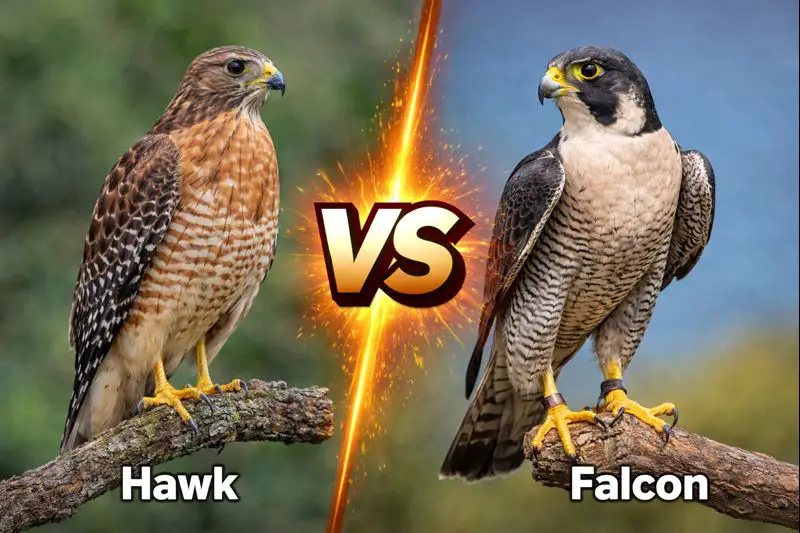
Florida feels alive in the sky. Shores shimmer under sunlight, marshes steam in warm air, pine forests whisper, and above everything, powerful birds of prey patrol the wind. Two of the most commonly seen and most frequently confused are hawks and falcons. They are both fierce, both majestic, and both vital to Florida’s ecosystems. But they are not the same. Their wings, their flight styles, their hunting behavior, and even their presence over Florida landscapes tell different stories.
For Florida residents, birdwatchers, backyard wildlife lovers, and photographers, knowing how to tell hawks from falcons brings a deeper level of appreciation. It helps you recognize what passes over your neighborhood, what patrols your local lakes, what hovers near coastal dunes, and what nests in towering city structures. With Florida being one of the richest birding locations in North America, this knowledge truly matters.
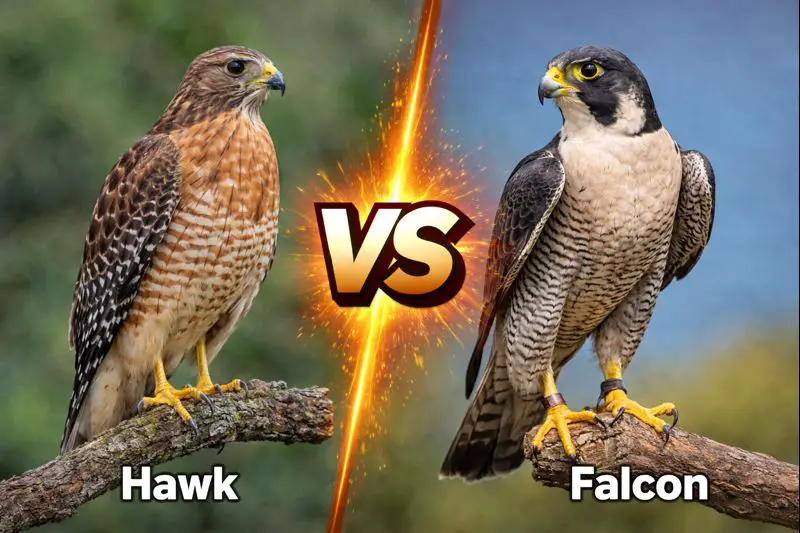
This guide will help you distinguish hawks and falcons clearly. It explains physical differences, flight behavior, sound, hunting preferences, habitats, the best places and times to observe them in Florida, real-world viewing tips, and common species to expect.
Table of Contents
- 1 Hawks in Florida
- 2 Falcons in Florida
- 3 Hawk vs Falcon Comparison Table
- 4 Physical Differences Residents Can See
- 5 Flight Differences Residents Notice Quickly
- 6 Hunting Behavior in Florida Environments
- 7 Sound Differences
- 8 Common Hawks Seen in Florida
- 9 Common Falcons Seen in Florida
- 10 Best Places to See Hawks and Falcons in Florida
- 11 Best Times of Year to Observe Them
- 12 Tips for Watching Hawks and Falcons in Florida
- 13 Quick Identification Checklist
- 14 FAQs about Hawk vs Falcon in Florida
- 15 Final Thoughts
Hawks in Florida
Characteristics of Hawks
Hawks belong to the Accipitridae family and are built for strength and control. Most hawks in Florida have broad, rounded wings, strong muscular bodies, thick legs, and deep chests. They look powerful. They give an impression of steadiness, presence, and authority in the sky.
Their eyes are intense and forward-focused. Their stance appears commanding. When perched, hawks look like they own their space. When flying, they glide with broad, confident wings that catch rising warm air currents.
Hunting Style of Hawks
Hawks are strategic hunters. Rather than relying on reckless speed, they master patience. They often perch quietly, barely moving, scanning the ground for prey. In Florida, they commonly sit on fence posts, tree branches, power poles, or along highways.
Once prey is detected, they dive with measured force and grab it with their exceptionally powerful talons. Their claws do the majority of the killing, crushing or immobilizing prey instantly. Hawks are skilled at taking squirrels, rabbits, rodents, small birds, snakes, lizards, frogs, and occasionally fish.
They also soar. Florida’s warm climate produces strong thermals, making it easy for hawks to float slowly in circles high above. This slow, graceful circling is one of the easiest visual clues to a hawk.
Where Hawks Are Found in Florida
Hawks are incredibly adaptable. They thrive in nearly every Florida environment, including:
• suburban neighborhoods
• city parks
• agricultural fields
• wetlands and marsh edges
• pine forests
• roadside corridors
• lakeside woodlands
They are often the raptor Florida residents see most often because they are comfortable being near human landscapes and readily take advantage of prey opportunities.
Falcons in Florida
Characteristics of Falcons
Falcons belong to the Falconidae family and are shaped for speed. Where hawks look powerful, falcons look aerodynamic. Their bodies are slim and streamlined. Their wings are long, narrow, and sharply pointed, giving them a sleek, knife-like silhouette.
Falcons also have unique facial markings. Many species possess distinctive “mustache marks,” dark streaks under their eyes that help reduce sun glare and aid in targeting prey. Their heads may look sharper and more defined compared to the rounded heads of many hawks.
Hunting Style of Falcons
Falcons do not stalk patiently like hawks. They dominate through speed and aerial agility. They chase prey in mid-air. They slice through open skies with fast, powerful wingbeats. They dive with unbelievable velocity. The Peregrine Falcon is the fastest animal on Earth, capable of diving more than 200 miles per hour.
Falcons kill with precision. Although they use talons, they also possess a unique “tooth notch” in their beak that allows them to sever prey quickly. This anatomical weapon is one of their defining characteristics.
Falcons feed heavily on birds, insects, and small mammals. They are fearless mid-air hunters and one of the most spectacular predators to witness in motion.
Where Falcons Are Found in Florida
Falcons prefer open environments, making Florida ideal. You may see them in:
• coastal regions and beaches
• open fields and grasslands
• farmlands
• dunes and barrier islands
• city skyscrapers
• migration corridors
In migration seasons, falcons are even more visible across Florida’s skies, especially along the Atlantic and Gulf coasts.
Hawk vs Falcon Comparison Table
Identifying these birds becomes easier when you compare traits side by side. The table below highlights the most important differences.
|
Feature
|
Hawks in Florida
|
Falcons in Florida
|
|---|---|---|
|
Body Build
|
Stocky, muscular, powerful chest
|
Slim, sleek, aerodynamic
|
|
Wing Shape
|
Broad and rounded
|
Long, narrow, pointed
|
|
Tail Shape
|
Wide and rounded when spread
|
Narrow and tapered
|
|
Flight Style
|
Slow soaring, gliding, circling
|
Fast, direct, rapid wingbeats
|
|
Hunting Style
|
Ambush and perch-hunting
|
High-speed chase and diving
|
|
Primary Weapon
|
Talons
|
Talons + notched “tooth” beak
|
|
Speed Level
|
Fast but moderate
|
Extremely fast
|
|
Common Habitats
|
Forests, wetlands, suburbs
|
Coasts, open lands, tall cities
|
|
Human Visibility
|
Very common in neighborhoods
|
Often coastal or urban high-rise
|
|
Common Florida Species
|
Red-shouldered, Red-tailed, Cooper’s
|
Peregrine, Kestrel, Merlin
|
Physical Differences Residents Can See
Body Structure
Hawks look strong. Falcons look sharp. Hawks feel like wrestlers. Falcons feel like sprinters. That visual contrast alone is often enough.
Wings and Tail
Hawks = wide, rounded wings.
Falcons = long, pointed wings.
Hawks’ tails spread wide, often rounded. Falcons’ tails stay narrow and sleek.
Head and Beak
Falcons have a distinct “notch” in the beak. Hawks do not. Falcons may also show bold face markings, especially the dark facial streaks.
Flight Differences Residents Notice Quickly
How Hawks Fly
Hawks glide and float. They move in big circles. Their wingbeats are slower and measured. Their flight feels calm, like they are relaxed rulers of the sky.
How Falcons Fly
Falcons move like lightning. Their wingbeats are rapid and tight. They fly straight and purposeful. When they dive, they transform into a living arrow, slicing through the air.
Hunting Behavior in Florida Environments
Hawks Hunting
Hawks use Florida trees, poles, and tall structures to their advantage. They wait. They strike with accuracy. They dominate squirrels, snakes, lizards, frogs, rodents, and birds commonly found in Florida suburbs and wetlands.
Falcons Hunting
Falcons use Florida’s open skies and coastal winds to pursue prey aggressively. They chase small birds, grab insects mid-flight, sweep across dunes, and dive with terrifying precision.
Sound Differences
Hawks often produce long, piercing screams that echo.
Falcons emit sharper, shorter, higher-pitched calls that repeat.
Even sound can help identification if you listen carefully.
Common Hawks Seen in Florida
Red-shouldered Hawk
One of the most common hawks in Florida. Seen frequently in suburban areas, especially near wetlands. Recognizable by its reddish shoulder patterns and loud, ringing call.
Red-tailed Hawk
Known for its iconic reddish-brown tail. Often seen on roadside poles and soaring over open land. A dominant presence in Florida skies.
Cooper’s Hawk
Sleeker than many hawks and highly agile. Skilled at chasing small birds through trees and often appears in residential backyards.
Common Falcons Seen in Florida
Peregrine Falcon
A legendary predator and one of Florida’s most thrilling birds to witness. Frequently seen along coasts during migration and winter. Sometimes nests in tall city buildings.
American Kestrel
Florida’s smallest falcon. Often perched on wires. Cute in appearance but deadly efficient, especially when hovering over open fields.
Merlin
Compact, aggressive, and fast. Commonly observed during migration seasons, especially in open environments.
Best Places to See Hawks and Falcons in Florida
Florida is a dream destination for raptor watching. Some of the best locations include:
Coastal Regions
Falcons dominate coastlines and beach skies. Peregrine Falcons especially love barrier islands and tall coastal structures.
Everglades and Wetlands
Hawks thrive around wetlands. Red-shouldered Hawks are abundant here.
State and National Parks
Locations like Everglades National Park, Paynes Prairie Preserve, Merritt Island National Wildlife Refuge, and Ocala National Forest are perfect viewing locations.
Suburban Neighborhoods
Residents often see hawks perched on neighborhood trees and utility poles.
Urban Skyscrapers
Peregrine Falcons sometimes nest and hunt around tall buildings in major cities.
Best Times of Year to Observe Them
Year-Round Watching
Many hawks remain in Florida year-round. Falcons also appear consistently, especially kestrels.
Migration Seasons
Fall and winter bring huge raptor migrations. Falcons become particularly visible during these periods, especially along coastal routes.
Time of Day
Morning and late afternoon are best. Air currents form, prey activity increases, and raptors soar more actively.
Tips for Watching Hawks and Falcons in Florida
Patience and Stillness
Move slowly. Stand quietly. Let nature come to you. Raptors notice sudden movement easily.
Use Binoculars
A good pair of binoculars makes identification far easier, especially for wing shapes and facial markings.
Learn Silhouettes
Train your eye. Look for rounded versus pointed wings. Notice flying style quickly.
Respect Wildlife
Never disturb nests. Never get too close. These birds are protected and deserve space.
Watch Open Skies and Power Poles
Falcons dominate open air. Hawks dominate perches. Knowing where to look increases success.
Quick Identification Checklist
Ask yourself:
• Does the bird soar wide and slow? Likely a hawk.
• Does it flap fast and fly straight? Likely a falcon.
• Are the wings pointed like knives? Falcon.
• Are the wings wide and rounded? Hawk.
• Hovering over fields? Often an American Kestrel.
• Circling high over suburbs? Often a Red-shouldered or Red-tailed Hawk.
FAQs about Hawk vs Falcon in Florida
Are hawks more common than falcons in Florida?
Yes. Hawks are generally seen more frequently, especially in suburban and wooded landscapes. Falcons appear regularly but prefer open and coastal regions.
Which one is faster?
Falcons. The Peregrine Falcon is the fastest animal on Earth during its dive.
Can they attack pets?
Incidents are rare. However, very small pets should always be watched outdoors as a precaution.
Do they live in Florida cities?
Absolutely. Hawks adapt easily to neighborhoods. Peregrine Falcons sometimes hunt pigeons and nest on tall buildings.
Do they help control pests?
Yes. Both species control rodents, insects, and problematic bird populations, supporting ecological balance.
Are they protected?
Yes. Federal protection laws prohibit harming or disturbing them.
Are they aggressive toward humans?
No. They avoid humans unless defending nests.
Can beginners learn to identify them?
Yes. Once you learn wing shape, body build, and flight style, identification becomes natural.
Final Thoughts
Florida’s skies are full of life. Hawks dominate with controlled power, soaring confidently above forests, neighborhoods, and wetlands. Falcons electrify the horizon with astonishing speed, chasing prey across beaches and migration paths. Together, they create one of the most dramatic predator stories in North American birdlife.
Learning to tell them apart connects you more deeply to Florida’s wildlife. It turns every walk, every drive, every quiet backyard moment, and every trip to the coast into a richer experience. Next time you look up and see a silhouette cutting through the air, you will not only recognize it. You will appreciate it. And Florida’s wild sky will feel even more alive.