
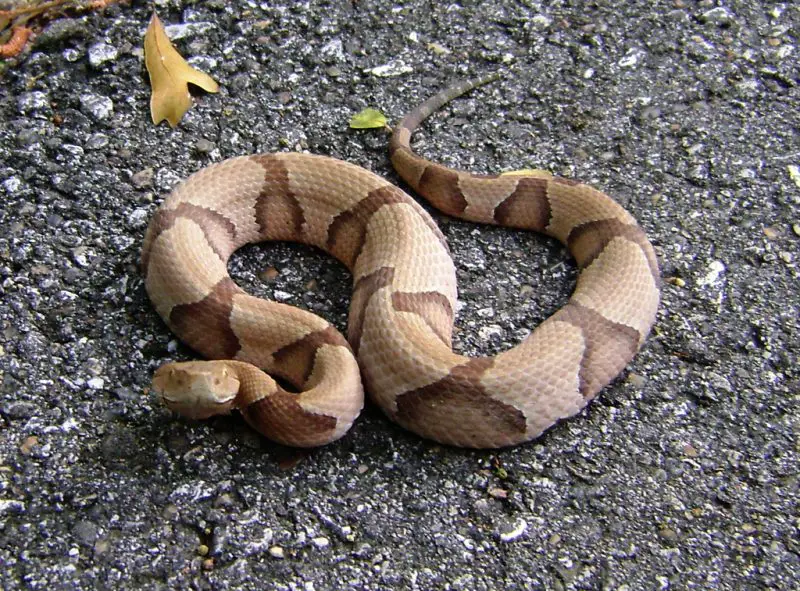
Many residents think of snakes as animals that belong mostly in remote prairies, wooded ravines, or rocky hills far from towns and neighborhoods in Nebraska. Yet the reality of wildlife in the Great Plains is far more complex. Nebraska’s mix of grasslands, river valleys, farmland, and scattered forests creates habitats where many reptile species can thrive quietly alongside human activity. Among the snakes that attract the most curiosity and concern are copperheads.
For many people, the word copperhead immediately brings to mind an image of a venomous snake hiding beneath leaves or sunning itself along a trail. Stories about unexpected encounters often circulate through communities, especially during warmer months when snakes become more active. Yet many Nebraska residents are surprised to learn that copperheads are actually far less common in the state than other snakes and that their behavior is often misunderstood.
Copperheads belong to a group of snakes known as pit vipers, which also includes rattlesnakes and cottonmouths. These snakes possess specialized heat-sensing organs that help them detect warm-blooded prey. Although copperheads are venomous, they are generally shy animals that prefer to avoid confrontation whenever possible.
Understanding copperhead activity in Nebraska requires looking closely at the state’s geography, seasonal weather patterns, and the natural habits of these secretive reptiles. Their movements follow environmental cues tied to temperature, sunlight, and prey availability. What might appear to be sudden snake activity is often the result of predictable seasonal patterns.
For homeowners, hikers, and outdoor enthusiasts across Nebraska, learning how copperheads behave can help explain why encounters occasionally occur and why these snakes tend to appear in certain places at certain times of year. Rather than being aggressive predators waiting to strike, copperheads are simply part of the region’s natural ecosystems, carrying out survival behaviors that have evolved over millions of years.
Table of Contents
- 1 The Snake Behind the Name Copperhead
- 2 Where Copperheads Are Found in Nebraska
- 3 Why Copperheads Are Hard to Spot
- 4 Seasonal Patterns of Copperhead Activity
- 5 What Copperheads Eat
- 6 The Purpose of Copperhead Venom
- 7 Why Copperheads Sometimes Appear Near Homes
- 8 The Ecological Role of Copperheads
- 9 Why Most Copperhead Encounters Are Brief
- 10 FAQs About Copperhead Activity in Nebraska
- 10.1 Are copperheads common in Nebraska?
- 10.2 When are copperheads most active?
- 10.3 Where do copperheads hide during winter?
- 10.4 What do copperheads eat?
- 10.5 Are copperheads aggressive toward people?
- 10.6 Why are copperheads hard to see?
- 10.7 Do copperheads live in neighborhoods?
- 10.8 How long do copperheads live?
- 11 Final Thoughts
The Snake Behind the Name Copperhead
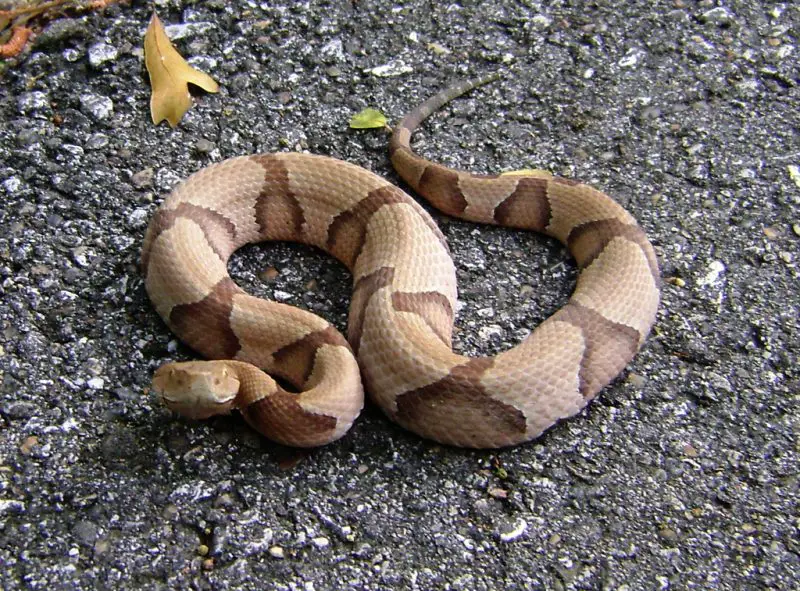
Copperheads are named for the distinctive coloration that runs along the top of their heads and bodies. Their scales often display a warm coppery or reddish-brown tone that blends well with forest floors and leaf litter.
The scientific name for the eastern copperhead is Agkistrodon contortrix. This species is found across large portions of the eastern and central United States.
Adult copperheads typically reach lengths between 24 and 36 inches, although some individuals may grow slightly longer. Their bodies are relatively thick compared with many other snakes, giving them a sturdy appearance.
One of the easiest ways to recognize a copperhead is the pattern along its body. Dark brown or chestnut-colored bands stretch across the snake’s back in a shape often described as an hourglass.
These patterns help the snake blend into its environment. Among fallen leaves or rocky terrain, the camouflage can be extremely effective.
Copperheads also possess vertical pupils similar to those of cats. This trait distinguishes many venomous pit vipers from non-venomous snakes, which often have round pupils.
Where Copperheads Are Found in Nebraska
Nebraska lies close to the western edge of the natural distribution range of copperhead snakes. Because of this geographic position, copperheads are not as widespread in Nebraska as they are in many southeastern states where forests and humid environments dominate the landscape. Their populations in Nebraska tend to be limited to specific habitats that provide the environmental conditions these snakes require to survive.
Most confirmed sightings occur in southeastern Nebraska, particularly in regions where wooded hillsides meet river valleys. These areas provide a combination of shade, moisture, and shelter that supports many reptile species. Dense vegetation and fallen leaf litter create environments where copperheads can remain hidden while hunting or resting.
The Missouri River valley contains some of the most suitable habitats in the state for these snakes. Forested slopes, rocky outcrops, and shaded ravines provide excellent shelter during both summer heat and colder seasons. Warm summer temperatures in these valleys also support the activity of the small animals that copperheads rely on as prey.
Copperheads are rarely found in open prairie landscapes. Nebraska’s grassland regions lack the dense cover and shaded environments these snakes prefer. Without tree cover, rocky crevices, or deep leaf litter, the conditions are less suitable for a snake that depends heavily on camouflage and protected hiding places.
Instead, copperheads are more likely to appear near wooded edges, brushy hillsides, or rocky bluffs along streams. These habitats provide the mixture of shelter and hunting opportunities that copperheads require to thrive.
Why Copperheads Are Hard to Spot
One reason copperheads frequently surprise people is their remarkable camouflage. The coloration of the snake closely matches the browns, oranges, and rust-colored tones found in fallen leaves, forest soil, and dry vegetation.
The distinctive hourglass-shaped markings across the snake’s body help break up its outline when viewed from above. When a copperhead remains still on the forest floor, the pattern blends almost perfectly with the surrounding leaf litter.
This camouflage evolved as an important survival strategy. By remaining nearly invisible in its environment, the snake can avoid predators while also remaining hidden from prey.
Copperheads rely heavily on this strategy because they are ambush predators rather than active hunters. Instead of chasing prey across long distances, they wait quietly until a small animal passes close enough to strike.
Because the snake may remain completely motionless for long periods, people sometimes walk very close without realizing the animal is present. The snake’s instinct is usually to remain still rather than reveal its location.
Only when the snake feels threatened or accidentally stepped on does it typically react defensively.
Seasonal Patterns of Copperhead Activity
Copperhead activity follows seasonal cycles influenced by temperature, sunlight, and prey availability. In Nebraska, the year begins quietly for these snakes during the cold winter months when they remain hidden underground.
During early spring, copperheads begin emerging from their winter shelters, known as hibernacula. These sheltered sites may include rock crevices, hollow logs, underground burrows, or deep root systems where temperatures remain stable during winter.
As the ground warms and sunlight becomes stronger, the snakes gradually increase their activity. Early spring is often a time when copperheads move between winter shelters and nearby feeding areas.
By late spring and early summer, activity levels increase significantly. The warmer temperatures allow the snakes to hunt more frequently as prey animals such as mice, frogs, and insects become more active.
During the hottest parts of summer, copperheads often shift their activity toward evening hours. Warm summer nights can be particularly active periods for these reptiles.
During extremely hot daytime temperatures, the snakes may remain hidden beneath rocks, logs, or thick vegetation to avoid overheating.
In autumn, copperheads often become active again as they search for food before winter arrives. This period allows them to build energy reserves before returning to their winter shelters.
Once colder temperatures settle in and nighttime frost appears, copperheads retreat to protected locations where they remain dormant until spring.
What Copperheads Eat
Copperheads primarily feed on small animals that inhabit forest floors and grassy areas. Their diet reflects the types of prey commonly found in the ecosystems where they live.
Typical prey includes mice, voles, small birds, frogs, lizards, and large insects. These animals are abundant in wooded environments and provide enough nutrition for the snake to survive.
Young copperheads often rely more heavily on insects such as cicadas, grasshoppers, and beetles. Because their bodies are smaller, insects provide an easier and safer food source during early life stages.
As the snakes grow larger, mammals gradually become a more important part of their diet. Rodents in particular provide high-energy meals that support the snake’s growth and survival.
Copperheads use a hunting strategy known as sit-and-wait predation. Rather than actively chasing prey, they rely on patience and camouflage.
The snake remains hidden in vegetation or leaf litter while waiting for an animal to pass nearby. When prey moves within striking distance, the snake launches a quick and precise attack.
After delivering a venomous bite, the snake usually releases the prey and allows the venom to immobilize it. Once the animal stops moving, the snake tracks it using scent cues.
Copperheads swallow prey whole, gradually working the animal into their mouths using flexible jaws. Because of this efficient hunting strategy, copperheads may survive with relatively few meals each year.
The Purpose of Copperhead Venom
Copperhead venom plays a critical role in the snake’s hunting strategy. The venom contains specialized proteins that affect the tissues of prey animals.
These compounds help immobilize small mammals, amphibians, or reptiles quickly after a bite. This allows the snake to capture prey without engaging in a prolonged struggle.
For the snake, venom provides an important advantage. Prey animals such as rodents can bite or scratch when threatened, which could injure the snake.
By using venom, copperheads reduce the risk of injury while hunting.
Although copperhead venom can cause medical symptoms in humans, it is generally considered less potent than the venom of some other pit vipers.
Most bites occur when a person accidentally steps on a snake or reaches near it without noticing the animal.
Because copperheads rely heavily on camouflage, they may remain still rather than fleeing immediately when approached.
When threatened, the snake’s typical response is to remain motionless, retreat slowly, or attempt to hide. Strikes usually occur only when the snake feels cornered or directly threatened.
Why Copperheads Sometimes Appear Near Homes
In some Nebraska neighborhoods located near wooded areas, copperheads occasionally wander close to houses or buildings. These encounters can be surprising for homeowners who rarely think about snakes living nearby.
However, residential areas sometimes provide the same environmental features that snakes use in natural habitats.
Woodpiles, rock gardens, brush piles, and thick vegetation can create shaded hiding places similar to those found in forests.
These structures offer shelter where snakes can remain hidden during hot days.
Residential yards may also attract rodents and other small animals that serve as prey for copperheads.
Because snakes follow prey populations, they sometimes pass through areas where mice or other small mammals are present.
Even so, copperheads rarely stay in places with heavy human activity.
Most encounters occur when a snake is simply moving through the area rather than establishing a permanent home.
The Ecological Role of Copperheads
Copperheads play an important role in maintaining ecological balance within Nebraska’s natural ecosystems.
As predators, they help control populations of rodents and other small animals. Without natural predators, these animals could multiply rapidly.
Rodents in particular reproduce quickly and may become agricultural pests that damage crops and stored food.
By feeding on rodents, copperheads contribute to keeping these populations in check.
At the same time, copperheads themselves become prey for larger animals.
Hawks, owls, raccoons, foxes, and other predators may feed on young snakes when the opportunity arises.
These predator-prey relationships form part of a complex food web connecting many species within Nebraska’s forests and river valleys.
Even animals that people often fear still play essential roles in maintaining the balance of natural ecosystems.
Why Most Copperhead Encounters Are Brief
When people encounter copperheads in the wild, the interaction is usually brief and uneventful.
The snake’s natural instinct is to avoid confrontation whenever possible. Copperheads rely heavily on camouflage and stillness to remain unnoticed.
If disturbed, they often move away quietly into nearby vegetation.
In many cases, the snake slips away before a person even realizes it was present.
Defensive strikes usually occur only when the snake feels threatened or cornered.
Because of this behavior, most encounters end quickly once the snake disappears into the surrounding environment.
For many Nebraska residents, copperheads remain largely unseen animals that quietly share the landscape without drawing attention.
Their presence is often discovered only through occasional sightings or stories passed between neighbors who spend time exploring wooded areas and river valleys.
FAQs About Copperhead Activity in Nebraska
Are copperheads common in Nebraska?
Copperheads occur mainly in southeastern parts of the state and are less common than many other snakes.
When are copperheads most active?
They are most active during warm months, particularly in spring and early autumn.
Where do copperheads hide during winter?
They shelter in rock crevices, burrows, and other protected underground spaces.
What do copperheads eat?
Their diet includes rodents, birds, frogs, lizards, and large insects.
Are copperheads aggressive toward people?
No. They usually avoid confrontation and rely on camouflage to remain hidden.
Why are copperheads hard to see?
Their coloration blends well with leaves and forest floors.
Do copperheads live in neighborhoods?
They may occasionally pass through yards near wooded areas but rarely stay long.
How long do copperheads live?
Many copperheads live between 15 and 20 years in the wild.
Final Thoughts
Copperheads are one of the most recognizable snakes in North America, yet their behavior is often misunderstood. In Nebraska, their presence is limited mainly to certain southeastern habitats where forests and river valleys create suitable environments.
Although they are venomous, copperheads are generally shy animals that rely on camouflage and stillness rather than aggression. Their movements follow seasonal patterns shaped by temperature, prey availability, and the need for safe shelter.
For Nebraska residents who enjoy spending time outdoors, understanding copperhead activity provides valuable insight into how these reptiles interact with the surrounding landscape.
Rather than representing a hidden danger, copperheads are simply part of the natural ecosystems that stretch across the state’s forests and river valleys, quietly carrying out their role in maintaining balance within the wildlife community.