
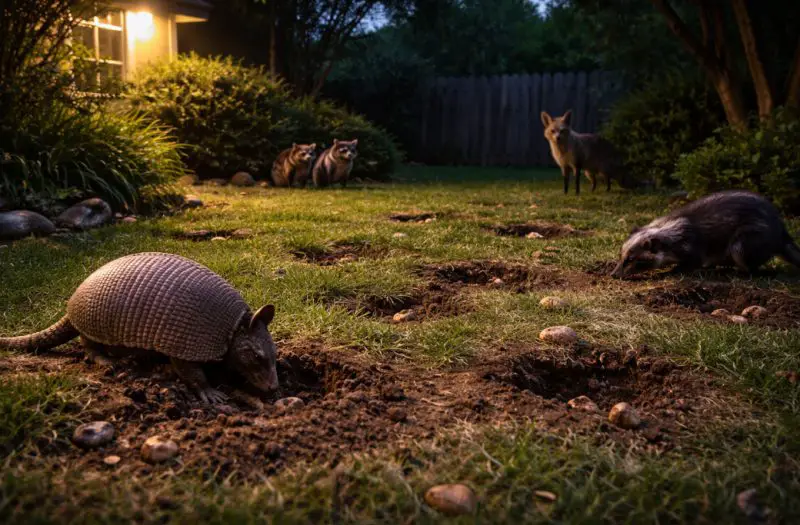
You wake up, step outside, and notice something new in the yard. Small holes scattered across the lawn. Some shallow, some deeper. Sometimes just one or two. Other mornings, dozens appear overnight. It can feel mysterious, even unsettling, especially if the yard looked perfectly normal the day before.
In Texas, this situation is surprisingly common. The state’s diverse wildlife, warm climate, and rich soil conditions attract many animals that dig for food, shelter, or nesting. Most of the time, these holes are not random vandalism by nature but simply signs of animals following their instincts.
Understanding what causes these holes, how to identify the culprit, and what you can do about it helps remove the mystery and prevent ongoing lawn damage.
Table of Contents
- 1 The Most Common Culprit in Texas: Armadillos
- 2 Skunks Also Dig Small Holes
- 3 Raccoons Searching for Food
- 4 Insects Can Cause Holes Too
- 5 Other Wildlife That May Dig
- 6 Soil Conditions That Encourage Digging
- 7 Why It Happens Overnight
- 8 Are These Holes Dangerous?
- 9 How to Identify the Culprit
- 10 Preventing Further Digging
- 11 Humane Wildlife Deterrence
- 12 Living With Texas Wildlife
- 13 FAQs About Tiny Holes in Texas Yards
- 13.1 Are armadillos the main cause?
- 13.2 Could insects cause holes?
- 13.3 Are skunks common diggers?
- 13.4 Should I worry about safety?
- 13.5 How can I confirm the animal?
- 13.6 Will holes stop naturally?
- 13.7 Can pets deter wildlife?
- 13.8 Are chemical repellents effective?
- 13.9 Do seasons matter?
- 13.10 Is professional help necessary?
- 14 Conclusion
The Most Common Culprit in Texas: Armadillos
Nighttime digging behavior
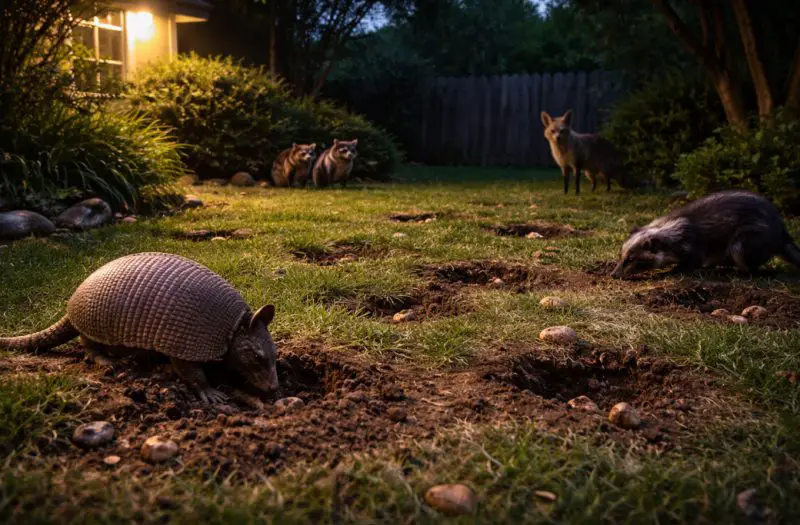
One of the most frequent reasons homeowners in Texas wake up to small holes scattered across their lawns is the activity of armadillos. These animals are widespread throughout much of the state and have adapted remarkably well to suburban environments. They are primarily nocturnal, meaning most of their foraging happens during the cooler nighttime hours when human activity decreases and temperatures are less intense.
Armadillos dig mainly in search of insects. Their diet consists largely of grubs, beetle larvae, ants, termites, worms, and other small invertebrates found just beneath the soil surface. Their sensitive snouts allow them to detect prey underground, prompting them to dig shallow, cone-shaped holes as they forage methodically across yards.
Because they typically work quietly overnight, homeowners rarely see them directly. Instead, the only evidence left behind is a pattern of freshly disturbed soil that seems to appear suddenly by morning. This nocturnal lifestyle explains why the digging often feels mysterious even though it follows predictable wildlife behavior.
Why your yard attracts them
Armadillos are strongly attracted to environments rich in insects. Lawns that are regularly irrigated, landscaped gardens with mulch, and areas with moist soil tend to support abundant insect populations. These conditions essentially create a buffet for insect-eating wildlife.
Texas’ generally warm climate allows insects to remain active for much of the year, which encourages armadillos to forage repeatedly in the same locations. Once they identify a yard as a reliable food source, they may return night after night.
Organic landscaping elements such as compost piles, leaf litter, or heavily watered flower beds also increase insect density. Even small environmental adjustments, like improving drainage or reducing excess watering, can sometimes reduce armadillo visits by limiting their food supply.
Signs it’s an armadillo
Several indicators help distinguish armadillo digging from other wildlife activity. The holes they create are typically shallow and conical, often only a few inches deep, with loose soil pushed outward. These holes frequently appear in clusters rather than isolated spots.
You might also notice disturbed soil along garden borders, fence lines, or near structural edges where insects are plentiful. Occasionally, armadillos dig larger burrows used for shelter. These burrows tend to be located near foundations, brush piles, or quiet corners of a yard.
Tracks with small claw marks may appear in soft soil, especially after rain. Observing these details helps confirm whether armadillos are responsible.
Skunks Also Dig Small Holes
Foraging for grubs
Skunks are another common nocturnal digger found in many parts of Texas. Like armadillos, they are primarily insectivores and spend considerable time searching for beetle larvae, worms, and other soil-dwelling prey. Their digging tends to be more precise and targeted because they rely heavily on smell to locate food beneath the surface.
Unlike armadillos, skunks often leave fewer holes, but they may revisit the same feeding spots repeatedly if food remains available. This can lead to a gradual increase in lawn disturbance over time rather than sudden widespread digging.
Because skunks are also nocturnal, most homeowners never witness their activity directly. The evidence appears only in the morning.
Identifying skunk damage
Skunk digging usually produces small, neat holes with minimal soil displacement. The holes may look as though they were made deliberately rather than scattered randomly.
A faint musky odor sometimes accompanies skunk activity, especially if they feel threatened or startled. Tracks with five toes may be visible in soft soil. Occasionally, patches of turf may be slightly lifted or overturned as they search for insects beneath grass roots.
While the damage is typically minor compared with larger animals, repeated visits can still affect lawn appearance.
Raccoons Searching for Food
Opportunistic feeders
Raccoons are highly adaptable animals common throughout Texas, from rural areas to urban neighborhoods. They are omnivorous and will eat almost anything available, including insects, fruit, birdseed, pet food, and human food waste.
When insect populations are abundant in a yard, raccoons may dig or tear up patches of lawn while searching for grubs. They are intelligent and persistent animals, often returning to locations where food has been found previously.
Their nocturnal habits make them difficult to observe directly, which contributes to the mystery surrounding yard damage.
Distinctive damage patterns
Raccoon digging often looks more disruptive than that of armadillos or skunks. They may flip sections of sod, scatter debris, or disturb larger areas of soil. Their front paws are dexterous, allowing them to manipulate objects almost like small hands.
Tracks resembling miniature human handprints are a common clue. You may also notice overturned garbage cans or disturbed bird feeders if raccoons are present.
Because they exploit multiple food sources, eliminating attractants can significantly reduce their activity.
Insects Can Cause Holes Too
Cicada emergence holes
Some holes in Texas yards are not caused by mammals at all but by insects completing their life cycles. Cicadas spend years underground as nymphs before emerging as adults. When they are ready to surface, they dig small exit holes that may appear in clusters.
These holes are usually neat, round, and relatively shallow. They often appear suddenly during emergence seasons and then gradually disappear as soil settles.
Although visually noticeable, cicada emergence is a natural and temporary event that rarely requires intervention.
Ground-nesting bees and wasps
Certain solitary bees and wasps nest in soil rather than hives. They dig small, tidy burrows that may resemble tiny holes scattered across lawns or garden beds.
These insects are typically non-aggressive and play beneficial roles as pollinators or pest controllers. Their presence often indicates healthy soil conditions and balanced ecosystems.
Disturbing these nests is usually unnecessary unless activity occurs directly in high-traffic areas.
Other Wildlife That May Dig
Foxes and coyotes
Predatory animals such as foxes and coyotes occasionally dig while hunting rodents or insects. Their holes are generally larger and deeper than those made by insect-feeding animals.
Texas’ expanding suburban development has increased encounters with these species. Although they usually avoid humans, they may forage in residential areas during nighttime hours.
Their digging patterns are typically isolated rather than widespread.
Rodents
Smaller mammals like pocket gophers, moles, and field mice create underground tunnel systems. These tunnels may produce soil mounds, raised ridges, or small openings in lawns.
Rodent activity often focuses on root systems, seeds, or insects. While usually not dangerous, persistent tunneling can affect lawn stability and plant health.
Management strategies vary depending on the specific species involved.
Soil Conditions That Encourage Digging
Moisture levels
Soil moisture strongly influences digging behavior. Damp soil is easier to excavate and supports higher insect populations. Irrigation systems, rainfall, or poor drainage can make yards more attractive to wildlife.
Dry soil generally discourages digging animals because prey becomes harder to locate and excavation requires more effort.
Improving drainage and adjusting watering schedules often reduces wildlife activity.
Organic landscaping
Mulch beds, compost piles, dense vegetation, and leaf litter create environments rich in insects and small animals. These conditions indirectly attract larger wildlife that feeds on them.
Maintaining balanced landscaping and avoiding excessive organic buildup helps reduce attractants.
Proper yard maintenance supports both plant health and wildlife management.
Lawn health factors
Overfertilization, excessive watering, or thick thatch layers can encourage grub populations. Healthy lawn care practices reduce insect abundance, which in turn discourages digging animals.
Balanced soil management is often more effective than wildlife deterrents alone.
Why It Happens Overnight
Nocturnal feeding habits
Many Texas wildlife species forage primarily at night. Cooler temperatures help conserve energy, and reduced human activity lowers perceived risk.
Morning discoveries reflect this nighttime activity rather than sudden daytime events.
Understanding these habits helps explain why damage appears unexpectedly.
Temperature and humidity factors
Texas nights often provide ideal conditions for insects to surface, especially during humid periods. Animals follow these food sources, leading to increased digging activity.
Weather patterns strongly influence wildlife behavior. Seasonal shifts may increase or decrease yard disturbances.
Are These Holes Dangerous?
Usually not harmful
Most digging animals pose little direct risk to humans. The primary concerns involve lawn appearance, minor tripping hazards, or potential garden damage.
Promptly filling holes and maintaining lawn health generally resolves these issues.
Potential structural concerns
Larger burrows near foundations, fences, or driveways may affect soil stability over time. Monitoring such activity helps prevent structural complications.
Professional assessment may be advisable if burrows appear repeatedly near buildings.
How to Identify the Culprit
Track observation
Animal tracks often provide valuable clues. Soft soil or damp ground preserves footprints that help identify species.
Motion-activated cameras can confirm nocturnal visitors quickly and accurately.
Careful observation reduces guesswork.
Timing patterns
Noting when holes appear helps narrow down possibilities. Overnight activity typically indicates nocturnal animals, while daytime digging suggests different species.
Recognizing patterns improves identification accuracy.
Preventing Further Digging
Reduce food sources
Controlling insect populations through balanced lawn care reduces the primary attractant for many digging animals. Avoid overwatering and maintain healthy soil conditions.
Less prey means fewer wildlife visits.
Remove attractants
Secure trash containers, store pet food indoors, and manage birdseed carefully. Eliminating easy food sources discourages repeat visits from raccoons and other opportunistic feeders.
Consistency is essential for long-term results.
Modify habitat
Trimming dense shrubs, reducing ground cover, and improving drainage make yards less attractive to wildlife. Habitat adjustments often provide the most sustainable prevention.
Humane Wildlife Deterrence
Non-harmful methods
Motion-activated lighting, fencing, and scent deterrents may reduce animal activity without causing harm. These approaches support humane coexistence.
Avoid harmful trapping unless absolutely necessary.
Professional assistance
Persistent wildlife problems sometimes require expert evaluation. Wildlife professionals can recommend humane solutions that protect both property and animals.
Living With Texas Wildlife
Natural coexistence
Texas’ rich biodiversity means wildlife interaction is a normal part of residential living. Animals often adapt quickly to suburban environments.
Understanding their behavior helps homeowners coexist peacefully while protecting their property.
Education helps reduce frustration
Learning why animals dig transforms confusion into practical knowledge. Preventive measures become easier to implement when the underlying causes are clear.
With awareness and thoughtful yard management, most digging problems can be minimized effectively.
FAQs About Tiny Holes in Texas Yards
Are armadillos the main cause?
Often yes, especially overnight.
Could insects cause holes?
Yes, cicadas and ground bees sometimes do.
Are skunks common diggers?
Yes, particularly where grubs are abundant.
Should I worry about safety?
Generally no.
How can I confirm the animal?
Use motion cameras or track observation.
Will holes stop naturally?
Often if food sources decline.
Can pets deter wildlife?
Sometimes, but not reliably.
Are chemical repellents effective?
Results vary widely.
Do seasons matter?
Yes, digging often increases in warmer months.
Is professional help necessary?
Usually only for persistent issues.
Conclusion
Tiny holes appearing in Texas yards rarely indicate anything mysterious or dangerous. Most often, they result from animals like armadillos, skunks, raccoons, or insects searching for food in healthy soil ecosystems. Texas’ warm climate and rich biodiversity naturally bring wildlife into suburban spaces.
By identifying the likely cause, managing food sources, and maintaining balanced landscaping, homeowners can significantly reduce digging activity. Understanding wildlife behavior turns a frustrating mystery into a manageable part of living in a vibrant natural environment.