

In Massachusetts, warm summer afternoons often bring people outdoors to gardens, parks, beaches, and backyard barbecues. The season is filled with blooming flowers, buzzing insects, and long daylight hours that invite people to enjoy nature. Yet among the many insects that thrive during these warmer months, few provoke as much immediate fear as wasps. Their sharp flight patterns, bright warning colors, and painful stings make them one of the most commonly misunderstood insects in the region.
Many Massachusetts residents assume that all wasps are aggressive pests whose only purpose is to ruin outdoor gatherings. When one appears near a picnic table or backyard grill, people often react with quick swats, panic, or attempts to flee. However, the truth about wasps and their stings is far more complex than most people realize.
Wasps are part of a large and diverse group of insects that play important ecological roles. In fact, many species act as natural pest control agents by hunting other insects that damage crops and gardens. Others serve as pollinators, helping plants reproduce. Their behavior, colony structure, and defensive strategies reveal an intricate biological system that has evolved over millions of years.
Wasp stings, while painful, are not usually the result of random aggression. Instead, they are defensive responses triggered when the insect perceives a threat to itself or its colony. Understanding why wasps sting, how their venom works, and what attracts them to human environments can help reduce unnecessary fear and prevent unwanted encounters.
Massachusetts provides an ideal environment for several species of wasps, including yellowjackets, paper wasps, and hornets. Each species behaves slightly differently, and their colonies develop throughout the summer before reaching peak population in late August and September.
By examining the biology and behavior of these insects, it becomes clear that wasps are not simply pests. They are highly organized animals whose lives are closely tied to the ecosystems around them.
For people living in Massachusetts, learning more about wasp stings reveals a fascinating intersection of insect biology, seasonal cycles, and human interaction with the natural world.
Table of Contents
- 1 Wasps Are Not the Same as Bees
- 2 Several Wasp Species Live in Massachusetts
- 3 Wasp Colonies Grow Rapidly During Summer
- 4 Wasps Sting Primarily to Defend Their Colony
- 5 Wasp Venom Produces Pain Through Chemical Compounds
- 6 Wasps Provide Valuable Natural Pest Control
- 7 Wasps Also Act as Pollinators
- 8 Late Summer Brings More Human-Wasp Encounters
- 9 Wasp Nests Die Off Naturally in Winter
- 10 FAQs About Wasp Stings in Massachusetts
- 11 Final Thoughts
Wasps Are Not the Same as Bees
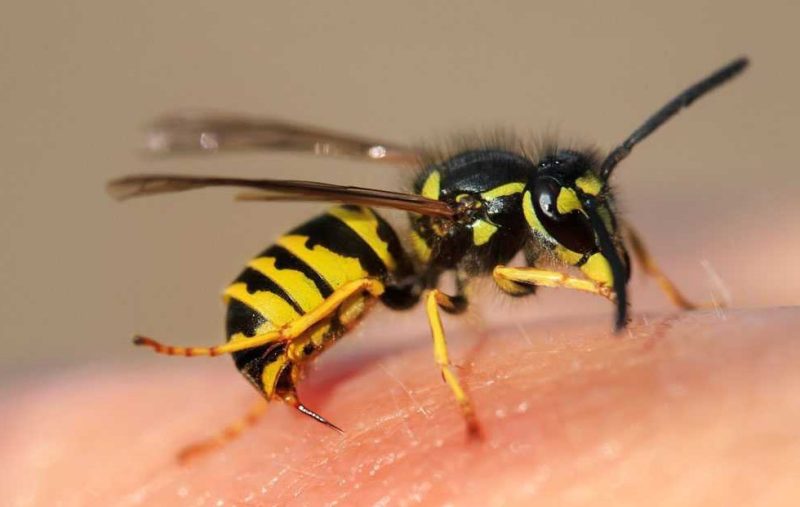
One of the most common misconceptions about wasp stings is that they are essentially the same as bee stings. Although both insects belong to the order Hymenoptera, their biology and behavior differ significantly.
Bees are typically more focused on collecting pollen and nectar for their colonies. Many species of bees are relatively docile and will sting only when directly threatened. Honeybees in particular die after stinging because their barbed stinger becomes lodged in the skin.
Wasps, on the other hand, have smoother stingers that allow them to sting multiple times. This ability means a single wasp can deliver several stings during a defensive encounter.
Another difference lies in diet.
While bees primarily feed on plant-based foods, many wasps are predators. They hunt caterpillars, flies, beetles, and other insects to feed their larvae.
This predatory behavior makes wasps valuable allies for gardeners and farmers, even though their presence can feel intimidating.
Understanding these distinctions helps explain why wasps behave differently from bees when they encounter humans.
Several Wasp Species Live in Massachusetts
Massachusetts hosts a variety of wasp species, but a few types are responsible for most human encounters.
Yellowjackets are perhaps the most notorious. These small, black-and-yellow wasps often build nests underground or inside wall cavities. They are highly defensive of their nests and may sting aggressively if disturbed.
Paper wasps are another common species. They construct open, umbrella-shaped nests under eaves, decks, and other sheltered structures. Paper wasps tend to be less aggressive than yellowjackets but will defend their nests when necessary.
Bald-faced hornets, which are technically a type of yellowjacket, build large gray paper nests in trees or shrubs. These aerial nests can contain hundreds of workers by late summer.
Each species has its own nesting habits, colony structure, and level of defensiveness.
Recognizing the differences between these species can help residents better understand the insects they encounter.
Wasp Colonies Grow Rapidly During Summer
Wasp colonies begin forming in early spring when fertilized queens emerge from winter shelter.
These queens spend the early weeks of the season building small nests and raising the first generation of worker wasps.
Once the workers emerge, they take over nest construction and food gathering.
Throughout the summer, the colony expands rapidly.
Workers hunt insects, collect nectar, and defend the nest while the queen continues laying eggs.
By late summer, some colonies may contain hundreds or even thousands of individuals depending on the species.
This period also coincides with increased human activity outdoors.
Picnics, barbecues, and outdoor events often occur during the same weeks when wasp populations reach their peak.
As food becomes scarcer toward the end of the season, wasps may become more attracted to sugary drinks, fruit, and other human foods.
This is one reason late summer often brings the highest number of wasp encounters.
Wasps Sting Primarily to Defend Their Colony
Contrary to popular belief, wasps do not usually sting people for no reason.
Most stings occur when a wasp believes its nest or colony is threatened.
When a nest is disturbed, worker wasps release chemical signals called alarm pheromones. These chemicals alert other members of the colony to potential danger.
Once the alarm signal spreads, nearby workers may swarm the perceived threat.
This collective defense behavior allows the colony to protect its nest against predators.
Even mowing lawns, trimming hedges, or accidentally stepping near a hidden nest can trigger this response.
Individual wasps encountered away from the nest are generally less aggressive.
However, they may still sting if trapped against skin or swatted aggressively.
Remaining calm and avoiding sudden movements often helps prevent stings.
Wasp Venom Produces Pain Through Chemical Compounds
When a wasp stings, it injects venom through its stinger into the skin.
This venom contains a mixture of enzymes, peptides, and other chemical compounds.
These substances serve several purposes.
Some components trigger pain receptors in the skin, creating the sharp burning sensation associated with a sting.
Others cause inflammation, which produces redness and swelling around the sting site.
Certain compounds also function as alarm pheromones that attract additional wasps if the colony is defending itself.
For most people, the reaction remains localized to the sting area.
However, individuals with allergies to wasp venom may experience more severe reactions that require medical attention.
Understanding how venom works helps explain why stings feel so intense.
Wasps Provide Valuable Natural Pest Control
Despite their reputation as aggressive insects, wasps contribute significantly to natural pest control.
Many species hunt insects that damage crops, gardens, and ornamental plants.
Caterpillars, aphids, beetles, and flies often become prey for wasp workers.
The wasps capture these insects and carry them back to the nest where they serve as food for developing larvae.
In this way, wasps help regulate populations of other insects that might otherwise become pests.
This predatory behavior benefits farmers and gardeners by reducing the need for chemical pesticides.
Some scientists estimate that wasps remove millions of tons of pest insects globally each year.
While their stings make them unwelcome guests at times, their ecological contributions are significant.
Wasps Also Act as Pollinators
Although bees are the most famous pollinators, wasps also contribute to plant pollination.
Adult wasps often feed on nectar from flowers, especially species with open structures that allow easy access.
As they move from flower to flower, they inadvertently transfer pollen between plants.
This process supports plant reproduction and helps maintain healthy ecosystems.
Certain plants even rely on specific wasp species for pollination.
These relationships demonstrate how interconnected insect life can be within natural environments.
Even insects known for their defensive stings may play unexpected roles in supporting plant communities.
Late Summer Brings More Human-Wasp Encounters
One reason Massachusetts residents notice more wasps later in the summer is related to changes within the colony.
By August and September, many colonies have reached maximum population size.
At the same time, food availability begins shifting.
Earlier in the season, wasps focus heavily on hunting insects for their larvae.
Later in the season, as larvae numbers decrease and adult wasps seek energy for survival, they become more interested in sugary foods.
Sweet drinks, fruit, desserts, and even spilled soda can attract foraging wasps.
This behavior often brings them into closer contact with humans during outdoor activities.
Because colonies are also large and defensive at this stage, encounters may feel more intense than earlier in the year.
Wasp Nests Die Off Naturally in Winter
Unlike honeybee colonies that survive year-round, most wasp colonies last only one season.
As autumn approaches and temperatures drop, the majority of workers and the queen eventually die.
Before winter arrives, the colony produces new queens and males.
After mating, the new queens seek sheltered places such as tree bark, soil, or building crevices where they can overwinter.
The following spring, these queens emerge and begin building new nests from scratch.
The old nest is never reused.
Understanding this natural cycle helps explain why many nests disappear each winter.
FAQs About Wasp Stings in Massachusetts
Are wasp stings dangerous?
For most people, wasp stings cause temporary pain and swelling. However, individuals with allergies may experience severe reactions.
Why do wasps sting multiple times?
Unlike bees, wasps have smooth stingers that allow them to sting repeatedly.
When are wasps most aggressive?
They tend to be most defensive when their nests are disturbed or during late summer when colonies are large.
Do all wasps build nests?
Most social species build nests, but some solitary wasps live alone and rarely sting.
What attracts wasps to people?
Sugary foods, drinks, and certain scents can attract foraging wasps.
How long does pain from a sting last?
Pain usually peaks quickly and gradually fades within a few hours.
Should wasp nests be removed?
Nests located near human activity may require professional removal for safety.
Are wasps beneficial insects?
Yes. They help control pest insects and contribute to pollination.
Final Thoughts
Wasp stings may be one of the most memorable experiences associated with summer in Massachusetts, but the insects responsible for those stings represent far more than a moment of pain.
Wasps are highly organized predators, efficient pest controllers, and occasional pollinators whose lives are deeply connected to local ecosystems.
Understanding their behavior helps explain why they sting and how people can reduce the chances of unpleasant encounters.
Rather than viewing wasps purely as aggressive pests, recognizing their ecological roles provides a more balanced perspective.
In the complex web of nature, even the insects that occasionally sting us contribute to maintaining the balance of the environments we share.
And once people begin to see wasps not just as threats but as intricate members of the natural world, the buzzing insects of summer begin to reveal a far more fascinating story than most residents ever realize.