

Ohio backyards are full of small daily wildlife moments that many people barely notice. A flash of blue across a maple tree, a sharp call from the fence line, or a sudden burst of wings near a bird feeder often signals the presence of one of the state’s most recognizable birds: the blue jay. To many residents, blue jays are simply loud, colorful birds that appear at feeders or perch in neighborhood trees. Yet what most Ohio residents don’t realize is that these birds are constantly observing the world around them with remarkable awareness.
Blue jays are far more intelligent and attentive than their bold personalities suggest. In suburban neighborhoods, wooded parks, and rural properties throughout Ohio, these birds quietly watch human activity, track potential threats, and memorize the layout of their environment. Their behavior often gives the impression that they are studying the homes, gardens, and landscapes where people live.
This observation is not accidental. Blue jays belong to one of the most intelligent bird families on Earth, the corvids, which also includes crows and ravens. Members of this group are known for their problem-solving skills, memory, communication abilities, and complex social behavior. Because of these traits, blue jays are constantly gathering information about their surroundings.
Ohio’s forests, neighborhoods, and suburban green spaces provide ideal habitat for these birds. Large oak trees offer food in the form of acorns, while shrubs and backyard feeders provide additional nutrition. The mixture of human development and natural habitat has created an environment where blue jays thrive.
For many residents, it may feel as though blue jays are simply noisy birds visiting a feeder. In reality, they are observing far more than people might expect. Their sharp eyesight, powerful memory, and strong territorial instincts allow them to monitor their environment in ways that few other backyard birds can match.
Understanding how blue jays behave reveals a fascinating glimpse into the intelligence of these striking birds. What appears to be a simple visitor on a branch may actually be a highly aware animal studying the landscape and everything within it—including the homes and people nearby.
Table of Contents
- 1 Blue Jays Are Among the Most Intelligent Birds in North America
- 2 Blue Jays Have Exceptional Eyesight
- 3 Blue Jays Learn Human Behavior Patterns
- 4 Blue Jays Use Loud Calls to Communicate About Danger
- 5 Blue Jays Form Strong Family Bonds
- 6 Blue Jays Cache Food for Winter Survival
- 7 Blue Jays Recognize Other Animals
- 8 Blue Jays Have Complex Social Interactions
- 9 Blue Jays Thrive in Human-Altered Landscapes
- 10 FAQs About Blue Jays in Ohio
- 11 Final Thoughts
Blue Jays Are Among the Most Intelligent Birds in North America
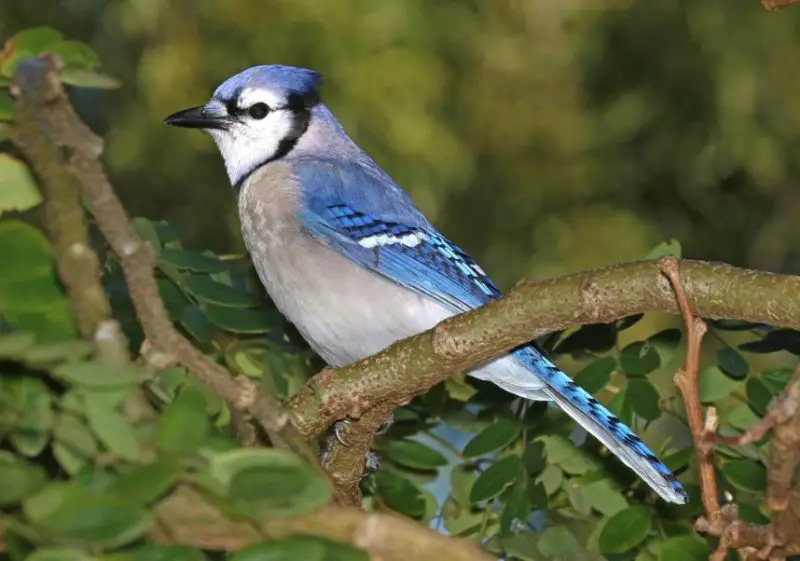
Blue jays belong to the Corvidae family, a group widely recognized for its intelligence. Corvids have demonstrated cognitive abilities that rival those of some mammals, including primates.
Scientists studying bird intelligence often focus on corvids because they display behaviors such as tool use, problem solving, and long-term memory. While blue jays may not use tools as frequently as some crow species, they share many of the same mental abilities.
One of their most impressive traits is spatial memory. Blue jays frequently store food in hidden locations for later consumption. To successfully retrieve these food caches, they must remember hundreds of individual hiding spots scattered across a landscape.
This ability requires an advanced memory system that allows them to recall specific locations even weeks later.
Because of this memory, blue jays constantly observe their environment and mentally map the locations of trees, feeders, buildings, and hiding spots.
When a blue jay appears to be watching a backyard from a tree branch, it may actually be recording details about potential food sources or safe resting areas.
This mental mapping helps the bird survive through seasons when food becomes scarce.
Blue Jays Have Exceptional Eyesight
A major reason blue jays appear so observant is their remarkable vision.
Birds generally possess stronger eyesight than humans, and blue jays are no exception. Their eyes allow them to detect movement quickly and observe fine details across long distances.
This sharp vision helps them locate food, identify predators, and recognize familiar environments.
From a perch high in a tree, a blue jay can watch activities happening across an entire yard or neighborhood.
It can detect subtle movements such as insects in grass, squirrels approaching a feeder, or people walking through gardens.
Their vision also allows them to recognize patterns in daily routines.
If a homeowner refills a feeder at a certain time of day, blue jays may begin appearing shortly before that time, having learned to anticipate the event.
To human observers, it may feel as though the birds are intentionally watching them.
In many cases, they truly are paying close attention.
Blue Jays Learn Human Behavior Patterns
Over time, blue jays become familiar with the patterns of the environments where they live.
In suburban areas throughout Ohio, these birds often observe human routines and adjust their behavior accordingly.
For example, blue jays quickly learn where bird feeders are located and when they are most likely to contain food. They may watch from nearby trees while people refill feeders or place food outdoors.
They also recognize which areas are safe for feeding and which locations contain potential threats.
Pets, loud machinery, and sudden movements can all influence how blue jays approach a space.
Once a bird becomes familiar with a particular yard, it may return regularly, sometimes for years.
This familiarity can make it seem as though blue jays are monitoring the household.
In reality, they are using their observational skills to determine whether the environment provides reliable resources.
Blue Jays Use Loud Calls to Communicate About Danger
Another reason blue jays appear to watch their surroundings so carefully is their role as early warning birds.
Blue jays are famous for their loud, piercing calls that echo through forests and neighborhoods.
These calls often signal the presence of predators such as hawks, owls, or cats.
When a blue jay detects a threat, it may begin calling loudly while moving through nearby trees. Other birds quickly recognize these alarm signals and respond by hiding or fleeing.
This behavior benefits many species.
By acting as a lookout, blue jays help alert smaller birds to danger before predators arrive.
In Ohio forests, birdwatchers often follow blue jay calls to locate hawks or other raptors.
Because blue jays constantly scan their environment for threats, they often notice unusual movement around homes and yards before people do.
Blue Jays Form Strong Family Bonds
Blue jays do not live completely solitary lives. During the breeding season, they form monogamous pairs and work together to raise their young.
Nests are typically built in trees or large shrubs where branches provide support and concealment.
Both parents participate in building the nest, incubating eggs, and feeding the chicks.
Once the young birds hatch, the parents remain highly alert to protect them from predators.
During this period, blue jays often become especially watchful.
They may monitor areas around their nest closely, observing animals and people who pass nearby.
If they perceive a threat, they may vocalize loudly or attempt to drive away intruders.
This protective behavior reinforces the impression that blue jays are carefully observing their surroundings.
Blue Jays Cache Food for Winter Survival
Ohio winters can be harsh for wildlife, and blue jays have developed clever strategies for surviving periods when food becomes scarce.
One of their most important behaviors is food caching.
Blue jays frequently gather nuts, seeds, and acorns and hide them in small crevices or beneath leaves.
These hidden supplies serve as emergency food reserves during winter.
Because acorns form a major part of their diet, blue jays play a surprising role in forest ecosystems.
When they carry acorns away from oak trees and bury them in new locations, some of those acorns eventually sprout into new trees.
In this way, blue jays contribute to forest regeneration across the Midwest.
Their constant scanning of landscapes helps them locate suitable caching sites where food can be safely hidden.
Blue Jays Recognize Other Animals
Blue jays do not observe only humans.
They also pay close attention to other animals sharing their environment.
Squirrels, raccoons, hawks, and even other bird species may all influence how blue jays behave.
If a predator frequently appears in a certain area, blue jays may avoid that location or increase alarm calls.
They also observe the behavior of other birds.
In mixed-species flocks, blue jays sometimes act as leaders that guide smaller birds toward feeding opportunities.
Because they are bold and vocal, they often dominate feeding areas.
This ability to read the behavior of other animals helps them adapt to changing environments.
Blue Jays Have Complex Social Interactions
Although blue jays can appear aggressive, their social interactions are surprisingly complex.
During winter, many blue jays form loose flocks that travel together while searching for food.
Within these groups, birds communicate using a variety of calls and body language.
Some calls signal food discoveries, while others warn of danger.
Young birds learn these signals by observing older individuals.
In some cases, blue jays even mimic the calls of hawks.
This mimicry may help them scare away other birds from feeding areas or confuse potential predators.
Such behavior demonstrates how flexible and intelligent these birds can be.
Blue Jays Thrive in Human-Altered Landscapes
One reason blue jays are so common in Ohio is their ability to adapt to environments shaped by human activity.
Suburban neighborhoods often provide an ideal mixture of trees, lawns, and food sources.
Bird feeders, ornamental trees, and fruit-bearing plants all contribute to the birds’ survival.
Unlike some species that avoid human development, blue jays have learned to thrive alongside people.
They use telephone poles, fences, and rooftops as perches while observing their surroundings.
In many ways, human landscapes have expanded the opportunities available to these adaptable birds.
FAQs About Blue Jays in Ohio
Are blue jays common in Ohio?
Yes. Blue jays are widespread across Ohio and can be found in forests, parks, and suburban neighborhoods.
Why do blue jays watch yards so closely?
They observe their environment to locate food sources, identify predators, and remember safe feeding areas.
Are blue jays aggressive birds?
They can be territorial, especially during nesting season, but aggression usually serves to protect their territory or young.
Do blue jays migrate?
Some blue jays migrate south during winter, but many remain in Ohio year-round.
What do blue jays eat?
Their diet includes acorns, seeds, insects, berries, and occasionally small animals.
Why do blue jays scream loudly?
Their calls often warn other birds about predators or signal territorial behavior.
Do blue jays help forests grow?
Yes. By caching acorns and other seeds, they help disperse trees across landscapes.
How long do blue jays live?
In the wild, blue jays may live around 7 to 10 years, though some individuals survive longer.
Final Thoughts
Blue jays are far more than colorful backyard visitors. Their intelligence, memory, and alert behavior make them some of the most observant birds living in Ohio.
What might appear to be a curious bird watching from a tree branch is often an animal carefully studying its surroundings.
By observing people, animals, and environmental patterns, blue jays gather information that helps them survive in a constantly changing landscape.
Their loud calls warn other birds of danger, their food caching helps forests grow, and their adaptability allows them to thrive in environments shaped by humans.
For Ohio residents, noticing these behaviors can transform a simple backyard sighting into something far more interesting.
The next time a blue jay sits quietly on a fence or tree branch, it may not just be resting.
It might be studying the world around it—including the home beneath the tree—with a level of awareness most people never realize.