

Indiana summers bring long afternoons in tall grass, humid forests, and backyard gardens where people reconnect with nature. From hiking in state parks to mowing rural fields or simply enjoying a picnic near wooded areas, outdoor life is an important part of the state’s culture. Yet hidden within many of these warm environments are tiny parasites that most people never see until the itching begins. These parasites are chiggers, and their bites can leave some of the most irritating skin reactions people experience outdoors.
Many Indiana residents are familiar with the intense itching that chigger bites cause, but few truly understand what these tiny creatures are or how they actually interact with human skin. A common belief is that chiggers burrow into the skin and remain there, but this idea is largely a myth. In reality, the biology of chiggers is far more complex, and their feeding behavior is very different from what many people imagine.
Chiggers are the larval stage of mites belonging to the family Trombiculidae. These mites exist almost everywhere in warm climates across the world, and the Midwest provides ideal conditions for their survival. Moist soil, dense vegetation, and warm temperatures allow chigger populations to flourish during the late spring, summer, and early fall.
Despite their tiny size—often no larger than a fraction of a millimeter—chiggers play a fascinating role in local ecosystems. Their life cycle, feeding strategies, and ecological interactions reveal a hidden world of microscopic activity unfolding just beneath the surface of Indiana’s fields and forests.
For people who spend time outdoors in Indiana, understanding chiggers is not just a matter of curiosity. It also helps explain why bites occur, how to reduce the risk of exposure, and why these tiny creatures have such a noticeable impact despite being almost invisible.
When the biology and behavior of chiggers are examined closely, it becomes clear that these irritating pests are far more complex than their reputation suggests.
Table of Contents
- 1 Chiggers Are Not Insects but Mites
- 2 Chiggers Do Not Burrow Into Skin
- 3 Indiana’s Climate Supports Chigger Populations
- 4 Chiggers Prefer Certain Areas of the Body
- 5 The Itching From Chigger Bites Can Be Intense
- 6 Chiggers Are Active Predators in Their Later Life Stages
- 7 Wildlife Hosts Support Chigger Populations
- 8 Seasonal Patterns Influence Chigger Activity
- 9 Preventing Chigger Bites Requires Simple Precautions
- 10 FAQs About Chigger Bites in Indiana
- 11 Final Thoughts
Chiggers Are Not Insects but Mites
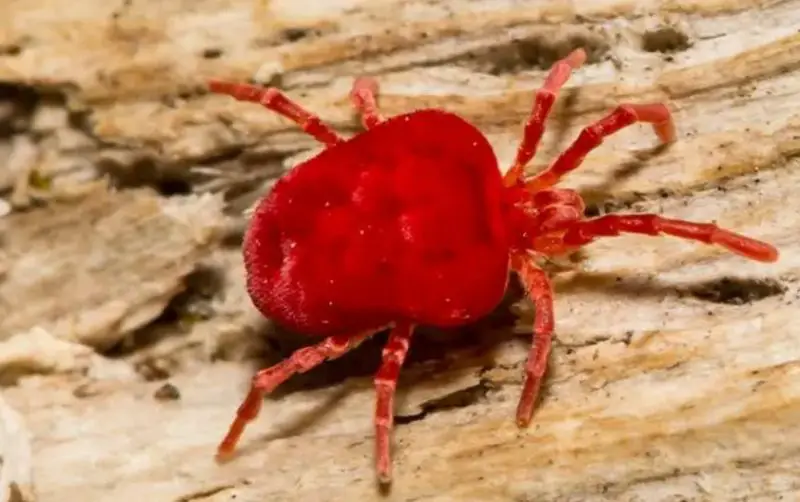
Although people often refer to chiggers as bugs or insects, they actually belong to the arachnid family. This means they are more closely related to spiders and ticks than to flies or mosquitoes.
Like other arachnids, adult mites have eight legs. However, the larval stage—the stage responsible for biting humans—has only six legs. This difference sometimes causes confusion when scientists classify the various stages of mite development.
Chiggers are incredibly small. A single larva is often less than one-fiftieth of an inch long. Without magnification, they appear as tiny red or orange specks moving across skin or clothing.
Because of their microscopic size, people rarely see chiggers during the moment they attach. Most encounters go unnoticed until the characteristic itching begins several hours later.
The adult mites that chiggers eventually become are harmless to humans. They live in soil and feed on small insects or organic matter. Only the larval stage feeds on animals.
This means the annoying bites people associate with chiggers come from a very brief stage in the mite’s life cycle.
Understanding this distinction helps explain why chigger infestations do not persist on human skin the way lice or fleas might.
Chiggers Do Not Burrow Into Skin
One of the most persistent myths about chiggers is the idea that they burrow deep into the skin and remain there for days.
In reality, chiggers do not burrow at all.
Instead, they attach themselves to the skin surface and inject digestive enzymes through specialized mouthparts. These enzymes break down skin cells into a liquid that the chigger can consume.
During this process, the skin hardens around the feeding site and forms a tiny tube-like structure called a stylostome. The chigger feeds through this tube for several hours.
Once feeding is complete, the chigger usually drops off the host and continues its development in the environment.
The itching people experience is actually caused by the body’s immune reaction to the stylostome and the enzymes left behind.
Even though the chigger itself may already be gone, the irritation can persist for several days.
This is why scratching does not remove the parasite—it has usually already left.
Indiana’s Climate Supports Chigger Populations
Chiggers thrive in warm, humid environments, making Indiana’s summers particularly suitable for their activity.
The mites prefer areas with dense vegetation, tall grasses, and moist soil. These conditions help protect them from drying out while they wait for passing hosts.
Fields, forest edges, brushy areas, and overgrown lawns are especially common habitats.
Unlike ticks, which may climb higher vegetation, chiggers tend to remain closer to the ground.
They gather in clusters on blades of grass or low plants, waiting for animals or humans to brush against the vegetation.
When contact occurs, the larvae quickly transfer to the host and begin searching for suitable feeding locations.
Because Indiana’s growing season produces abundant vegetation, chigger habitats often develop in areas where people spend time outdoors.
Gardens, hiking trails, and grassy parks may all provide environments where chiggers thrive.
Chiggers Prefer Certain Areas of the Body
When chiggers attach to a host, they tend to migrate to specific areas where skin is thin or where clothing creates tight pressure.
Common bite locations include ankles, behind the knees, around the waistline, under socks, and along areas where belts or elastic bands press against the skin.
These locations provide warm, sheltered environments where the mites can feed more easily.
Because of this behavior, bites often appear in clusters rather than scattered randomly across the body.
The pattern of bites can sometimes help distinguish chigger exposure from other insect bites.
For example, mosquito bites usually appear individually on exposed skin, while chigger bites frequently occur in concentrated groups around clothing lines.
This pattern often becomes noticeable several hours after outdoor exposure.
The Itching From Chigger Bites Can Be Intense
The most memorable aspect of chigger bites is the intense itching they produce.
The itching often begins several hours after the bite and may continue for several days.
Unlike mosquito bites, which usually peak in irritation within a short time, chigger bites sometimes become itchier over time.
This delayed reaction occurs because the body’s immune system responds to the stylostome left behind in the skin.
Inflammation develops around the feeding site, producing the small red bumps that people recognize as chigger bites.
Scratching can worsen irritation and may even cause secondary infections if the skin breaks.
For this reason, medical professionals often recommend avoiding excessive scratching and using soothing treatments such as anti-itch creams or antihistamines when necessary.
Chiggers Are Active Predators in Their Later Life Stages
While the larval stage feeds on animals, later stages of the chigger life cycle have very different diets.
After dropping off a host, the larvae molt into nymphs and eventually adults.
These later stages live in soil and become predators of small insects and other tiny arthropods.
In this role, they actually help regulate populations of other small invertebrates.
This ecological function often goes unnoticed because the mites remain hidden beneath leaf litter and soil.
The presence of chiggers in an area often indicates a healthy micro-ecosystem filled with diverse insect life.
Although humans may view them as pests, their role within the soil ecosystem contributes to natural balance.
Wildlife Hosts Support Chigger Populations
Chiggers do not rely exclusively on humans for food.
In fact, humans are accidental hosts rather than preferred ones.
Many small animals serve as regular hosts for chigger larvae. These include rodents, rabbits, birds, reptiles, and other mammals commonly found in Indiana.
When these animals move through grass and vegetation, they pick up chiggers that later drop off to continue their life cycle.
The abundance of wildlife in certain areas can therefore influence chigger population density.
Fields with large rodent populations or forest edges with active wildlife often support higher numbers of mites.
Because wildlife hosts are widespread, eliminating chiggers from an entire area is nearly impossible.
Instead, prevention focuses on reducing exposure in places where humans are likely to encounter them.
Seasonal Patterns Influence Chigger Activity
Chigger activity in Indiana typically follows seasonal patterns linked to temperature and humidity.
Populations often begin increasing in late spring as temperatures rise.
Peak activity usually occurs during the warmest months of summer when humidity remains high.
During this period, outdoor activities such as hiking, camping, and gardening coincide with the highest risk of chigger exposure.
As autumn temperatures cool, chigger populations gradually decline.
Cold winter conditions eventually eliminate most active larvae, and the life cycle begins again the following year.
Understanding these seasonal patterns can help people anticipate when chigger encounters are most likely.
Preventing Chigger Bites Requires Simple Precautions
Although completely avoiding chiggers may be difficult, several practical strategies can reduce the likelihood of bites.
Wearing long pants and socks while walking through tall grass creates a barrier between skin and vegetation.
Tucking pant legs into socks can further reduce exposure at the ankles.
Using insect repellents containing DEET or permethrin can also help deter chiggers.
After spending time outdoors, changing clothes and showering promptly may remove any larvae that have not yet attached.
Washing clothing in hot water helps eliminate mites that may remain on fabric.
Maintaining lawns by trimming grass and removing excessive vegetation can also reduce chigger habitat around homes.
These preventive measures significantly lower the risk of encountering the mites.
FAQs About Chigger Bites in Indiana
What exactly are chiggers?
Chiggers are the larval stage of mites belonging to the family Trombiculidae.
Do chiggers burrow into skin?
No. They attach to the surface and feed through a stylostome rather than burrowing.
How long do chigger bites last?
The itching usually lasts several days but may persist longer depending on individual reactions.
Can chiggers spread diseases?
In the United States, chiggers rarely transmit diseases to humans.
Where are chiggers most commonly found?
They prefer tall grass, forest edges, brushy areas, and moist environments.
Why do bites appear in clusters?
Chiggers often gather in groups on vegetation and attach to similar areas of the body.
Can pets bring chiggers indoors?
Animals can carry mites temporarily, though chiggers typically drop off after feeding.
When are chiggers most active?
Activity peaks during warm, humid summer months.
Final Thoughts
Chigger bites may be one of the most irritating experiences associated with outdoor life in Indiana, yet these tiny mites represent a fascinating part of the natural world.
Their life cycle, feeding behavior, and ecological roles reveal how even microscopic organisms interact with the environment in complex ways.
While their bites can cause uncomfortable itching, understanding how chiggers live and behave helps reduce fear and confusion surrounding them.
Simple precautions and awareness allow people to enjoy Indiana’s forests, parks, and fields with fewer unpleasant encounters.
And although they may be nearly invisible, chiggers remind us that even the smallest creatures can leave a surprisingly large impression on our outdoor experiences.