
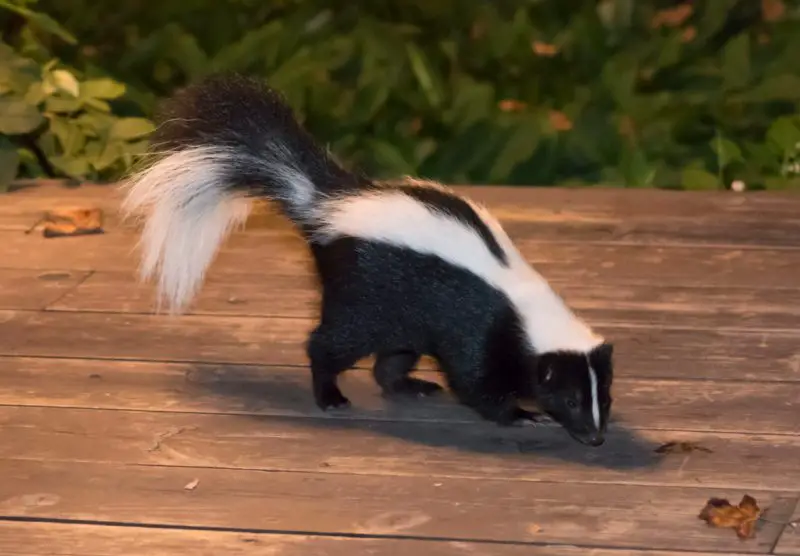
In many Ohio neighborhoods, the first sign of a skunk is not the animal itself, but the smell. It appears suddenly, lingers longer than expected, and seems to come from nowhere. Only later do homeowners begin to suspect what is really happening beneath their porch, deck, or crawl space. By that point, the skunk has likely already settled in.
What most Ohio residents don’t realize about skunks living under their porches is that these animals do not arrive randomly, and they rarely leave quickly on their own. Their presence is the result of careful selection, environmental opportunity, and seasonal behavior that makes residential spaces particularly attractive. Once established, they can remain hidden for long periods while continuing to use the same location.
Understanding why skunks choose porches, how they behave once they are there, and what signals their presence early can make the difference between a temporary issue and a long-term problem. Their behavior is quiet, deliberate, and often misunderstood until it becomes difficult to ignore.
Table of Contents
- 1 Skunks Choose Porches Because They Offer Ideal Shelter
- 2 They Often Move In Without Being Noticed
- 3 Skunks Are Most Active When You Are Not
- 4 They Return to the Same Den Repeatedly
- 5 Spring Brings Increased Risk of Skunks Under Porches
- 6 Skunks Do Not Spray Without a Reason
- 7 Pets Are More Likely to Trigger Problems
- 8 Food Sources Near Homes Attract Skunks
- 9 Odor Is Often the First and Most Persistent Sign
- 10 Skunks Can Stay Hidden for Long Periods
- 11 Removing Attractants Is More Effective Than Forcing Them Out
- 12 Coexistence Requires Awareness, Not Fear
- 13 FAQs About Skunks Under Porches in Ohio
- 14 Final Thoughts
Skunks Choose Porches Because They Offer Ideal Shelter

A porch may look like a simple structural feature to a homeowner, but to a skunk, it represents a nearly perfect den. In the wild, skunks seek out hollow logs, rock crevices, or abandoned burrows—spaces that offer protection, insulation, and concealment. A porch replicates all of these conditions in one place, often with even greater stability.
In Ohio, where weather can shift dramatically between seasons, this kind of shelter becomes especially valuable. The space beneath a porch tends to stay dry during heavy rain, insulated during cold snaps, and shaded during summer heat. These microclimate conditions make it far more comfortable than exposed ground. For a skunk, this means less energy spent regulating body temperature and more energy available for survival.
The structural design of a porch also provides overhead protection, which is critical. Skunks rely heavily on avoiding detection rather than outrunning predators. A covered space reduces visibility from above and limits access from larger animals. Unlike animals that dig extensive tunnels from scratch, skunks prefer locations that require minimal effort to convert into a den. A small gap or loose board is often all they need.
Once a skunk identifies a porch that meets these criteria, it becomes a reliable part of its territory. The location is remembered, reused, and often favored over other options. What seems like a random choice is actually a highly efficient decision based on survival advantages.
They Often Move In Without Being Noticed
Skunks are remarkably discreet when establishing a new den. Their nocturnal nature and slow, quiet movements allow them to explore without drawing attention. Most of their activity happens after dark, when human presence is minimal and the environment is quieter.
In Ohio neighborhoods, a skunk will typically begin by surveying the perimeter of a structure. It moves cautiously, following edges and staying close to cover. It is not rushing to move in. Instead, it is evaluating. It looks for small openings, gaps beneath foundations, or weak points in the structure that can be expanded.
This process can take several nights. The skunk may approach, retreat, and return repeatedly, gradually testing the safety of the space. During this phase, signs are subtle. A faint smell, a small patch of disturbed soil, or a barely visible opening may appear, but these are easy to overlook.
By the time a homeowner notices something unusual, the skunk has often already established a routine. It has entered and exited multiple times, becoming comfortable with the environment. This delay between arrival and detection creates the illusion that the animal appeared suddenly, when in fact it has been there quietly all along.
Skunks Are Most Active When You Are Not
The timing of skunk activity plays a major role in how their presence is perceived. Because they are primarily nocturnal, they operate almost entirely outside of normal human schedules. They leave their dens after sunset, forage through the night, and return before dawn.
In Ohio residential areas, this means that most of their movement occurs when people are indoors, asleep, or otherwise unaware. They travel along fence lines, under decks, and through shaded areas, avoiding open spaces whenever possible. Their slow, deliberate movements make them even less noticeable.
As a result, homeowners often encounter the effects of skunk activity rather than the animal itself. A smell in the morning, a disturbed patch of soil, or a pet reacting to something unseen becomes the first clue. Without direct observation, the situation can feel unclear or even mysterious.
This disconnect between activity and observation is why skunks often go unnoticed for so long. They are present, active, and consistent, but they are doing it on a schedule that rarely overlaps with human awareness.
They Return to the Same Den Repeatedly
Once a skunk finds a location that works, it tends to stay loyal to it. A porch that provides shelter, safety, and proximity to food becomes part of the animal’s known environment. This familiarity reduces risk, which is a key factor in survival.
Even if a skunk leaves temporarily, it may return when conditions change. In Ohio, this is especially common during colder months or breeding seasons, when the need for secure shelter increases. A previously used den remains a reliable option.
This behavior can repeat across seasons. A porch that housed a skunk one year may attract another the next, even if it is a different individual. The structure itself continues to offer the same advantages, making it consistently appealing.
For homeowners, this creates the impression of a recurring issue. In reality, it is a pattern driven by memory and environmental consistency. The location has proven effective, and that success reinforces its continued use.
Spring Brings Increased Risk of Skunks Under Porches
Early spring is one of the most important periods for skunk activity. This is when females begin searching for safe, stable locations to give birth and raise their young. The requirements for these sites are strict. They must offer protection, minimal disturbance, and a controlled environment.
A porch meets all of these needs. It provides a sheltered, enclosed space that is unlikely to be disturbed frequently. Once a female selects such a location, she is highly motivated to stay. Moving would mean exposing her young to risk.
During this time, activity may increase slightly, but it remains mostly hidden. You might notice stronger odors, more frequent movement at night, or subtle changes in the area. However, the animals themselves are rarely seen.
This is often when homeowners become fully aware of the situation. What began as a quiet presence becomes more persistent, not because the skunks are new, but because their behavior has intensified due to reproduction.
Skunks Do Not Spray Without a Reason
The reputation of skunks is largely defined by their ability to spray, but this behavior is often misunderstood. Spraying is not a casual action. It is a last-resort defense used only when the animal feels that escape is not possible.
Before spraying, skunks give clear warning signals. They may stomp their front feet, raise their tail, or turn their back toward the threat. These behaviors are meant to create distance without the need for escalation.
In Ohio backyards, these warnings are often missed. Low light conditions, unexpected encounters, and the presence of pets can lead to situations where the skunk feels cornered. When that happens, it reacts defensively.
Understanding this sequence is important. It shows that spraying is not aggression. It is a response to perceived danger. Recognizing and avoiding these situations can significantly reduce the risk of an encounter.
Pets Are More Likely to Trigger Problems
Pets, especially dogs, are far more likely than humans to provoke a skunk. Their curiosity and instinct to investigate unfamiliar smells often lead them directly to hidden animals.
In Ohio homes, this typically happens at night. A dog may be let outside and wander near a porch or deck. Detecting a scent, it approaches without hesitation, unaware of the risk.
From the skunk’s perspective, this is a direct threat. With limited space to retreat, it responds defensively. The result is often a spray, which becomes the first clear indication for the homeowner that a skunk is present.
Managing this risk involves controlling pet access, especially during nighttime hours. Keeping dogs on a leash or supervising their movement can prevent these encounters before they happen.
Food Sources Near Homes Attract Skunks
Skunks are opportunistic feeders, meaning they will take advantage of whatever food is available. In Ohio residential areas, this includes both natural and human-related sources.
Insects, grubs, and small animals provide natural food. At the same time, unsecured trash, pet food, and compost offer easy alternatives. Once a skunk identifies a reliable food source, it incorporates that location into its routine.
When food is available near a porch, the combination becomes highly attractive. Shelter and nourishment are both within reach, reducing the need to travel far. This efficiency is exactly what skunks seek.
This is why some homes experience repeated activity. The environment supports the animal’s needs in a way that encourages it to stay.
Odor Is Often the First and Most Persistent Sign
The smell associated with skunks is often the first clue that something is wrong. It can appear suddenly, spread quickly, and linger for long periods. Even without a direct spray event, skunks can produce mild odors that signal their presence.
In Ohio neighborhoods, this smell is often noticed at night or early morning, when conditions allow it to travel more easily. Humidity and still air can make it more pronounced.
Because the source is hidden, the odor can be difficult to trace. It may seem to come from multiple directions or shift over time. This adds to the confusion and delays identification.
Recognizing this smell as an early indicator can help address the issue before it becomes more severe.
Skunks Can Stay Hidden for Long Periods
Once a skunk establishes itself under a porch, it can remain there for extended periods without being seen. Its activity is limited, controlled, and timed to avoid detection.
This allows it to live in close proximity to humans while remaining largely unnoticed. The only evidence of its presence may be indirect, such as odor, tracks, or minor disturbances.
In Ohio, where porches and decks are common, this hidden presence is more widespread than many people realize. The absence of visible activity does not mean the animal is gone. It means it is successfully avoiding attention.
Removing Attractants Is More Effective Than Forcing Them Out
Trying to remove a skunk without addressing why it is there often leads to temporary results. The animal may leave briefly, only to return or be replaced by another.
Skunks are drawn to resources. If a yard provides food and shelter, it remains attractive. Removing these elements reduces the incentive to stay.
Securing trash, eliminating outdoor food sources, and maintaining the area around the porch can significantly change the situation. Blocking access points only works if the conditions inside are no longer appealing.
This approach focuses on long-term prevention rather than short-term reaction.
Coexistence Requires Awareness, Not Fear
Skunks are often viewed with fear, but their behavior is largely defensive and predictable. They are not aggressive animals, and they play a role in controlling insect populations and maintaining ecological balance.
Understanding how they behave changes how they are perceived. Instead of unpredictable threats, they become animals responding to environmental conditions.
In Ohio, where wildlife and residential spaces overlap, coexistence is often the most practical solution. Awareness allows homeowners to manage situations effectively without unnecessary conflict.
When their behavior is understood, the presence of skunks becomes less mysterious and more manageable, turning a stressful situation into one that can be handled with clarity and control.
FAQs About Skunks Under Porches in Ohio
Why do skunks choose porches?
Porches provide shelter, protection, and stable conditions, making them ideal den sites.
Are skunks dangerous?
They are not aggressive but may spray if threatened.
When are skunks most active?
They are primarily active at night.
How can I tell if a skunk is under my porch?
Signs include odor, disturbed soil, and entry holes.
Do skunks return to the same place?
Yes, they often reuse locations that provide safety.
What attracts skunks to my yard?
Food sources such as trash, pet food, and insects.
Can skunks be prevented?
Reducing attractants and securing entry points helps prevent them.
Will a skunk leave on its own?
Sometimes, but not always. It depends on available resources and conditions.
Final Thoughts
What most Ohio residents don’t realize about skunks living under their porches is that these animals are not random intruders. They are responding to conditions that make residential spaces attractive and sustainable.
Their behavior is quiet, strategic, and often hidden until it becomes noticeable. By the time they are detected, they are already established.
Understanding their patterns allows homeowners to respond effectively. It shifts the focus from reaction to prevention.
Skunks are part of the environment, even in suburban settings. And when their behavior is understood, managing their presence becomes far more achievable.