
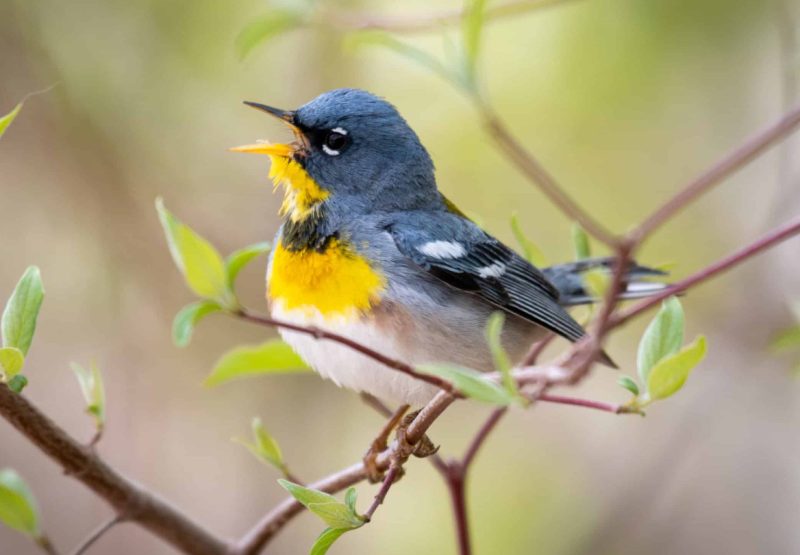
In Mississippi, warblers often arrive like flashes of color that seem to appear out of nowhere and disappear just as quickly. One morning, your yard is quiet. The next, it’s alive with tiny birds moving rapidly through branches, barely stopping long enough to be clearly seen. For many residents, this feels random and fleeting, as if these birds are simply passing through without purpose.
But nothing about warbler behavior is random. Mississippi sits along a major migratory pathway, making it a crucial stop for dozens of warbler species each year. These birds are not just visiting. They are navigating a demanding journey, making precise decisions about where to stop, how long to stay, and when to move on.
What most Mississippi residents don’t realize about warblers in their yards is that these birds are using these spaces strategically. Even a small yard can become an important resource, offering food, cover, and a brief but critical opportunity to rest.
Table of Contents
- 1 Warblers Are Migrating With Precision, Not Chance
- 2 Your Yard May Be a Temporary Lifeline
- 3 Warblers Are Insect Hunters, Not Feeder Birds
- 4 Their Movement Is Fast Because Time Matters
- 5 They Arrive Overnight and Leave Just as Quickly
- 6 Different Species Use Different Parts of Your Yard
- 7 They Are Sensitive to Subtle Environmental Changes
- 8 Their Colors Have Purpose Beyond Beauty
- 9 Most Warblers Do Not Stay to Nest
- 10 Supporting Insect Life Helps Attract Them
- 11 Warblers Help Control Insects Naturally
- 12 FAQs About Warblers in Mississippi Yards
- 13 Final Thoughts
Warblers Are Migrating With Precision, Not Chance

Warblers may appear unpredictable to the casual observer, but their movements follow an extraordinary level of precision shaped by evolution over thousands of years. These birds are not drifting randomly across the landscape. They are navigating defined migratory corridors, many of which pass directly through Mississippi. This places the state in a critical position where large numbers of warblers converge during both spring and fall migrations.
Their journeys are guided by a combination of internal biological clocks and external environmental cues. Changes in daylight length signal when it is time to begin moving. Temperature shifts influence the availability of food along the route. Even celestial cues such as the position of the sun during the day and stars at night help them maintain direction. Some species also detect subtle changes in the Earth’s magnetic field, allowing them to stay on course even when visual references are limited.
Most warblers migrate at night. This reduces exposure to predators, allows them to travel in cooler air, and minimizes energy loss. While people sleep, these birds are actively crossing vast distances. By dawn, they descend into suitable habitats to rest and feed. This is why their appearance feels sudden. It is not that they arrived unexpectedly, but that their journey happened outside of human awareness. What seems random is actually the result of precise timing, navigation, and survival strategy working together.
Your Yard May Be a Temporary Lifeline
For a migrating warbler, survival depends on finding the right place at the right time. These birds burn enormous amounts of energy during migration. Fat reserves built up before departure can be depleted quickly, especially after long overnight flights. Without reliable places to stop and refuel, many would not survive the journey.
A Mississippi yard, even a modest one, can serve as a critical lifeline. Trees, shrubs, and patches of vegetation provide both food and shelter. Insects hidden in leaves and bark become immediate sources of energy. Dense foliage offers protection from predators and a place to rest after hours of flight.
What many residents do not realize is that these small spaces function as part of a much larger network. Warblers move from one stopover site to another, each one playing a role in their journey. Your yard may only host them for a day or two, but during that time, it can be essential to their survival.
This changes how their presence should be understood. They are not simply passing through without purpose. They are making calculated decisions, choosing locations that allow them to recover quickly and continue moving.
Warblers Are Insect Hunters, Not Feeder Birds
Warblers often confuse homeowners because they do not behave like typical backyard birds. They rarely visit feeders, ignore seeds, and seem uninterested in the food sources that attract other species. This leads many people to assume they are difficult to attract or simply uninterested in yards.
In reality, warblers are specialized insect hunters. Their diet consists primarily of small insects, larvae, and spiders found in vegetation. They search leaves, branches, and bark with constant motion, picking prey as they move. This feeding style requires them to remain active rather than stationary.
Their behavior reflects this specialization. They do not sit and wait for food. They actively pursue it. Every quick movement through a branch or sudden shift in direction is part of a hunting pattern. What appears restless is actually highly focused.
If a yard supports insect life, it becomes valuable to warblers. If it does not, they will move on quickly. This is why natural vegetation matters far more than feeders when it comes to attracting these birds.
Their Movement Is Fast Because Time Matters
Warblers move quickly because they have to. Migration is a race against time, energy, and environmental conditions. Every moment spent in one place must contribute to recovery and preparation for the next stage of the journey.
Their rapid, darting movements allow them to cover more ground in less time. By constantly shifting positions, they increase their chances of finding food while reducing the risk of being detected by predators. Staying still for too long would make them vulnerable.
This speed can make them difficult to observe. They appear and disappear within seconds, rarely staying in one spot long enough to be easily identified. But this behavior is not chaotic. It is efficient.
Each movement has a purpose. Feed quickly. Stay alert. Move on. The faster they can regain energy, the sooner they can continue their migration. Their pace reflects the urgency of survival.
They Arrive Overnight and Leave Just as Quickly
The sudden appearance of warblers in Mississippi yards is one of the most noticeable aspects of their behavior. One day, there is no sign of them. The next, they are everywhere. Then, just as quickly, they are gone.
This pattern is directly tied to nocturnal migration. Warblers travel at night and descend into suitable habitats just before dawn. Because people are not awake to witness their arrival, it feels as though they appeared instantly.
Their departure can be just as abrupt. Once they have refueled and conditions are favorable, they take off again at night. A yard that was full of activity one day may be completely quiet the next.
This rapid turnover reflects the efficiency of migration. Some birds may stay for several days if resources are abundant. Others may leave after only a few hours. The timing depends on weather, food availability, and the condition of the individual bird.
Different Species Use Different Parts of Your Yard
Warblers are not a single uniform group. Different species have different preferences for where they feed and move within a habitat. This creates a layered use of space that allows multiple species to occupy the same yard at the same time.
Some warblers prefer the upper canopy, moving through the tops of trees where sunlight and insects are abundant. Others stay in mid-level branches, while some focus on shrubs and lower vegetation. A few even forage closer to the ground.
This vertical separation reduces competition. Each species finds its own niche, allowing them to coexist without directly competing for the same resources. For observers, this means that looking at different levels of the yard increases the chances of seeing a variety of birds.
It also highlights the importance of plant diversity. A yard with multiple layers of vegetation supports more species than one with a single type of structure.
They Are Sensitive to Subtle Environmental Changes
Warblers are highly sensitive to their environment. Small changes in habitat conditions can have a significant impact on whether they stop in a particular location.
Pesticide use is one of the most important factors. Because warblers depend on insects, reducing insect populations reduces their food supply. A yard that appears clean and well-maintained may actually be less attractive to them if it lacks the resources they need.
Habitat structure also matters. Dense vegetation provides cover and feeding opportunities, while open, heavily managed spaces offer less protection. Weather conditions can further influence their presence, affecting both migration timing and food availability.
This sensitivity makes warblers indicators of environmental health. Their presence suggests that a yard supports a functioning ecosystem. Their absence may indicate that something is missing.
Their Colors Have Purpose Beyond Beauty
The vibrant colors of warblers are one of their most striking features, but these colors serve important biological functions. They are not simply decorative.
During the breeding season, males use bright coloration to attract mates and establish territory. These visual signals help individuals recognize members of their own species and assess potential rivals or partners.
Even during migration, these colors remain visible. They allow birds to maintain awareness of others around them, especially when moving in mixed flocks. For observers, these flashes of yellow, green, and blue make warblers stand out, even as they move quickly through foliage.
The combination of color and motion creates a brief but vivid impression. It is part of what makes warblers so memorable, even when sightings are short.
Most Warblers Do Not Stay to Nest
Despite their presence, most warblers seen in Mississippi yards are not there to stay. They are in transit, using these spaces as temporary stopover sites rather than permanent homes.
Their breeding grounds are typically located farther north, in regions where conditions are more suitable for raising young. Once they have regained energy, they continue their journey.
This is why their visits are brief. They are not establishing territory or building nests in most residential areas. They are moving through, following a schedule that is shaped by migration.
Understanding this helps explain their fleeting nature. They are not disappearing without reason. They are continuing a journey that extends far beyond what can be seen in a single yard.
Supporting Insect Life Helps Attract Them
Because warblers rely on insects, supporting insect populations is one of the most effective ways to make a yard attractive to them. This does not mean allowing uncontrolled conditions, but rather maintaining a balance that supports biodiversity.
Reducing pesticide use allows natural insect populations to thrive. Planting native vegetation provides habitat for insects, which in turn attracts warblers. Even small changes can have a noticeable impact.
A yard that supports insects becomes part of the migration network. It provides the resources warblers need, even if only for a short time. This approach benefits not only birds but the entire ecosystem.
Warblers Help Control Insects Naturally
Although their visits are brief, warblers provide a valuable service by feeding on insects. They consume large numbers of small prey, helping to regulate populations that might otherwise increase.
This natural form of pest control is often overlooked. A yard that supports warblers may experience fewer issues with certain insects. Even a short stopover can have an effect.
Their presence contributes to balance. They are not just passing through without impact. They are interacting with the environment in ways that benefit both plants and other wildlife.
Understanding this role adds another layer to how warblers are perceived. They are not just beautiful visitors. They are active participants in the ecosystem, even during their brief stay.
FAQs About Warblers in Mississippi Yards
Why do warblers appear suddenly?
They migrate at night and arrive before dawn, creating the impression of sudden appearance.
Why don’t they visit feeders?
Warblers eat insects, not seeds, so they rely on natural food sources.
How long do they stay?
Some stay for a few days, while others leave quickly depending on conditions.
What attracts them to a yard?
Insects, vegetation, and safe cover are key factors.
Do they nest in yards?
Most do not. They use yards as stopover sites during migration.
Are they beneficial?
Yes, they help control insect populations and support ecological balance.
Why are they hard to see?
Their small size and rapid movement make them difficult to observe.
Can I attract more warblers?
Providing natural habitat and reducing pesticide use can increase visits.
Final Thoughts
What most Mississippi residents don’t realize about warblers in their yards is that these birds are part of a much larger story. Their brief appearances are not random moments, but critical steps in a long and demanding journey.
Each visit reflects a balance of timing, environment, and survival. Your yard, no matter how small, can play a role in that journey.
Understanding this transforms how these birds are seen. They are no longer fleeting visitors, but participants in a remarkable process that connects landscapes across vast distances.