
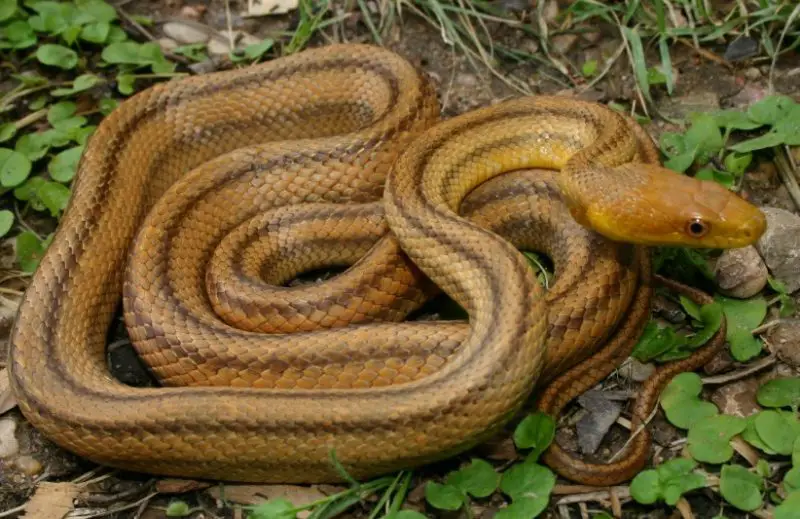
Brown snakes are among the most commonly encountered reptiles in North Carolina, yet they are also some of the most misunderstood. Their earth-toned colors allow them to blend easily into leaf litter, gardens, forests, and roadside edges, which often leads to sudden encounters and quick assumptions. In reality, most brown snakes found in the state are harmless species that quietly go about their lives hunting insects, worms, and rodents.
North Carolina’s mix of forests, wetlands, farmland, and suburban landscapes creates ideal conditions for a wide range of brown-colored snakes. Some species remain hidden beneath soil and debris, while others are active climbers or frequent visitors to yards and barns. Learning how to identify these snakes by pattern, body shape, and behavior can help reduce fear and prevent dangerous misidentifications.
This guide explores 10 brown snakes found in North Carolina, with clear pictures and identification details to help you recognize each species, understand where they live, and know how to respond safely when you encounter one.
Types of Brown Snakes in North Carolina
Eastern Rat Snake (Pantherophis quadrivittatus)

The Eastern Rat Snake is one of the largest and most adaptable snakes found in North Carolina. Adults commonly reach 4 to 6 feet in length, with some individuals growing even longer. Their coloration varies widely, but many appear brown, gray, or blackish with faint patterning that becomes darker toward the head. Juveniles often show stronger blotches that fade with age.
This species is an excellent climber and is frequently found in trees, barns, attics, and old structures. Its slender but powerful body allows it to scale vertical surfaces in search of prey or shelter. Because of this behavior, Eastern Rat Snakes are often mistaken for dangerous snakes when seen near homes.
Eastern Rat Snakes are nonvenomous constrictors that primarily feed on rodents, birds, and bird eggs. Their role in controlling mouse and rat populations makes them highly beneficial to both rural and suburban environments. When hunting, they rely on stealth and strength rather than speed.
When threatened, this snake may vibrate its tail, flatten its body, or emit a foul-smelling musk. Despite these defensive displays, it is not aggressive and rarely bites unless handled. In North Carolina, it is widespread across forests, farmland, and wooded neighborhoods.
Northern Brown Snake (Storeria dekayi)

The Northern Brown Snake is a small, secretive species rarely noticed unless closely observed. Adults usually measure only 9 to 15 inches long. Their bodies are slender and smooth, colored light brown or gray with a faint lighter stripe down the center of the back, bordered by small dark spots.
This snake spends most of its life hidden beneath rocks, leaf litter, boards, or garden debris. It prefers moist environments and is often found in suburban yards, parks, and forest edges. Because it avoids open spaces, many people never realize they share habitat with this species.
Northern Brown Snakes feed primarily on earthworms, slugs, and soft-bodied insects. Their small size and gentle feeding habits make them completely harmless to humans and pets. They are most active during cool, damp weather, especially in spring and fall.
When disturbed, this snake rarely attempts to bite. Instead, it may freeze, coil tightly, or release a mild musk. In North Carolina, it is common but easily overlooked due to its quiet, underground lifestyle.
Red-bellied Snake (Storeria occipitomaculata)

The Red-bellied Snake is a small but striking species, best known for its vivid underside. Adults typically grow 8 to 12 inches long. The upper body is brown or gray, often plain or lightly patterned, while the belly is bright red, orange, or pink, creating a sharp contrast.
A distinguishing feature is the presence of pale spots or light markings on the neck just behind the head. These markings can appear yellow or cream and help separate this species from other small brown snakes in North Carolina.
Red-bellied Snakes favor moist woodlands, forest floors, and shaded hillsides. They spend most of their time hidden beneath leaves, logs, and stones, emerging mainly during cooler parts of the day. Their secretive behavior makes sightings relatively uncommon.
Their diet consists mostly of slugs, snails, earthworms, and small insects. When threatened, the snake may curl its tail to display the bright belly as a warning display. Despite this dramatic color, it is entirely harmless and nonvenomous.
Eastern Worm Snake (Carphophis amoenus)

The Eastern Worm Snake is one of the most easily overlooked snakes in North Carolina due to its small size and subterranean habits. Adults usually measure 7 to 11 inches long. The body is smooth, glossy, and uniformly brown on top, closely resembling a large earthworm.
The underside is pink or salmon-colored, which becomes visible only when the snake curls or moves quickly. Its head is small and pointed, adapted for burrowing through loose soil and leaf litter.
This species spends nearly all of its life underground, emerging mainly after heavy rain or during moist conditions. It prefers forests with soft soil, rotting logs, and deep leaf litter. Because of this, it is rarely seen even where populations are healthy.
Eastern Worm Snakes feed almost exclusively on earthworms and soft-bodied larvae. They are extremely gentle and rarely attempt to defend themselves beyond wriggling away. In North Carolina, they are widespread but seldom encountered.
Corn Snake (Pantherophis guttatus)

The Corn Snake is one of the most recognizable snakes in North Carolina, admired for its bold coloration and calm temperament. Adults typically grow 3 to 5 feet long. Their bodies are orange, brown, or reddish with large black-bordered blotches running down the back.
The belly pattern resembles a checkerboard, often with black and white squares, which is a key identification feature. This striking appearance is one reason the species is popular in captivity, though wild individuals remain common.
Corn Snakes thrive in a wide range of habitats, including forests, farmland, overgrown fields, and abandoned buildings. They are skilled climbers and may enter barns or sheds while hunting rodents, leading to frequent human encounters.
They are nonvenomous constrictors that feed mainly on mice, rats, and small birds. When threatened, Corn Snakes may freeze, flee, or vibrate their tails in dry leaves to mimic rattlesnakes. Despite this bluff, they are harmless and beneficial members of North Carolina’s ecosystems.
Eastern Garter Snake (Thamnophis sirtalis)

The Eastern Garter Snake is one of the most common and recognizable snakes in North Carolina. Adults typically range from 18 to 30 inches in length, with some individuals growing slightly longer. Their coloration varies widely, but most have a brown, olive, or black body with three light-colored stripes running lengthwise down the back and sides.
This species is highly adaptable and can be found in forests, fields, wetlands, suburban yards, and even urban parks. It is often seen near water sources such as streams, ponds, and drainage ditches, where prey is abundant. Unlike many snakes, garter snakes are active during the day and are frequently encountered basking in the open.
Eastern Garter Snakes feed on a broad diet that includes earthworms, amphibians, small fish, insects, and occasionally rodents. They possess mild venom used to subdue prey, but it is harmless to humans and delivered through chewing rather than fangs.
When threatened, this snake may flatten its body, strike without biting, or release a strong-smelling musk. Despite these defenses, it is nonaggressive and plays an important role in controlling pest populations throughout North Carolina.
Eastern Hognose Snake (Heterodon platirhinos)

The Eastern Hognose Snake is best known for its dramatic behavior and distinctive upturned snout. Adults usually measure 20 to 33 inches long. Their coloration is highly variable, ranging from tan and brown to gray or nearly black, often marked with dark blotches along the back.
The upturned snout is used for digging in sandy soil, allowing the snake to uncover buried prey. Hognose snakes are thick-bodied and have keeled scales that give them a rough texture, helping them blend into leaf litter and forest floors.
This species prefers dry woodlands, sandy fields, and pine forests. Its diet consists primarily of toads, which it is uniquely adapted to eat due to specialized jaw structures and mild venom that helps overcome toxic defenses.
When threatened, the Eastern Hognose Snake is famous for its elaborate bluff. It may flatten its neck, hiss loudly, strike with a closed mouth, and even play dead by rolling onto its back. Despite this intimidating display, it is completely harmless.
Pine Snake (Pituophis melanoleucus)

The Pine Snake is one of the largest snakes found in North Carolina, often reaching lengths of 5 to 7 feet. It has a thick, muscular body with a pale background color marked by large dark brown or black blotches that fade toward the tail.
Its head is relatively small compared to its body, and the scales are strongly keeled, giving the snake a rough appearance. The powerful body and pointed snout make it well adapted for burrowing in sandy soils.
Pine Snakes inhabit dry pine forests, sandhills, and open woodlands. They spend much of their time underground in burrows, either their own or those made by mammals. Because of their secretive nature, they are rarely seen despite their size.
These snakes are nonvenomous constrictors that feed on rodents, rabbits, birds, and eggs. When threatened, Pine Snakes may hiss loudly, coil defensively, and vibrate their tails, often being mistaken for rattlesnakes. They are not aggressive and provide valuable rodent control.
Eastern Kingsnake (Lampropeltis getula)

The Eastern Kingsnake is a sleek, powerful snake known for its bold pattern and impressive hunting abilities. Adults typically grow 3 to 4 feet long, with some individuals exceeding this range. Their glossy black bodies are marked with white or yellow chain-like bands.
This species prefers a wide range of habitats, including forests, wetlands, fields, and farmland. It is frequently found near water but is equally comfortable in dry environments. Kingsnakes are strong and confident hunters, often active during the day or at dusk.
Eastern Kingsnakes are famous for their diet, which includes rodents, birds, lizards, and other snakes, including venomous species. Their resistance to venom allows them to prey on copperheads and rattlesnakes, making them especially beneficial.
When threatened, they may hiss or vibrate their tails, but they rarely bite. Their calm nature and ecological value make them one of the most respected snakes in North Carolina.
Smooth Earth Snake (Virginia valeriae)

The Smooth Earth Snake is a small, secretive species that often goes unnoticed. Adults typically measure 7 to 10 inches long. As the name suggests, its scales are smooth rather than keeled, giving the snake a soft, glossy appearance.
The body color ranges from brown to gray, sometimes with faint lighter striping or speckling. The belly is pale, often white or cream-colored. Its small head and slender body make it well suited for moving through soil and leaf litter.
This snake prefers moist forests, grassy fields, and areas with loose soil. It spends most of its life hidden beneath rocks, logs, or underground, emerging mainly at night or after rainfall.
Smooth Earth Snakes feed primarily on earthworms, slugs, and soft-bodied insects. They are gentle and nondefensive, rarely attempting to bite. In North Carolina, they are widespread but seldom seen due to their secretive lifestyle.
Tips for Identifying Brown Snakes Safely in North Carolina
When encountering a brown or tan snake in North Carolina, distance is your best tool for safe identification. Many harmless species closely resemble venomous snakes at a glance, especially in low light or dense vegetation. Never attempt to pick up or corner a snake to confirm its identity.
Pay attention to body shape and pattern rather than color alone. Venomous snakes such as copperheads tend to have thick bodies, broad triangular heads, and bold hourglass-shaped markings. Harmless brown snakes are usually slimmer, with stripes, blotches, or uniform coloring rather than sharp banding.
Observe behavior carefully. Most nonvenomous snakes will try to escape quickly once they detect vibration or movement. Venomous species often rely on camouflage and remain still. A snake that freezes instead of fleeing should always be given extra space.
Finally, remember that snakes play an important ecological role. If a snake is not posing an immediate threat, it is best to leave it alone and allow it to move away naturally.
FAQs About Brown Snakes in North Carolina
Are there venomous brown snakes in North Carolina?
Yes. Copperheads are the most common venomous brown snake in the state. However, many harmless species are brown and frequently mistaken for them.
How can I tell a copperhead from a harmless brown snake?
Copperheads have hourglass-shaped bands, a thick body, and a broad head. Harmless brown snakes usually have stripes, spots, or uniform coloring and a slimmer build.
Do garter snakes have venom?
Eastern Garter Snakes have mild venom used to subdue prey, but it is harmless to humans and not medically significant.
Are hognose snakes dangerous?
No. Eastern Hognose Snakes are nonvenomous and famous for defensive bluffing behaviors like hissing or playing dead.
What should I do if I see a snake near my home?
Give it space and observe from a distance. Most snakes will move away on their own. If necessary, contact local wildlife control rather than attempting removal yourself.
Do brown snakes bite?
Harmless brown snakes rarely bite and usually only if handled or trapped. Even when bites occur, they are not dangerous.
Are snakes protected in North Carolina?
Many native snake species are protected. Killing or harming wildlife may be illegal in some areas. Always check local regulations.