
Stories about aggressive snakes chasing people have circulated for decades. Among the most famous of these tales are those involving water moccasins, often described as bold, territorial, and quick to pursue humans near water. Campfire stories, fishing dock chatter, and online forums have only amplified the myth.
But when those stories are tied specifically to Maine, the claim immediately raises questions. Maine sits far north of the typical habitat for many southern reptiles. Its cooler climate, long winters, and different ecosystems create very different wildlife conditions compared with the southeastern United States.
So do water moccasins really chase people in Maine? The scientific answer is straightforward. They are not found there at all. Yet sightings and reports continue. Understanding why requires a closer look at snake geography, behavior, human perception, and the persistence of wildlife myths.
Table of Contents
- 1 Cottonmouth Range and Climate Limits
- 2 Why People Still Believe They Are There
- 3 The Snake Most Often Confused With Cottonmouths
- 4 Understanding Snake Defensive Behavior
- 5 How the Cottonmouth Myth Started
- 6 What Snakes Actually Live in Maine
- 7 The Psychology Behind Wildlife Fear
- 8 Seasonal Snake Activity in Maine
- 9 What Happens If a Southern Snake Appears in Maine
- 10 Recognizing Non-Venomous Water Snakes
- 11 Why Snakes Matter Ecologically
- 12 Common Situations That Lead to Misinterpretation
- 13 Safety Around Any Snake
- 14 The Role of Local Education
- 15 Media Influence on Snake Perception
- 16 Climate Change and Future Possibilities
- 17 How Experts Verify Snake Presence
- 18 Coexisting With Maine’s Native Snakes
- 19 FAQs About Water Moccasins in Maine
- 19.1 Do water moccasins actually live in Maine?
- 19.2 Why do some people claim they saw one in Maine?
- 19.3 Do water moccasins chase people anywhere?
- 19.4 What snake in Maine is most often mistaken for a cottonmouth?
- 19.5 Are any snakes in Maine dangerous to humans?
- 19.6 Could a cottonmouth ever appear in Maine accidentally?
- 19.7 What should you do if you encounter a snake near water?
- 19.8 Why are snakes important in Maine’s ecosystems?
- 20 Final Thoughts
Cottonmouth Range and Climate Limits

Water moccasins, commonly known as cottonmouths, are native primarily to the southeastern United States. They thrive in warm, humid environments where wetlands, swamps, marshes, slow rivers, and ponds dominate the landscape.
These snakes depend heavily on warmth for survival. As ectothermic animals, they regulate body temperature through environmental heat. Long cold winters significantly limit their ability to survive, reproduce, and maintain healthy populations.
Maine’s climate presents serious challenges. Winters are extended and often harsh. Water bodies freeze for months, and seasonal temperatures stay below what cottonmouths typically tolerate. Even summer warmth is relatively short compared with southern states.
Because of these climatic constraints, established cottonmouth populations simply do not exist in Maine. There is no biological evidence of breeding groups, stable habitats, or recurring verified sightings.
Why People Still Believe They Are There
Despite clear geographic limits, many residents insist they have seen water moccasins. This pattern is not unique to Maine. Similar claims occur in other northern states where cottonmouths are absent.
Misidentification is usually the main reason.
Many non-venomous snakes share similar physical features. Dark coloration, thick bodies, aquatic habits, and defensive postures can easily convince someone they are looking at a dangerous species. Fear heightens perception. Quick movement near water triggers instinctive caution.
Memory also plays a role. A surprising wildlife encounter can become exaggerated over time. Stories retold among friends or online communities often grow more dramatic with each retelling.
Add social media photos, anecdotal reports, and regional folklore, and the myth gains momentum even without scientific backing.
The Snake Most Often Confused With Cottonmouths
In Maine, the snake most frequently mistaken for a cottonmouth is the northern watersnake.
This species is non-venomous but can appear intimidating. It often lives near lakes, rivers, ponds, and marsh edges. Its body can look thick, and coloration varies from patterned brown to nearly black individuals, especially older snakes.
Northern watersnakes also display strong defensive behavior. When approached, they may hold their ground, flatten their bodies, or strike if they feel cornered. They may also release musk with a strong odor as a defense mechanism.
To someone unfamiliar with snake identification, this behavior can easily be interpreted as aggression or pursuit.
Understanding Snake Defensive Behavior
The idea of snakes chasing humans is widespread but rarely supported by observation. Most snakes prefer avoidance over confrontation. Humans are large potential predators, not prey.
When a snake appears to move toward a person, it is often trying to escape to cover, water, or shelter located behind or near the observer. From the human perspective, that movement can look like pursuit.
Some species stand their ground briefly if escape paths are blocked. Defensive displays such as hissing, striking, or body flattening are warnings rather than attack strategies.
Snakes conserve energy carefully. Chasing something as large as a human provides no evolutionary advantage.
How the Cottonmouth Myth Started
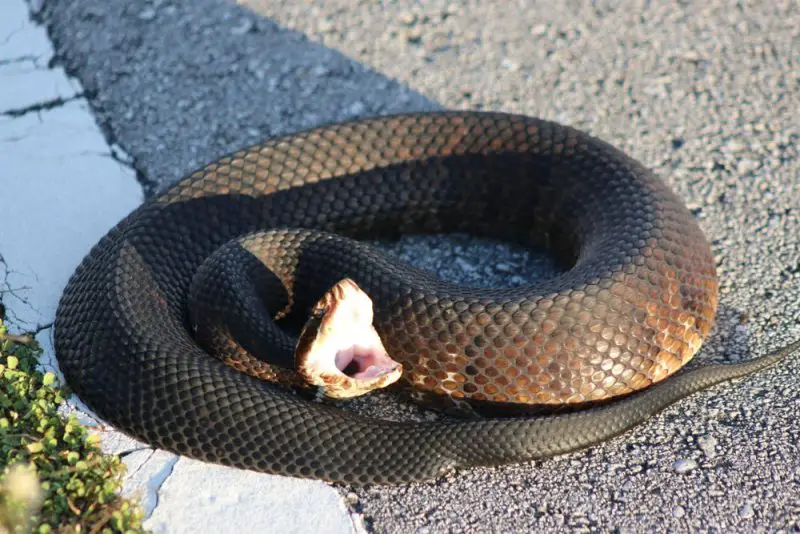
Cottonmouths gained a particularly strong reputation because of their defensive posture. When threatened, they may open their mouths wide, displaying the pale interior that inspired the name “cottonmouth.”
This dramatic display can appear confrontational. Combined with their aquatic habitat and relatively heavy build, it created a perception of aggression that spread culturally over time.
Historical accounts from southern regions sometimes described encounters inaccurately. Early naturalists and settlers often lacked detailed herpetological knowledge. Those early narratives shaped public perception long before modern wildlife science clarified the facts.
Even today, sensational stories attract attention more easily than calm scientific explanations.
What Snakes Actually Live in Maine
Maine hosts several native snake species, but none are venomous. These include:
Common garter snakes
Northern watersnakes
Milk snakes
Smooth green snakes
Red-bellied snakes
Ribbon snakes
Each plays an important ecological role. They help control rodents, amphibians, insects, and other small animals, maintaining natural balance.
Most of these species avoid human contact. Encounters are typically brief and non-confrontational unless the snake feels trapped.
The Psychology Behind Wildlife Fear
Human fear of snakes is deeply rooted. Evolutionary psychology suggests early humans benefited from quickly recognizing potential reptile threats. That instinct still influences modern perception.
This predisposition means ambiguous encounters often get interpreted as dangerous. A harmless snake swimming across a lake can appear threatening simply because it resembles something people have learned to fear.
Media portrayals amplify this effect. Movies, television, and viral videos frequently emphasize dramatic snake encounters rather than ordinary behavior.
As a result, people may assume danger even where none exists.
Seasonal Snake Activity in Maine
Snake sightings in Maine usually increase during warmer months, especially late spring through early fall.
Snakes emerge from winter brumation when temperatures rise. They seek sun exposure for warmth, hunt more actively, and may be seen crossing roads or basking near water.
Summer recreational activities overlap with this active period. Hiking, fishing, swimming, and boating increase the likelihood of encounters.
Still, these sightings involve native non-venomous species, not cottonmouths.
What Happens If a Southern Snake Appears in Maine
Occasionally, exotic pets escape or are intentionally released. A cottonmouth could theoretically appear temporarily through such circumstances.
However, isolated individuals rarely survive northern winters. Without a breeding population, these occurrences do not create lasting ecological presence.
Wildlife agencies occasionally investigate unusual reports, but confirmed cases of cottonmouth establishment in Maine remain absent.
Recognizing Non-Venomous Water Snakes
Several visual clues help distinguish harmless watersnakes from cottonmouths:
Head shape can appear triangular when a snake feels threatened, even in non-venomous species.
Body thickness varies widely depending on age, health, and recent feeding.
Coloration often darkens with age, making identification harder.
Behavioral context matters too. Most northern watersnakes retreat quickly when given space.
Accurate identification usually requires experience or expert confirmation.
Why Snakes Matter Ecologically
Snakes serve as mid-level predators in many ecosystems. They control rodent populations, reducing agricultural damage and limiting disease spread.
They also act as prey for birds of prey, mammals, and larger reptiles. Removing snakes can disrupt food webs in subtle but significant ways.
Even species that seem intimidating contribute positively to environmental health.
Understanding this role encourages coexistence rather than fear.
Common Situations That Lead to Misinterpretation
Certain scenarios frequently produce mistaken reports of aggressive snakes:
Swimming snakes crossing lakes toward shore
Snakes moving quickly across hiking trails
Defensive strikes when someone tries to handle them
Snakes basking near docks or boat ramps
In each case, the snake’s goal is usually escape, warmth, or feeding opportunity, not confrontation.
Safety Around Any Snake
Regardless of species, basic safety guidelines apply:
Keep a respectful distance
Avoid attempting capture or handling
Watch where you step near water or vegetation
Allow snakes clear escape routes
These simple steps dramatically reduce negative encounters.
The Role of Local Education
Wildlife education programs help correct misconceptions. Park services, nature centers, and conservation organizations often provide snake identification resources.
Accurate knowledge reduces unnecessary fear. It also helps protect snakes from being killed out of misunderstanding.
Public awareness continues improving, but myths still persist.
Media Influence on Snake Perception
Modern media spreads information rapidly. Unfortunately, dramatic wildlife stories often circulate without verification.
A photo from a southern state might be shared locally with a misleading caption. Over time, people may believe those animals exist nearby.
Critical evaluation of such claims helps prevent misinformation.
Climate Change and Future Possibilities
Some people wonder whether warming climates could eventually expand cottonmouth ranges northward.
While climate influences species distribution, many other factors matter. Habitat type, prey availability, competition, and winter extremes all affect survival.
Even with gradual warming, significant northward expansion into Maine would likely take a very long time, if it happens at all.
How Experts Verify Snake Presence
Herpetologists rely on multiple methods:
Field surveys
Photographic documentation
Genetic sampling
Long-term habitat monitoring
A single anecdotal sighting rarely counts as confirmation.
Scientific rigor helps avoid false conclusions.
Coexisting With Maine’s Native Snakes
Most encounters end peacefully when people stay calm. Snakes typically retreat once they realize humans are not a threat.
Respecting wildlife space benefits both sides.
Simple awareness prevents unnecessary conflict.
FAQs About Water Moccasins in Maine
Do water moccasins actually live in Maine?
No. Water moccasins, also known as cottonmouths, are native mainly to the southeastern United States. Maine’s colder climate and long winters make it unsuitable for stable populations. There are currently no verified wild populations in the state.
Why do some people claim they saw one in Maine?
Most reports come from misidentifying non-venomous snakes, especially northern watersnakes. Their dark coloration, aquatic habits, and defensive behavior can resemble cottonmouths to someone unfamiliar with snake identification.
Do water moccasins chase people anywhere?
Scientific observation shows they generally do not chase humans. When people feel pursued, the snake is usually trying to escape toward water, cover, or another safe direction that happens to coincide with where the person is standing.
What snake in Maine is most often mistaken for a cottonmouth?
The northern watersnake is the most common source of confusion. It lives near lakes, rivers, ponds, and wetlands and can appear thick-bodied and dark, which often leads to mistaken identity.
Are any snakes in Maine dangerous to humans?
Maine has no native venomous snakes. While any snake can bite defensively if handled, bites from local species are typically harmless beyond minor injury.
Could a cottonmouth ever appear in Maine accidentally?
It is possible, though rare, if an escaped or released pet survives briefly. However, the climate makes long-term survival and reproduction extremely unlikely.
What should you do if you encounter a snake near water?
Remain calm, keep a safe distance, and allow the snake space to retreat. Avoid handling or provoking it. Most snakes will leave quickly once they feel safe.
Why are snakes important in Maine’s ecosystems?
They help control rodents, insects, amphibians, and other small animals. This balance supports agriculture, reduces pest populations, and contributes to overall ecosystem health.
Final Thoughts
Water moccasins do not live in Maine, and they certainly are not chasing people there. Persistent stories usually stem from misidentified northern watersnakes, amplified folklore, or simple misunderstanding of snake behavior.
Snakes rarely seek conflict. Most encounters reflect defensive reactions or escape attempts rather than aggression. Understanding this helps reduce fear while promoting safer coexistence.
Maine’s native snakes play valuable ecological roles and deserve respect rather than alarm. Knowledge replaces myth. Calm observation replaces fear. And in the end, the wilderness becomes easier to appreciate when facts guide perception.