
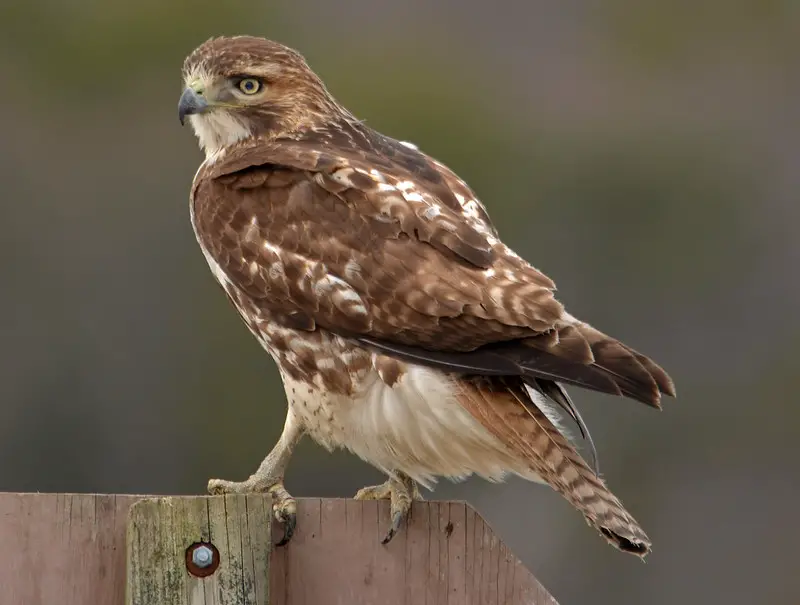
Indiana’s skies are far more alive than most people realize, especially when you start paying attention to the hawks that rule the treetops and open fields. These raptors appear in every season, from fiery-tailed hunters perched along country roads to slender marsh gliders sweeping low over wetlands. Each species tells a different story about the landscapes it inhabits.
Once you know what to look for, spotting hawks becomes one of the most rewarding wildlife experiences in the state. Some hover like kites in the wind, some slip through forests like shadows, and others gather in spectacular migration kettles that fill the sky. Their variety makes Indiana an exceptional place for both beginners and seasoned birdwatchers.
This guide introduces nine of the most notable hawks found throughout Indiana, offering a clear look at their identification, behavior, and habitats. Whether you’re scanning winter fields or watching summer thermals rise, these insights will help you recognize each hawk with confidence and enjoy the thrill of seeing them in the wild.
Table of Contents
Different Types of Hawks Found in Indiana
Red-tailed Hawk
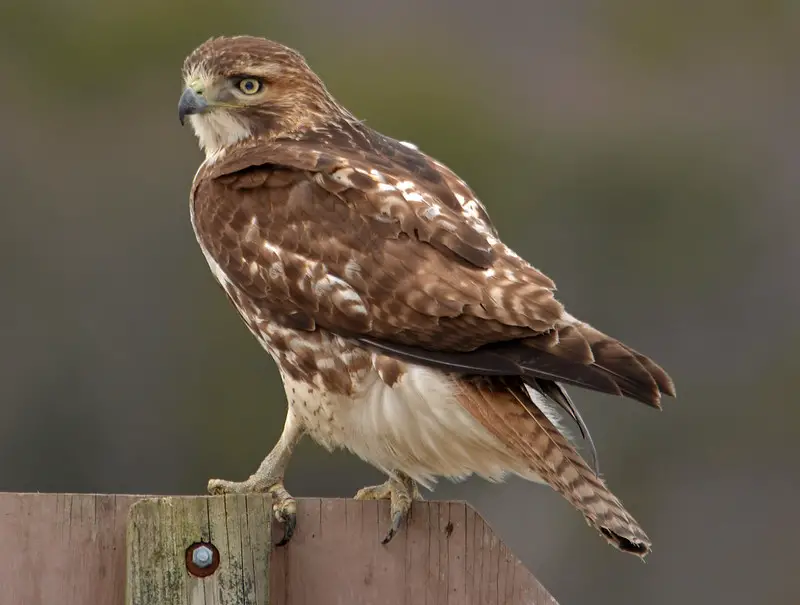
The Red-tailed Hawk is one of North America’s most recognizable raptors and a common year-round resident across Indiana. This species stands out with its sturdy build, broad wings, and the iconic reddish tail that gives it its name. Adults typically display a pale chest with a dark belly band, making them easy to identify even from a distance.
In terms of size, Red-tailed Hawks measure around 18 to 26 inches long with a wingspan between 4 and 4.5 feet. Their powerful flight and habit of circling on thermals make them a familiar sight over open fields, highways, and forest edges. Their call is a sharp, descending scream that Hollywood frequently uses as the generic “eagle cry.”
These hawks thrive in diverse habitats, including farmlands, woodlands, and suburban areas. In Indiana, they can be spotted statewide, often perched high on utility poles or large trees while searching for prey. Their diet includes rodents, rabbits, snakes, and occasionally birds, making them valuable for natural pest control.
A fun fact about the Red-tailed Hawk is that it forms lifelong pair bonds, often returning to the same large nest year after year. Their nests can grow massive over time as each generation adds new layers of sticks.
Red-shouldered Hawk

The Red-shouldered Hawk is a beautiful forest hawk known for its striking rufous chest, black-and-white checkered wings, and warm reddish “shoulders.” This species has a vocal, high-pitched call, which often reveals its presence before it is seen. Adults show strong barring on the chest and tail, making them easy to distinguish from other hawks.
Their body length ranges from 17 to 24 inches, with a wingspan of roughly 3.5 to 4 feet. They are agile fliers, weaving through dense trees as they chase small mammals, reptiles, and amphibians. Their long tail and rounded wings help them maneuver swiftly in woodland habitats.
Red-shouldered Hawks prefer mature forests near rivers, creeks, or wetlands. In Indiana, they are most common in the southern and central regions where wooded corridors and moist lowlands are abundant. They are year-round residents and often occupy the same nesting territory for multiple seasons.
A fun fact is that Red-shouldered Hawks sometimes reuse old squirrel nests instead of building entirely new structures. They are also known for their loud, repeated “kee-ah” call, which is one of the most recognizable hawk sounds in eastern forests.
Cooper’s Hawk

The Cooper’s Hawk is a sleek, forest-dwelling raptor well known for its incredible agility and long tail. Adults have steely blue-gray upperparts and orange barring on the chest, while juveniles show brown streaking. Their rounded wings and long tail give them a distinctive flying silhouette.
These hawks measure between 14 and 20 inches long with a wingspan of 2 to 3 feet. They are built for speed, diving through trees with remarkable precision as they pursue songbirds and small mammals. Because of their hunting style, they are often seen darting through suburban yards and wooded parks.
Cooper’s Hawks inhabit forests, tree-lined neighborhoods, and wooded edges throughout Indiana. They are now frequently spotted in cities, where bird feeders unintentionally attract their prey. This species lives in Indiana year-round, although some northern individuals migrate short distances in winter.
A fun fact about Cooper’s Hawks is that their eyes change color as they age. Juveniles have yellow eyes that gradually turn orange and eventually deep red in full adulthood.
Sharp-shinned Hawk
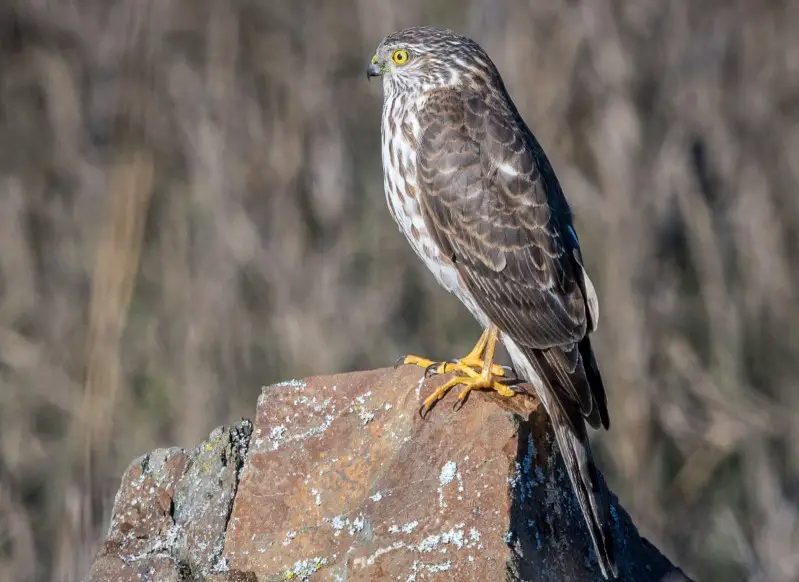
The Sharp-shinned Hawk is the smallest hawk in Indiana, notable for its slender build, long legs, and quick, powerful wingbeats. Adults look similar to Cooper’s Hawks with bluish-gray backs and reddish-barred chests, but they are noticeably smaller and have a more delicate appearance.
These tiny raptors measure only 9 to 13 inches long, with a wingspan between 17 and 22 inches. They are agile fliers that specialize in hunting small songbirds, often launching surprise attacks from cover. Their rapid, flap-flap-glide flight pattern is a useful identification clue.
Sharp-shinned Hawks prefer dense forests and conifer stands, but in Indiana they are mostly seen during migration and winter. They visit backyards more frequently in colder months, especially where bird feeders are present. Their secretive nature makes them harder to observe closely.
A fun fact is that females are up to one-third larger than males, which is one of the most dramatic size differences between sexes in any raptor species. This helps reduce food competition between mates.
Broad-winged Hawk

The Broad-winged Hawk is a compact, forest-loving raptor best known for its long-distance migrations. It has a stocky body, short tail, and broad wings with distinctive dark edges. Adults show a pale belly with rufous barring, while juveniles have streakier underparts.
In size, Broad-winged Hawks measure 13 to 17 inches long and have a wingspan of about 2.5 to 3 feet. Although they appear calm in the forest canopy, they transform into powerful gliders during migration, joining thousands of other hawks in swirling “kettles” that rise on warm air currents.
These hawks breed in Indiana’s wooded areas, especially in mature forests and quiet rural landscapes. However, they leave the state entirely each fall, traveling to Central and South America for the winter. They return in spring to reclaim territories and hunt small mammals, frogs, insects, and reptiles.
A fun fact about Broad-winged Hawks is that during migration they can travel over 4,000 miles, making them one of the most impressive long-distance travelers among North American raptors. Their massive migration flocks are a favorite sight for birdwatchers.
Rough-legged Hawk

The Rough-legged Hawk is a winter visitor to Indiana, easily recognized by its feathered legs, which help it stay warm in cold northern climates. Adults often show a pale head, dark belly patch, and bold wing markings that are especially visible in flight. Their plumage varies widely, appearing in both light and dark morphs.
This species measures 18 to 24 inches long with a wingspan reaching nearly 4.5 feet. Unlike many other hawks, Rough-legged Hawks frequently hover in place while hunting, using their long wings to stay aloft against the wind. Their buoyant flight and habit of perching on isolated fence posts make them easy to spot in open landscapes.
Rough-legged Hawks breed in the Arctic tundra and visit Indiana only during the colder months. They prefer wide-open fields, prairies, and marshlands where they can search for voles and other small mammals. Their seasonal appearance makes them a special highlight for winter birdwatchers.
A fun fact about this species is that it nests on cliffs in the far north, sometimes close to Snowy Owl territories. Their feathered legs are one of the few adaptations among hawks specifically suited for life in extreme Arctic conditions.
Northern Harrier

The Northern Harrier is a slender, owl-faced raptor known for its graceful, low-flying hunting style. It features a distinct facial disk, long tail, and narrow wings that give it a gliding, buoyant flight. Males are gray with white undersides, while females and juveniles are brown with streaked chests.
These birds measure 18 to 20 inches in length, with a wingspan of 3.5 to 4 feet. They fly low over grasslands, marshes, and fields, tilting from side to side as they scan for small mammals and birds. Their owl-like facial disk helps funnel sound to their ears, giving them excellent hearing.
Northern Harriers are found throughout Indiana in open wetland and prairie habitats. They breed in parts of the state but are most commonly seen during migration and winter. Their preference for wide, undisturbed landscapes makes them more prevalent in rural areas.
A fun fact about the Northern Harrier is that males may have up to five mates in a single breeding season, although two or three is more typical. This makes them one of the few polygynous raptors in North America.
Swainson’s Hawk (rare migrant)

The Swainson’s Hawk is a long-winged, elegant raptor that rarely passes through Indiana during migration. Adults show a distinct dark chest bib, pale belly, and grayish-brown upperparts. Their slim build and pointed wings help set them apart from bulkier buteo hawks.
These hawks measure between 18 and 22 inches long, with an impressive wingspan around 4 to 4.5 feet. They are known for their soaring flight and habit of joining large flocks during migration. During summer, they rely heavily on insects like grasshoppers, shifting to small mammals only when necessary.
Swainson’s Hawks breed in the Great Plains and western regions and do not nest in Indiana. Instead, they appear only as rare migrants, usually in late spring or fall. When they do pass through, they prefer open agricultural fields or grasslands where thermals are strong.
A fun fact about Swainson’s Hawks is that they undertake one of the longest raptor migrations in the Western Hemisphere, traveling from North America to Argentina. Their migration flocks can contain tens of thousands of individuals.
Ferruginous Hawk (very rare / accidental)

The Ferruginous Hawk is the largest buteo hawk in North America and is considered extremely rare in Indiana, appearing only as an accidental visitor. It has a regal appearance with rusty-toned legs, pale underparts, and large, powerful wings. Both light and dark morphs occur, with the light morph being more commonly seen.
This species ranges from 22 to 27 inches long with a wingspan of up to 5.5 feet, making it one of the largest hawks on the continent. Its broad wings and strong flight give it a commanding presence in the sky. Ferruginous Hawks specialize in hunting ground-dwelling mammals such as rabbits and prairie dogs.
Ferruginous Hawks typically inhabit open prairies, deserts, and grasslands of the western United States. When one appears in Indiana, it is almost always a wandering individual far outside its usual range. Sightings are rare enough that they often spark excitement among birders.
A fun fact about the Ferruginous Hawk is that it sometimes builds huge ground nests made of sticks, bones, and even old cow dung. Its name comes from the Latin word “ferrum,” meaning iron, referring to its rusty, iron-colored feathers.
Best Time and Places to See Hawks in Indiana
The best time to observe hawks in Indiana depends on the species, but fall and early winter offer some of the most reliable viewing opportunities. September and October bring strong migration activity, making it easier to spot Broad-winged Hawks soaring in large kettles. Winter months are ideal for Rough-legged Hawks and Northern Harriers, which move into the state when temperatures drop farther north.
Indiana’s open farmlands, wetlands, and forest edges provide excellent viewing conditions throughout the year. Areas such as Goose Pond Fish & Wildlife Area, Indiana Dunes National Park, Eagle Creek Park, and Muscatatuck National Wildlife Refuge are among the most productive locations. These sites offer expansive views of the sky, varied habitats, and healthy prey populations. Suburban neighborhoods with mature trees are also great places to spot Cooper’s Hawks and Red-tailed Hawks.
Spring brings returning migrants, including Broad-winged Hawks and rare visitors like Swainson’s Hawks. During this season, forested parks and river corridors provide good chances to catch them gliding overhead. Early morning and late afternoon are typically the best times for hawk watching, when thermals and hunting activity peak.
FAQs About Hawks in Indiana
What is the most common hawk in Indiana?
The Red-tailed Hawk is the most widespread and frequently observed hawk in Indiana. It can be found year-round in nearly every county and often perches on telephone poles along highways. Its large size and reddish tail make it easy for beginners to identify.
Why do hawks circle in the sky?
Hawks circle to take advantage of rising warm air called thermals. These currents allow them to gain altitude with little effort, helping them conserve energy while searching for prey or migrating long distances. Broad-winged Hawks are especially well known for this behavior.
Are hawks dangerous to pets?
Most hawks in Indiana are too small to threaten cats or dogs over 10–15 pounds. They primarily hunt rodents, birds, and small mammals. While attacks on pets are extremely rare, it is still wise to supervise very small animals outdoors, especially during peak hunting times.
When is hawk migration in Indiana?
Migration peaks from mid-September through early October. This is the best time to witness Broad-winged Hawk kettles, which can include hundreds or thousands of birds. Spring migration is more subtle, usually occurring from late March to early May.
Can hawks live in cities?
Yes, some species such as Cooper’s Hawks and Red-tailed Hawks adapt well to suburban or urban environments. They often take advantage of tall buildings, open green spaces, and abundant prey drawn to backyard bird feeders. Their adaptability allows them to thrive even in densely populated areas.
Conclusion
Hawks play an important role in Indiana’s ecosystems, keeping rodent and small animal populations in balance while adding beauty and excitement to the state’s natural landscapes. Whether soaring over farmland, gliding above wetlands, or darting through suburban trees, each species offers a unique glimpse into the world of raptors.
By understanding when and where to look, birdwatchers can experience these magnificent birds throughout the year. Their presence enriches Indiana’s wildlife heritage and inspires deeper appreciation for the natural world.