
Connecticut’s woodlands, suburbs, and rolling hills host a surprising variety of squirrel species, each with its own behavior, appearance, and habitat preferences. While Eastern Gray Squirrels dominate backyards and parks, the state is also home to vibrant red squirrels, two species of flying squirrels, ground-dwelling chipmunks, and even the impressive woodchuck.
Many residents see squirrels every day without realizing how different each species truly is. Some thrive in oak forests, others glide silently at night, and a few—like the Thirteen-lined Ground Squirrel—appear only on rare occasions. Each plays a unique role in the ecosystem, from spreading seeds to providing food for predators.
This guide breaks down all the major squirrel species found in Connecticut, complete with identification notes, habitat descriptions, behaviors, and fun facts to help you recognize these animals more easily across towns, parks, and forests throughout the state.
Table of Contents
- 1 Common Types of Squirrels Found in Connecticut
- 2 Best Time to Observe Squirrels in Connecticut
- 3 FAQs About Squirrels in Connecticut
- 3.1 Which squirrel species is most common in Connecticut?
- 3.2 Are there flying squirrels in Connecticut?
- 3.3 Are red squirrels aggressive?
- 3.4 Do chipmunks hibernate in Connecticut?
- 3.5 Are woodchucks dangerous?
- 3.6 Why is the Thirteen-lined Ground Squirrel rare in Connecticut?
- 3.7 What do flying squirrels eat?
- 3.8 Can squirrels damage homes?
- 3.9 Do all squirrels build nests?
- 3.10 Which squirrel species is best to observe for beginners?
- 4 Conclusion
Common Types of Squirrels Found in Connecticut
Eastern Gray Squirrel

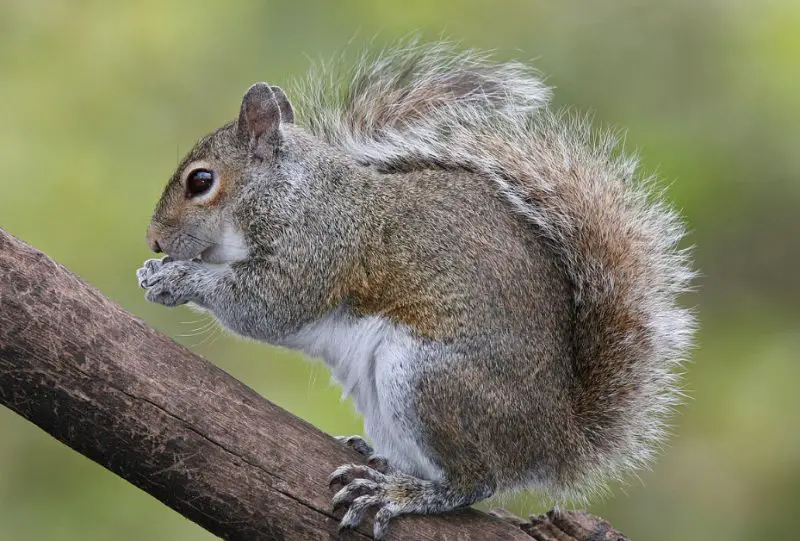
The Eastern Gray Squirrel is the most common and visible squirrel across Connecticut, easily recognized by its soft gray fur, white belly, and long, bushy tail. Its agile movements and bold curiosity make it a familiar sight in suburban yards, college campuses, and forest edges. Thanks to its adaptable nature, it thrives in both rural woodlands and densely populated neighborhoods.
Most adults weigh between one and 1.5 pounds and measure around 16 to 20 inches in total length, including the tail. Their strong hind legs and sharp claws allow them to climb trees quickly and leap across branches with impressive agility. The gray coat often appears slightly brownish in sunlight, making identification easy even at a distance.
Eastern Gray Squirrels are active during the day and spend much of their time collecting acorns, hickory nuts, berries, and buds. They typically build leaf nests high in trees but also use tree cavities during winter. In Connecticut, they are widespread and found in nearly every town with mature trees, from Hartford to the coastal communities along Long Island Sound.
Fun fact: Gray squirrels bury thousands of nuts each fall, and the ones they forget often grow into new trees—making them accidental forest planters.
Eastern Fox Squirrel
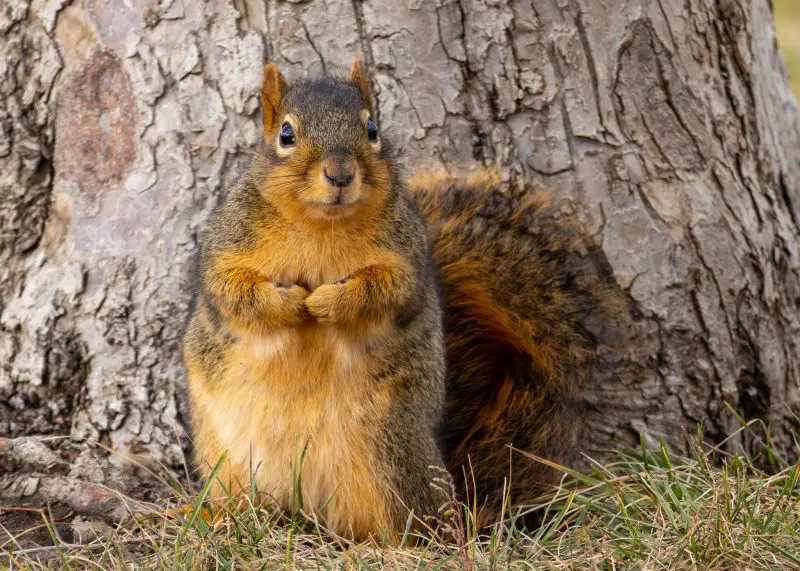
The Eastern Fox Squirrel is noticeably larger than the gray squirrel and is known for its striking two-toned fur: a mix of orange, cinnamon, brown, and gray. With its stout build and long tail edged in rust-colored fur, it stands out immediately when compared to other local squirrels. Although common in other nearby states, it is considered locally uncommon in Connecticut.
Adults can reach up to 2.5 pounds and measure 20 to 28 inches long, making them the largest tree squirrels in North America. Their size gives them a heavier, slower climbing style compared to gray squirrels, but they are still agile and capable jumpers. Their large paws and powerful grip help them balance on wide branches during feeding.
In Connecticut, the Eastern Fox Squirrel has a limited distribution, mainly appearing in scattered woodlots, farmland edges, and open forests. They prefer areas with oak, walnut, and hickory trees, which offer reliable food sources. Because they favor more open habitat than gray squirrels, they are seen more often on the ground, foraging or carrying nuts.
Fun fact: Fox squirrels have excellent memory and can recover a high percentage of the nuts they bury—more accurately than gray squirrels in several studies.
Southern Flying Squirrel
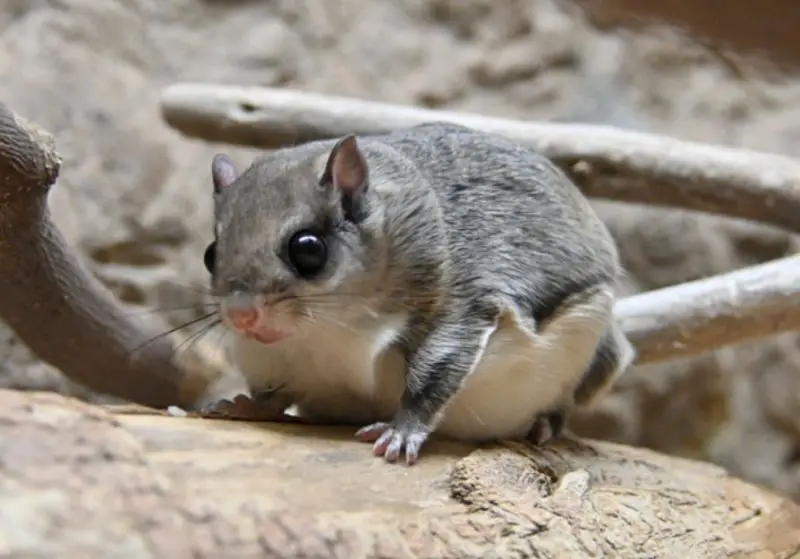
The Southern Flying Squirrel is one of Connecticut’s most charming nocturnal mammals, known for the loose skin flaps along its sides that allow it to glide between trees. Its large, dark eyes reflect available light and give it a gentle, adorable appearance. Because it is strictly active at night, many residents never realize these squirrels live right in their neighborhoods.
Most adults measure about 8 to 10 inches long, including the slender tail, and weigh just 2 to 3 ounces. Their fur is soft and silky, with a pale belly and a light brown back. When gliding, they spread their limbs to stretch the patagium—creating a parachute-like shape that can carry them up to 150 feet from tree to tree.
Southern Flying Squirrels prefer dense deciduous forests, especially areas rich in beech and oak. In Connecticut, they are widely distributed but remain difficult to spot due to their nighttime activity. They often nest in tree cavities, abandoned woodpecker holes, or communal nests during winter, sharing warmth with other squirrels.
Fun fact: They communicate with high-pitched ultrasonic chirps that humans can’t hear without special equipment.
Northern Flying Squirrel

The Northern Flying Squirrel is a close relative of the southern species but is slightly larger, fluffier, and adapted to colder climates. Its fur is a bit darker and more gray-toned, and it has a thicker tail that helps with insulation during long Connecticut winters. Its nocturnal habits make it just as elusive, though it occupies different habitats.
Adults generally grow 10 to 12 inches long and weigh between 3 and 5 ounces. Their gliding ability rivals that of their southern cousins, and they use it to travel quietly across forest canopies. Their large black eyes give them excellent low-light vision, making them efficient nighttime foragers.
In Connecticut, Northern Flying Squirrels live primarily in cooler, high-elevation forests dominated by conifers and mixed hardwoods. They are far less common than the southern species and are considered a species of conservation concern in parts of New England. Their diet includes fungi, lichens, nuts, and insects, with a preference for mushrooms found in mature forests.
Fun fact: They play a critical ecological role by spreading fungal spores that help trees absorb nutrients—making them important “forest gardeners.”
Red Squirrel

The Red Squirrel is a small, energetic species that thrives in Connecticut’s coniferous and mixed forests. Its reddish-brown coat, white belly, and expressive black eyes make it easy to recognize. This squirrel has a sharper, chattier personality than the gray squirrel and is often heard before it is seen, thanks to its rapid vocalizations and territorial chatter.
Adults measure 12 to 14 inches long, including the tail, and weigh around half a pound. Their compact size allows them to move quickly through dense branches, especially in spruce and pine forests. Red squirrels are known for their agility and their tendency to dart across logs and tree trunks with sudden bursts of speed.
In Connecticut, Red Squirrels are most common in northern and higher-elevation regions where evergreens dominate the landscape. They feed heavily on pine cones, seeds, fungi, and berries, storing extra food in large caches called “middens.” These piles of cones can sometimes reach impressive sizes near their favored trees.
Fun fact: Red squirrels create cone storage piles that may last for years, and some middens become valuable food caches shared by multiple generations.
Eastern Chipmunk

The Eastern Chipmunk isn’t a true tree squirrel but is closely related and often grouped with them due to similar behavior and habitat preferences. Its reddish-brown back, five dark stripes, and chubby cheek pouches make it one of Connecticut’s most recognizable small mammals. Chipmunks spend much of their time on the ground, darting between logs, shrubs, and stone walls.
Adults measure about 8 to 10 inches long and weigh around 3 ounces. Their small size allows them to squeeze into tight spaces and escape predators. They rely on their expandable cheek pouches to carry seeds, nuts, and berries back to underground burrows, where they store winter food.
In Connecticut, Eastern Chipmunks are widespread in suburban yards, forest edges, parks, and old stone foundations. They construct complex burrow systems with chambers for sleeping, storing food, and raising young. Their activity peaks in spring and fall, though they may emerge during warm winter days to feed.
Fun fact: Chipmunks can hold enough food in their cheek pouches to equal nearly their entire body weight, making them surprisingly efficient foragers.
Woodchuck (Groundhog)

The Woodchuck, also known as the Groundhog, is the largest member of the squirrel family found in Connecticut. Its thick brown fur, sturdy build, and short bushy tail give it a rugged appearance well suited to a life spent digging and grazing. Woodchucks are mostly seen on the ground, where they forage for grasses, clover, vegetables, and leaves.
Adults typically weigh between 5 and 12 pounds and measure 16 to 26 inches long. Their strong claws and powerful limbs allow them to dig complex burrows with multiple entrances. These burrows provide protection from predators and serve as winter dens where woodchucks hibernate until spring.
Woodchucks live across Connecticut in fields, forest edges, meadows, and even residential areas with ample vegetation. They prefer open areas with nearby cover, such as hedgerows or brush piles. Their daytime activity makes them one of the only diurnal members of the squirrel family in the region.
Fun fact: Despite their chunky appearance, woodchucks are excellent swimmers and surprisingly good climbers when escaping danger.
Thirteen-lined Ground Squirrel

The Thirteen-lined Ground Squirrel is a rare and occasional visitor in Connecticut, recognized by its distinctive pattern of alternating stripes and spots running down its back. This prairie-adapted species is more common in the Midwest, but individuals occasionally wander eastward into New England due to range shifts and human-altered landscapes.
Adults reach 7 to 12 inches in total length and weigh around 4 to 6 ounces. Their slender build and long body help them move quickly through short grasslands, where they often stand upright to scan for predators. They rely heavily on open ground and avoid dense forests, which limits their ability to establish stable populations in Connecticut.
This species prefers open fields, grassy meadows, golf courses, and roadsides—areas that mimic its native prairie environment. Sightings in Connecticut are sporadic and typically involve single individuals or temporary populations that fail to persist due to climate and habitat mismatch.
Fun fact: Thirteen-lined Ground Squirrels are among the deepest hibernators of all North American mammals, entering a state where their body temperature drops dangerously close to freezing.
Best Time to Observe Squirrels in Connecticut
Squirrels in Connecticut are active throughout the year, but certain times of day and seasons offer far better viewing opportunities. Their behavior changes with weather, food availability, and breeding cycles, making some periods ideal for spotting multiple species at once.
Best Time of Day
The most active periods are early morning and late afternoon, when tree squirrels like the Eastern Gray, Red Squirrel, and Fox Squirrel search for food. These cooler hours allow them to move freely before temperatures rise or fall. Chipmunks are also busy during these times, scurrying between logs and stone walls.
Flying squirrels are a special case. Because they are strictly nocturnal, the best time to observe Southern and Northern Flying Squirrels is after sunset. They often emerge from tree cavities roughly 30–60 minutes after dusk, especially during mild evenings.
Best Season of the Year
Autumn is the peak season for observing squirrels across the state. During fall, nearly all species are actively collecting acorns, hickory nuts, fungi, and seeds for winter. Their increased movement makes them easier to spot in both forests and suburban neighborhoods.
Spring is another excellent season, especially for seeing young squirrels emerge from dens. Red Squirrels and Gray Squirrels become more vocal during this time, defending territories and searching for mates. Chipmunks also return from winter torpor and become noticeably active on warm days.
Winter sightings vary by species. Gray Squirrels and Red Squirrels remain active all winter, especially on sunny, calm days. Chipmunks appear only occasionally during warm spells, while Woodchucks are rarely seen because they enter deep hibernation.
Weather Conditions That Improve Sightings
Mild, calm days—particularly after a night of rain—bring squirrels out in force. Moist ground makes it easier for them to dig for cached nuts, and reduced wind improves their ability to travel safely in trees. Flying squirrels are particularly active on warm, windless nights.
Seasonal Highlights
-
Late September to early November: Peak for nut-gathering behavior.
-
April to June: Juvenile squirrels are visible near nests and cavities.
-
January sunshine: Gray and red squirrels forage visibly on bright winter days.
-
Warm spring nights: Best period for catching glimpses of flying squirrels gliding between trees.
FAQs About Squirrels in Connecticut
Which squirrel species is most common in Connecticut?
The Eastern Gray Squirrel is by far the most widespread and is found in nearly every town with mature trees.
Are there flying squirrels in Connecticut?
Yes. Both Southern and Northern Flying Squirrels live in the state, but they are nocturnal and rarely seen.
Are red squirrels aggressive?
Red squirrels can be territorial, especially around food sources, but they typically avoid direct conflict with people.
Do chipmunks hibernate in Connecticut?
Chipmunks do not fully hibernate. They enter a lighter torpor and occasionally wake to eat from stored food.
Are woodchucks dangerous?
Woodchucks generally avoid humans. They may cause property damage through burrowing but rarely act aggressively.
Why is the Thirteen-lined Ground Squirrel rare in Connecticut?
It prefers prairie-like habitats that are uncommon in the state, so sightings are often isolated and temporary.
What do flying squirrels eat?
They feed on nuts, seeds, fungi, insects, and occasionally bird eggs, depending on the season.
Can squirrels damage homes?
Yes. Gray squirrels and flying squirrels sometimes enter attics or chew wiring if access points are available.
Do all squirrels build nests?
Tree squirrels build leaf nests or use tree cavities, while chipmunks and woodchucks build underground burrows.
Which squirrel species is best to observe for beginners?
Eastern Gray Squirrels and Red Squirrels are easiest to observe due to their daytime activity and wide distribution.
Conclusion
Connecticut hosts a richer variety of squirrels than most residents realize, from the familiar gray squirrel to the elusive flying squirrels that glide through treetops after dark. Each species contributes something unique to local ecosystems—planting new trees, spreading fungi, feeding predators, or shaping forest structure through their foraging habits.
By understanding how these squirrels differ in their appearance, behavior, and preferred habitats, nature enthusiasts can appreciate the incredible diversity hidden in backyards, state parks, and forest trails. With careful observation and a bit of patience, it’s easy to discover just how lively and important Connecticut’s squirrel species really are.