

If you spend enough time outdoors in Nevada, you eventually realize the desert isn’t as empty as it looks. One quiet morning or late afternoon is all it takes for the landscape to suddenly feel alive, when a pair of long ears pops up from the brush or a blur of movement darts across open ground. That’s usually the moment you truly notice Nevada’s wild rabbits and hares.
What makes them fascinating is how differently each species lives. Some stay low, perfectly blending into sagebrush and dusty terrain, while others rely on incredible speed, long legs, and powerful leaps to survive in wide open spaces. Head into cooler mountains or northern regions and you’ll discover completely different species again, proving Nevada is far more diverse than many expect.
This guide to six wild rabbit and hare species in Nevada is meant to help you identify what you’re seeing, understand where each one lives, and appreciate how they survive here. Whether you’re out hiking, driving backroads, or simply curious about wildlife, knowing these species makes every sighting feel a little more special.
Table of Contents
- 1 Different Types of Wild Rabbits Found in Nevada
- 2 Tips for Watching Wild Rabbits and Hares in Nevada
- 3 Best Time and Places to See Them in Nevada
- 4 FAQs About Wild Rabbits and Hares in Nevada
- 5 Conclusion
Different Types of Wild Rabbits Found in Nevada
Desert Cottontail (Sylvilagus audubonii)

Identification Overview:
-
Color: Light brown to gray with pale underside and white fluffy tail
-
Size: Medium-sized rabbit with long ears
-
Ears: Long, thin, often held upright
-
Habitat: Deserts, shrublands, grasslands, suburban edges
-
Status in Nevada: Common and widespread
The Desert Cottontail is the most familiar wild rabbit you’re likely to see across Nevada. It thrives in dry environments, which makes it perfectly suited to the state’s desert landscapes, rocky hillsides, and brushy open land. You’ll often spot it during early morning or late afternoon when temperatures are cooler.
This rabbit is easy to recognize thanks to its classic cotton-ball tail and upright ears that help release heat. Its sandy coloration blends beautifully with Nevada’s desert tones, helping it stay hidden from predators. When startled, it usually freezes first, then bursts into quick zig-zag runs.
Desert Cottontails feed mainly on grasses, shrubs, and cactus pads, surviving on very limited water sources. Their ability to get moisture from plants helps them live comfortably in some of the harshest environments in the region.
They are commonly seen near neighborhoods, parks, and desert roadsides, meaning even casual observers often encounter them without needing to go deep into wilderness areas.
Mountain Cottontail (Sylvilagus nuttallii)

Identification Overview:
-
Color: Brownish-gray with lighter belly and white tail
-
Size: Slightly smaller and stockier than Desert Cottontail
-
Ears: Shorter and more rounded compared to desert species
-
Habitat: Higher elevations, woodlands, sagebrush slopes
-
Status in Nevada: Regional and less common than desert species
The Mountain Cottontail lives in cooler, higher-elevation parts of Nevada rather than the hot desert lowlands. You are more likely to encounter it in mountainous areas, foothills, and places with thicker vegetation and sagebrush cover. These environments provide both food and shelter from predators.
Compared to the Desert Cottontail, this species appears a bit stockier with slightly shorter ears. Its fur is dense and generally darker, helping it blend into rockier and forested landscapes. The white tail is still visible when it runs, flashing as it bounds away.
Mountain Cottontails are shy and rely heavily on cover, often staying close to shrubs, rock piles, and dense vegetation. They feed on grasses, woody plants, and seasonal vegetation, adapting well to colder climates and snowy conditions at higher elevations.
Seeing one in Nevada usually feels a bit more special, since you need to venture into the uplands or more natural habitats rather than open urban areas or flat desert terrain.
Pygmy Rabbit (Brachylagus idahoensis)
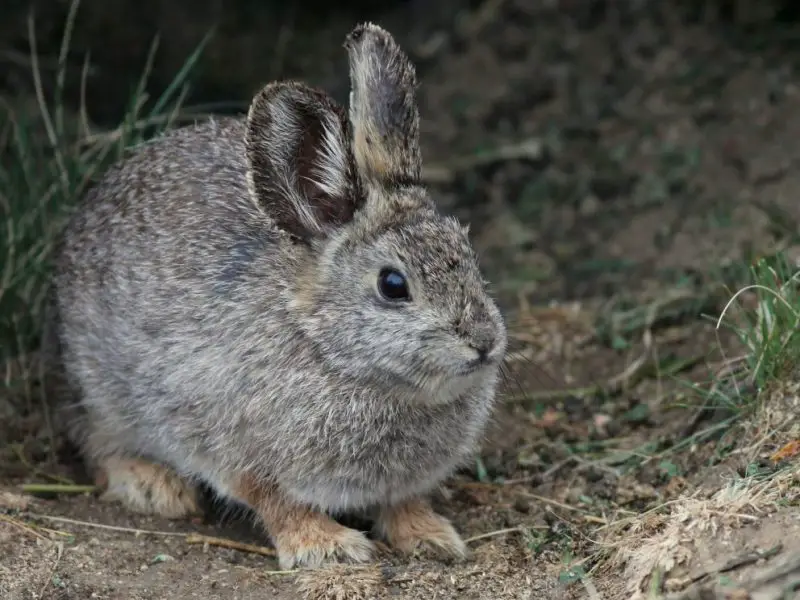
Identification Overview:
-
Color: Gray-brown with subtle shading and no bright white tail
-
Size: Very small; one of the smallest rabbit species in North America
-
Ears: Shorter and rounded
-
Habitat: Dense sagebrush habitats
-
Status in Nevada: Rare and localized
The Pygmy Rabbit is truly unique, not only because it is tiny but also because it lacks the classic bright white cotton tail that most people associate with rabbits. Instead, its tail blends closely with the rest of its fur, making it less noticeable. This helps it stay hidden within thick sagebrush environments.
This species is strongly tied to sagebrush and relies on it for both cover and food. Unlike many rabbits, Pygmy Rabbits can actually dig their own burrows, giving them extra protection and allowing them to survive in extremely specific habitats.
Because they are so small and shy, spotting a Pygmy Rabbit in Nevada is rare and often requires patience, quiet movement, and being in the right habitat. They tend to stay low to the ground and often slip into vegetation instead of running in open bursts.
Their limited range and dependency on healthy sagebrush ecosystems make them a sensitive and important species in Nevada’s wildlife story, representing both the fragility and resilience of desert life.
Black-tailed Jackrabbit (Lepus californicus)

Identification Overview:
-
Color: Gray-brown body with darker back and black tail
-
Size: Large hare with extremely long legs and ears
-
Ears: Very long with black tips and good heat-release function
-
Habitat: Deserts, open plains, sagebrush, scrublands
-
Status in Nevada: Very common and widespread
The Black-tailed Jackrabbit is one of the most iconic desert mammals in Nevada. Its long legs and powerful build make it incredibly fast, helping it escape predators across wide open landscapes. Unlike true rabbits, jackrabbits are hares, which means they are larger and built for speed and endurance.
You’ll often see them in open areas, especially at dawn and dusk when temperatures are cooler. Their long ears are not only for hearing but also help regulate body heat in Nevada’s extreme desert climate, making them perfectly adapted to hot environments.
When threatened, they rely on burst speed, zig-zag running, and sudden directional changes to avoid predators like coyotes and hawks. Their black-tipped tail is often visible when they run, helping identify them quickly in the field.
They primarily eat grasses, shrubs, and desert plants, surviving in areas with very little water. Their adaptability and toughness make them one of Nevada’s most successful wild mammals.
White-tailed Jackrabbit (Lepus townsendii)

Identification Overview:
-
Color: Brown to gray-brown in warmer months; paler in cold seasons
-
Size: Very large hare with long legs and robust body
-
Ears: Long but usually lighter in color than Black-tailed
-
Habitat: Grasslands, sagebrush meadows, higher elevation areas
-
Status in Nevada: Localized and less common
The White-tailed Jackrabbit is bigger and heavier than the Black-tailed and generally prefers cooler, more open upland habitats instead of the harsh low desert. In Nevada, it is usually associated with northern regions and higher elevation landscapes.
Its white tail helps distinguish it, especially when it runs, flashing bright white as it leaps away. In some regions and seasons, its coat can become paler, helping it blend with lighter surroundings. This seasonal shift provides good camouflage in colder, open environments.
White-tailed Jackrabbits are incredibly fast runners, relying on powerful legs and long-distance sprinting to escape danger. Their movements are dramatic, with long bounds and impressive speed over open terrain.
They feed primarily on grasses, shrubs, and seasonal vegetation and often remain in quieter, less disturbed areas. Seeing one can feel special because they are less frequently encountered than Black-tailed Jackrabbits in Nevada.
Snowshoe Hare (Lepus americanus)

Identification Overview:
-
Color: Brownish in warmer months; can turn white in snowy conditions
-
Size: Medium-sized hare with compact body
-
Ears: Shorter than jackrabbits, rounded
-
Habitat: Forested mountains, colder woodland regions
-
Status in Nevada: Rare and limited to specific cooler habitats
The Snowshoe Hare is a cold-adapted species that survives in Nevada only in select northern and higher elevation forested areas. Unlike desert hares, this species prefers dense cover, cooler climates, and wooded environments.
Its most famous trait is seasonal coloration. In many regions, Snowshoe Hares turn white in winter, blending perfectly into snowy landscapes, while turning brown again in warmer seasons. This camouflage is one of their greatest survival advantages.
They have large hind feet, which work almost like snowshoes, allowing them to move across snow more easily without sinking. This adaptation helps them stay mobile in winter conditions where other species might struggle.
Snowshoe Hares are shy, secretive, and rarely seen unless you’re in the right habitat at the right time. Their presence highlights Nevada’s surprising ecological diversity, showing that even cold-adapted northern wildlife can find a home in parts of the state.
Tips for Watching Wild Rabbits and Hares in Nevada
Move slowly, stay quiet, and let the landscape come to life. Rabbits often reveal themselves only when you notice small movements.
Early morning and late afternoon are best, when temperatures are cooler and animals are active.
Use binoculars for open areas and always keep a respectful distance so you can watch natural behavior instead of scaring them away.
Best Time and Places to See Them in Nevada
Dawn and dusk offer the highest chances, with soft light and cooler desert air bringing wildlife out to feed and move.
Open deserts and sagebrush valleys are great for Desert Cottontails and Black-tailed Jackrabbits.
Higher elevations, foothills, and northern regions are better for Mountain Cottontails, White-tailed Jackrabbits, and Snowshoe Hares.
FAQs About Wild Rabbits and Hares in Nevada
Are wild rabbits and jackrabbits common in Nevada?
Yes, especially Desert Cottontails and Black-tailed Jackrabbits, which are widespread and frequently seen.
What is the difference between rabbits and jackrabbits?
Jackrabbits are hares, larger and built for speed, while rabbits are smaller and rely more on hiding.
What is the best time of day to see them?
Dawn and dusk are the most active times, offering the best viewing opportunities.
Where should I go to see them?
Look in deserts, sagebrush regions, open plains, foothills, and cooler mountain areas depending on the species.
Are any species rare in Nevada?
Yes, Pygmy Rabbits and Snowshoe Hares are localized and much harder to find.
Conclusion
Watching rabbits and hares in Nevada is a rewarding experience, revealing how much life thrives in both desert and mountain environments.
With patience, the right timing, and the right locations, each sighting feels special and turns the Nevada landscape into a truly living scene.