

Idaho is one of those places where the landscape still feels wild and untamed, and the birds living here perfectly match that spirit. Spend time in the sagebrush plains, rolling valleys, or mountain forests, and you quickly realize how many fascinating grouse species quietly live around you.
Across open leks in spring, booming displays echo at sunrise, while in the forests a sudden burst of wings can turn a peaceful walk into a thrilling wildlife moment. Each species reflects a different side of the state, from dry sage country to cool high-elevation woodlands.
With the right timing, patience, and curiosity, exploring Idaho becomes even more exciting. Once you know where to look and how to recognize them, every trip outdoors feels like a chance to meet another incredible grouse in the wild.
Table of Contents
Different Types of Wild Grouse Found in Idaho
Greater Sage-Grouse

Identification Overview:
-
Color: Mottled brown, gray, and black with lighter underside
-
Size: Large grouse with bulky body and long pointed tail
-
Head/Neck: Males have yellow eye combs and inflatable chest air sacs
-
Habitat: Sagebrush plains, open shrublands
-
Status in Idaho: Native and regionally common in suitable sage habitat
The Greater Sage-Grouse is the most iconic upland bird of Idaho’s sagebrush country. This large, heavy-bodied grouse blends perfectly with dry, open landscapes and is strongly tied to healthy sagebrush ecosystems. In spring, males gather on leks, puffing their chests and fanning their tails in dramatic courtship displays.
You’ll most often find them in wide, undisturbed shrublands, especially early mornings during breeding season. Outside the display season, they remain quiet and well-camouflaged, often going unnoticed unless flushed. Sage-Grouse rely heavily on sagebrush for both shelter and food, making them a true symbol of Idaho’s wild high desert.
Sharp-tailed Grouse
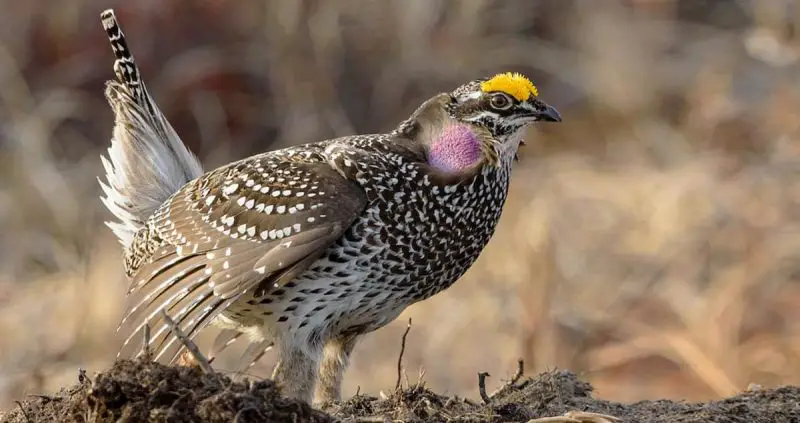
Identification Overview:
-
Color: Brown mottled body with spotted breast and pale belly
-
Size: Medium-sized grouse with slimmer build than sage-grouse
-
Tail: Distinctive short, pointed tail with white edges
-
Habitat: Grasslands, shrublands, agricultural edges
-
Status in Idaho: Present in select regions, localized populations
The Sharp-tailed Grouse is known for its energetic personality and lively breeding dances. Smaller and sleeker than the Greater Sage-Grouse, it prefers a mix of open prairie, brushy terrain, and lightly wooded areas. In some regions of Idaho, restoration and habitat management have helped maintain populations.
During spring, males perform incredible lek displays, stamping their feet rapidly and flicking their tails in a buzzing dance across open ground. Outside of breeding season, they remain more secretive but can be found feeding on grasses, grains, buds, and berries depending on the season.
Ruffed Grouse

Identification Overview:
-
Color: Brown or gray morph with dark barring and mottled pattern
-
Size: Medium-sized forest grouse with rounded body
-
Tail: Broad fan-shaped tail with dark terminal band
-
Habitat: Forests, wooded valleys, mixed timberlands
-
Status in Idaho: Fairly common in forested regions
The Ruffed Grouse is Idaho’s classic woodland grouse, thriving in forested environments rather than open sage country. Well-camouflaged among leaves and understory, it often explodes into flight suddenly when startled, giving hikers quite a surprise.
One of its most recognizable behaviors is the rhythmic “drumming” sound males produce in spring by beating their wings while standing on a log. This deep, echoing sound carries through the forest and signals territory and courtship.
Ruffed Grouse feed on buds, leaves, berries, and insects depending on the season. Their adaptability to forest environments makes them one of the most frequently encountered upland birds in Idaho’s wooded landscapes.
Dusky Grouse (often called Blue Grouse)
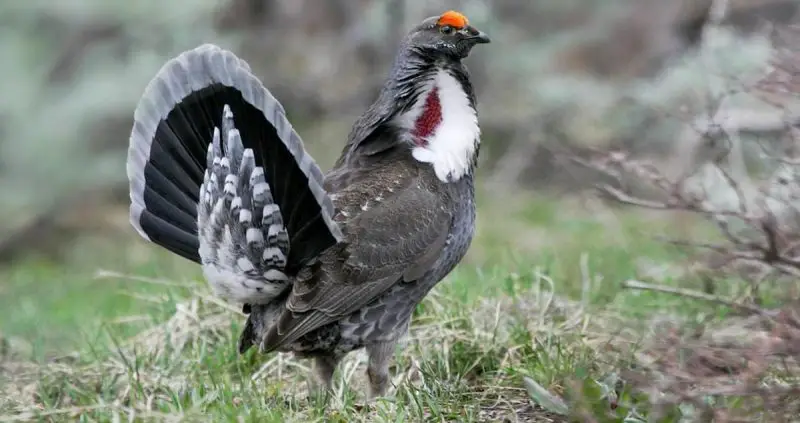
Identification Overview:
-
Color: Grayish to brown body with subtle bluish tones in males
-
Size: Large forest grouse, slightly smaller than sage-grouse
-
Neck/Head: Males show colorful throat air sacs during display
-
Habitat: Mountain forests, wooded slopes, high-elevation terrain
-
Status in Idaho: Present in suitable mountainous regions
The Dusky Grouse is a bird of Idaho’s mountains, spending much of its life in forested slopes, high ridges, and conifer woodlands. Unlike open-country grouse, this species prefers cooler elevations and thicker cover, especially during warmer months.
During spring, males perform striking courtship displays, puffing out their chest, showing colorful air sacs, and producing deep, low sounds that echo through forested valleys. They can often be surprisingly tame when displaying, allowing close observation when approached quietly.
In winter, Dusky Grouse often move to higher elevations and rely heavily on conifer needles for food, showing impressive adaptability to harsh mountain conditions. Seeing one feels like discovering a hidden resident of Idaho’s wild high country.
Spruce Grouse

Identification Overview:
-
Color: Dark mottled brown and gray; males darker with red eye combs
-
Size: Medium-sized grouse, compact body
-
Tail: Short, dark tail with subtle banding
-
Habitat: Dense conifer forests, especially spruce and fir
-
Status in Idaho: Localized and uncommon
The Spruce Grouse lives in Idaho’s dense northern forests, often in quiet, shaded conifer stands where it blends almost perfectly into the surroundings. Because of its calm nature, it is sometimes called the “fool hen,” as it often allows surprisingly close approach.
Males are striking, darker, and more boldly patterned, especially noticeable when their red eye combs become visible. Females are more camouflaged, helping them disappear into the forest floor while nesting.
Spruce Grouse rely heavily on conifer forests not just for shelter but also for food, especially in winter when they feed largely on needles. Their presence is strongly tied to healthy evergreen woodland ecosystems, making them a special and more limited Idaho species to encounter.
Tips for Watching Grouse in Idaho
Move slowly, stay quiet, and let the landscape settle. Grouse rely on camouflage, so you often see them only when they move.
Early morning is usually the best time, especially during spring when males display on leks.
Binoculars are helpful in open sage areas, while patience matters most in forest habitats.
Best Time and Places to See Them in Idaho
Spring is the most exciting season, when Sage-Grouse and Sharp-tailed Grouse perform dramatic courtship displays at dawn.
Summer and fall are great for forest grouse like Ruffed, Dusky, and Spruce Grouse in wooded mountain regions.
Look in sagebrush plains for Greater Sage-Grouse, grassland and shrub mixes for Sharp-tailed Grouse, and conifer forests and mountain slopes for the forest species.
FAQs About Grouse in Idaho
Are grouse common in Idaho?
Yes, several species are well established, though some are localized and habitat-dependent.
What is the best time of year to see them?
Spring is best for lek displays, while summer and fall are great for quiet forest encounters.
Do different species live in different habitats?
Yes, some prefer sagebrush plains, others grasslands, and some live mainly in mountain forests.
Are any grouse rare in Idaho?
Some, like Spruce Grouse and certain Sharp-tailed populations, are more localized and harder to find.
Do grouse migrate?
Most Idaho grouse are resident birds, though some may move seasonally between elevations.
Conclusion
Grouse make Idaho’s wild landscapes feel even more alive, from booming spring displays on open leks to quiet surprises along forest trails. With the right timing, patience, and a good sense of habitat, you can experience some truly unforgettable birdwatching moments across the state.