
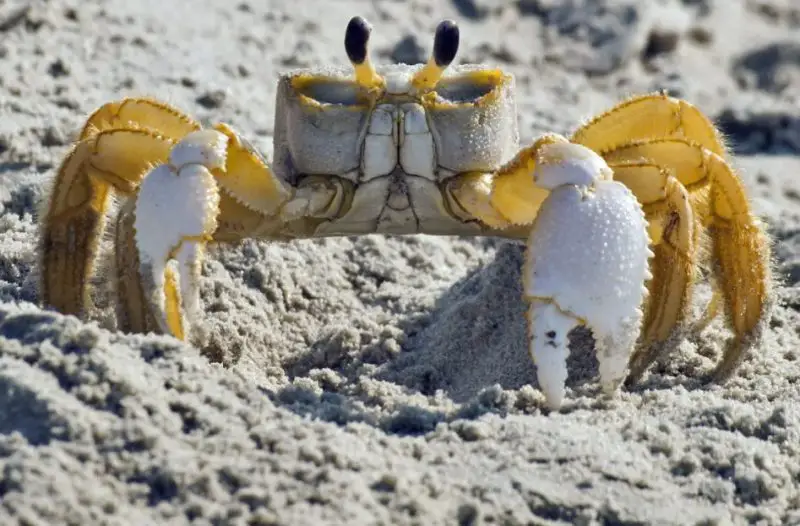
South Carolina’s beaches hide a world that only comes alive when the sun goes down. Among the most intriguing creatures of these sandy coastlines are ghost crabs, pale and speedy crustaceans that seem to vanish as quickly as they appear. Anyone who has walked along Folly Beach, Hilton Head, or the shores of Myrtle Beach at night has likely seen their shadows darting across the sand. Their mysterious behavior and unusual abilities make them one of the most captivating animals living just beyond the tide.
Ghost crabs thrive in a landscape that changes every hour. They must cope with shifting tides, hot sand, unpredictable weather, and predators that roam both land and water. Their pale shells, clever digging habits, and almost spooky running patterns reveal how perfectly adapted they are to a world shaped by wind and waves. These crabs use the cover of darkness and their unusual traits to hunt, hide, and survive in places where little protection exists.
This article uncovers ten of the strangest and most fascinating facts about ghost crabs living along South Carolina’s beaches. From unusual sounds to underwater tricks, each fact reveals something unexpected about these nighttime sand dwellers. Understanding their behaviors brings new appreciation for the hidden life happening beneath your feet during every coastal visit.
Table of Contents
- 1 Unusual Behaviors and Hidden Facts About South Carolina’s Ghost Crabs
- 1.1 1. They Can Run Faster Than Any Other Crab on the East Coast
- 1.2 2. They Dig Deep Burrows That Can Reach More Than Four Feet Down
- 1.3 3. They Can Live for Long Periods Without Bathing in Seawater
- 1.4 4. They Communicate Using Strange Drumming Sounds
- 1.5 5. Their Eyes Move Independently Like Tiny Periscopes
- 1.6 6. They Glow in the Dark Under UV Light
- 1.7 7. They Can Create Cooling Mists Using Moist Sand
- 1.8 8. They Have One Claw Larger Than the Other for Defense and Food Handling
- 1.9 9. They Can See Stars and Navigate Under Moonlight
- 1.10 10. They Can Blow Bubbles to Breathe More Easily
- 2 FAQs About Ghost Crabs in South Carolina
- 2.1 Are ghost crabs dangerous to humans?
- 2.2 Where can I find ghost crabs in South Carolina?
- 2.3 Why do ghost crabs run so fast?
- 2.4 Do ghost crabs bite or pinch?
- 2.5 What do ghost crabs eat on South Carolina beaches?
- 2.6 Do ghost crabs come out during the day?
- 2.7 Are ghost crabs protected in South Carolina?
- 2.8 Why are ghost crab burrows important?
- 3 Final Thoughts
Unusual Behaviors and Hidden Facts About South Carolina’s Ghost Crabs
1. They Can Run Faster Than Any Other Crab on the East Coast
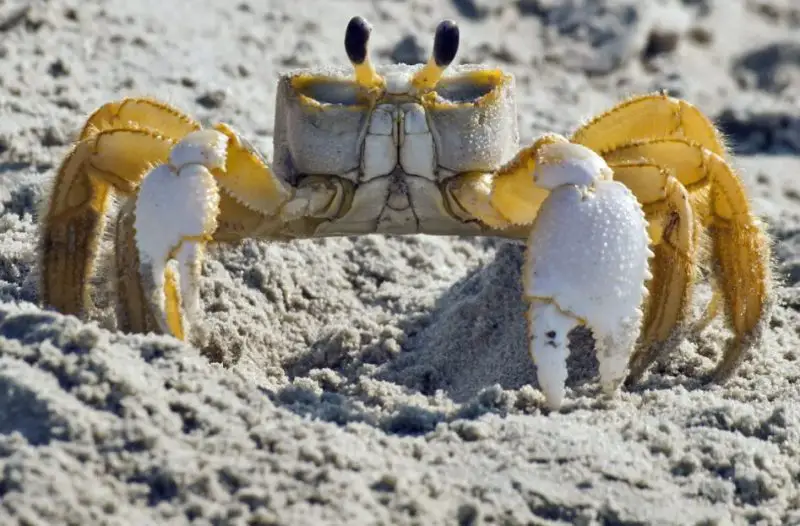
Ghost crabs are the sprinters of South Carolina’s beaches. Their long legs and lightweight bodies allow them to sprint across sand at remarkable speed. Their movement is so fast that their pale forms blur into the landscape, giving the impression that they disappear into thin air. Researchers note that their sideways running style gives them extra stability while allowing sharp turns to escape predators.
Their speed helps them forage along the waterline without being caught by birds, raccoons, or even curious beachgoers. The heat of the sand pushes them to move quickly as well, since staying still for too long increases their exposure to predators. Their running behavior is a perfect match for the open environment of beach dunes and tidal flats.
This ability also shapes their personality. Ghost crabs rely on stealth and speed rather than brute strength. When threatened, they dash straight into their burrows or vanish behind tiny ridges in the sand with a movement so quick it seems supernatural.
2. They Dig Deep Burrows That Can Reach More Than Four Feet Down
Ghost crabs are expert engineers. They build tunnels that twist deep into the earth, sometimes reaching lengths of four feet or more. These burrows help regulate temperature, provide moisture, and offer safety during the hottest parts of the day. The shape and depth of the burrow depend on the crab’s age, the sand condition, and the tide cycle.
The deep tunnels serve as stable refuges from predators. Birds like herons and gulls search for ghost crabs frequently, but most give up long before reaching the hidden chambers. Ghost crabs also use their burrows as storage, dragging food pieces inside to eat later when conditions are safer.
In South Carolina, beach erosion and storms can expose these impressive structures. After a major tide cycle or tropical event, long spirals and collapsed burrows appear on dunes, revealing the astonishing architecture that normally lies hidden below.
3. They Can Live for Long Periods Without Bathing in Seawater
Ghost crabs live on land but still depend on saltwater to survive. Unlike many crabs that must return to the ocean frequently, ghost crabs can go long stretches without submerging themselves. Special moisture-retaining structures on their gills allow them to breathe air while staying hydrated enough to function.
Their bodies are designed to minimize water loss, which is crucial in the hot sands of South Carolina. They absorb moisture from damp sand and rely on nighttime humidity to keep their gills functioning. During daylight hours, they retreat deep into burrows where temperatures are cooler and moisture levels remain stable.
This remarkable adaptation makes them one of the most land-oriented crabs in the world. They straddle the line between marine life and terrestrial life, mastering both environments in a way few species can match.
4. They Communicate Using Strange Drumming Sounds
Ghost crabs are surprisingly vocal. They create low, rhythmic drumming sounds by tapping their claws against the sides of their burrows or banging them on the sand. These sounds help them communicate territory, warn rivals, or attract mates during breeding periods.
In the quiet nights of South Carolina’s barrier islands, you can sometimes hear the faint clicking beneath the surface. This drumming travels through the sand, reaching other crabs hidden nearby. Each sound differs slightly depending on size, age, and the message being sent.
The ability to communicate through vibrations rather than visible signals fits perfectly with their nocturnal lifestyle. Instead of relying on sight in the dark, ghost crabs use sound waves to share complex information across the dunes.
5. Their Eyes Move Independently Like Tiny Periscopes
One of the strangest features of ghost crabs is their telescoping eye stalks. These stalks allow the eyes to rotate independently and elevate far above their bodies. This gives ghost crabs a nearly 360-degree field of view, helping them spot danger long before it reaches them.
The eye stalks can retract during burrow digging to protect the sensitive lenses from sand. When above ground, the crabs raise them like periscopes, scanning the beach in every direction. This adaptation helps them survive in open, exposed habitats where hiding places are limited.
Their eyes also detect movement with extreme precision. Even tiny shadows sweeping across the sand trigger immediate responses. The combination of independent eye movement and rapid reflexes makes ghost crabs some of the most alert animals on the shoreline.
6. They Glow in the Dark Under UV Light
Ghost crabs do not bioluminesce naturally, but their shells fluoresce under ultraviolet light. When hit with UV rays, the chalky exoskeleton glows in shades of pale yellow or blue. Scientists believe this fluorescence comes from structural compounds in the shell linked to calcium and protein layers.
On South Carolina beaches, nighttime researchers often use UV flashlights to spot ghost crabs. Their glowing shells stand out sharply against the darker sand, revealing individuals that are otherwise nearly invisible in normal light. This glow was once mistaken for supernatural phenomena by beachgoers who did not realize UV light was involved.
Although the function of their fluorescence remains unclear, it offers an unusual glimpse into the complex chemistry of crustacean shells.
7. They Can Create Cooling Mists Using Moist Sand
Ghost crabs survive extreme heat by manipulating moist sand along the edges of their burrows. When sand contains enough water, the crab pulls it to the surface and spreads it near the entrance. As the moisture evaporates, the temperature drops, creating a small cooling zone.
This behavior helps regulate body temperature during the hottest parts of the day. Their burrows remain cool naturally, but by adjusting the moisture levels at the entrance, they improve airflow and create miniature climate-control systems.
The cooling mist effect is subtle, but it becomes critical during South Carolina’s hottest months, when sand temperatures can exceed what most small animals can tolerate.
8. They Have One Claw Larger Than the Other for Defense and Food Handling
Ghost crabs display claw asymmetry, meaning one claw grows significantly larger than the other. The large claw serves for defense, intimidation, and territorial displays. The smaller claw is used for delicate feeding tasks like picking up tiny pieces of vegetation or capturing small prey.
This division of labor allows ghost crabs to perform multiple tasks efficiently. When threatened, they raise the large claw to appear bigger and more dangerous. When feeding, they switch to the smaller claw for precise handling.
In South Carolina’s dunes, you can observe ghost crabs using this combination of claws to tear apart detritus, scavenge along the strandline, or defend burrow entrances against rivals.
Ghost crabs have specialized compound eyes that can detect faint light. They use moonlight, starlight, and even reflected surf glow to navigate across the beach at night. Their ability to sense subtle shifts in brightness helps them travel long distances between feeding areas and burrows.
They avoid direct moonlight when possible, choosing shadowed paths to reduce detection by predators like owls or night herons. Their sensitivity to nighttime lighting also influences when they emerge. On very bright nights, many ghost crabs remain in their burrows longer.
This celestial navigation demonstrates how deeply adapted they are to nocturnal coastal life.
10. They Can Blow Bubbles to Breathe More Easily
Ghost crabs produce bubbles near their mouths when they become overheated or stressed. These bubbles help oxygenate the water around their gills or reduce heat buildup. They also appear when crabs are handling wet sand or processing food.
This behavior makes them appear as if they are foaming at the mouth, which often surprises people who encounter them. The bubble production is harmless and reflects a clever biological solution to breathing difficulties on dry land.
The ability to adjust respiration on the spot is another trait supporting their semi-terrestrial lifestyle in South Carolina’s hot coastal environment.
FAQs About Ghost Crabs in South Carolina
Are ghost crabs dangerous to humans?
Ghost crabs avoid people and pose little risk. At most, they may pinch lightly if handled, but they prefer to flee before interacting.
Where can I find ghost crabs in South Carolina?
They live on nearly all sandy beaches including Hilton Head, Folly Beach, Edisto Island, Myrtle Beach, and Hunting Island. Look for them at night.
Why do ghost crabs run so fast?
Their speed helps them escape predators and avoid heat exposure. Rapid movement also allows them to reach burrows quickly when threatened.
Do ghost crabs bite or pinch?
They can pinch if cornered, but they do not attack. Their primary defense is running, hiding, or raising their claws as a warning signal.
What do ghost crabs eat on South Carolina beaches?
They feed on plant material, insects, carrion, small fish, and organic debris left by the tide. Their diet varies with season and food availability.
Do ghost crabs come out during the day?
They are mostly nocturnal. During hot daylight hours, they remain deep in their burrows to avoid overheating.
Are ghost crabs protected in South Carolina?
They are part of natural beach ecosystems and not currently listed as endangered. However, habitat disturbance can impact populations.
Why are ghost crab burrows important?
Burrows regulate temperature, provide moisture, allow safe molting, and shelter young crabs from predators and environmental stress.
Final Thoughts
Ghost crabs are among the most remarkable residents of South Carolina’s beaches. Their strange abilities, hidden behaviors, and nocturnal lifestyles give them an air of mystery rarely seen in coastal wildlife. Each unusual trait helps them navigate shifting sands, rising temperatures, and endless cycles of tide and wind. Their presence adds life to the dunes, shaping beach ecosystems in subtle but essential ways.
Understanding their habits reminds us of the delicate balance that supports coastal environments. As visitors walk the shoreline after sunset, ghost crabs continue their nightly routines just beyond the glow of human activity, keeping South Carolina’s beaches vibrant and alive.