
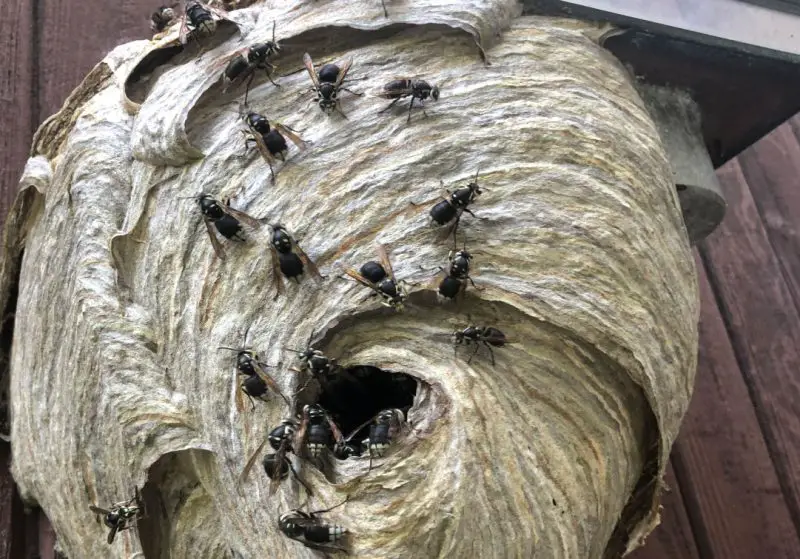
Homeowners are used to sharing space with wildlife in Oregon. Deer wander through yards. Raccoons tip over trash cans. Spiders claim garages and sheds. Most of these encounters are tolerated, sometimes even welcomed. But there is one sight that consistently triggers panic, phone calls to pest control, and hurried retreats indoors.
A bald-faced hornet nest.
It is not the hornets themselves that people usually notice first. It is the nest. Large, gray, layered like paper-textured nest and hanging ominously from trees, eaves, or attic corners. Once spotted, it is impossible to ignore. And once people realize what lives inside, fear spreads quickly.
Bald-faced hornets are among the most aggressive stinging insects in Oregon. Their nests are not just structures. They are heavily defended fortresses. And when those fortresses appear close to homes, the risk becomes very real.
Table of Contents
- 1 Bald-Faced Hornets Are Common in Oregon
- 2 What Bald-Faced Hornets Actually Are
- 3 Why Their Nests Are So Disturbing
- 4 How Close to Homes They Build
- 5 Why Homeowners Fear Accidental Encounters
- 6 The Aggressive Defense Behavior
- 7 Why Their Stings Are Especially Painful
- 8 The Risk to Children and Pets
- 9 Why Summer Is the Most Dangerous Time
- 10 Why Hornets Seem More Aggressive in Late Summer
- 11 Allergic Reactions and Medical Emergencies
- 12 Why DIY Nest Removal Is Dangerous
- 13 Why Hornets Keep Returning to the Same Areas
- 14 The Ecological Role Homeowners Often Forget
- 15 Why Oregon’s Landscape Increases Risk
- 16 Warning Signs of a Nearby Nest
- 17 What To Do If You Find a Nest
- 18 When Nests Become Less Dangerous
- 19 Psychological Fear and Trauma After Attacks
- 20 Why Fear Is Rational, Not Overreaction
- 21 Preventing Future Nests
- 22 FAQs About Bald-Faced Hornet Nests in Oregon
- 22.1 Are bald-faced hornets common in Oregon
- 22.2 Why are bald-faced hornet nests so dangerous near homes
- 22.3 How aggressive are bald-faced hornets
- 22.4 How painful are bald-faced hornet stings
- 22.5 Can bald-faced hornet stings be life-threatening
- 22.6 Why do hornets chase people after an attack
- 22.7 When is bald-faced hornet season in Oregon
- 22.8 Should homeowners remove bald-faced hornet nests themselves
- 22.9 Do bald-faced hornets reuse old nests
- 22.10 What should I do if I find a nest on my property
- 23 Final Thoughts
Bald-Faced Hornets Are Common in Oregon
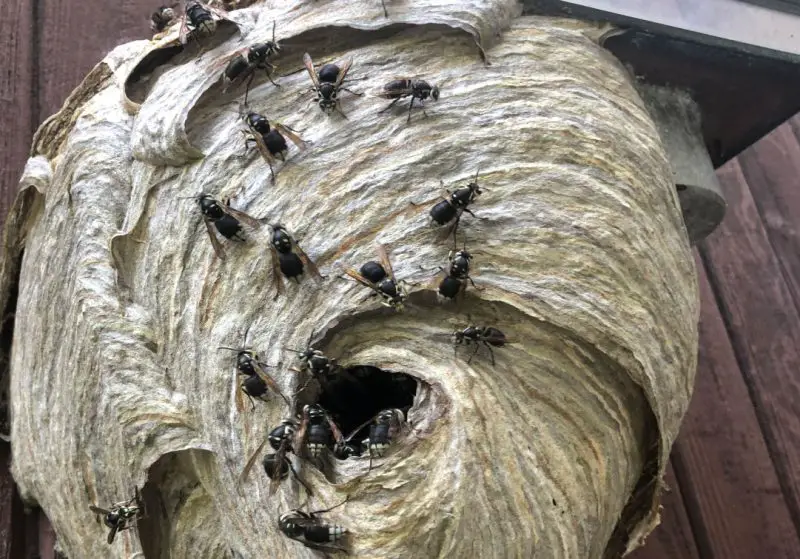
Despite their fearsome reputation, bald-faced hornets are native to Oregon and much of the Pacific Northwest. They are not invasive, and they have long been part of forest ecosystems.
Oregon’s climate suits them well. Mild summers, abundant insects, and widespread tree cover provide ideal conditions. They are especially common in western Oregon, where forests, suburbs, and older neighborhoods blend together.
Homeowners in wooded suburbs, rural properties, and even established city neighborhoods encounter them regularly. As development spreads into forested areas, encounters have become more frequent, not because hornets are increasing dramatically, but because people are living closer to them.
What Bald-Faced Hornets Actually Are
Despite the name, bald-faced hornets are not true hornets. They are a type of yellowjacket wasp.
They are larger than most yellowjackets, measuring up to three-quarters of an inch long. Their bodies are black with bold white markings on the face and abdomen, giving them a striking, high-contrast appearance.
Their size and coloration alone are enough to make people uneasy. Combined with their behavior, they quickly earn their reputation.
Why Their Nests Are So Disturbing
Bald-faced hornet nests are among the largest paper nests built by any wasp species in Oregon.
A mature nest can grow larger than a basketball, sometimes approaching the size of a beach ball. It is made from chewed wood fibers mixed with saliva, forming layered paper shells that protect the colony inside.
The nest typically hangs from tree branches, shrubs, under roof eaves, inside attics, or occasionally on the side of buildings. Unlike ground-nesting yellowjackets, bald-faced hornet nests are elevated and highly visible.
Visibility is part of the fear. When homeowners see a nest, they know exactly where danger is located.
How Close to Homes They Build
Bald-faced hornets do not seek out humans, but they are perfectly comfortable building near them.
They choose locations that are sheltered, elevated, and protected from rain and wind. Homes provide all of these features.
Common nesting sites in Oregon include:
Tree branches overhanging yards
Corners of houses and garages
Under eaves and soffits
Attics and open vents
Sheds and outbuildings
Once established, the nest grows rapidly through the summer.
Why Homeowners Fear Accidental Encounters
The biggest danger is not intentional interaction. It is accidental proximity.
Homeowners mow lawns, prune trees, clean gutters, or let children play outside without realizing how close they are to a nest. Bald-faced hornets defend a large area around their nest, sometimes extending several feet in all directions.
You do not need to touch the nest to trigger an attack. Vibrations from lawn equipment, footsteps, or even loud noises can be enough.
Once defensive behavior starts, it escalates quickly.
The Aggressive Defense Behavior
Bald-faced hornets are not aggressive hunters of people. But they are extremely aggressive defenders.
When they perceive a threat, they do not send one warning sting. They swarm.
Multiple hornets can emerge within seconds. They fly directly toward the perceived threat and sting repeatedly. They can chase people for long distances, sometimes hundreds of feet.
Unlike honeybees, they do not die after stinging. Each hornet can sting multiple times.
This combination of speed, coordination, and persistence is what makes them so dangerous.
Why Their Stings Are Especially Painful
Bald-faced hornet venom is designed to cause immediate pain and intense inflammation.
The sting produces sharp, burning pain followed by swelling, redness, and heat. The pain can last for hours, and the swelling may persist for days.
Multiple stings compound the effect. A homeowner who accidentally disturbs a nest may receive dozens of stings in seconds.
For people with allergies, even a single sting can be life-threatening.
The Risk to Children and Pets
Children and pets are especially vulnerable.
Children may not recognize nests as dangerous. They may throw objects, climb trees, or play near hornet activity without understanding the risk.
Pets, particularly dogs, may investigate nests out of curiosity. Dogs are frequently stung on the face, mouth, and throat, which can cause dangerous swelling and breathing difficulties.
Veterinarians in Oregon regularly treat pets for hornet stings during peak season.
Why Summer Is the Most Dangerous Time
Bald-faced hornet colonies follow a seasonal cycle.
In spring, a single queen begins building a small nest and raising the first workers. At this stage, nests are small and often unnoticed.
By mid to late summer, colonies reach peak size. Hundreds of workers may occupy a single nest. Defensive behavior intensifies as the colony protects its investment.
Late summer and early fall are the most dangerous periods for homeowners. Nests are largest, hornets are most numerous, and people are spending more time outdoors.
Why Hornets Seem More Aggressive in Late Summer
As summer progresses, hornet colonies shift focus.
Early in the season, workers concentrate on nest building and feeding larvae. Later, they focus on defense and reproduction.
Food becomes scarcer. Temperatures rise. Colonies are crowded.
All of these factors make hornets more reactive to disturbance. What might have gone unnoticed in early summer can trigger a full-scale attack in August or September.
Allergic Reactions and Medical Emergencies
One of the greatest fears associated with bald-faced hornets is the risk of allergic reactions.
Anaphylaxis is a severe, potentially fatal allergic response. Symptoms may include difficulty breathing, swelling of the throat, rapid drop in blood pressure, dizziness, vomiting, and loss of consciousness.
Emergency treatment is critical.
Even people without known allergies can experience severe reactions if stung multiple times.
This is why hornet encounters often result in emergency room visits.
Why DIY Nest Removal Is Dangerous
Many homeowners underestimate the danger of nest removal.
Spraying a nest during the day, striking it with tools, or attempting to knock it down can provoke immediate and overwhelming attacks.
Hornets inside the nest respond instantly. Those outside quickly join.
Falls from ladders are also common when people panic during attacks.
Professional removal is strongly recommended for bald-faced hornet nests near homes.
Why Hornets Keep Returning to the Same Areas
Bald-faced hornets do not reuse old nests, but they often return to favorable locations year after year.
Trees, rooflines, and sheltered corners that worked before will likely attract queens again.
Removing a nest does not guarantee the area will remain hornet-free without preventive measures.
The Ecological Role Homeowners Often Forget
Despite the fear they inspire, bald-faced hornets play an important role in Oregon’s ecosystems.
They are predators of many pest insects, including flies, caterpillars, and other wasps. They help regulate insect populations naturally.
Away from homes, they are beneficial.
The problem is not their existence. It is proximity.
Why Oregon’s Landscape Increases Risk
Oregon’s mix of forests, suburbs, and older neighborhoods creates ideal overlap between hornets and humans.
Large trees near homes provide nesting sites. Mild weather supports long active seasons. Abundant insects provide food.
As people expand into wooded areas, encounters become unavoidable.
Warning Signs of a Nearby Nest
Homeowners often miss early signs.
Frequent hornet traffic in one area
Hornets flying in and out of a specific spot
A faint buzzing near eaves or trees
Increased hornet activity around a single branch
Spotting these signs early allows for safer intervention.
What To Do If You Find a Nest
The most important step is distance.
Do not approach the nest. Do not attempt removal. Do not let children or pets near the area.
Mark the location mentally and physically if needed. Contact professional pest control experienced with stinging insects.
If the nest is far from human activity, leaving it alone may be an option until winter, when the colony naturally dies off.
When Nests Become Less Dangerous
After the first hard frosts, bald-faced hornet colonies collapse.
Workers die. The nest becomes inactive. Only newly fertilized queens survive elsewhere to start new colonies the following spring.
Old nests are abandoned and pose no danger.
However, many homeowners prefer not to wait if the nest is close to living spaces.
Psychological Fear and Trauma After Attacks
People who have experienced hornet attacks often develop lasting fear.
Children may refuse to play outside. Adults may avoid yard work. Pets may become anxious in outdoor spaces.
The memory of being chased and stung repeatedly is powerful.
Education and preparedness help reduce fear by restoring a sense of control.
Why Fear Is Rational, Not Overreaction
Fear of bald-faced hornet nests is not irrational.
The insects are fast. The stings are painful. The risk of severe reactions is real.
What matters is responding with informed caution rather than panic.
Preventing Future Nests
Preventive steps include inspecting eaves and trees in spring, sealing openings, trimming overhanging branches, and reducing insect attractants near homes.
Early detection is key. Small nests are far safer to address than mature ones.
FAQs About Bald-Faced Hornet Nests in Oregon
Are bald-faced hornets common in Oregon
Yes. Bald-faced hornets are native to Oregon and are commonly found throughout the state, especially in wooded areas, suburbs, and neighborhoods with mature trees.
Why are bald-faced hornet nests so dangerous near homes
Their nests are heavily defended. Hornets will attack anyone who comes too close, even without touching the nest, and they can sting repeatedly while chasing perceived threats.
How aggressive are bald-faced hornets
They are not aggressive when foraging but are extremely aggressive when defending their nest. Once disturbed, multiple hornets may swarm and sting repeatedly.
How painful are bald-faced hornet stings
The stings cause intense burning pain, swelling, and redness. Multiple stings can lead to severe reactions and medical emergencies.
Can bald-faced hornet stings be life-threatening
Yes. People with allergies can experience anaphylaxis from a single sting. Multiple stings can be dangerous even for those without known allergies.
Why do hornets chase people after an attack
Bald-faced hornets release alarm pheromones when defending their nest, causing others to join the attack and pursue the threat over long distances.
When is bald-faced hornet season in Oregon
Nests begin forming in spring, grow through summer, and become most dangerous in late summer and early fall when colonies are largest.
Should homeowners remove bald-faced hornet nests themselves
No. DIY removal is extremely dangerous and often leads to mass stings or falls. Professional removal is strongly recommended.
Do bald-faced hornets reuse old nests
No. Old nests are abandoned after winter, but hornets may build new nests in the same area the following year.
What should I do if I find a nest on my property
Keep your distance, restrict access for children and pets, and contact a professional pest control service experienced with stinging insects.
Final Thoughts
Bald-faced hornet nests represent one of the most serious insect hazards Oregon homeowners face. Not because the hornets are malicious, but because their defensive instincts collide with human activity.
Their nests are large, visible, and fiercely protected. Their stings are painful, and their attacks are relentless once triggered.
Respecting their space, recognizing early warning signs, and choosing safe removal methods can prevent injuries and emergencies.
In Oregon, fear of bald-faced hornet nests is rooted in experience. And understanding that fear is the first step toward living safely alongside one of the state’s most formidable insects.