

Across the forests, fields, and suburban neighborhoods of Virginia, tiny parasites quietly wait among the grasses and leaves. Most people rarely notice them until it is too late. These parasites are ticks, and among them, one species in particular has become closely associated with a serious illness: Lyme disease.
For many Virginia residents, the idea of tick bites often surfaces only during the warm months when outdoor activities increase. Hiking in the Blue Ridge Mountains, walking dogs through wooded trails, gardening in backyard flower beds, or exploring state parks are all common parts of life in the state. Yet few people fully understand how ticks behave, how Lyme disease spreads, or why Virginia has seen rising concerns about tick-borne illnesses in recent decades.
Ticks are not insects but arachnids, relatives of spiders and mites. Their tiny size and stealthy feeding habits allow them to attach to animals and humans without immediate detection. When infected ticks bite people, they can transmit bacteria that cause Lyme disease, a condition that affects thousands of Americans each year.
Virginia sits in a region where tick populations have expanded and Lyme disease cases have steadily increased. The state’s combination of forests, wildlife populations, humid summers, and expanding suburban landscapes creates ideal conditions for ticks to thrive.
Yet the story of ticks and Lyme disease is not simply about parasites and disease. It is also about ecology, wildlife interactions, climate patterns, and the ways human landscapes intersect with natural habitats.
Understanding tick bites and Lyme disease requires looking beyond common myths and examining how these tiny creatures live, feed, and interact with the environment.
For many Virginia residents, learning the full story behind ticks reveals that the issue is far more complex—and far more fascinating—than most people realize.
Table of Contents
- 1 Lyme Disease Is Caused by Bacteria, Not the Tick Itself
- 2 Tick Bites Often Go Unnoticed
- 3 The Tick Life Cycle Is Surprisingly Complex
- 4 White-Footed Mice Are Key Players in the Lyme Disease Cycle
- 5 Virginia’s Expanding Forest Edges Increase Tick Encounters
- 6 Lyme Disease Symptoms Can Vary Widely
- 7 Tick Activity Changes Throughout the Year
- 8 Wildlife Diversity Influences Lyme Disease Risk
- 9 Prevention and Awareness Are the Best Defenses
- 10 FAQs About Tick Bites and Lyme Disease in Virginia
- 10.1 Are tick bites common in Virginia?
- 10.2 Do all tick bites cause Lyme disease?
- 10.3 How long must a tick stay attached to transmit Lyme disease?
- 10.4 Are deer responsible for spreading Lyme disease?
- 10.5 When are ticks most active?
- 10.6 What should you do if you find a tick attached?
- 10.7 Can pets bring ticks into the home?
- 10.8 Is Lyme disease treatable?
- 11 Final Thoughts
Lyme Disease Is Caused by Bacteria, Not the Tick Itself
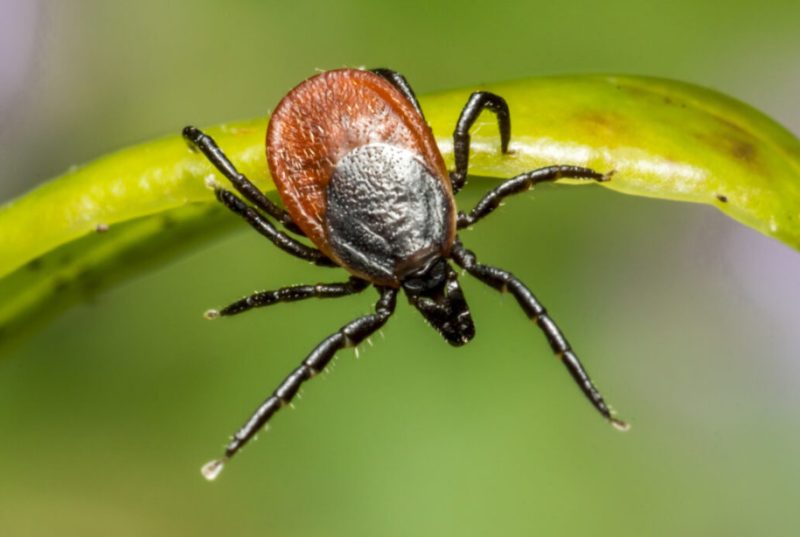
One of the most important facts about Lyme disease is that the illness does not originate from ticks themselves. Instead, the disease is caused by a bacterium known as Borrelia burgdorferi.
Ticks act as carriers for this bacterium. When an infected tick feeds on a human or animal, it may transmit the bacteria through its saliva into the bloodstream of its host.
The species responsible for spreading Lyme disease in the eastern United States is the blacklegged tick, often referred to as the deer tick (Ixodes scapularis).
These ticks acquire the bacteria during earlier stages of their life cycle when feeding on infected animals. Once infected, they can potentially pass the bacteria to other hosts during later feedings.
However, not every tick carries Lyme disease.
Many ticks never encounter the bacteria at all. Infection occurs only when ticks feed on animals that harbor the pathogen, most commonly certain small mammals.
This complex transmission cycle means Lyme disease risk depends heavily on the local ecology of wildlife populations.
Understanding how ticks become infected is key to understanding how Lyme disease spreads.
Tick Bites Often Go Unnoticed
One reason Lyme disease can spread so effectively is that tick bites are frequently painless and difficult to detect.
Ticks have evolved specialized mouthparts designed to anchor securely into skin while feeding. During this process, they release saliva containing compounds that reduce pain and prevent blood from clotting.
This allows the tick to feed slowly for hours or even days without being noticed.
In many cases, people do not realize they have been bitten until they discover the tick later during a shower or routine tick check.
Nymph-stage ticks, which are particularly important in Lyme disease transmission, are extremely small. At this stage they may be no larger than a poppy seed.
Because of their tiny size, nymphs are easy to overlook.
They often attach in hidden areas such as behind the knees, along the hairline, under the arms, or around the waistline.
This stealthy feeding strategy helps ticks remain undetected long enough to complete their blood meal.
The Tick Life Cycle Is Surprisingly Complex
Ticks follow a multi-stage life cycle that typically spans two years.
The process begins when adult female ticks lay thousands of eggs in leaf litter or soil.
When the eggs hatch, tiny larvae emerge. These larvae have six legs and must find a host for their first blood meal.
Small animals such as mice, birds, and reptiles often serve as hosts at this stage.
After feeding, the larvae drop to the ground and molt into the next stage known as the nymph.
Nymphs are slightly larger and possess eight legs like adult ticks.
This stage plays a major role in Lyme disease transmission because nymphs are both small and capable of carrying the bacteria.
After feeding again, nymphs molt into adult ticks.
Adult ticks seek larger hosts such as deer, raccoons, dogs, or humans.
Once an adult female feeds and mates, she lays eggs and the cycle begins again.
This two-year cycle connects ticks with a wide range of wildlife species.
White-Footed Mice Are Key Players in the Lyme Disease Cycle
Although deer are often associated with Lyme disease, one of the most important animals in the transmission cycle is actually a small rodent: the white-footed mouse.
These mice are common across Virginia’s forests and suburban woodlands.
They frequently host larval ticks and are highly efficient carriers of Borrelia burgdorferi.
When young ticks feed on infected mice, they acquire the bacteria and may carry it into later life stages.
This means that even though deer help support tick populations, mice are often responsible for infecting ticks with Lyme bacteria.
The interaction between ticks and mice forms a critical part of the Lyme disease ecology.
Changes in mouse populations can influence infection rates in ticks.
Environmental factors such as acorn production, forest health, and predator populations can indirectly affect this system as well.
Virginia’s Expanding Forest Edges Increase Tick Encounters
Over the past several decades, Virginia’s landscape has changed significantly.
Suburban development has expanded into areas that were once continuous forest.
Instead of large unbroken forests, many regions now contain a patchwork of wooded areas, neighborhoods, and open fields.
These forest edges create ideal conditions for ticks.
Edges provide both shade and vegetation while attracting wildlife such as deer, mice, and birds.
Because people often live close to these habitats, encounters between ticks and humans become more common.
Backyards, walking trails, and community parks frequently lie directly beside tick-friendly environments.
As a result, tick exposure can occur even in residential areas.
Many Lyme disease cases originate not from remote wilderness trips but from everyday outdoor activities near home.
Lyme Disease Symptoms Can Vary Widely
Lyme disease often begins with symptoms that resemble common viral illnesses.
Early signs may include fatigue, fever, headaches, muscle aches, and swollen lymph nodes.
One of the most recognizable symptoms is a circular skin rash known as erythema migrans, often described as a bull’s-eye pattern.
However, not every infected person develops this rash.
If untreated, the infection can spread through the body over time.
Later symptoms may involve joint pain, neurological issues, or heart rhythm abnormalities.
Because symptoms can appear gradually and mimic other conditions, Lyme disease sometimes goes undiagnosed in its early stages.
Fortunately, when detected early, Lyme disease is usually treatable with antibiotics.
Prompt medical evaluation after potential tick exposure helps reduce complications.
Tick Activity Changes Throughout the Year
Tick encounters in Virginia vary depending on the season.
Nymph-stage ticks are most active during late spring and early summer. Because these ticks are small and difficult to detect, this period carries significant Lyme disease risk.
Adult ticks often become more noticeable in fall.
These larger ticks are easier to see and remove but can still transmit disease if infected.
Ticks remain active whenever temperatures are above freezing.
Even mild winter days may allow ticks to search for hosts.
Because Virginia’s climate is relatively mild compared to northern states, ticks can remain active for much of the year.
This extended activity period increases the potential for human encounters.
Wildlife Diversity Influences Lyme Disease Risk
Virginia’s ecosystems support a wide variety of wildlife species.
This biodiversity can sometimes influence tick infection rates.
Some animals, such as certain birds and reptiles, are poor carriers of Lyme bacteria.
When ticks feed on these hosts, they do not become infected.
In areas where diverse wildlife populations exist, ticks may feed on many different animals rather than primarily on mice.
This can reduce the overall proportion of infected ticks.
Scientists sometimes refer to this as the dilution effect, where biodiversity helps limit disease transmission.
Healthy ecosystems with balanced predator and prey populations may therefore play a role in controlling Lyme disease risk.
Prevention and Awareness Are the Best Defenses
Because ticks are widespread in Virginia, prevention strategies are essential for reducing risk.
Wearing long pants and light-colored clothing can help make ticks easier to detect.
Using insect repellents designed for tick protection provides an additional layer of defense.
After spending time outdoors, performing a thorough tick check is one of the most effective preventive measures.
Checking behind ears, along the scalp, under arms, and behind knees helps ensure ticks are removed before they attach for long periods.
Showering soon after outdoor activity may also help wash away unattached ticks.
Keeping lawns trimmed and removing leaf litter around homes can reduce tick habitat in residential areas.
These simple practices greatly reduce the chances of tick bites.
FAQs About Tick Bites and Lyme Disease in Virginia
Are tick bites common in Virginia?
Yes. Virginia’s forests, grasslands, and suburban landscapes provide ideal habitats for several tick species.
Do all tick bites cause Lyme disease?
No. Only ticks infected with the Lyme disease bacteria can transmit the illness.
How long must a tick stay attached to transmit Lyme disease?
Transmission usually requires the tick to remain attached for many hours, often more than 24.
Are deer responsible for spreading Lyme disease?
Deer help support tick populations, but mice often play a more direct role in infecting ticks with the bacteria.
When are ticks most active?
Tick activity increases during spring and summer but may occur year-round in mild climates.
What should you do if you find a tick attached?
Remove it carefully with fine-tipped tweezers and clean the area with antiseptic.
Can pets bring ticks into the home?
Yes. Dogs and cats may carry ticks indoors after spending time outside.
Is Lyme disease treatable?
Yes. Early treatment with antibiotics is usually effective when the disease is diagnosed promptly.
Final Thoughts
Tick bites and Lyme disease represent a complex intersection of ecology, wildlife, and human activity across Virginia’s landscapes.
These tiny arachnids may seem insignificant, but their role in transmitting disease highlights the intricate connections between animals, habitats, and public health.
Understanding how ticks live and interact with wildlife helps explain why Lyme disease has become more common in some regions.
At the same time, awareness and simple preventive measures allow people to enjoy Virginia’s forests, trails, and parks safely.
The story of ticks reminds us that even the smallest organisms can influence the health of entire ecosystems—and the people who share them.
By learning more about these hidden creatures, residents gain not only protection from disease but also a deeper understanding of the natural world that surrounds them.