
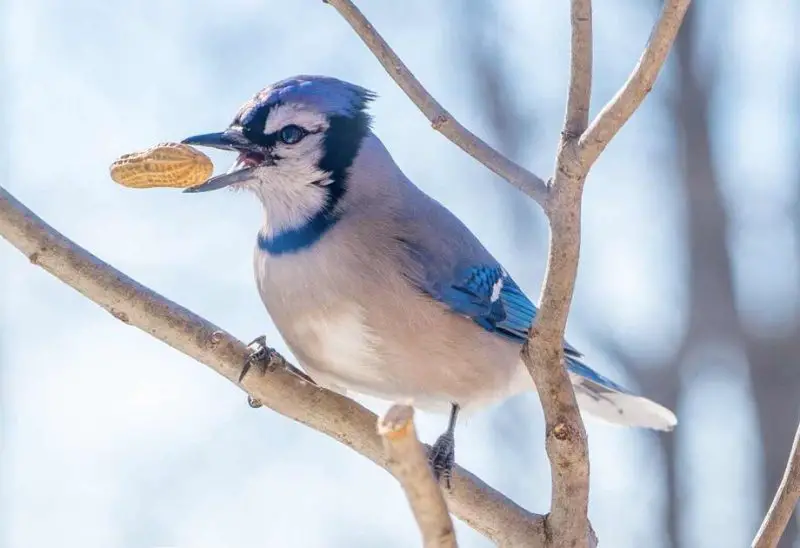
Winter in New York is demanding, long, and often unforgiving. Snow covers neighborhoods, forests fall silent, icy winds sweep across parks and countryside, and many birds leave in search of warmer environments. But blue jays stay. These striking, intelligent birds remain through the cold months, navigating freezing temperatures, reduced food availability, and harsh storms with resilience and remarkable feeding strategies.
Their survival depends deeply on what they eat during these months and how skillfully they manage food resources. Blue jays do not simply “find” food in winter. They plan ahead, store, adapt, and rely on instinct developed over thousands of years. Their winter diet becomes a careful balance of energy, protein, fat, and accessible nourishment that allows them to endure when other birds would struggle.
This detailed guide explores what blue jays eat to survive New York’s harsh winter, how their diet changes from warmer seasons, where they find food when snow dominates, and why their feeding behavior plays such an important role in forest health, backyard ecosystems, and winter bird communities.
Table of Contents
- 1 How New York’s Winter Conditions Shape Blue Jay Feeding
- 2 Blue Jays and Their Legendary Food Caching Behavior
- 3 Key Foods Blue Jays Eat in New York Winter
- 4 Insects and Protein Sources in Winter
- 5 Fruits and Berries That Support Winter Survival
- 6 Suet and Fat-Rich Human-Provided Foods
- 7 How Blue Jays Balance Diet and Energy Conservation
- 8 Where Blue Jays Find Food in New York Winter Landscapes
- 9 How Blue Jays’ Physical Adaptations Support Winter Feeding
- 10 Blue Jays’ Role in Winter Ecosystems
- 11 Nutrition Value of Their Winter Diet
- 12 Challenges Blue Jays Face in New York Winters
- 13 FAQs about What Blue Jays Eat to Get Through New York’s Harsh Winter
- 13.1 Do blue jays migrate out of New York in winter?
- 13.2 What is their most important winter food?
- 13.3 Do blue jays rely heavily on bird feeders?
- 13.4 Do they still eat insects in winter?
- 13.5 Do blue jays store food?
- 13.6 Are berries part of their winter diet?
- 13.7 Do blue jays need fat-rich food in winter?
- 13.8 Can blue jays break through frozen food?
- 13.9 Do they eat corn in winter?
- 13.10 Does human presence help their winter survival?
- 14 Final Thoughts
How New York’s Winter Conditions Shape Blue Jay Feeding
Cold Temperatures Demand High-Energy Food
New York winters bring freezing nights, icy mornings, and long stretches of cold days. Blue jays burn significant energy just staying warm. To maintain metabolism and body temperature, they need calorie-dense food sources rather than light summer snacks.
This means their winter diet focuses on fats, proteins, and stored foods rather than insects and soft vegetation.
Snow Cover Changes Access to Food
Snow changes everything. Ground insects disappear beneath frozen soil. Many plants die back or become inaccessible. Seeds, nuts, berries, and cached food suddenly become the most valuable resources.
Blue jays adapt to this seasonal shift remarkably well. Instead of searching aimlessly, they move intelligently to places where food reliably remains available.
Blue Jays and Their Legendary Food Caching Behavior
Storing Food Ahead of Winter
One of the most important reasons blue jays survive harsh winters is preparation. Throughout fall, they gather food and store it in multiple hidden locations. This behavior is called caching.
They tuck away:
• acorns
• peanuts
• seeds
• corn kernels
• other small foods
Each item is carefully hidden in bark crevices, buried under leaves, tucked beneath soil, or stored inside natural cavities.
Incredible Memory Supports Winter Survival
Blue jays remember where they hid much of their food. Even under snow, they locate caches and retrieve lifesaving winter meals. This stored food carries them through long stretches when fresh food is scarce.
Caching is not random instinct. It is strategic, planned, and essential to their winter survival system.
Key Foods Blue Jays Eat in New York Winter
Acorns: A Winter Lifeline
Acorns are one of the most important winter foods for blue jays. Oaks are common across New York landscapes, from suburban streets to forests, and blue jays take full advantage.
Acorns provide:
• high fat content
• carbohydrates
• long-lasting stored energy
Blue jays often bury acorns in the fall and return to them throughout the cold season. Many acorns they forget to retrieve eventually sprout, which means blue jays indirectly help plant and expand oak forests.
Other Nuts and Hard Seeds
Nuts are naturally dense in nutrients and ideal for winter survival. Blue jays consume:
• beechnuts
• chestnuts
• hazelnuts
• walnuts (pieces they can break or find)
Their powerful beaks allow them to crack tougher shells and access nutrient-rich cores.
Sunflower Seeds and Other Bird Feeder Seeds
In winter months, many New Yorkers maintain bird feeders, and blue jays make full use of them. Black oil sunflower seeds are especially valuable because they are high in fat, easy to eat, and warming.
They may also consume:
• striped sunflower seeds
• cracked corn
• safflower seeds
• mixed wild bird seed
Feeders become supplemental winter food stations when natural resources grow scarce.
Insects and Protein Sources in Winter
Do Blue Jays Still Eat Insects in Winter?
Insects form a major part of blue jay diet during warm months, but New York winters reduce availability sharply. However, insects do not disappear entirely. Many overwinter inside bark, wood, soil, or protected plant cavities.
Blue jays sometimes peck into bark or forage in sheltered areas to extract:
• dormant beetles
• insect larvae
• spiders hidden under cover
These protein sources are especially valuable in mid-winter when energy demands peak.
Fruits and Berries That Support Winter Survival
Frozen and Dried Berries Still Matter
Winter forests and suburban landscapes often retain leftover berries from fall. Blue jays take advantage of these frozen or dried food sources, especially during deep snow periods.
Common winter berries include:
• sumac berries
• wild grape clusters
• juniper berries
• holly berries (where available)
• crabapple fruit
These offer natural sugars, hydration, and supplemental nutrients when other resources thin out.
Ornamental and Backyard Plants
Urban and suburban New York areas provide additional berry access from landscaping plants. Blue jays adapt well to these environments, feeding on:
• ornamental berry shrubs
• fruit trees that hold leftover fruit
• hedges with persistent seeds or berries
Human-modified environments quietly help sustain many wintering jays.
Suet and Fat-Rich Human-Provided Foods
Suet as a Powerful Winter Fuel
Many winter birds benefit from suet, and blue jays are no exception. Suet is rich in fat, which converts directly into warmth and sustained energy. When temperatures plunge, suet can be the difference between surviving a storm and struggling through it.
Blue jays eagerly feed on:
• plain suet
• suet mixed with seeds
• suet with peanuts or insects
This energy-packed food supports strong muscles and helps maintain heat.
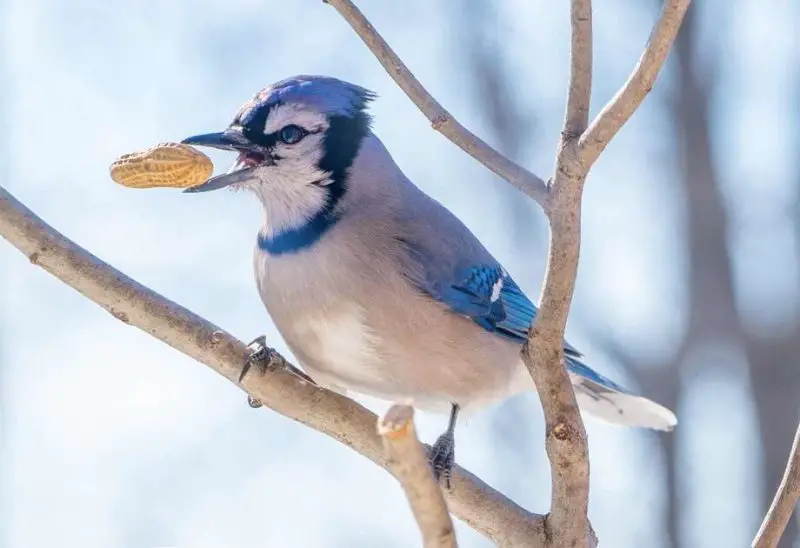
Peanuts: One of Their Favorite Winter Foods
Peanuts are especially valuable in winter because they are:
• high in fat
• high in protein
• easy to carry
• ideal for caching
Blue jays often take peanuts from feeders, fly off, and stash them to retrieve later when snow deepens.
How Blue Jays Balance Diet and Energy Conservation
Eating Often but Efficiently
Winter survival is not just about what they eat. It is also about how they manage energy. Blue jays feed frequently but try to minimize unnecessary flying and searching. They prioritize reliable feeding areas.
Using Group Awareness
Blue jays are social birds. In winter, they often travel in small groups. This helps:
• locate food faster
• share awareness of feeding locations
• increase safety while foraging
Group intelligence indirectly strengthens winter diet success.
Where Blue Jays Find Food in New York Winter Landscapes
Forests and Woodlands
New York’s forests, from upstate wilderness to suburban woodlots, provide:
• acorns
• nuts
• overwintering insects
• bark-dwelling prey
• protected berry shrubs
These habitats supply natural, stable winter feeding options.
Suburbs and Residential Areas
Blue jays thrive near people in winter. They visit:
• bird feeders
• backyard trees
• shrubs and hedges
• parks and gardens
Urban environments supply both natural and supplemental foods, often helping them through extreme cold spells.
Rural Farmland and Edge Habitats
Field edges, barns, hedgerows, and old orchards also provide:
• grain remnants
• stored seeds
• wind-exposed berry plants
• leftover crops
Winter winds clear snow in these areas, improving access to food.
How Blue Jays’ Physical Adaptations Support Winter Feeding
Strong Beaks Built for Hard Winter Foods
Their thick, powerful beaks allow them to crush nuts, pry open shells, dig under bark, and crack tough seeds. That makes food available others cannot eat.
Remarkable Intelligence
Blue jays demonstrate planning, memory, and problem-solving. These traits help them:
• locate stored food
• recognize consistent food sources
• adapt quickly to changing conditions
Their intelligence may be one of their greatest winter survival tools.
Blue Jays’ Role in Winter Ecosystems
Helping Plant Forests
By caching acorns and forgetting some of them, blue jays inadvertently plant future oak trees. This shapes forests over generations and supports biodiversity.
Balancing Insect Activity
Even limited winter insect feeding helps control populations that could damage trees when warmth returns.
Supporting Winter Bird Community Dynamics
Where blue jays thrive, their presence can influence how other birds feed and move. They are part of a larger winter survival network.
Nutrition Value of Their Winter Diet
Protein
Supports muscle strength, flight ability, and daily activity.
Fats
Help maintain body heat, store energy, and support endurance during storms.
Carbohydrates
Offer quick bursts of energy for immediate survival needs.
This nutritional balance keeps them healthy until spring returns.
Challenges Blue Jays Face in New York Winters
Extended Storms
Long, icy storms can temporarily block food access and test stored reserves.
Extreme Cold Snaps
Sudden drops in temperature demand high-calorie food quickly.
Competition
Other winter birds, squirrels, and wildlife compete for many of the same resources.
Yet blue jays overcome these challenges through planning, caching, adaptability, and resilience.
FAQs about What Blue Jays Eat to Get Through New York’s Harsh Winter
Do blue jays migrate out of New York in winter?
Many stay year-round. Some may move short distances depending on food supply, but most remain and adapt.
What is their most important winter food?
Acorns and stored nuts are among the most important, along with sunflower seeds, peanuts, and suet from feeders.
Do blue jays rely heavily on bird feeders?
They benefit from feeders, especially in harsh conditions, but they are fully capable of surviving on natural foods.
Do they still eat insects in winter?
Yes, but less frequently. They mainly target dormant insects and larvae hidden in bark and wood.
Do blue jays store food?
Yes, they cache large amounts of food during fall to retrieve during winter.
Are berries part of their winter diet?
They do eat certain winter berries, especially leftover or dried fruit still clinging to shrubs or trees.
Do blue jays need fat-rich food in winter?
Very much. Fat provides warmth and sustained energy during freezing weather.
Can blue jays break through frozen food?
Their strong beaks allow them to access food many birds cannot reach in winter.
Do they eat corn in winter?
Yes, cracked corn and leftover agricultural grains can supplement winter feeding.
Does human presence help their winter survival?
Urban and suburban environments provide additional food sources, often improving survival success.
Final Thoughts
Winter in New York tests every creature that remains, but blue jays meet it with strength, preparation, and remarkable intelligence. Their diet shifts from insects and soft foods toward stored acorns, nuts, seeds, suet, berries, and anything rich enough to fuel their energy needs through cold storms and frozen mornings.
They do more than just endure winter. They navigate it skillfully. Through caching behavior, strong physical adaptations, and flexible feeding strategies, blue jays turn a challenging season into a survivable one. When spring eventually melts the snow and forests awaken again, they emerge healthy, strong, and ready to reclaim the vibrancy of warmer months — proving once again that resilience often comes from instinct, planning, and nature’s quiet brilliance.