
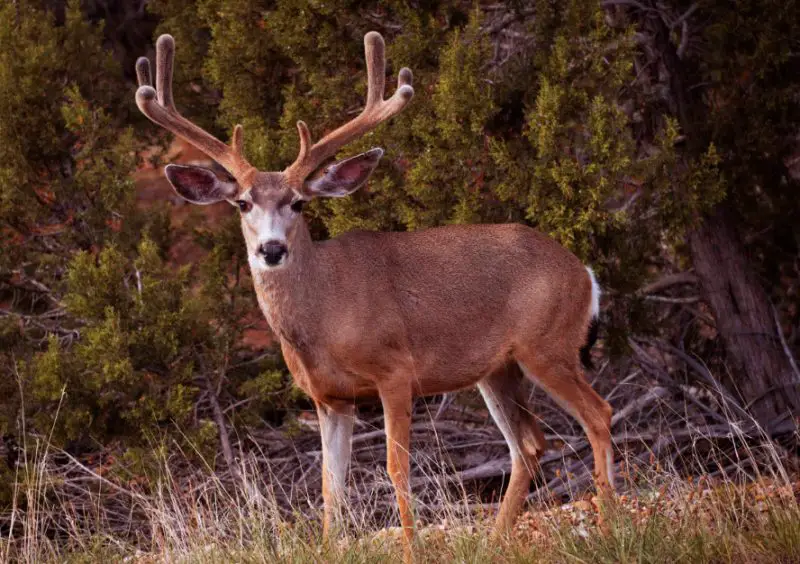
The Arizona Highlands turn into a different world when winter arrives. Snow dusts the ponderosa pines, temperatures drop sharply at night, and the landscape that feels rich and green in warmer months becomes tougher, quieter, and far less forgiving. Yet mule deer remain here, moving through cold valleys and elevated plateaus, adapting their feeding strategy to survive one of the most challenging seasonal transitions in the Southwest.
Their winter diet is never about luxury. It is about survival efficiency. Food becomes scarcer, plants change nutritional quality, and energy conservation suddenly matters more than curiosity or variety. The way mule deer adjust their diet in these high-elevation Arizona environments reveals fascinating natural intelligence, biological adaptation, and a deep relationship with the winter landscape.
This guide explores in detail what mule deer eat in the Arizona Highlands during harsh cold, how their feeding behavior changes with winter conditions, which plants become essential for survival, how snow depth influences access to food, and how their winter diet connects to overall health, population strength, and ecological balance.
Table of Contents
- 1 Mule Deer Winter Feeding Strategy in Arizona Highlands
- 2 Key Foods Mule Deer Eat in Arizona Highlands Winter
- 3 Evergreen and Shrub Species They Depend On
- 4 Remaining Grasses and Forbs Under Snow
- 5 Agricultural Fields and Human-Modified Landscapes
- 6 Winter Feeding Behavior Patterns
- 7 Influence of Snow Depth and Weather
- 8 Digestive Adaptation for Winter Diet
- 9 Nutritional Challenge and Body Condition
- 10 Predator and Risk Considerations
- 11 Habitat Zones in Arizona Highlands That Support Winter Diet
- 12 Long-Term Ecological Importance of Winter Diet
- 13 FAQs about What Mule Deer Eat During Harsh Cold in Arizona Highlands
- 13.1 Do mule deer still find enough food in harsh Arizona winters?
- 13.2 Do mule deer dig through snow for food?
- 13.3 What is the most important winter food for mule deer in the Arizona Highlands?
- 13.4 Do mule deer rely on human food in winter?
- 13.5 Does deep snow affect what they eat?
- 13.6 Do mule deer lose weight in winter?
- 13.7 Do predators influence winter feeding behavior?
- 13.8 What role do pine needles and juniper play?
- 13.9 Do mule deer change feeding times in winter?
- 13.10 Does winter diet affect spring survival?
- 14 Final Thoughts
Mule Deer Winter Feeding Strategy in Arizona Highlands
Shifting from Soft Greens to Woody Foods
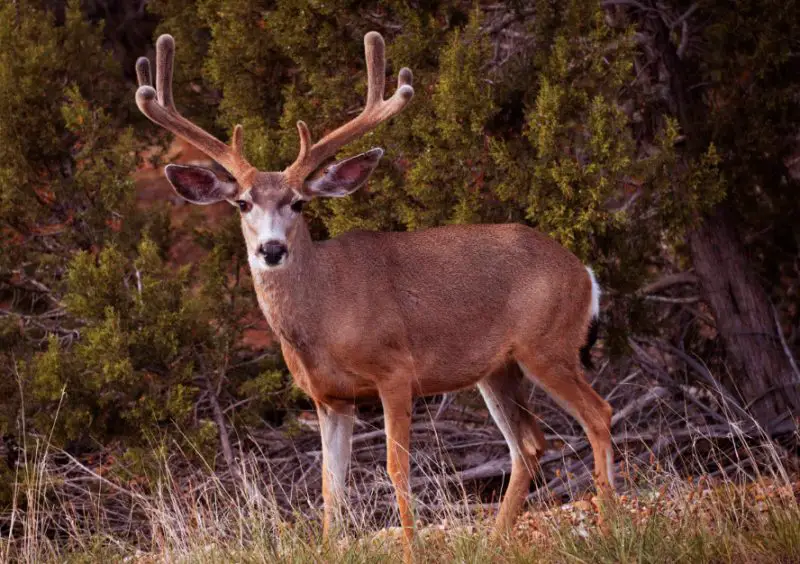
During spring and early summer, mule deer feed heavily on forbs and lush vegetation. But winter changes the rulebook completely. In Arizona Highlands, many of these tender plants die back or disappear beneath snow. Mule deer gradually transition toward woody browse – shrubs, twigs, evergreen leaves, and hardy plant parts that survive the cold season.
This shift is not random. Woody vegetation provides sustained calories, digestible fiber, and a form of slow, steady energy release that supports survival rather than rapid growth. Even when temperatures fall and snow limits movement, these foods can still be accessed above ground.
Energy Conservation and Selective Feeding
Winter feeding always connects to movement. Mule deer conserve energy by reducing unnecessary travel, which means they feed closer to safe cover and in areas where multiple food sources are available within short distance.
They become more selective with every bite. Instead of grazing broadly, they choose plants that offer the best nutritional payoff for the least effort. This is why winter diet seems narrower but more purposeful.
Using Memory of Landscape
Mule deer do not enter winter unprepared. They remember where certain shrubs grow, where south-facing slopes retain accessible vegetation, and where wind exposure reduces snow cover. Generational learning and instinct guide them to repeat successful winter feeding pathways, especially in Arizona’s mountainous forested regions.
Key Foods Mule Deer Eat in Arizona Highlands Winter
Browse Plants: The Core of Winter Survival
Browse is the backbone of mule deer winter diet. These are woody plant parts that remain available despite snow and cold. In Arizona Highlands, several shrubs and trees become critical.
Gambel Oak
Gambel oak remains incredibly valuable in winter. Mule deer eat twigs, leaves left from the fall period, and occasional buds. Even dry oak leaves can offer meaningful roughage when options are limited.
Mountain Mahogany
Mountain mahogany shrubs hold their nutritional value well into winter. They grow in many highland habitats, remain accessible above snow, and provide both protein and digestible fiber. Mule deer seek them repeatedly.
Serviceberry
Where available, serviceberry shrubs offer nutritious twigs and leftover fruits. Mule deer browse them frequently in colder seasons, especially in mixed forest and shrub zones.
Evergreen and Shrub Species They Depend On
Ponderosa Pine and Other Conifers
In particularly harsh conditions, mule deer will nibble needles from ponderosa pines and other evergreens. These are not their first choice, but they provide survival calories, especially when deep snow blocks shrub access.
The smell of pine is a winter scent of survival in Arizona uplands. Mule deer turn to it when conditions push them toward harder, resin-tasting but reliable plant material.
Juniper
Juniper becomes another seasonal fallback. Mule deer may eat foliage and occasionally berries. While not ideal nutritionally, juniper still provides energy in severe cold periods and remains visible when snow buries ground-level food.
Remaining Grasses and Forbs Under Snow
Even during winter, mule deer do not completely abandon grasses. They search south-facing slopes, wind-swept areas, and shallow snow zones for dried grasses and winter-cured forbs.
These foods are lower in protein than summer growth but still help with digestive balance and provide carbohydrates. Mule deer take advantage of every patch they can uncover, often scraping lightly to expose edible remains.
Agricultural Fields and Human-Modified Landscapes
In some Arizona Highland regions near rural settlements, ranchlands, and meadows, mule deer may also visit leftover agricultural vegetation when snow does not block movement. Winter wheat, residual hay growth, or crop remains can become supplemental food sources.
However, accessing human-connected food areas comes with risks: road exposure, predator proximity, and human disturbance. Mule deer therefore balance opportunity against safety instinctively.
Winter Feeding Behavior Patterns
Feeding More Often, Saving More Energy
During harsh winter, mule deer often feed multiple short sessions rather than long open grazing. This helps:
• conserve heat
• reduce exposure to predators
• manage energy use efficiently
They minimize unnecessary movement, preferring predictable food areas that require little exploration.
Group Feeding Dynamics
Winter often encourages mule deer to gather in looser groups. This provides safety, shared movement paths, and collective memory of food locations. Group feeding also reduces individual risk when foraging in more exposed locations.
Influence of Snow Depth and Weather
Light Snow Winters
In winters with lighter snow, mule deer maintain wider access to shrubs and dried grasses. Movement remains easier, food choices remain slightly broader, and body condition is typically better.
Heavy Snow Winters
Deep snow transforms feeding into a survival challenge. Mule deer may:
• reduce range size
• rely almost entirely on shrubs protruding above snow
• climb to wind-exposed ridges where snow is thinner
Deep snow burns more energy when walking, so every feeding decision becomes heavier in importance.
Digestive Adaptation for Winter Diet
Mule deer are ruminants. Their multi-chambered stomach allows them to break down tough winter vegetation that many animals cannot use efficiently. In winter, their digestive system shifts subtly to handle woody fiber more effectively.
They ruminate while resting, allowing them to:
• extract energy more completely
• reduce movement
• stay warm through internal metabolic heat
This biological design is a critical advantage in the Arizona Highlands during freezing months.
Nutritional Challenge and Body Condition
Losing Weight Is Normal
Even with efficient diet strategies, mule deer usually lose weight in winter. Food is harder to find, and energy expenditure remains high. Survival depends on how strong they entered winter and how severe conditions become.
Importance of Fat Reserves
Autumn feeding helps mule deer build fat reserves that carry them through limited winter nutrition. The foods they eat in winter help slow the loss, stabilize health, and support essential functions rather than growth.
Predator and Risk Considerations
Winter diet is not only about plants. It is about staying alive while eating. Mule deer must remain alert to mountain lions and coyotes. Choosing feeding areas near cover, avoiding open snow-covered meadows for too long, and feeding during safer twilight periods all connect directly to diet strategy.
Food and safety are never separated decisions in nature.
Habitat Zones in Arizona Highlands That Support Winter Diet
Ponderosa Pine Forest Zones
These forest regions offer shrubs, pine foliage fallback, and varied terrain that shelters mule deer from extreme wind. Winter browse remains accessible here.
Mixed Shrublands and Transition Areas
These zones often supply mountain mahogany, serviceberry, oak, and scattered grasses. Mule deer thrive best in winters where these habitats remain available.
Elevated Ridges and Sun-exposed Slopes
Wind and sun exposure reduce snow cover, allowing deer to access dried vegetation more easily. These microhabitats often become highly valuable feeding grounds.
Long-Term Ecological Importance of Winter Diet
The winter diet of mule deer does not only sustain individual animals. It shapes population survival, affects fawn survival rates in spring, influences predator balance, and plays a role in vegetation structure through browsing patterns.
Healthy winter diet stability supports ecosystem stability.
FAQs about What Mule Deer Eat During Harsh Cold in Arizona Highlands
Do mule deer still find enough food in harsh Arizona winters?
Food becomes limited but not impossible. Browse plants, shrubs, evergreen foliage, and dried grasses provide ongoing nutrition. Their digestive system helps them use even tough winter vegetation efficiently.
Do mule deer dig through snow for food?
They may scrape lightly in shallow snow conditions but rely mostly on above-snow shrubs and woody plants rather than deep digging like some ungulates.
What is the most important winter food for mule deer in the Arizona Highlands?
Woody browse such as mountain mahogany, serviceberry, Gambel oak, and available shrubs are generally the most critical food sources.
Do mule deer rely on human food in winter?
Occasionally they use agricultural leftovers or meadow vegetation near rural areas, but they mostly depend on natural shrubs and forest plants.
Does deep snow affect what they eat?
Yes. Deep snow restricts movement and limits lower vegetation. Mule deer then rely more on taller shrubs and evergreen foliage.
Do mule deer lose weight in winter?
Yes, some weight loss is normal. Winter diet helps slow loss and maintain survival rather than promote weight gain.
Do predators influence winter feeding behavior?
Absolutely. Mule deer select feeding areas with cover and prefer safer time periods to reduce predator risk while still meeting dietary needs.
What role do pine needles and juniper play?
They act as fallback foods when other vegetation becomes too difficult to reach. Not ideal nutrition, but important during severe cold.
Do mule deer change feeding times in winter?
They often feed more frequently but in shorter sessions, conserving warmth and reducing exposure.
Does winter diet affect spring survival?
Yes. Better winter nutrition supports stronger body condition, improving survival and fawn success when warmer seasons return.
Final Thoughts
Winter in the Arizona Highlands challenges mule deer in every possible way. Freezing nights, snow-covered ground, reduced plant growth, and constant energy demand create a season defined by survival intelligence. Mule deer respond not with panic but with adaptation. They narrow their diet, become more selective, conserve movement, trust shrubs and woody plants, and use memory of landscape to endure.
Their winter diet is not dramatic. It is steady, practical, quietly resilient. It reflects centuries of evolution, silent learning, and the remarkable ability of wildlife to synchronize life with environment, even when conditions feel harsh and uncompromising.
And when winter finally loosens its grip, the same mule deer step into greener seasons because they mastered the hardest one first.