
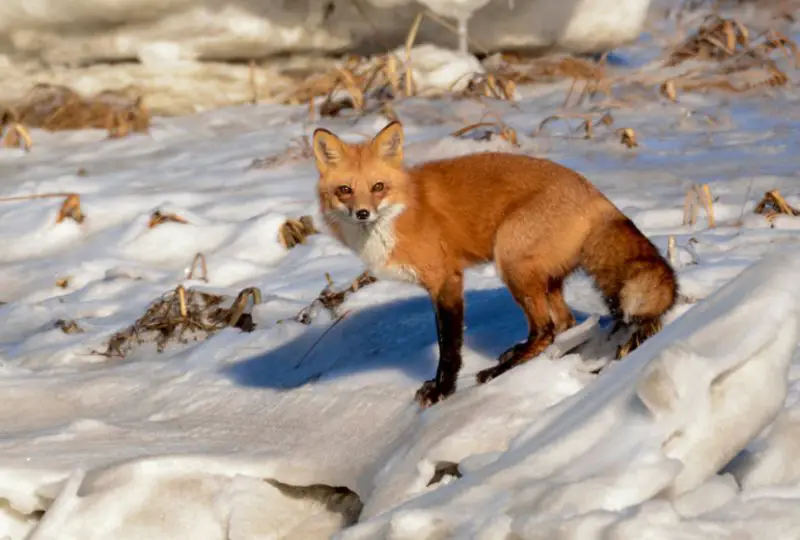
Winter in Vermont is long, quiet, and unforgiving. Snow piles up for months, temperatures dip well below freezing, and much of the landscape seems locked in place.
For many animals, this season is about survival.
For the Red Fox, winter is something more than an obstacle. It is a tool.
Across Vermont’s fields, forests, and frozen wetlands, red foxes use snow in clever, efficient ways that give them an edge when food is scarce and conditions are harsh. Their success is not luck. It is the result of finely tuned behavior shaped by thousands of winters.
Table of Contents
- 1 Vermont’s Winter Landscape and Why Snow Matters
- 2 How Red Foxes Move Efficiently on Snow
- 3 The Snow Pounce: A Precision Hunting Strategy
- 4 Snow Helps Foxes Control Competition
- 5 Snow as Cover and Concealment
- 6 Snow Preserves Food and Scent Trails
- 7 Winter Diet Changes Driven by Snow
- 8 Snow and Denning Behavior in Vermont
- 9 Human Landscapes, Snow, and Fox Adaptation
- 10 FAQs About Red Foxes and Snow in Vermont
- 10.1 How deep of snow can red foxes hunt in?
- 10.2 Do red foxes hunt better in fresh snow or old snow?
- 10.3 Can red foxes survive Vermont winters without snow?
- 10.4 Why do foxes jump straight up before hunting?
- 10.5 Do foxes hunt during snowstorms?
- 10.6 Are fox tracks easy to identify in snow?
- 10.7 Does snow protect fox dens from cold?
- 10.8 Are foxes more aggressive in winter?
- 11 Final Thoughts
Vermont’s Winter Landscape and Why Snow Matters
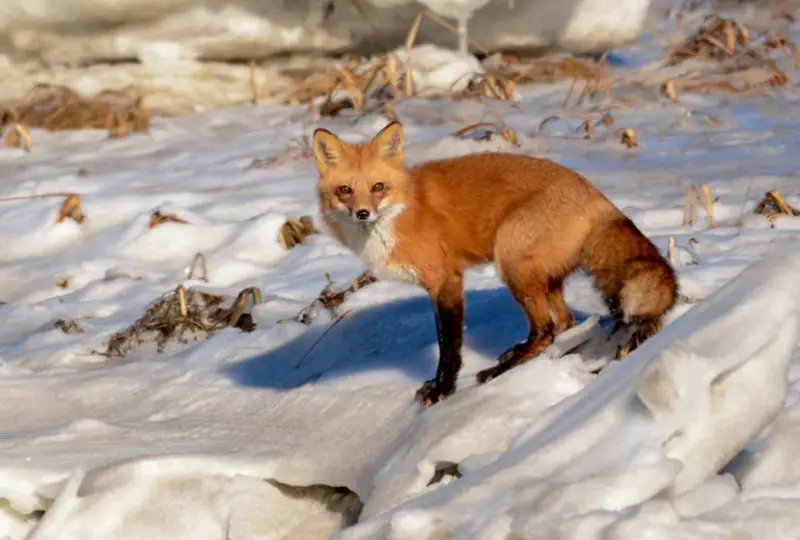
Winter in Vermont is not a short season or a background detail. It is a dominant ecological force that reshapes the land for months at a time. Snowfall is often deep and persistent, with repeated freeze-thaw cycles creating layered snowpacks that range from powdery to hard-crusted. Nights are long, temperatures remain low, and much of the ground stays locked beneath ice and snow well into early spring.
Snow does far more than blanket the landscape. It changes how heat moves through the soil, how sound travels through the air, and how scent behaves near the ground. Small mammals such as voles and mice create extensive tunnel systems beneath the snowpack, using it as insulation from predators and extreme cold. Deer compress snow into packed trails as they move between feeding and bedding areas. Wind sculpts drifts along hedgerows and field edges, sometimes exposing frozen grasslands while piling snow deeply in sheltered areas.
For the Red Fox, this constantly shifting winter surface becomes a readable landscape. Every drift, crust, and track carries information. Snow is not an obstacle to be endured but a living map that foxes learn to interpret and exploit day after day.
How Red Foxes Move Efficiently on Snow
Lightweight Build Gives a Major Advantage
Red foxes are built for efficiency, especially in winter. Compared to larger predators like coyotes or bobcats, foxes have a lighter body mass and narrower frame. This difference becomes critical when moving across soft or uneven snow.
Where heavier animals punch through the snowpack and burn energy with every step, foxes often remain closer to the surface. Their long legs distribute weight more evenly, while a narrow chest and flexible gait allow them to adjust quickly to changing snow conditions. Even after fresh snowfall, foxes can travel without sinking deeply, conserving valuable calories.
This efficiency means foxes can reach feeding areas that are temporarily inaccessible to larger competitors. In lean winter months, that difference can determine whether an animal eats or goes hungry.
Using Packed Trails and Frozen Corridors
Fox movement in winter is rarely random. Instead, foxes rely on a network of natural and human-created pathways that reduce resistance and energy loss.
Packed deer trails, snowmobile tracks, frozen streams, roadside edges, and wind-scoured ridgelines all become preferred travel routes. These corridors allow foxes to patrol large territories while expending minimal effort. In Vermont’s rolling terrain, such paths often link open fields, forest edges, wetlands, and farmland into a connected winter landscape.
By following these routes, foxes move quietly and efficiently, increasing their chances of detecting prey while avoiding unnecessary exposure.
The Snow Pounce: A Precision Hunting Strategy
Hunting What Foxes Cannot See
One of the most recognizable winter behaviors of red foxes is the snow pounce. This hunting technique is especially effective in Vermont, where consistent snow cover hides prey beneath the surface.
When a fox detects movement under the snow, it stops completely. The animal tilts its head, listening intently. It cannot see the vole or mouse below, but it can hear subtle scratching, scurrying, or rustling within the tunnel system.
Once the fox judges the exact location and depth, it launches upward and forward, plunging nose-first into the snow. The strike is fast, direct, and often lethal.
Snow as a Sound Amplifier
Snow does not muffle sound as much as many people assume. In fact, compacted snow can reflect and channel sound, making faint movements beneath the surface easier to detect.
Studies of fox hunting behavior show that foxes rely heavily on hearing rather than sight when hunting under snow. The layered snowpack acts like a dome, focusing sound upward. Vermont’s stable winter snow conditions create ideal circumstances for this strategy to work repeatedly and reliably.
In this way, snow does not hide prey from foxes. It reveals them.
Snow Helps Foxes Control Competition
Slowing Down Larger Predators
Red foxes share Vermont’s winter landscape with coyotes, bobcats, and occasionally free-roaming domestic dogs. Snow alters the balance between these species.
Deep, soft, or crusted snow slows heavier predators more dramatically than it slows foxes. Coyotes, in particular, expend significantly more energy breaking through snow layers. During these conditions, foxes gain temporary access to feeding areas that would otherwise be risky or inaccessible.
Right after heavy snowfall or during freeze-thaw cycles, foxes often capitalize on this advantage.
Using Timing to Avoid Conflict
Foxes also adjust when they move, not just where. Winter activity patterns often shift toward storms, twilight hours, or periods immediately following snowfall.
During these times, other predators may be less active or less efficient. By hunting when competition is reduced, foxes lower the risk of confrontation while maximizing access to prey. Snow creates brief windows of opportunity, and foxes are remarkably good at exploiting them.
Snow as Cover and Concealment
Blending Into the Winter Landscape
The red fox’s winter coat grows thicker and denser, providing insulation against cold temperatures. At the same time, its coloration becomes surprisingly effective camouflage.
Against snow, the fox’s rusty red fur breaks up its outline rather than standing out starkly. Patches of exposed grass, leaf litter, shadowed snowbanks, and frozen soil all mirror the fox’s coloration. In uneven winter light, foxes are far less visible than many observers expect.
This visual blending allows foxes to move closer to prey without being detected.
Using Snowbanks and Drifts for Ambush
Snow reshapes the physical structure of the landscape. Drifts pile up along fences, stone walls, and hedgerows, creating natural barriers and blind spots.
Foxes use these features strategically. They move along the edges of snowbanks where rodents emerge or where rabbits travel between cover. Snowbanks act as visual screens, allowing foxes to approach quietly and strike with minimal warning.
In winter, the snow itself becomes part of the hunting terrain.
Snow Preserves Food and Scent Trails
Caching Prey in Snow
When hunting is successful, foxes often kill more prey than they can immediately consume. Rather than waste food, they cache it.
Foxes bury excess prey in snow or loose soil, marking the location with scent. Frozen winter conditions slow bacterial growth and decomposition, effectively preserving the food. A cached vole or rabbit can remain edible for days or even weeks.
In Vermont winters, snow functions as a natural freezer that extends the value of every successful hunt.
Reading the Snow Like a Map
Snow captures movement in detail. Tracks from rodents, rabbits, birds, deer, and other predators are clearly imprinted on the surface.
Foxes use this information constantly. Fresh tracks reveal recent activity. Older, wind-softened tracks indicate past movement. Foxes can follow prey trails, avoid competitors, and adjust travel routes based on what the snow records.
Each snowfall resets the map. Each morning brings new information.
Winter Diet Changes Driven by Snow
Rodents Beneath the Snowpack
Throughout winter, small rodents remain the primary food source for foxes. Snow insulates these animals, keeping subnivean tunnels warmer than the surface air.
However, these tunnel systems are predictable. Foxes learn where vole populations concentrate, especially in meadows, hayfields, and old agricultural land common in rural Vermont. Snow limits escape routes, making prey more vulnerable to skilled hunters.
Scavenging Opportunities
Snow also reveals scavenging opportunities. Winter-killed deer, roadkill, and remains left by larger predators are more easily located against a white background.
Cold temperatures slow decomposition and reduce insect activity, keeping carcasses usable longer. Snow can also limit access by other scavengers, allowing foxes to feed with less competition. Opportunism is a key part of winter survival.
Snow and Denning Behavior in Vermont
Winter Shelter Selection
Red foxes remain active all winter and do not hibernate. Still, they require safe resting sites to conserve energy.
Snow-covered dens, brush piles, hollow logs, and even abandoned burrows provide shelter from wind and cold. Snow acts as insulation, stabilizing internal temperatures and blocking drafts. A thick layer of snow can make a den significantly warmer than the surrounding air.
Preparing for Breeding Season
Late winter marks the beginning of breeding season for red foxes. Snow cover influences where dens are established and how territories are maintained.
Stable snow conditions allow fox pairs to maintain consistent travel routes between feeding areas and den sites. These routes become well-worn paths through the snow, reinforcing territorial boundaries and supporting the demands of breeding season.
Human Landscapes, Snow, and Fox Adaptation
Farmland and Suburban Snow Benefits
Human-modified landscapes create patchy snow conditions. Plowed roads, driveways, farm fields, and suburban lawns expose ground or compress snow unevenly.
Foxes adapt quickly to these environments. Plowed edges attract rodents displaced by snow removal. Field margins and drainage ditches concentrate prey movement. These areas become reliable winter hunting zones.
In many cases, human activity unintentionally improves winter foraging efficiency for foxes.
Why Fox Sightings Increase in Winter
People often report seeing more foxes in winter, especially after snowfall. Snow makes fox movement more visible through tracks and contrasts.
This does not mean fox populations suddenly increase. Instead, snow funnels foxes into predictable routes that intersect with human spaces. Fields, yards, and roads become shared corridors, making fox presence more noticeable during winter months.
Snow reveals what was always there.
FAQs About Red Foxes and Snow in Vermont
How deep of snow can red foxes hunt in?
Red foxes can hunt effectively in snow depths up to about 30 centimeters. Beyond that, energy costs increase, but crusted or packed snow often restores hunting efficiency.
Do red foxes hunt better in fresh snow or old snow?
Fresh snow is ideal for detecting new prey movement and tracks. However, crusted snow can improve travel efficiency, allowing foxes to cover more ground quickly.
Can red foxes survive Vermont winters without snow?
Yes, but snow actually benefits foxes by preserving food, amplifying sound, and limiting competition. Winters with inconsistent snow can be more challenging.
Why do foxes jump straight up before hunting?
The vertical jump helps pinpoint sound location beneath the snow. It allows foxes to strike with precision rather than guessing blindly.
Do foxes hunt during snowstorms?
They often do. Storms reduce activity from other predators and make rodents more active beneath the snow, creating ideal hunting conditions.
Are fox tracks easy to identify in snow?
Yes. Fox tracks are narrow, straight-lined, and show a direct-register walking pattern, making them distinct from dogs or coyotes.
Does snow protect fox dens from cold?
Snow acts as insulation. A thick snow layer over a den can stabilize internal temperatures and block wind, making dens more comfortable.
Are foxes more aggressive in winter?
No. They are more focused and efficient. Winter behavior reflects survival strategy, not aggression.
Final Thoughts
Snow defines winter in Vermont, but for red foxes, it is not just something to endure.
It is a hunting aid, a preservative, a map, and a shield.
By reading snow conditions, using sound instead of sight, and exploiting the weaknesses of larger competitors, red foxes turn Vermont’s harsh winters into an advantage. Their success is a reminder that survival is not always about strength or size.
Sometimes, it is about understanding the landscape better than anyone else.
And in Vermont, few animals understand snow as well as the red fox.