

In Tennessee, spending time outdoors is part of everyday life for many residents. Warm summers, forested hills, grassy meadows, and winding creeks create an environment where hiking, fishing, gardening, and yard work are common weekend routines. Yet many people eventually notice the same strange pattern after a day outside. Hours after leaving the woods or fields, the itching begins, and clusters of tiny red bumps suddenly appear on the skin.
At first, most people assume mosquitoes are responsible. Tennessee’s humid summers certainly support large mosquito populations, and mosquito bites are common across the state. But in many cases the true cause is something far smaller and far less visible. The irritation often comes from chiggers, microscopic mites that live quietly in grasses, forests, and brushy landscapes.
Because chiggers are almost impossible to see with the naked eye, many residents never realize when exposure actually happens. The mites attach briefly, feed for only a few hours, and disappear long before itching begins. This delay has created countless myths about how chiggers behave. In reality, their biology is far different—and far more fascinating—than many people realize.
Table of Contents
- 1 The Tiny Mites Responsible for Chigger Bites
- 2 Why Tennessee’s Environment Is Perfect for Chiggers
- 3 The Truth About How Chiggers Bite
- 4 Why Chigger Bites Itch So Much
- 5 When Chigger Season Peaks in Tennessee
- 6 Where Chiggers Are Most Likely to Be Found
- 7 Outdoor Activities That Increase Exposure
- 8 Why Bites Appear in Clusters
- 9 The Ecological Role of Chiggers
- 10 FAQs About Chigger Bites in Tennessee
- 11 Final Thoughts
The Tiny Mites Responsible for Chigger Bites
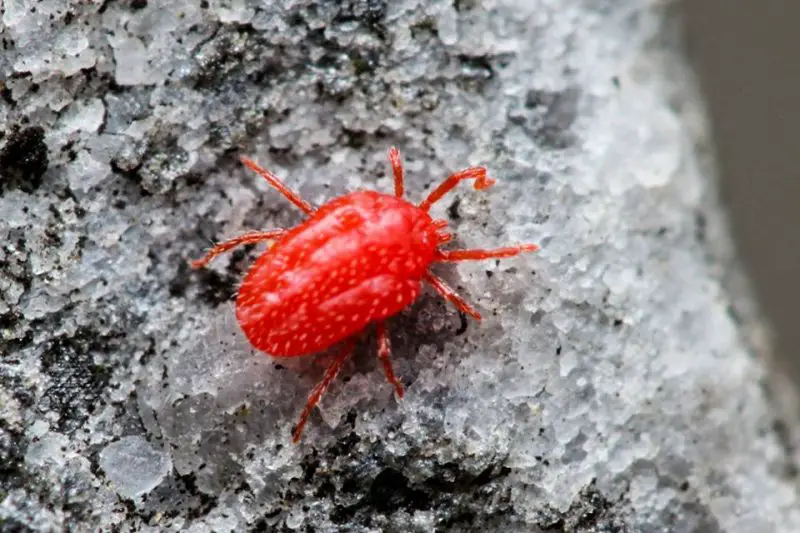
Chiggers are not insects, although many people assume they belong to that group. They are actually mites, placing them in the same broader family of arthropods as spiders and ticks. This classification explains why their biology and feeding behavior differ significantly from insects like mosquitoes or fleas.
Scientifically, chiggers belong to the family Trombiculidae, a diverse group of mites found in warm regions around the world. Thousands of species exist globally, though only a small number are known to bite humans regularly. Most species live entirely unnoticed in soil ecosystems.
The stage responsible for biting is the larval stage, which represents only one brief phase of the chigger life cycle. These larvae are extremely small, measuring roughly 0.2 to 0.3 millimeters in length. At this scale, they are barely visible even in bright sunlight.
To the naked eye, chiggers appear only as tiny reddish or orange specks slowly moving across vegetation. Their microscopic size allows them to remain hidden within grasses, weeds, and low plants where they wait for passing hosts.
Adult chiggers live primarily in soil and leaf litter environments. They feed on insect eggs, small arthropods, and decaying organic material rather than on animals.
Only the larval stage requires a host. During this short parasitic phase, the larvae obtain nutrients needed to continue their development into nymphs and eventually adult mites.
Why Tennessee’s Environment Is Perfect for Chiggers
Tennessee’s landscape offers nearly ideal conditions for chigger populations to thrive. Warm temperatures, regular rainfall, and abundant vegetation create a humid environment close to the ground where these mites can survive easily.
Chiggers prefer areas where moisture remains trapped near the soil surface. Tall grasses, weeds, and brushy vegetation create shaded conditions that protect them from drying out in the sun.
Forest floors provide particularly favorable habitats. Layers of fallen leaves form a natural blanket that holds moisture while also protecting tiny organisms living beneath it.
These leaf-litter environments create stable microclimates where chiggers can survive even during hot summer days. The shaded conditions help maintain the humidity levels necessary for the mites’ survival.
Wildlife also plays a major role in sustaining chigger populations. Small mammals such as mice, squirrels, rabbits, and birds frequently serve as hosts for the larval mites.
As these animals move through grasses and forest undergrowth, they carry chiggers to new locations. Over time, this movement spreads the mites across fields, woodlands, and suburban environments.
Because Tennessee contains extensive woodland areas, farmland, and grassy fields, these environments allow chiggers to remain widespread throughout the region.
The Truth About How Chiggers Bite
One of the most common myths about chiggers is that they burrow into human skin. This belief has been repeated for generations, but it is not accurate.
In reality, chiggers never tunnel beneath the skin’s surface. Instead, they remain attached to the outer layer of skin while feeding.
When a larval mite reaches human skin, it searches for a place where the skin is thin or slightly compressed. These locations allow easier access to surface tissues.
Common feeding sites include ankles, sock lines, waistbands, behind the knees, and under tight clothing. These areas often trap the mites when they crawl across the body.
Once attached, the chigger inserts tiny mouthparts into the outer layer of skin. It then releases digestive enzymes that break down skin cells.
These enzymes liquefy small amounts of tissue. The mite feeds by absorbing the dissolved skin cells rather than drinking blood.
During this feeding process, the skin forms a hardened tube called a stylostome. This tube functions as a feeding channel through which the mite absorbs nutrients.
Chiggers typically remain attached for only several hours. After feeding, they drop off and return to the soil environment.
However, the stylostome remains embedded in the skin for several days. This leftover structure is what causes prolonged itching even after the mite has left.
Why Chigger Bites Itch So Much
The intense itching associated with chigger bites is caused by the body’s immune response. The digestive enzymes introduced by the mite trigger inflammation in the surrounding skin.
When these foreign proteins enter the skin, the immune system quickly recognizes them as potential threats. Immune cells begin moving toward the affected area.
This process produces redness and swelling around the bite site. The inflammation also stimulates nerve endings within the skin.
As these nerve endings become more sensitive, they produce the strong itching sensation many people experience. The irritation often intensifies several hours after exposure.
Scratching may provide temporary relief, but it can also worsen the irritation. Repeated scratching may damage the skin surface.
When the skin barrier breaks, bacteria may enter the area and cause secondary irritation. For this reason, avoiding excessive scratching can help reduce discomfort.
Because the stylostome remains in place for several days, itching may continue long after the mite has disappeared.
When Chigger Season Peaks in Tennessee
Chigger activity follows seasonal patterns closely linked to temperature and humidity. In Tennessee, the season usually begins during late spring when warming soil temperatures allow eggs to hatch.
As the larvae emerge, they climb onto nearby vegetation where they begin waiting for passing hosts. During this stage, they remain concentrated near the tips of grasses and weeds.
Throughout early summer, chigger populations gradually increase. Favorable environmental conditions allow large numbers of larvae to develop.
Peak activity usually occurs during mid to late summer when temperatures and humidity reach their highest levels. These conditions provide the moisture required for larval survival.
Late summer and early autumn may still bring noticeable chigger activity. As long as temperatures remain warm, the mites can continue reproducing.
When cooler weather arrives, larval survival begins to decline. The first frost typically eliminates active chigger populations.
After frost occurs, the season ends until the following spring when new larvae hatch.
Where Chiggers Are Most Likely to Be Found
Chiggers rarely spread evenly across landscapes. Instead, they gather in concentrated patches sometimes called mite islands.
These clusters form where environmental conditions are especially favorable for the mites. Moist soil and dense vegetation often support these populations.
Forest edges are one of the most common locations. These areas combine sunlight, shade, and plant growth, creating ideal microclimates.
Tall grassy fields also provide suitable habitats. Larvae climb onto the tips of grass blades where they can easily contact passing animals.
Moist environments near streams, ponds, and wetlands frequently support larger chigger populations. Humidity remains consistently higher in these areas.
Even suburban yards can harbor chiggers if grass grows tall or landscaping remains dense. Overgrown vegetation can recreate the conditions found in natural habitats.
Because mites cluster in specific patches, exposure can vary greatly within a small area. One person may walk through a heavily populated patch while another nearby encounters none.
Outdoor Activities That Increase Exposure
Many common outdoor activities increase the chance of encountering chiggers. Hiking through grassy trails is one of the most frequent situations where exposure occurs.
Gardening also brings people into close contact with soil and vegetation where mites live. Working near flower beds or garden edges may disturb chigger habitats.
Camping can increase exposure when people sit or lie directly on the ground. Leaf litter and grassy areas are common locations for larvae.
Fishing along streams or lakes often involves walking through tall grass near water. These environments frequently support chigger populations.
Even everyday yard work can expose homeowners to mites. Activities such as mowing lawns, clearing weeds, or trimming brush may disturb areas where chiggers live.
Although these activities do not guarantee bites, they increase the likelihood of brushing against vegetation containing larvae.
Why Bites Appear in Clusters
Chigger bites often appear in groups rather than as single isolated bumps. This pattern occurs because several larvae may attach to the skin during a single encounter.
When a person walks through vegetation containing chiggers, multiple mites may transfer onto clothing or exposed skin at the same time.
Once on the body, the mites tend to gather in areas where clothing presses tightly against the skin. These locations provide warmth and protection.
Waistbands, sock lines, and areas behind the knees create small folds in the skin. These folds allow mites to attach more easily.
Because several mites may feed close together in these areas, the resulting bites often appear as clusters of red bumps.
The Ecological Role of Chiggers
Although chigger bites can be irritating to humans, the mites play important roles in natural ecosystems.
Adult chiggers feed on insect eggs and small arthropods in soil environments. This feeding activity helps regulate populations of other tiny organisms.
They also consume organic debris, contributing to the decomposition process that recycles nutrients in the soil.
Chiggers themselves serve as food for other organisms. Birds, insects, and predatory arthropods may feed on them during various life stages.
These interactions form part of a complex ecological network within soil and vegetation environments.
Even organisms that cause occasional discomfort for humans still contribute to the balance of natural ecosystems.
FAQs About Chigger Bites in Tennessee
Do chiggers burrow into the skin?
No. Chiggers feed on the surface layer of skin and never tunnel beneath it.
Why do bites appear hours later?
The itching begins only after the body reacts to digestive enzymes left in the skin.
Are chigger bites dangerous?
Most bites are harmless, though they can cause intense itching.
Can chiggers live indoors?
Chiggers rarely survive indoors because they require humid outdoor environments.
How long do chigger bites last?
Most bites fade within several days, although itching may continue longer.
Do chiggers transmit diseases?
In North America, chiggers are not known to spread diseases to humans.
Why do bites occur around ankles?
Ankles are often the first part of the body to brush against grass containing larvae.
Can chiggers remain attached for days?
No. They usually feed for only a few hours before dropping off.
Final Thoughts
Chigger bites are one of the most common yet misunderstood outdoor experiences in Tennessee. These microscopic mites thrive in warm, humid environments where vegetation grows thick and moisture remains near the ground.
Although their bites can be irritating, chiggers are simply part of the natural ecosystems found throughout the state. Their brief interaction with humans occurs only during the larval stage when they require nutrients to continue developing.
Understanding how chiggers live and feed helps explain why bites appear after outdoor activities and why they often occur in predictable locations on the body.
For Tennessee residents who enjoy spending time outdoors, awareness of chiggers offers a clearer picture of the hidden world that exists beneath grasses and forest leaves. Even the smallest organisms play roles in the ecosystems surrounding everyday life.